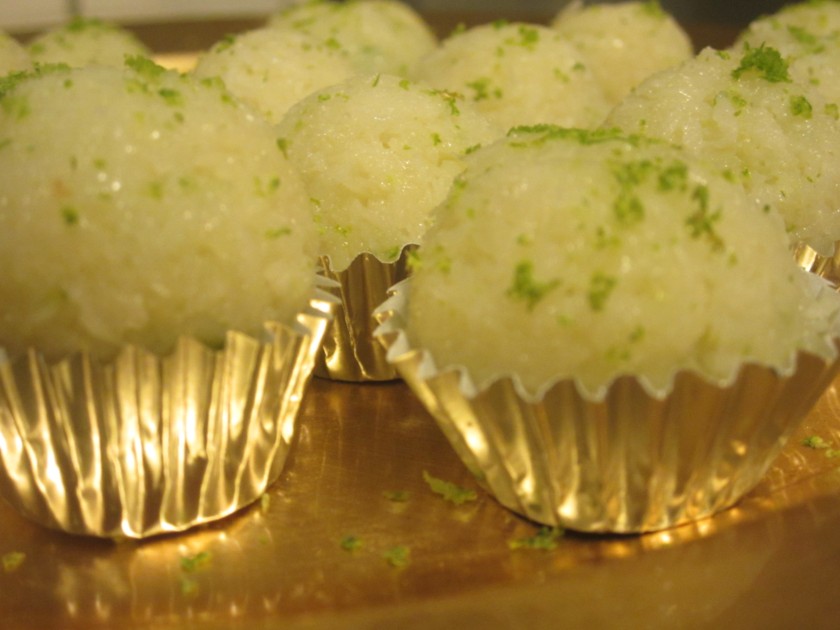
Beijinho de Côco, com Capirinha!

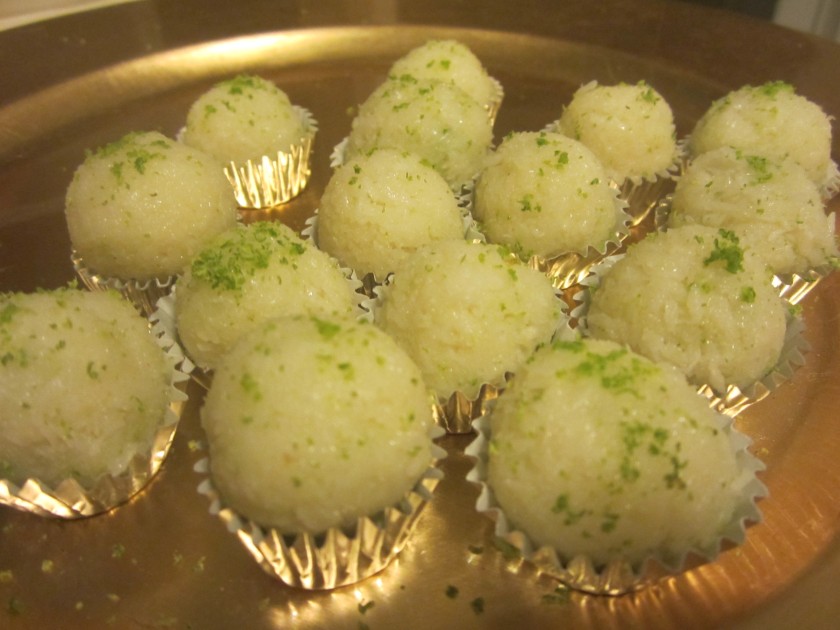
Well, last week I ventured trying to make the most famous Brazilian candy/after meal sweet: Brigadeiro, a bit adapted, thanks to a forwarded recipe, which included adding Caipirinha to it! So, this time, I’m coming with the second most traditional and well-known sweet: Beijinho de Côco (“Coconut Kiss”, if I could translate it). Again, using last week’s recipe, and why not, venturing to discover how the little coconut kiss would taste, if a bit of “caipirinha” was added to the mix! 😮 The recipe is the same one from last week, just adding 100g of shredded (unsweetened) coconut to the mix. Don’t forget to have the lemon zest for a beautiful topping effect!

Here is the result:

"Beijinho de Côco com Caipirinha!"

Remembering, from last week’s recipe:

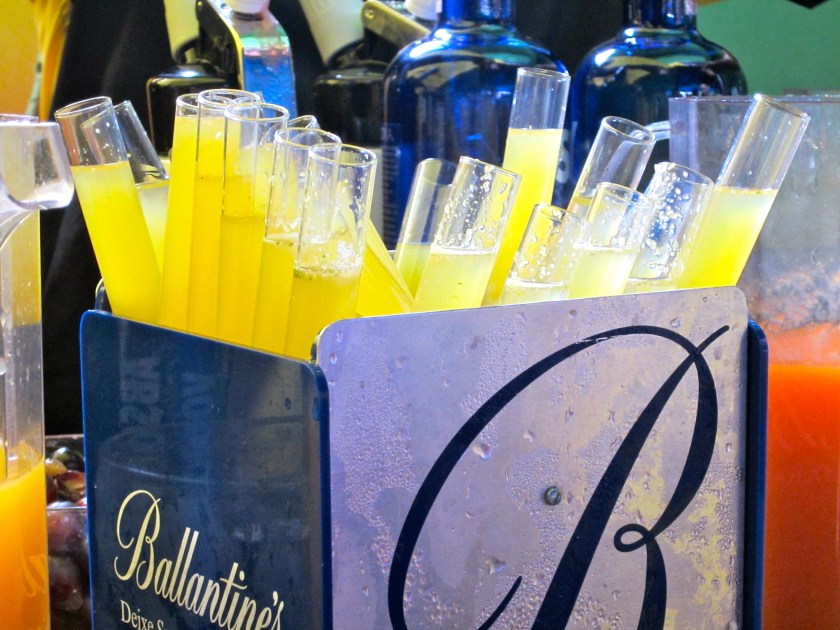
Brigadeiro de caipirinha com cachaça e limões

Remember “brigadeiro”? Those little chocolate candies that one may find at birthday parties? Well, this one resembles a famous Brazilian drink: “The Caipirinha”… a candy made with ingredients for a mixed drink… The main ingredient?

A little bit of cachaça, Brazil’s famous “sugar cane aguardiente”… 😮 And, obviously: “enjoy responsibly”…. Enjoy at a friend’s house, after a great feijoada… Take a good nap afterwards… find yourself a comfy hammock and forget about getting behind the wheel! 😮 No “eating and driving”, okay? 😮

Here is the image, and the recipe, in Portuguese, with comments in English:

Receita do Brigadeiro de Caipirinha

Brigadeiros de caipirinha

Ingredientes

  • 1 lata de leite condensado
  • 2 colheres de sopa de manteiga
  • 50 ml de cachaça
  • Açúcar cristal
  • Raspas de limão para decorar
  • Opcional: suco de um limão e ½ caixa de creme de leite

Modo de preparo

Leve ao fogo uma panela com o leite condensado, o creme de leite e a manteiga. Vá mexendo em fogo baixo até dar ponto e desgrudar da panela. Tire um pouco do fogo e adicione a cachaça/vodca, e o suco do limão. Volte a panela ao fogo e deixe dar o ponto novamente. Use uma assadeira untada (de manteiga) pra colocar a “massa”, e deixe reservado até esfriar.

Pra fazer as bolinhas: unte as mãos com manteiga, pegue um pouco da “massa” e vá boleando, fazendo movimentos circulares. Passe a bolinha no açúcar cristal, com raspas de limão, para decorar. (Obs: existe um açúcar especial, de confeiteiro, que parece um gelo triturado e também é uma boa opção).

One may add lemon/lime zest over the candy, making it look even more similar to the original drink… Humm!

[Portuguese] Há quem goste de colocar um pouquinho de raspas de limão na massa no lugar do suco. Deve deixar um azedinho bem gostoso!

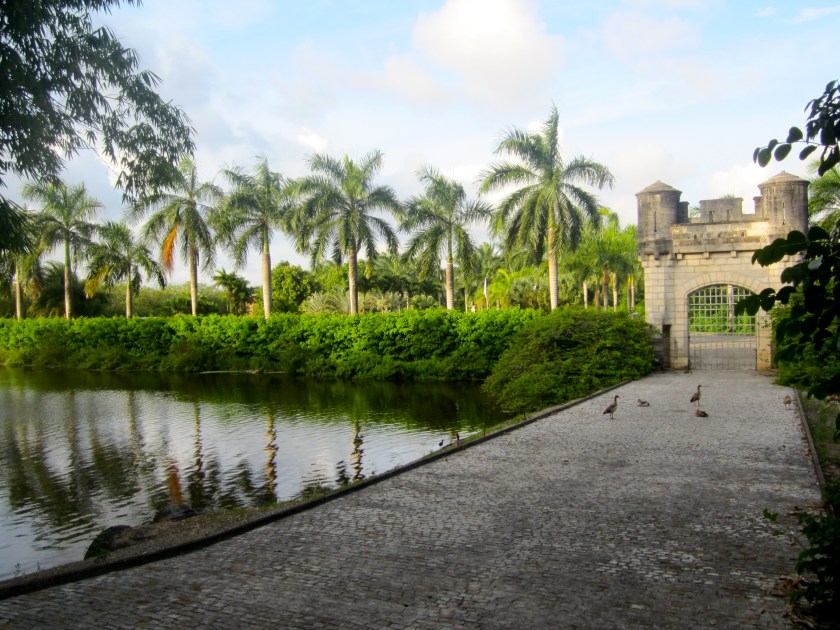
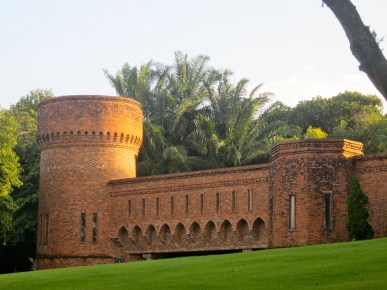
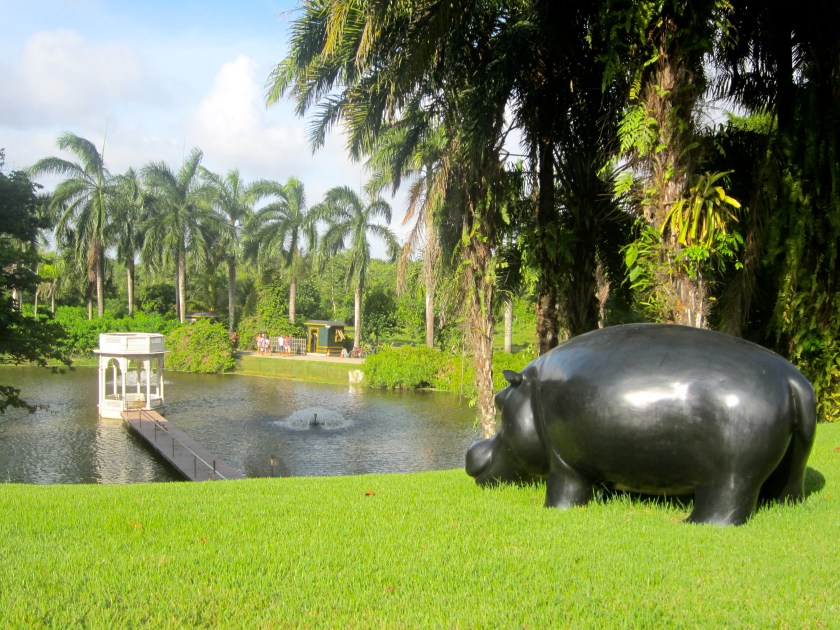
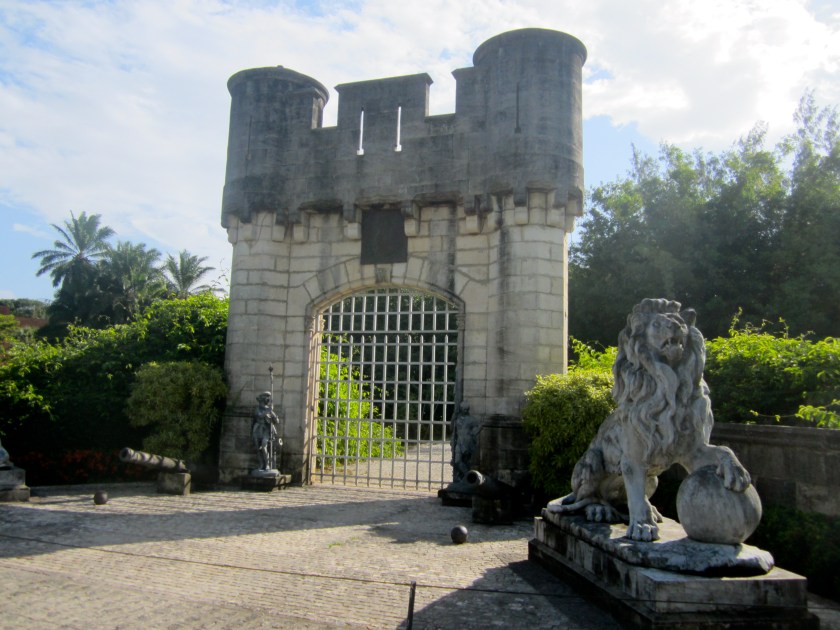
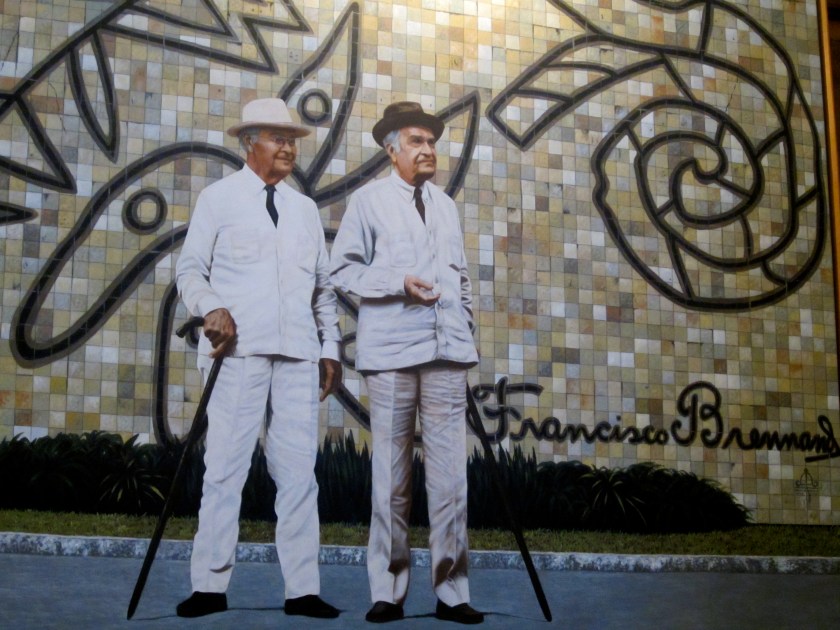
Gardens and Sculptures at the Brennand Museum, Brazil

This is the second part of our visit to the Brennand Institute in Recife, Brazil, which encompasses museum and castle. The theme for this last post covers the beautiful and pristine gardens surrounding the Institute, as well as the sculptures garden, and the sculptures throughout the museum. Again, all collections longtime cared by Mr Ricardo Brennand. Ricardo Brennand Institute is a cultural institution that holds a museum, an art gallery, a library, a cafe, as well as, a large park. The collector Ricardo Brennand is its creator and owner.

During our visit, we were able to appreciate objects of art from many different locations and times, from Middle Ages Europe to the 15th century, through Colonial Portuguese & Spanish Brazil, Dutch Brazil, 17th century, and Brazil in the 19th century. All photos were taken by one of the members of our family (even the 4 year old!). Stop by the Slideshow at the end of this post for a treat! 😮

For 50 years Brennand acquired those objects. The Institute owns Brazilian e foreign paint colections, like the largest Frans Post colections outside the Netherlands, one of the biggest armory in the planet, sculptures from all over the world, carpets and many others objects of art.

This slideshow requires JavaScript.

Armors and Dolls at the Ricardo Brennand Institute, Brazil

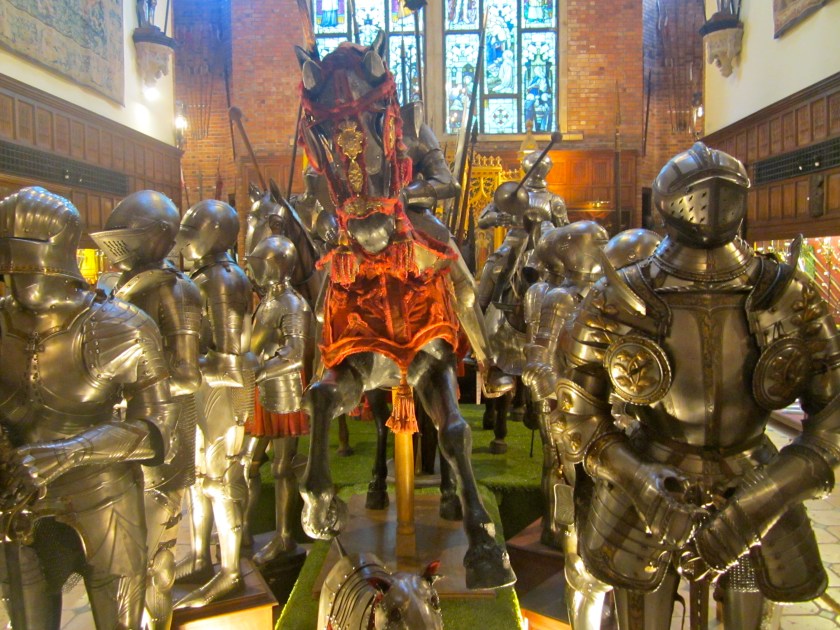
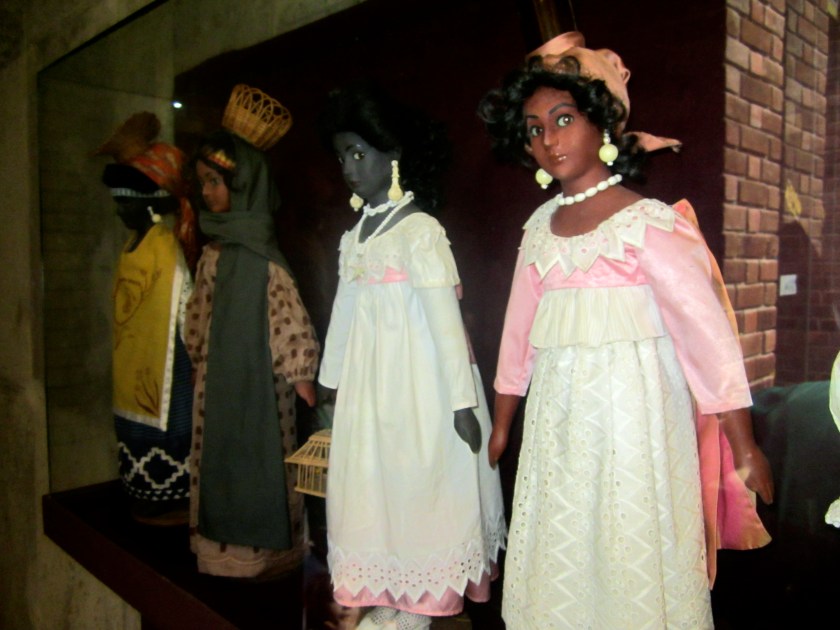
Weekends are always reserved for quality time with the family (obviously, after we’re done with the necessary grocery shopping!). Why not offer our children the opportunity to truly experience culture, learn about the Colonial Brazil, the first settlers, and yet, have a great deal of fun? And that’s exactly what our family did! This post showcases one of themes from our visit to the Institute & Brennand Castle, focusing on two very distinct collections/areas: the dolls and the armors, longtime cared and collected by Mr Ricardo Brennand. A follow up about the gardens and overall view of the Institute, a product of the visionary Mr Brennand will be coming soon…

Ricardo Brennand Institute is a cultural institution that holds a museum, an art gallery, a library, a cafe, as well as, a large park. The collector Ricardo Brennand is its creator and owner.

During our visit, we were able to appreciate objects of art from many different locations and times, from Middle Ages Europe to the 15th century, through Colonial Portuguese & Spanish Brazil, Dutch Brazil, 17th century, and Brazil in the 19th century. For 50 years Brennand acquired those objects. The Institute owns Brazilian e foreign paint colections, like the largest Frans Post colections outside the Netherlands, one of the biggest armory in the planet, sculptures from all over the world, carpets and many others objects of art – these last ones will be subject of another post!

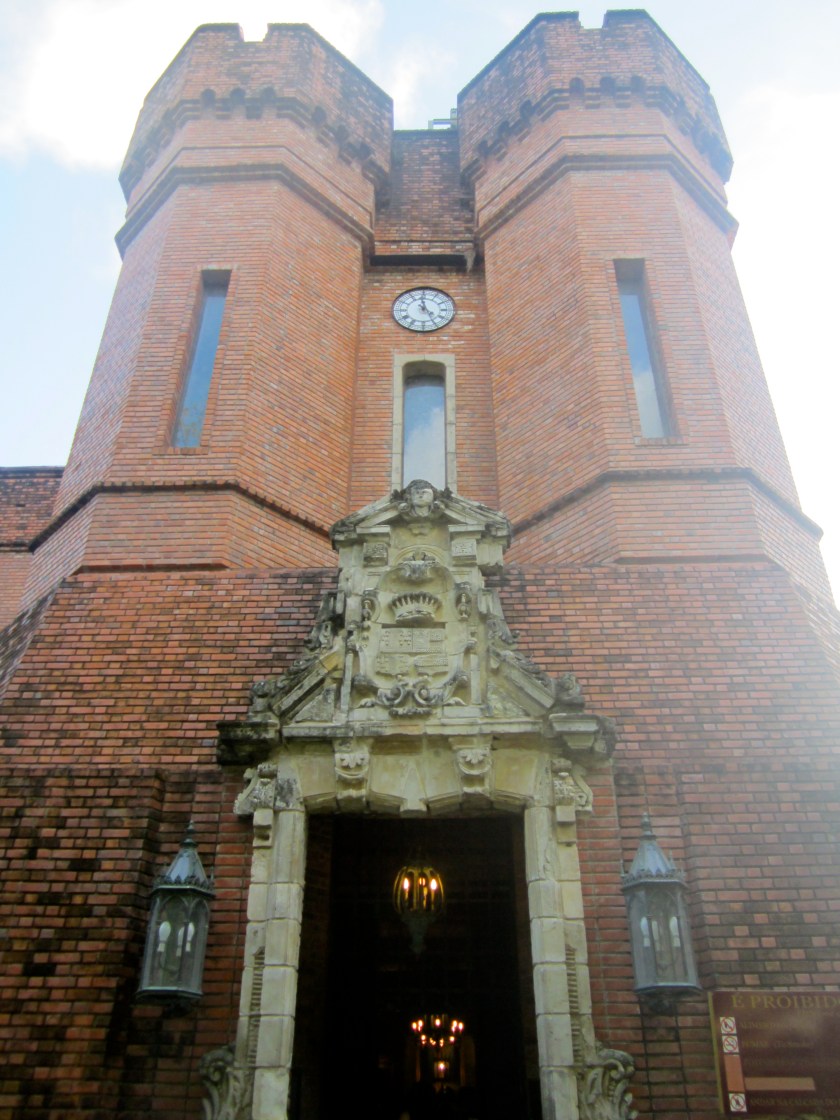
The Entrance to the Complex: Institute & Castle

The doors leading to the Castle

Porcelain Dolls quietly observe the visitors...

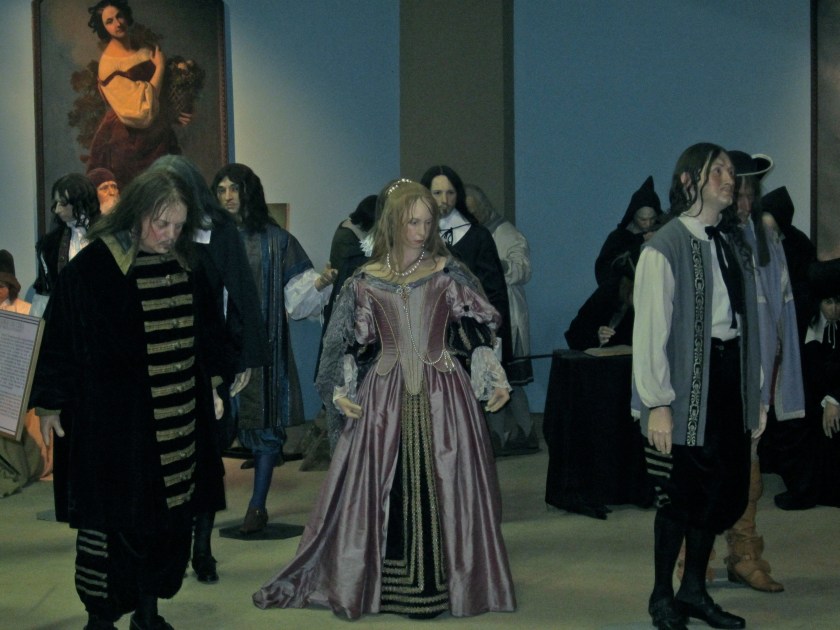
“Peeking” into the Wax Museum: live-size people re-enact a socio-political meeting

The creators saluting the visitors:

Eating on a budget: economy restaurants for local food lovers in Recife!

Hey there! This past weekend we didn’t wanna cook… Kids had a ton of energy, kept running inside the house, so we decided we had to get the whole family out of the apartment… “let’s enjoy the great weather, while appreciating the local food..“. Our surprise: a lot of eateries, restaurants, even the fast-food places did NOT OPEN UNTIL 5PM! We’re shocked (and a bit frustrated, as well!) “Should we go back and try to cook something?”, we discussed, before asking our toddlers from a savior play date with the neighbors (we’re very thankful for that, BTW!)

As a result, we begin our search, trying to find a place that was kid-friendly, open-setting, good & healthy food and… not too expensive… But, the most important thing, was getting the kiddos out of the house… 😮

Here is the result: Always wonderful to share:

Economy Restaurants in Recife

You may be on a budget, but eating well is still possible in Recife. This listing of places to eat covers only restaurants. There are many traditional style restaurants, but Brazil also offers self-service restaurants where you pay by weight. Such restaurants are very popular, especially at lunchtime, but be sure to arrive early to get a good choice. Lunch here starts at 12.00 and popular places will have little left after 1.30pm. The price per kilo varies according to the range and quality of the offering, and by the location of the restaurant. Most shopping centers have food courts with a mix of fast food and self-service restaurants. On the whole we would suggest that the food is over-priced and lacks quality compared to other options outside the shopping centers. Stand-alone restaurants in shopping centers are better quality, but also tend to be over priced compared to similar establishments in other street locations.

Chinese food in Recife is cheap, as it is in many countries. You do get what you pay for and, for the most part, are not recommended.  However, Japanese food is very popular and generally of good quality. Many better self-service buffets also include sushi in their offering.

Cafes, bakery’s (padarias), delicatessens and bars often have good food options, from nibbles and snacks to more substantial meals. You can find more details under the heading bars and cafes

Of course, beach and street food are to be found everywhere in all the destinations covered by this site, so to do justice to the subject all listings and tips are under a separate heading Beach and Street Food

La Plage (Crepes) Good crepes in a very well docorated restaurant. Rua Professor Rui Batista, 120, Boa Viagem. (81) 3465 1654. Tues-Sat 6pm-11.30pm; Sun 5pm-11pm; Mon closed. (R$16+) MAP

Anjo Solto (Crepes) A very popular and well established venue popular with the fashionable crowd. Also gay friendly. Usually lively from 10pm until very late. Galeria Joana DÁrcPina.(81) 3325 0862. Daily 6pm until the last client. (R$18+). MAP www.anjosolto.com.br

Pin Up (Burgers), This place offers fantastic burgers for little more than a McDonald´s in the setting of a very American style diner. Avenida Herculano Bandeira, 204, Pina. (81) 3466 0001.  5.30pm-1.30am tue-sat; 5pm-24.00 sun; closed mon.  MAP www.pinupburgueria.com.br

Laça Burguer (Burgers & Sandwiches) Better than McDonald’s for a similar price, but not as good as Pin Up.  Avenida Visconde de Jequintinhonha 138-ABoa Viagem. (81) 3461 2179.  Mon-Thurs 11.30am-2am; Fri-Sat 11.30am-5am; Sun 12.00-2am. MAP

Entre Amigos o Bode (Regional) A large bar/restaurant serving traditional regional food and meat. This place is very popular with locals. Rua Marquês de Valença 30 Boa Viagem(81) 3312.1000. Mon-Fri 11.30am-2am; Sat & Sun 11.30am-4am . Approx. R$25 per person. MAPwww.entreamigosobode.com.br

Parraxaxá (Regional). The name is of indigenous origin and is pronouncedpahashasha. This very popular self-service (pay by the kilo) restaurant serves regional cuisine in a rustic theme restaurant. A very wide selection of savory and sweet dishes. The plates are massive so make sure your eyes are not bigger than your stomach, or it will cost you! Rua Baltazar Pereira 32, Boa Viagem(81) 3463 7874. Mon-Fri 11am-10pm; Sat & Sun6-11pm. Approx R$20 per person. MAP www.parraxaxa.com.br

Ponteio Grill (Regional) One of the most famous Brazilian eating experiences is the churrascaria (pronounced showhaskaria), a grill where you help your self to the salad bar (including a limited sushi menu) then take what meat you want as it is brought to your table on large spits. Its good to go when you are very hungry, as this is a fixed price restaurant for all you want to eat. The price is less earlier in the week and higher on weekends. There are other similar restaurants that cost more, and some a little less. We recommend this as being the best value for money. Avenida Boa Viagem 4824Boa Viagem. (81) 3326 2386. Mon-Thurs 12pm-4pm and 7-12am midnight; Fri-Sun 12pm-12am midnightApprox R$30 per person. MAP

Feijoada do Vovô Hortêncio (Regional) Feijoada is considered a national dish of Brazil and is served only at lunchtimes, usually on weekends. Folklore suggests feijoada was a “luxury” dish of African slaves on Brazilian colonial farms, as it was prepared with relatively cheap ingredients (beans, rice, collard greens, farofa) and leftovers from salted pork and meat production. Some versions, even in good bars and restaurants, can be disgustingly fatty. The feijoada at this restaurant is excellent, and we recommend it to more adventurous eaters. Definitely it is not for vegetarians. Rua Setúbal 1603, Boa Viagem. (81) 3074 4788. Fri-Sun Lunchtimes only .  Approx. R$20 per person. MAP

Chica Pitanga, (Regional/International) A very popular self-service/pay-per-kilo restaurant with a large buffet offering. Get here early, especially at weekends, to avoid waiting for a table.  Rua Petrolina 19, Boa Viagem. (81) 3465 2224. Mon-Fri 11.30am-3.30pm & 6pm-10pm; Sat & Sun 11.30am-10pm. Approx R$20per person. MAP

O Poeta, (Regional/International) A good quality self-service/per kilo restaurant that is very popular with local office workers. Get here early if you want a good selection. Avenida Rio Branco 243Recife Antigo. (81) 3224-3310. Mon-Fri only 11.30-3.30pmApprox R$20per person MAP

Panquecas e Saladas(Regional/International) A good quality self-service/pay-per-kilo restaurant in an old house. A more limited choice than others listed here, but still good and fresh. Take a table upstairs for a cheap and cheerful meal in a nice setting. Good juices too. As with all self-service places, get here early. Rua da Guia 93,Recife Antigo(81) 3224 2259. Mon-Fri only 11.30-3pm. Approx R$10 per person.MAP

O Buraquinho (Regional) A simple restaurant in one of the most interesting and picturesque historic squares of Recife. It serves regional dishes for very good prices. Pátio de São Pedro 28, Recife Downtown(81) 3224 6431. Mon-Sat 11.30am-12.00am midnight. Sun closed . R$20, MAP

Royal (Regional) Established in 1944, this restaurant serves traditional regional dishes and focuses on offering value for money. It is only open for breakfast and lunch weekdays to serve its office worker clients. Rua Mariz e Barros 181Recife Antigo (81) 3224 5854. Mon-Fri only 8am-3pm. R$20, MAP

Tio Pepe (Brazilian) This restaurant was founded in 1964 by José Garrido Cid, an immigrant from Galicia, Spain. Before he died, Pepe passed the baton to one of his Brazilian daughters, Mirtes, who has modernized the business. Generous portions of fish, meat and poultry are freshly cooked, most on a traditional coal grill. Rua Almirante Tamandaré 170, Boa Viagem. (81) 3341 7153. Tues-Sat 11.30am-11.30pm; Sun 11.30am-4.30pm Approx R$30. MAP

La Comedie (French) This little French bistro is one of the hidden gems of Recife. It is tucked away behind the French language school Aliança Francesa, and located in a small building with a covered patio area. It offers a selection of high quality French snacks and dishes. The mini quiches are great, so are the soups. Not to forget: the Brazilian spin on the French classic for dessert, the petit gâteau, is amazing, not chocolate but uva (grape) or goiaba (a sweet guava jam). Rua Amaro Bezerra 466Derby. (81) 3222 0245. Mon-Wed 12pm-10pm; Thurs-Sat 12pm-11pm; Close Sun. R$20.MAP

La Cuisine Bistrô (French) We have included this restaurant in the Economy option, but prices here can go from reasonable to expensive, depending on your choice from an extensive menu. Soups, salads, sandwiches and other light options are possible if you are on a budget. They are very good quality and this is a nice restaurant. When I am looking to go budget here I take The French onion soup and the petit gateau, both classic and 95% of the time very well done, a great buless expensive options.Avenida Boa Viagem 560Pina. (81) 3327 4073. Mon-Thurs 12pm-11pm; Fri 12pm-1am; Sat 1pm-1am; Sun 1pm-11pm.R$25 MAP Review Exclusive Offer
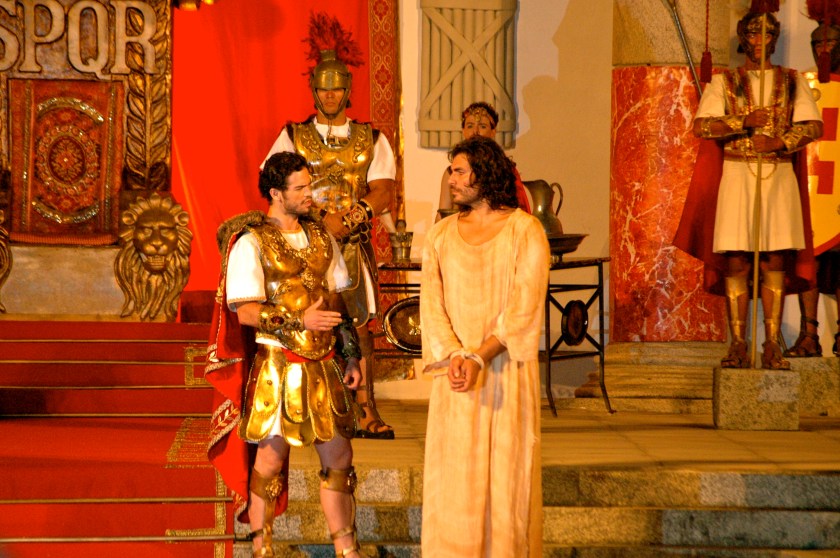
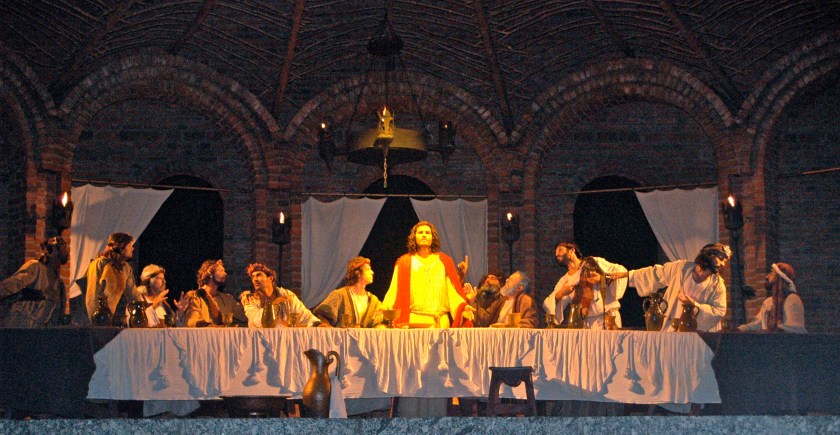
Passion of the Christ in Brazil {Nova Jerusalém, Pernambuco}

De maneira simples, porém criativa, as apresentações contavam ainda com a participação de familiares, na maioria mulheres, e amigos que juntos contracenavam nas ruas utilizando-se do cenário local. 

No ano de 1956, Plínio Pacheco chega a Fazenda Nova e encanta-se pela bela atriz Diva Pacheco, filha de Epaminondas. 

Desde então são 42 anos de representações ininterruptas dentro das muralhas, atraindo espectadores do Brasil e do mundo. O espetáculo, que chega a sua 44ª edição, será encenado entre 15 e 23 de abril. Neste ano, Lacerda, que completa 33 anos, representará Jesus Cristo pela terceira vez. Já Fafá estreia no papel de Maria, mãe de Jesus. O elenco conta ainda com a atriz Vanessa Lóes, mulher de Lacerda, como Madalena; Sidney Sampaio, como Pôncio Pilatos; e Carlos Reis, Herodes.

Das ruas para o maior teatro ao ar livre do mundo, assim começou a ser encenado o espetáculo da Paixão de Cristo de Nova Jerusalém.

 Era 1951 e o comerciante Epaminondas Mendonça teve a ideia de realizar pelas ruas da pequena vila de Fazenda Nova, no período da Semana Santa, a encenação da vida, morte e ressurreição de Jesus Cristo. 

A inspiração partiu após ler em uma revista como os alemães da cidade de Oberammergau realizavam uma apresentação semelhante.

 Enquanto Epaminondas atraia hóspedes para o hotel da família e movimentava o comércio local, Sebastiana, sua esposa, de veia artística cultural e teatral, cuidava da direção do espectáculo.

De maneira simples, porém criativa, as apresentações contavam ainda com a participação de familiares, na maioria mulheres, e amigos que juntos contracenavam nas ruas utilizando-se do cenário local. 

No ano de 1956, Plínio Pacheco chega a Fazenda Nova e encanta-se pela bela atriz Diva Pacheco, filha de Epaminondas. 

Desde então são 42 anos de representações ininterruptas dentro das muralhas, atraindo espectadores do Brasil e do mundo. O espetáculo, que chega a sua 45ª edição em 2012, foi encenado entre 15 e 23 de abril do ano passado, quando tivemos a oportunidade de prestigiá-lo na pré-estréia. Naquele ano, Lacerda, que completava 33 anos, representou Jesus Cristo pela terceira vez. Já Fafá estrelava no papel de Maria, mãe de Jesus. O elenco contou ainda com a atriz Vanessa Lóes, mulher de Lacerda, como Madalena; Sidney Sampaio, como Pôncio Pilatos; e Carlos Reis, Herodes.

Jesus aparece ao fiéis entre anjos

Pregação aos fiéis

Discussões no Templo: 
Jesus entra triunfalmente em Jerusalém, aclamado pelo povo. Expulsa os vendilhões do Templo e discute com fariseus, escribas e doutores da lei.


A despedida dos apóstolosA última ceia:
 Jesus reúne os seus discípulos para a Última Ceia e deles se despede, dando-lhes o pão (o seu corpo) e o vinho (o seu sangue).
"Eu sou o Corpo e o Sangue"

a Ceia com os Apóstolos

A Traição de Judas e a Prisão de Jesus

Judas betrayed Jesus
Preparation for the arrest - Jesus prepara-se para a prisão

The Temptation

Jesus atormentado busca auxílio do céu

Agonia no Horto: 
Jesus sofre antevendo sua Paixão e Morte.

O Bacanal de Herodes

Convidados do bacanal de Herodes
O Bacanal de Herodes


O Julgamento de Jesus, a Condenação

Ao Palácio para Julgamento

Pilatos questiona a Jesus

Pilatos pede a Jesus um milagre

Jesus perante Herodes e Pilatos:

Herodes pede a Jesus um milagre e não é atendido. Irritado, o rei manda-o de volta a Pilatos. 
O Pretório Romano é invadido pela multidão e pelos que querem a morte de Jesus. Pilatos, o Procurador de Roma, chega ao Pretório numa biga romana e saúda os seus legionários.

Humilhação e Coroação de Jesus, Jesus leva sua Cruz

Jesus is brought out to judgement - Jesus é trazido a julgamento

Jesus suffers


O Encontro com as Mulheres de Jerusalém

O perdão à Maria Madalena


- à espera de Jesus

Crucificação

A chegada à Gólgota

 Preparação

Últimas palavras à Nossa Senhora

A morte de Jesus.

myspace layout codes

Também na primeira apresentação de 2011 foi usado, pela primeira vez, o recurso de áudio-descrição para deficientes visuais. De acordo com a organização, o sistema permitirá que o público, com um fone de ouvido, escute uma narrativa sobreposta ao som original da peça descrevendo imagens, sons e textos. A encenação da “Paixão de Cristo” é dublada. Em 2010, 80 mil pessoas vindas de 22 estados brasileiros e 12 países assistiram ao espectáculo. De acordo com a organização do evento, a ideia de construir uma réplica da cidade de Jerusalém para as encenações da “Paixão” foi de Plínio Pacheco, que chegou a Fazenda Nova em 1956. O fascínio que o espetáculo da Paixão de Cristo de Nova Jerusalém exerce no público não está apenas na grandiosidade das construções, na atmosfera que ali se respira e na beleza da história de Jesus. Reside também na participação ativa do público, diante da mobilidade das cenas. Entre um ato e outro, uma multidão movida pela emoção passada pela boa interpretação dos atores, caminha entre os cenários, transportando-se por algumas horas à época de Cristo e revivendo sua saga.

Weekly Photo Challenge: Through

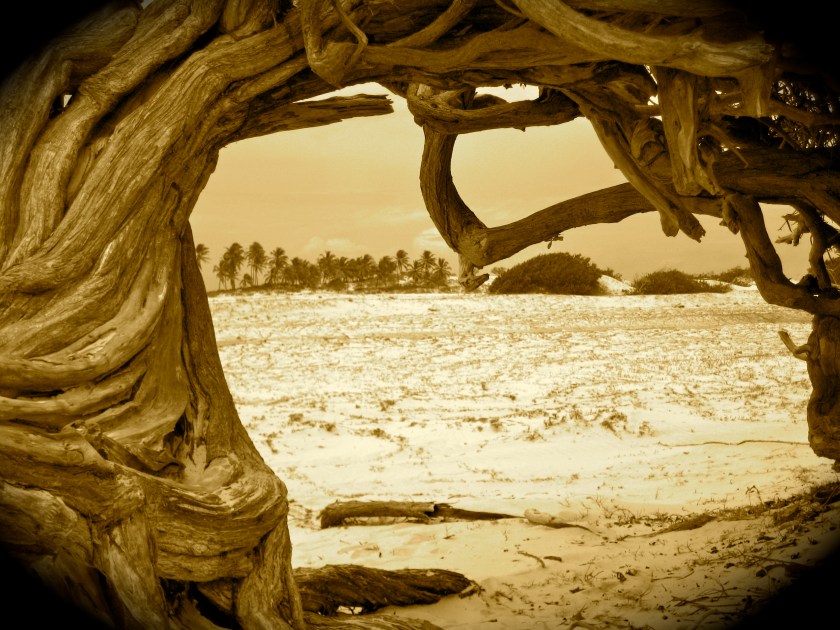
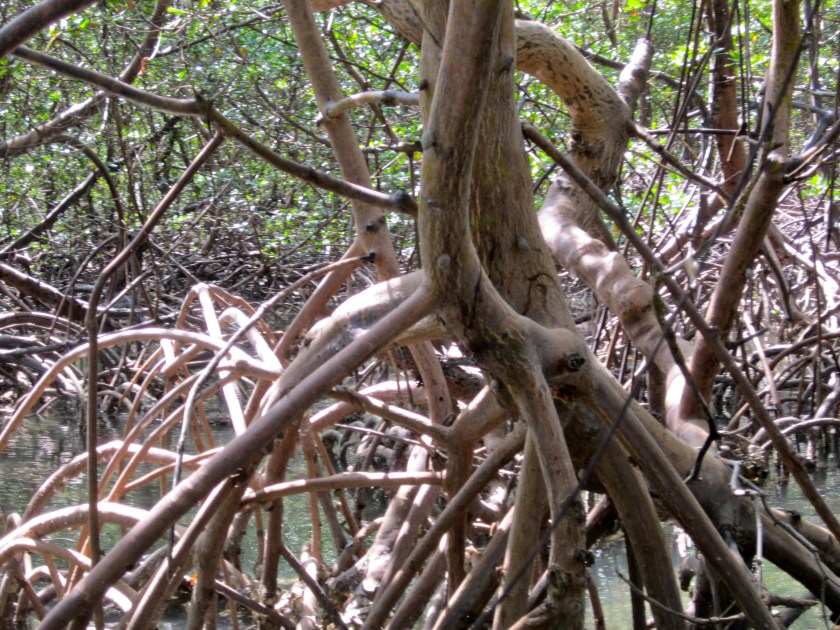
Through the aerial roots of this old tree...

“Through”. That’s the inspiration for this week’s photo challenge from WordPress. Humm… Physically speaking? Emotionally through? A passage? A rite of passage? Too many different interpretations for this one single theme. What’s “through” for you? For me, it means passage, strategy, possibilities to overcome challenges…

Since we’re getting through one more week, let’s see how it goes regarding the challenge:

A detailed view from a particular site at the Reuben Island Prison, South Africa - many tried to escape through...
Walking through the city, through old cobblestone steps, São Luis do Maranhão, Brazil
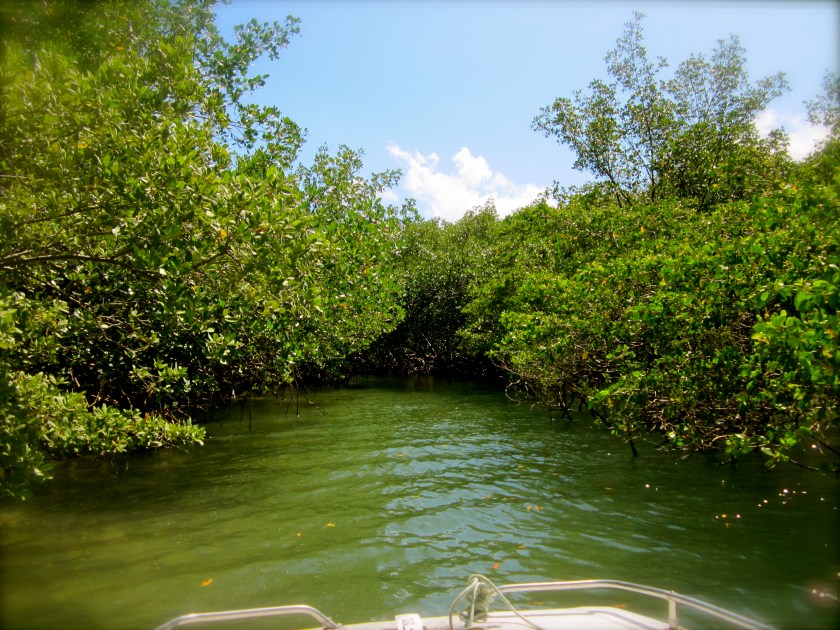
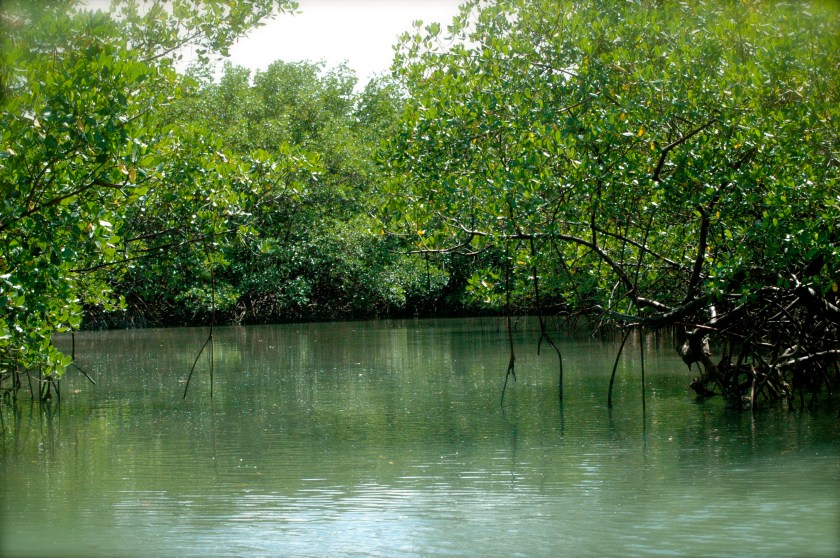
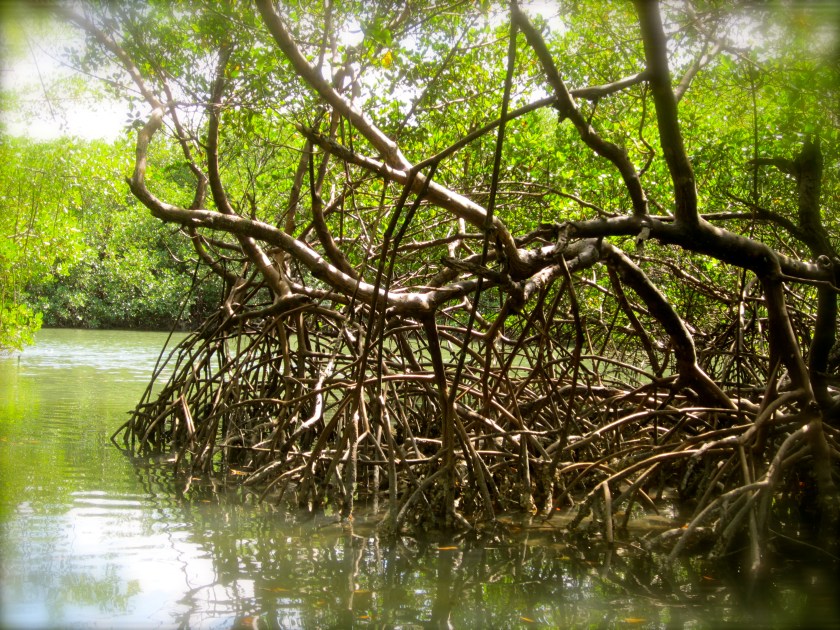
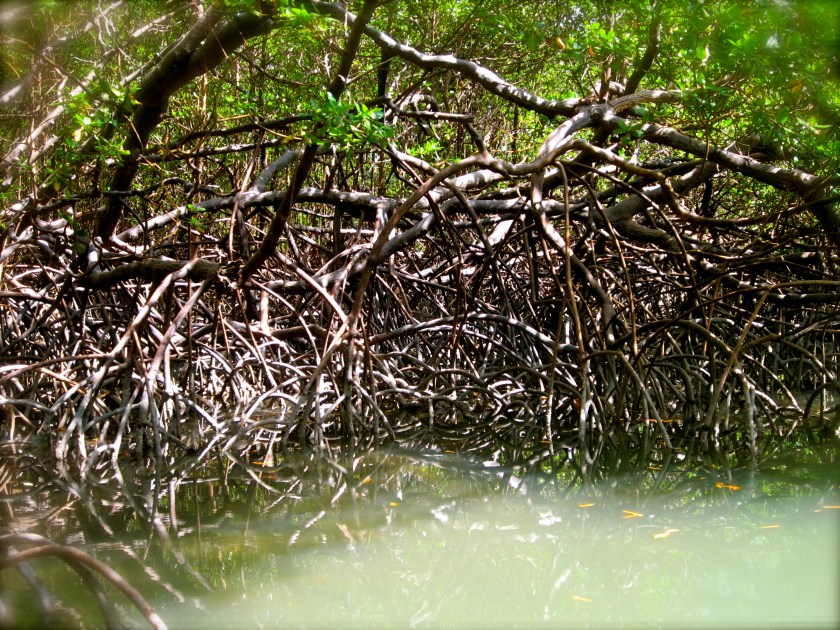
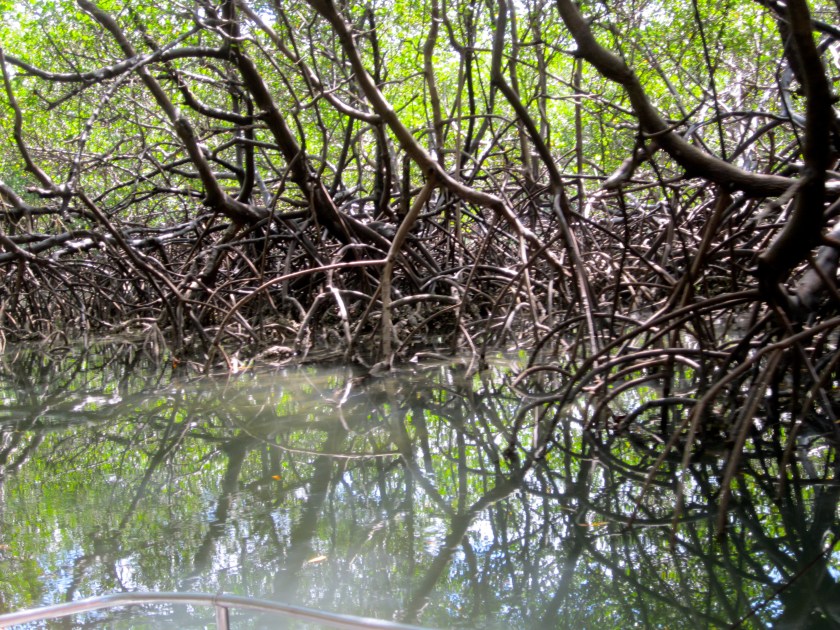
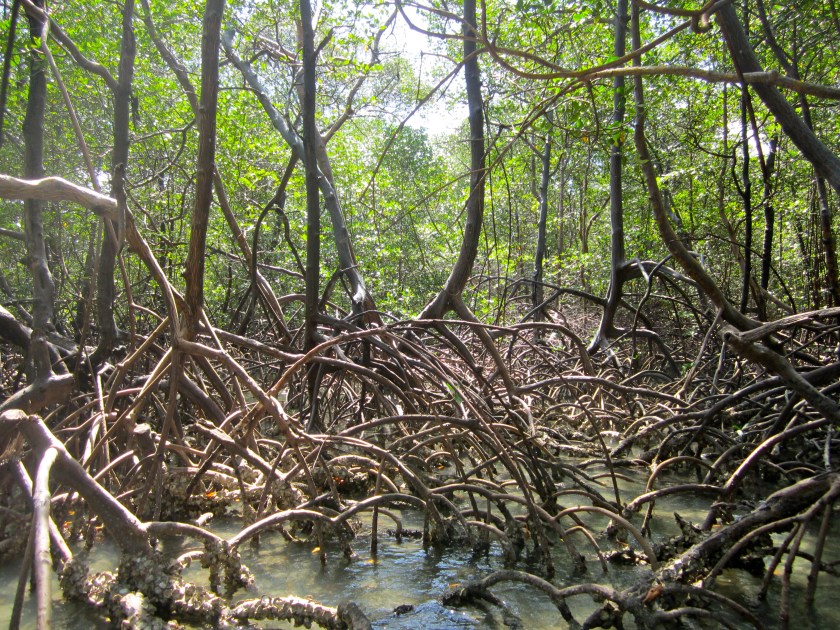
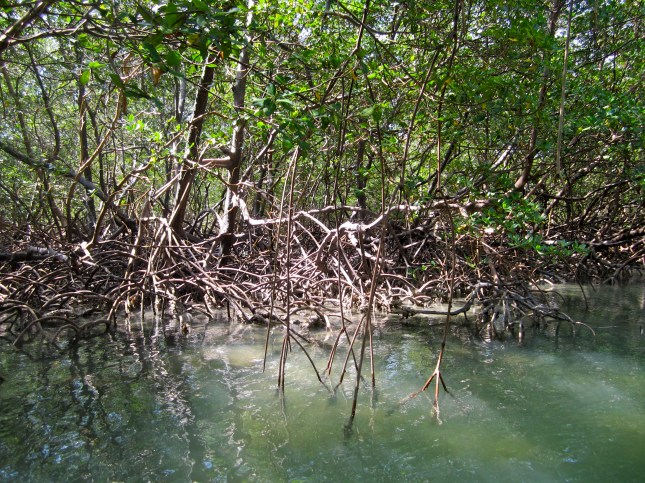
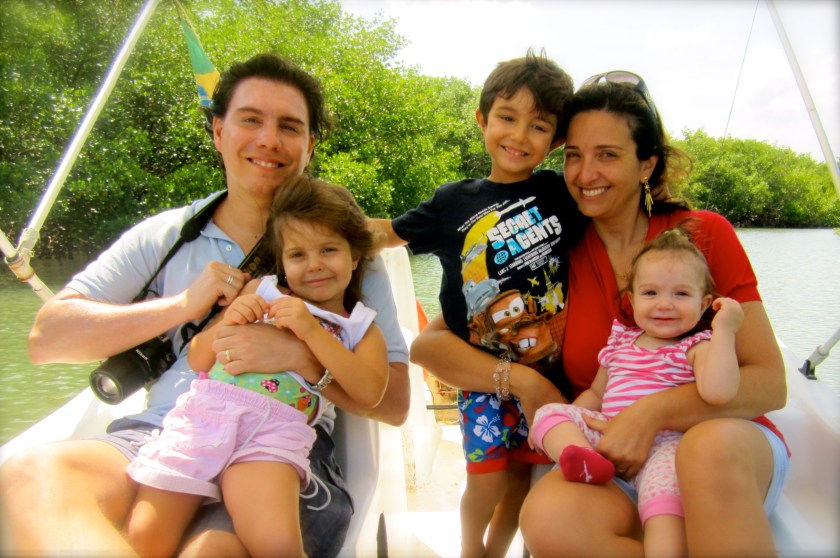
Taking a boat trip through the mangrove in Itamaracá Island, Brazil
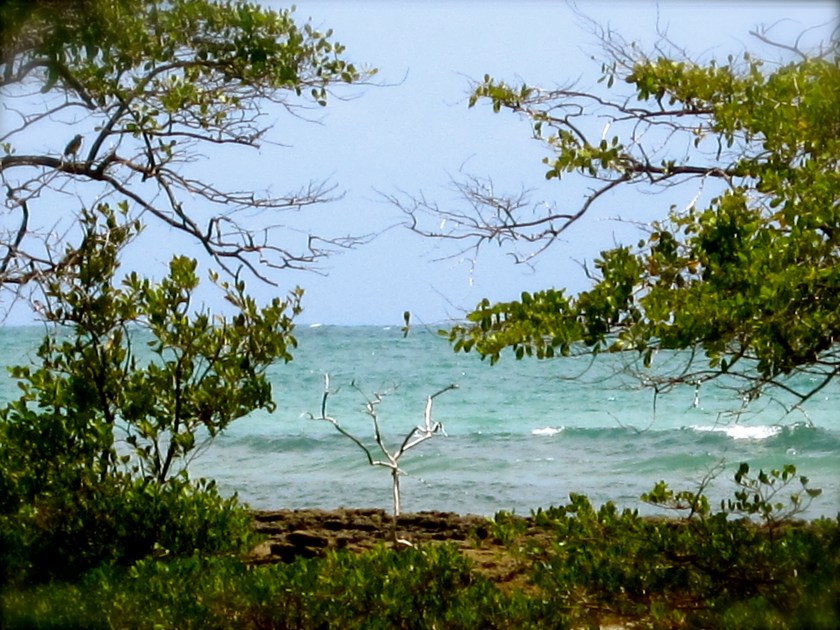
Watching the sunset through the rocks in Jericoacoara Beach
"Take my hand and walk me through this path... through your lens I'll see your world..."

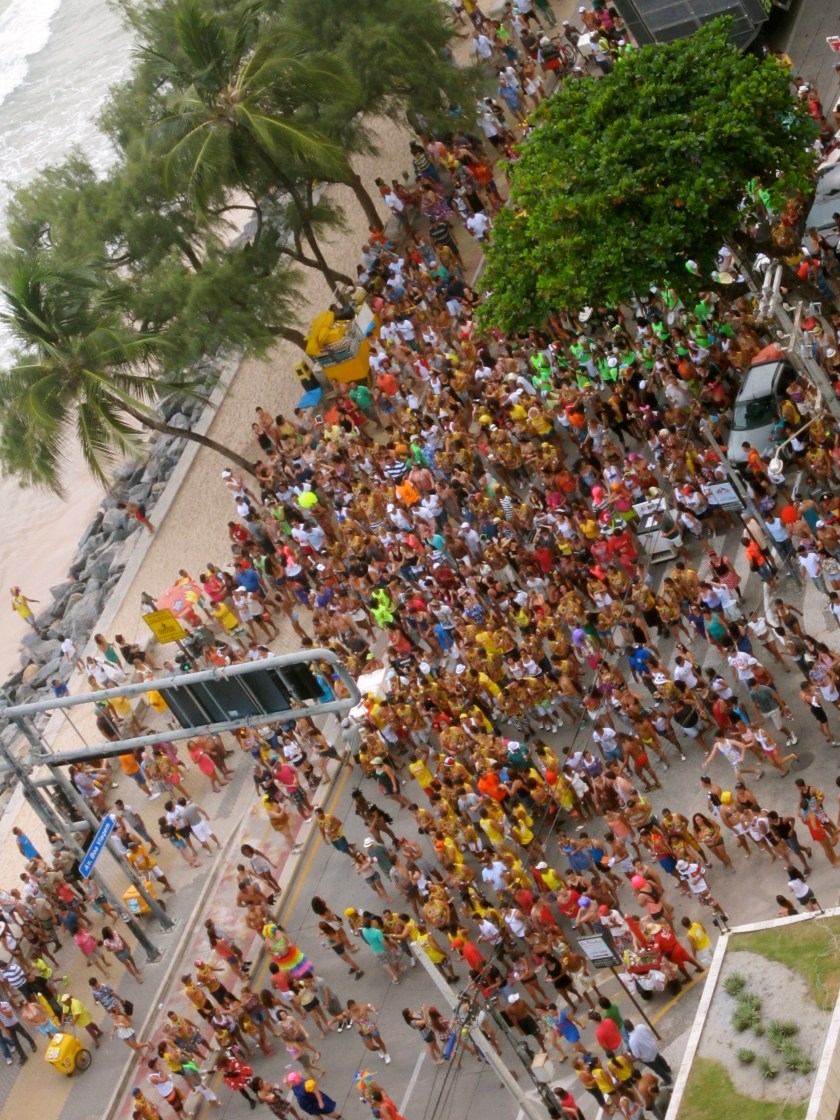
And finally, walking through the excited crowd, experiencing the largest street carnival in the world!

Other posts from WordPress bloggers:

Trackbacks & Pingbacks

  1. Scenic through a mirror (Weekly Photo Challenge) « Cardinal Guzman
  2. Weekly Photo Challenge: Through « Joakim Knudsen
  3. Weekly Photo Challenge:Through « The eternal truth
  4. Weekly Photo Challenge: Through | phlogged
  5. Weekly Photo Challenge – Through | Chittle Chattle
  6. Weekly Photo Challenge: Through | fluffy flurries
  7. Weekly Photo Challenge – Through | Just Snaps
  8. Weekly Photo Challenge: THROUGH « Ink.
  9. Weekly Photo Challenge: Through | Four Deer Oak
  10. Weekly Photo Challenge: Through | Wanderings of an Elusive Mind
  11. Weekly Photo Challenge: Through | Wind Against Current
  12. Weekly Photo Challenge: Through | Lonely Travelog
  13. Weekly Photo Challenge: Through « Much Ado About Nothing
  14. Through the mesh! « The eternal truth
  15. Weekly Photo Challenge: Through | Because
  16. Weekly Photo Challenge ~ Through « An Uneducated Palate
  17. Through this and that … « MindBlur
  18. Weekly Photo Challenge – Through « The Urge To Wander
  19. WordPress Weekly Photo Challenge: Through « A year in the Life
  20. Weekly Photo Challenge: Through « Sin Polaris
  21. Weekly Photo Challenge: Through | Creativity Aroused
  22. Through « Teepe’s weblog
  23. Weekly Photo Challenge: Through « Cee’s Life Photography Blog
  24. Weekly Photo Challenge: Through : { a Memory Bliss }
  25. Weekly photo challenge: Through | A Number of Things
  26. Weekly Photo Challenge: THROUGH | Contemplative Eye
  27. Weekly Photo Challenge – Through II « The Urge To Wander
  28. Weekly Photo Challenge: Through « Mike Hardisty Photography
  29. Weekly Photo Challenge: Through | heartfelt images
  30. Weekly Photo Challenge: Through « Changeversations
  31. Weekly Photo Challenge: Through « a hectic life
  32. Weekly Photo Challenge: Through | 50 Year Project
  33. Weekly Photo Challenge: Through #2 | fluffy flurries
  34. Weekly Photo Challenge – Through « My 2012 Photo Challenge
  35. Weekly Photo Challenge: Through | mothergrogan
  36. Weekly Photo Challenge: Through « The Proscenium
  37. Weekly Photo Challenge: Through « Rois
  38. WEEKLY PHOTO CHALLENGE : THROUGH « 2012 – ON THE BENCH
  39. Weekly Photo Challenge: Through « Julie Dawn Fox in Portugal
  40. Weekly Photo Challenge: Through | LUNAtic Ƹ̴Ӂ̴Ʒ PANDorA
  41. Weekly Photo Challenge – Through « Chris Donner, Mystery Writer
  42. sun and moon « yi-ching lin photography
  43. Weekly Photo Challenge: Through « Heart’s Home
  44. Weekly Photo Challenge: Through « Find Focus
  45. Weekly Photo Challenge: Through… | Mirth and Motivation
  46. Weekly Photo Challenge: Through « My Sardinian Life | La Mia Vita Sarda
  47. Weekly Photo Challenge: Through « Gobetween Flames
  48. Weekly Photo Challenge: Through | Jumbled Contents Of My Head
  49. Show And Tell SATurday 4 (Through) « Much Ado About Nothing
  50. Weekly Photo Challenge: Through « acieartikulasi
  51. WEEKLY PHOTO CHALLENGE: Through – woven decor
  52. WEEKLY PHOTO CHALLENGE: Through – woven decor
  53. Weekly Photo Challenge: Through (2) « The (Urban-Wildlife) Interface
  54. Weekly Photo Challenge: {Through} « lifebydmagdalene
  55. Weekly photo challenge: Through « Reflections in a Puddle
  56. Weekly photo challenge : Through « rondomtaliedraai
  57. Weekly Photo Challenge: Through « The Poet Stefan
  58. Weekly Photo Challenge: Through | jenkakio
  59. Weekly Photo Challenge: Through | Chronicles of Illusions
  60. Weekly WordPress Challenge: Through « Photo By Holly
  61. grow THROUGH life « Simply Charming
  62. Weekly Photo Challenge: Through « YSalma
  63. Weekly Photo Challenge: Through « R Shad
  64. Weekly Photo Challenge: Through « Form Your Troika
  65. Weekly Photo Challenge: Through « blastedgoat
  66. Photo Challenge: Through « a weirder fetish
  67. WW11 Weekly Photo Challenge: Through | booksinthekitchen
  68. Weekly Photo Challenge: Through « Ruth E Hendricks Photography
  69. Weekly Photo Challenge: Through « Thirdhandart’s Weblog
  70. grove « yi-ching lin photography
  71. Weekly Photo Challenge: Through « AbstractUnknownBoy
  72. Weekly Photo Challenge: Through | Sonel’s Corner
  73. Through the tunnel of cherry blossoms | Summerfield84’s English blog
  74. Weekly photo challenge: Through « Connie’s World
  75. Weekly Photo Challenge: Part Two for both Through & Unusual « Cee’s Life Photography Blog
  76. To Gaze Through A Looking Glass « Nyck’s Notions
  77. THROUGH AND THROUGH and THROUGH « 2012 – ON THE BENCH
  78. Weekly Photo Challenge – Through – Just a lil’ lost…
  79. Weekly Photo Challenge: Through « weird & cool stuff seen while out & about
  80. Weekly photo challenge: Through | The Eco and the Id
  81. through « yi-ching lin photography
  82. Day 114 – Hike 8 « Stopping the Wind
  83. Queenkv’s Brainpickings » Blog Archive » Weekly Photo Challenge: Through
  84. Weekly Photo Challenge – Through | a round tuit
  85. [Photo] Weekly Photo Challenge: Through « Thirty Creative Studio
  86. Weekly Photo Challenge: Through | Perpetual Learner
  87. Weekly Photo Challenge: Through | Noises and sweet airs
  88. Weekly Photo Challenge: Through | Frames & Focus
  89. A Bridge Through a Bridge | Just Snaps

Brasilia Teimosa, from a distance… refreshing images and Portuguese text

 
“Brasilia Teimosa” [Stubborn Brasilia] is the oldest urban non-official community in Recife, Pernambuco, Brazil. a great way to observe what’s happening along the coastline, and within the community, is by enjoying a meal with with friends at the Biruta Bar & Restaurant:
 
Source: Wikipedia:
 
Brasília Teimosa é um bairro do Recife.
Situada na zona sul do Recife, entre o bairro do Pina e o Porto do Recife, numa área caracterizada por uma linha contínua de arrecifes paralela à orla, surgiu através da ocupação de uma área antes denominada Areal Novo, iniciada em 1947. Seus habitantes, pescadores, negociantes, estudantes, donas de casa, têm ligação muito forte com o mar.


O nome foi uma alusão a Brasília, então nova capital do Brasil que estava sendo projetada no governo de Juscelino Kubitschek, em contraste com a área em que os moradores viviam, em perene ameaça de expulsão. Essa persistência teve grande destaque nos anos 1950, quando essa área foi destinada pelo Governo do Estado à construção de depósitos inflamáveis. A perseverança dos primeiros moradores, que reconstruíam suas casas durante a noite quando ao longo do dia eram demolidas consolidou a ideia de teimosia, coincidente com o período da construção da Capital Federal. Mais antiga ocupação urbana do Recife. O bairro foi uma das primeiras áreas a serem urbanizadas com recursos do BNH, através de um projeto de urbanização denominado Teimosinho. Esse projeto tomou força em 1982, com a relocação de famílias da Vila da Prata, com ações também em 1986 e 1989, mas a área era novamente ocupada. Em 2004, uma grande intervenção urbana foi realizada pelo Governo Federal com a construção de uma avenida à beira mar. Atualmente o bairro está modificado urbanisticamente, em sua orla marítima, com restaurantes típicos e comércio de frutos do mar, o forte da economia dos seus moradores.


333rd Post: Surrounded by marine dolphins [video]

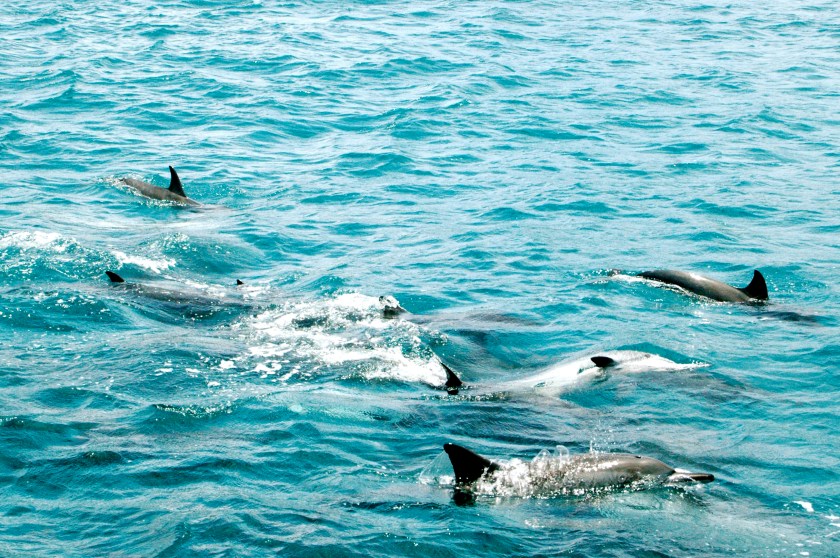
Every year, people travel to Fernando de Noronha, a group of islands off the coast of Brazil, to meet some of the archipelago’s most famous residents: spinner dolphins:

The spinner dolphin is a tropical oceanic dolphin that lives in groups numbering three to more than two thousand individuals. Of the 37 different dolphin species, it is the third most abundant in the world and is named for its tendency to shoot out of the water and complete as many as seven rotations whilst airborne.
The dolphins usually surface during boat rides, showing off their acrobatics skills as they leap out of the water and putting on a real show. The stunts they perform are more than simply fun; they’re an important form of signalling, drawing the attention of the boat, which, in turn, protects the rest of the pod from potential predators. The communication system consists of different types of jumps and beats made with the body on the surface of the water, producing turbulence when the dolphin completes its dive.
The daily routine for the spinner dolphins in Fernando de Noronha involves feeding, primarily during the night, followed by a morning relocating to the appropriately named Dolphins Bay. They arrive in the bay at sunrise and depart for various feeding areas in the afternoon.

Dolphins Bay (Baia dos Golfinhos), located off Sancho Beach, is a top destination for dolphin spotters. The bay’s waters are the calmest and deepest in the entire archipelago, ranging from 0 to 25 metres but averaging about 15 meters in the centre. The floor of the bay is composed predominantly of volcanic sands with scattered rocks and can be accessed by a single trail that offers a good vantage point from which to observe the activities of the spinner dolphins. One ideal point from which to observe Dolphins Bay is Dolphin Lookout, set 55 metres above sea level. It can be reached via a one-kilometre-long walking trail that begins in a parking lot at Sancho Bay.

This slideshow requires JavaScript.

Fernando de Noronha Marine National Park: wildlife

Fernando de Noronha in Brazil is famous for its exquisite natural environment, pristine beaches, and tropical climate where the sun shines the whole year! A paradise for scuba diving in Brazil, there are numerous things to do on the Fernando Noronha island. The wildlife of Fernando de Noronha is very rich, and one of the main attractions of the island are the Spinner Dolphins which can be seeing 365 days a year from the Dolphins Bay Viewpoint or on a Noronha boat ride. We were fortunate to spot a few other “representatives” of the archipelago’s wildlife.

This slideshow requires JavaScript.

Sunday is for food! Gastronomic event and islander cuisine.

During our visit to the Archipelago of Fernando de Noronha, we were invited to enjoy the magnificent islander cuisine, through an unique gastronomic event. This event happens every Wednesday and Saturday evenings at one of the best bread and breakfast of Fernando de Noronha called “Pousada Zé Maria. Father and son run the business, and the night event we attended was hosted and presented by Zé Maria’s son, Tuca Noronha. Our appreciation to the host, as well as to the pleasant evening among friendly companions…

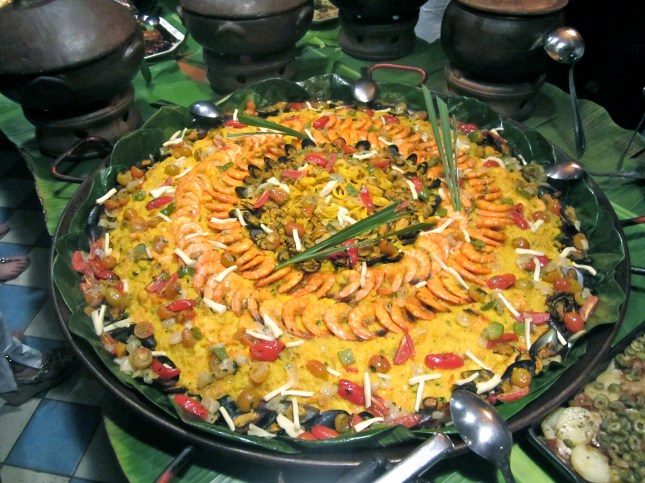
That said, the ecologically correct paradise of Fernando de Noronha offers opportunities for its visitors to be adventurous, without impacting the environment – and this concept is extended to its cuisine. Besides participating at Zé Maria’s Gastronomical Event, we also enjoyed typical food from the island at the Shark Museum Restaurant and Restaurante da Edilma (where I had shark for the first time!), and the perfect evening view at Pousada Maravilhas restaurant. The union of great food, good conversations and pleasant ambience, is the perfect combination for wonderful travel memories…

Gastronomic Event at Zé Maria’s:

Sea Food Specialty at Maravilha Restaurant:

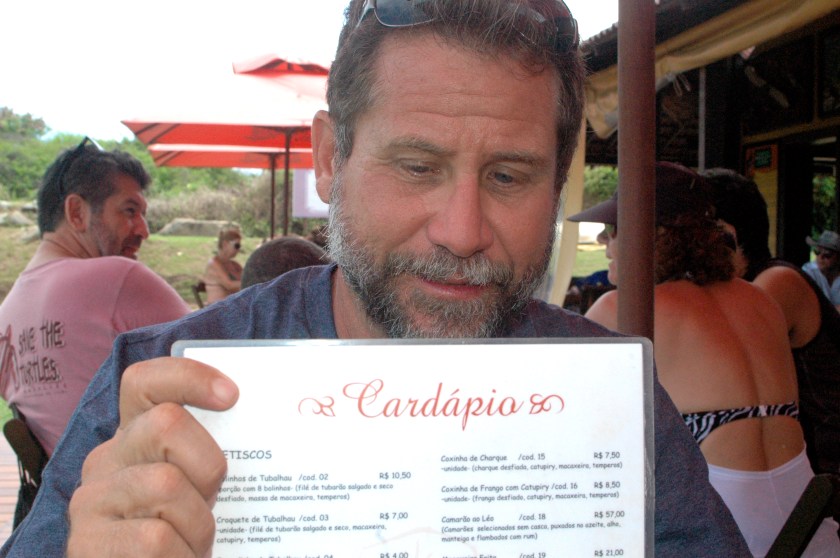
A special dish at the Shark Museum, in honor of its creator, Eng. Leonardo Veras: “Camarão ao Léo”:

Enginneer Leonardo Veras, our host.

[Português/English] Marine Turtles in Northeastern Brazil – Projeto TAMAR em Fernando de Noronha

Five of the world’s seven sea turtle species are found in Brazil.

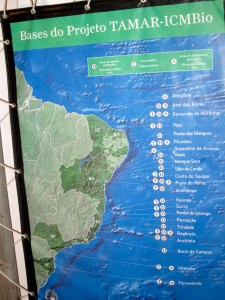
For over 20 years TAMAR project is responsible for identifying and protecting nesting beaches and feeding areas, doing research, promoting awareness and involving the local community.

Thanks to good planning, loyal sponsorship and an innovative merchandising program they are able to maintain 20 bases in Brazil. Releasing more than 600 thousand hatchlings every year, the TAMAR bases have become important tourism attractions and mean income to 1200 families.

[NOTE FROM BLOGGER] ALL THE INFORMATION BELOW IS PROVIDED BY WWF BRAZIL:
Project: Supported by WWF
Year started: 1982
Other Partners/Supporters: Petrobrás
Address: Alameda do Boldro s/no. – Fernando de Noronha – PE
Contact: Claudio Bellini
e-mail: infonoronha@tamar.org.br
more info: www.projetotamar.org.br
Area: Natural
Activities: Visit a conservation unit
Equipments: sandals, shorts, t-shirts, swimming gear, towel, small backpack, sunglasses, sunscreen
Gateway: Recife ou Natal
Near airport: Fernando de Noronha – PE
Dist. from the airport: 2 KM
Max. number visitors: 15
Min. number visitors: 2
Max. Lenght: 10 day(s)
Min. Lenght: 2 day(s)
Level: easy
Activity: Enviromental, Scientific, Social
Best time to go: February, March, April, May
Attending a night-time lecture (9 pm) at the TAMAR Institute

[Portuguese] O arquipélago de Fernando de Noronha, composto por 21 ilhas e ilhotas de origem vulcânica, está situado a 345km de Natal, capital do Rio Grande do Norte/RN e a 545Km de Recife, capital de Pernambuco/PE. É sítio de reprodução da tartaruga-verde (Chelonia mydas), que utiliza as praias arenosas do lugar para desovar entre os meses de dezembro e julho. É também área de alimentação, crescimento e repouso para juvenis desta espécie e da tartaruga-de-pente (Eretmochelys imbricata).

As praias de desova apresentam características propícias a um monitoramento diário, inclusive noturno nas áreas principais. A do Leão concentra 80% das ocorrências. As demais desovas acontecem ao longo do mar de dentro, entre as praias do Sancho e da Conceição. Cada estação reprodutiva, registra em média 100 desovas, gerando 8.900 filhotes da tartaruga verde.

O TAMAR iniciou suas atividades na região em 1984, quando o arquipélago ainda era território federal administrado pela Aeronáutica (hoje é território do Estado de Pernambuco).

Em 1986, foi criada a APA-Área de Proteção Ambiental. A praia do Leão, principal área de desova do arquipélago, tornou-se o embrião do Parque Nacional Marinho, criado por decreto federal, em 1988.

Fernando de Noronha é uma das bases mais importantes para o trabalho do Tamar.

É um verdadeiro laboratório natural, pois a transparência do mar oferece excelente condição ao desenvolvimento de pesquisas sobre a biologia e comportamento das tartarugas marinhas em ambiente natural, sobretudo debaixo d’água.

Além do monitoramento de fêmeas, durante o período reprodutivo, a base mantém um programa de marcação e recaptura de tartarugas que utilizam o arquipélago como área de alimentação, crescimento e repouso, durante uma etapa do seu ciclo de vida. Desde 1990, mais de mil tartarugas já foram marcadas pelo Tamar através desse programa, em que os pesquisadores realizam mergulho livre, autônomo ou rebocado.

Além do mais, o grande fluxo turístico que o arquipélago registra é estratégico para o trabalho de sensibilização e educação ambiental, principalmente através do Centro de Visitantes-Museu Aberto das Tartarugas Marinhas, o qual tivemos o prazer e honra de visitar durante nossa recente visita ao arquipélago. Todos os visitantes do Museu-Aberto do TAMAR recebem uma palestra gratuita sobre a vida selvagem a ser encontrada no arquipélago, assim como, são instruídos a como se comportar em frente à natureza, sem causar quaisquer impacto ambiental. Todas as palestras são às 9 da noite, e seguem por cerca de uma hora até uma hora e meia. Extremamente informativas,claras, concisas e ministradas por pesquisadores e voluntários do TAMAR. É a perfeita preparação para os que irão aventurar-se a explorar as ilhas na manhã seguinte. Nós adoramos a experiência, eu enquanto bióloga, e meu esposo, agora apaixonado pela vida marinha. Um sucesso e uma oportunidade única de vivenciar, aprender e compartilhar conhecimentos.

Weekly Photo Challenge: Contrast

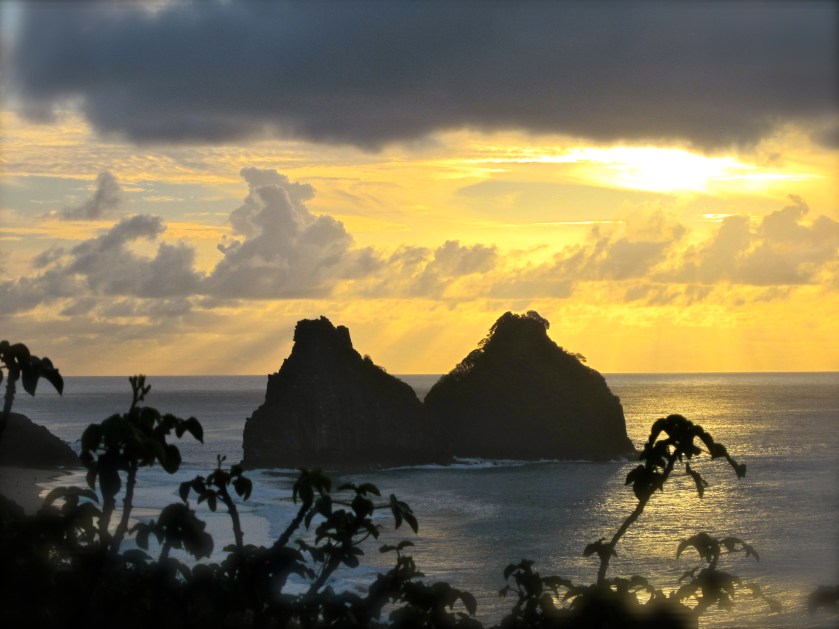
The inspiration for this week’s challenge is “Contrast”, and here I’m, sharing a very recent image that represents a lot of contrast: the end of the day, beginning of the evening; the dark colors from the previously light sky, kindly kissing the calm ocean waters, introducing the night to observers and by-passers…

The postal card for Archipelago Fernando de Noronha, in Brazil

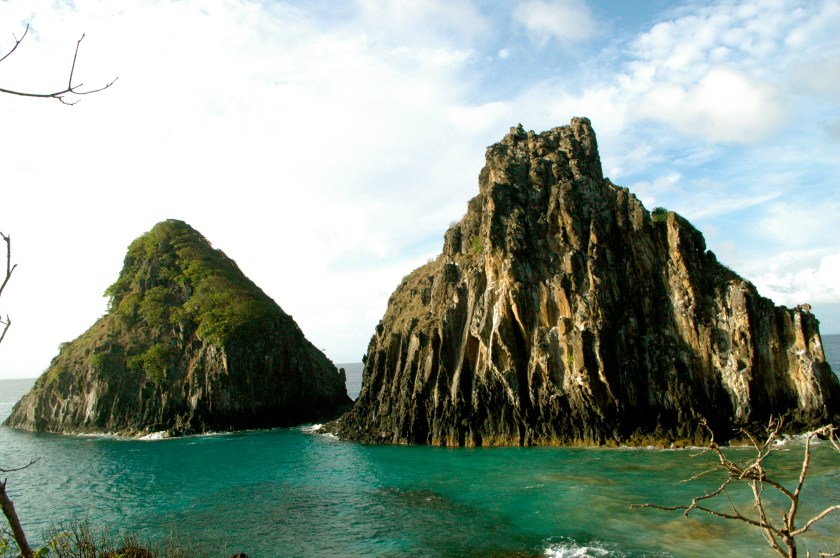
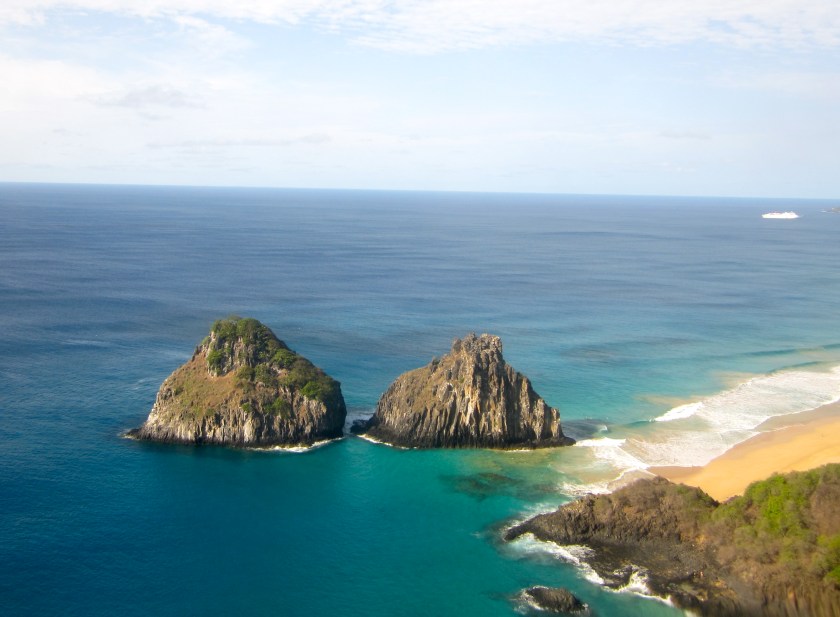
And, if you’re curious to know how this scene would look during the day, here’s another contrast: the ‘earth-colored sky’ is replaced by a paradisiac blue sky, which is reflected onto the turquoise and green waters…. from a far away view, I’m bringing you all to a closer look at the “Morro Dois Irmãos”(Two Brother’s Hill) 😮

So, do you prefer the “sunset view” or the “daytime view”?  I’m totally bias, because I’m deeply in love with the main island, but I’m leaving the question here! 😮

Related Posts from other WordPress photographers: Contrast

World Heritage Wonder: Fernando de Noronha Archipelago, Brazil

The "Two Brothers" hill - Morro Dois Irmãos, viewed from the Praia da Cacimba do Padre, FN.

Just like the AtlantisFernando de Noronha has caught the imagination of travelers for centuries and many urban myths are associated with this gloriously surreal island. With its powdery beaches, lush rolling greens and crystalline azure waters, Fernando de Noronha is a tropical paradise of sublime beauty that is steeped deep in mysticism and mystery. The archipelago – named after a 16th-century Portuguese nobleman who may never have actually set foot there – exists in the proud Brazilian imagination, as well as a beautiful group of a main island and several islets. Fernando de Noronha is, strictly speaking, an archipelago made up of one 11-square-mile chunk of volcanic rock and 20 smaller islands, three degrees south of the equator, 220 miles from Brazil’s north-eastern coast.

Discovered in 16th century, the eco-wonderland is big on conservation, thus traveling from mainland is expensive business. Fernando de Noronha has the best beaches in Brazil, as Guia Quatro Rodas Praias, Brazil’s ‘Beach Bible’, bestowed five starts to only four beaches in Brazil – and three of them are at Fernando de Noronha. One of the more popular ways to explore the island-mountain is by hiring a dune buggy [look at our photos here on the sides!], which is available easily for rent.

We would always start or days early, heading towards Lago dos Dois Irmãos, or walking down the cobblestone streets in Vila dos Remédios.

street in Vila dos Remédios
Main Church - Igreja da Conceição

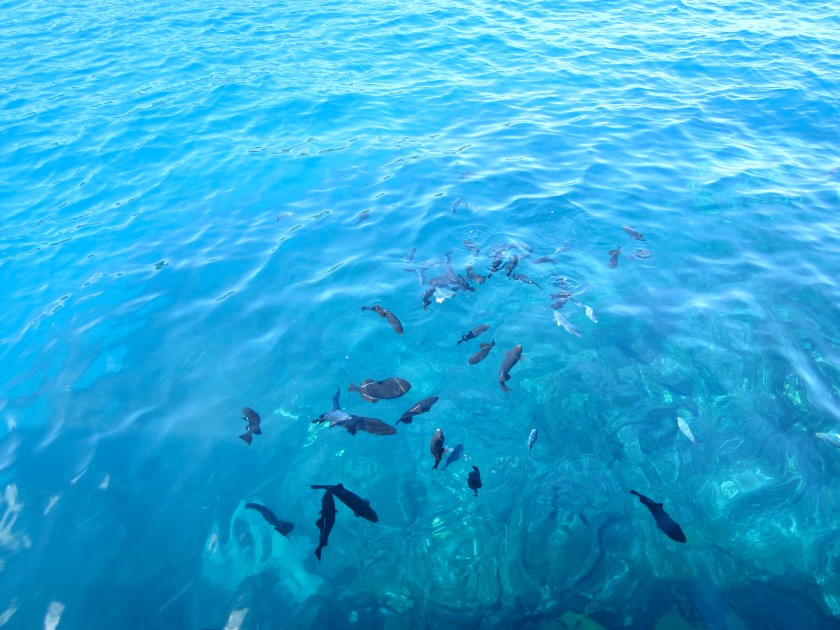
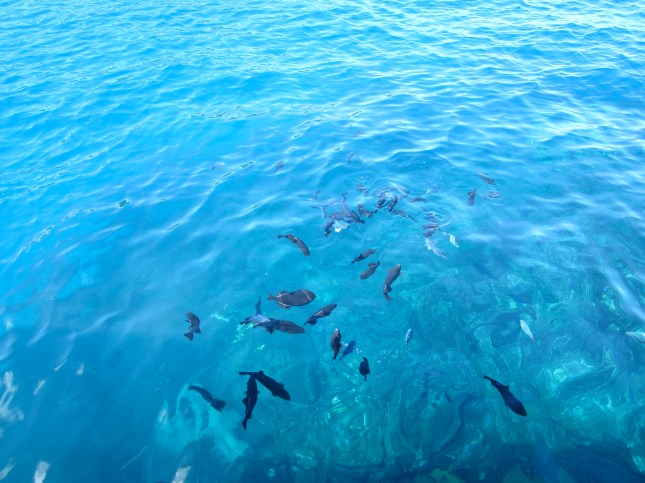
In Atalaia Beach, we were able to snorkel with fishes and juvenile sharks, checking out the swarms of hawksbill and green turtles, and also, witness rare island species like iguanas. Other adventure seekers like us, engaged in underwater activities, diving and snorkeling to experience the prolific marine life including albacore, barracuda, snappers, cangulos (fish)… An upcoming post will offer more details about our encounters with the marine and wild lives from the archipelago 😮
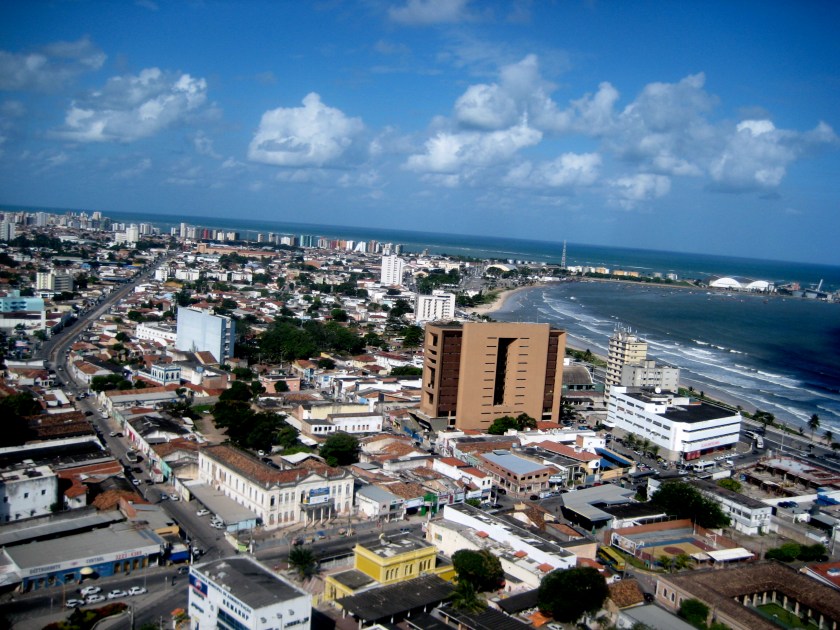
Leão, Sancho and Porcos Bay are the best beaches in Fernando de Noronha and our personal favorite is Sancho Bay as the water changes color from crystal to turquoise to emerald and there is a huge reef wall around the beach making it popular among snorkelers. These will be subject of upcoming posts, since we’re still going through our pictures, often having to bring ourselves back to our present time…

Watching the sunset behind the "Morro Dois Irmãos" (Two Brothers)
Hiking along the beach coast - Praia do Cachorro, Praia do Meio, Praia da Conceição
One of the natural wonders found during our hiking adventures - native Atlantic/Rain Forest setting

Praia da Cacimba do Padre, well-known destination by surfers, and observers

Turquoise waters
Intriguing formations among the volcanic rocks

Fernando de Noronha’s claim to fame is its diverse and rich ecosystem. And while nature lovers throng to this eco-paradise, the volcanic island with its splendid marine life, dramatic rock formations and long lazy stretches of beaches is the perfect romantic destination as well… and we can vouche for that! 😮

Searching for marine fish and dolphins

hiking couple :o
hiking couple 😮


…finally, leaving you “curious for the posts to come“, a glimpse of what we found during our eco-friendly explorative adventures: 😮

[We still need to share our experiences with the Brazilian TAMAR Project (marine turtles) and with the Shark Museum (“Museu do Tubarão”)]. Imagine!!

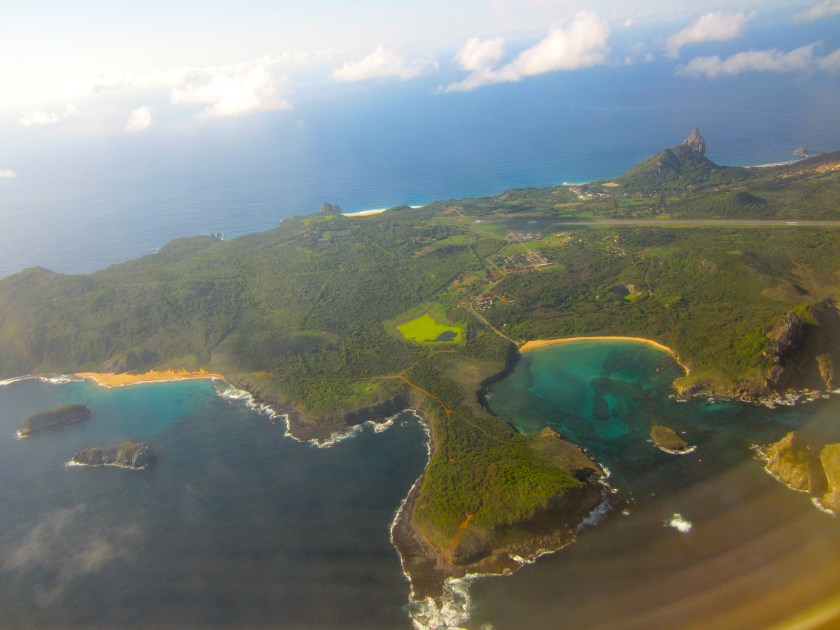
Searching for paradise: Aerial views of Fernando de Noronha Archipelago, Brazil

This is the first in a series of posts on our recent trip to the Brazilian Archipelago of Fernando de Noronha: leisure, research, adventure, photography.

Peaks of the Southern Atlantic submarine ridge form the Fernando de Noronha Archipelago off the coast of Brazil, representing a large proportion of the island surface of the South Atlantic and the rich waters are extremely important for the breeding and feeding of tuna, shark, turtle and marine mammals. The islands are home to the largest concentration of tropical seabirds in the Western Atlantic. Baia de Golfinhos has an exceptional population of resident dolphin. The Fernando de Noronha archipelago covers the majority of the main island and includes the majority of smaller offshore islands and islets. The islands are part of a large submarine mountain system of volcanic origin, which rises from the ocean floor some 4,000 m in depth. The Fernando de Noronha volcano is estimated to be between 1.8 million and 12.3 million years old. The coastline is complex, with a number of high cliffs and sandy beaches. The north-west facing shores are relatively calm, whereas the south-east shores face the predominant currents and winds and are largely rocky shores with significant wave action.

Arriving… flying along the coastline

And here, a snapshot of “who’s got an unchallengeable view” of this paradise:

The highly productive coastal waters around islands are used by many fish species for spawning and as a refuge for juvenile fish. The shallow waters also provide habitat for benthnic organisms (such as coral, sponges and algae). Oceanic islands therefore play a key role in the reproduction and dispersal of marine organisms, providing a staging point for the colonization of other coastal areas and the surrounding ocean. There are less than 10 oceanic islands in the South Atlantic and the Fernando de Noronha Archipelago represents almost 50% of the islands in terms of surface area. As the site makes up such a large proportion of insular South Atlantic coastal area, it is an important repository for the maintenance of biodiversity for the entire South Atlantic basin.

Fernando de Noronha is also the only know location for Insular Atlantic Forest – a subtype of Atlantic Rainforest. To date over 400 species of vascular plants have recorded, including three endemics. The archipelago also contains the sole oceanic mangrove in the South Atlantic. [Source: UNESCO/CLT/WHC]

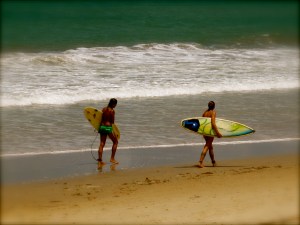
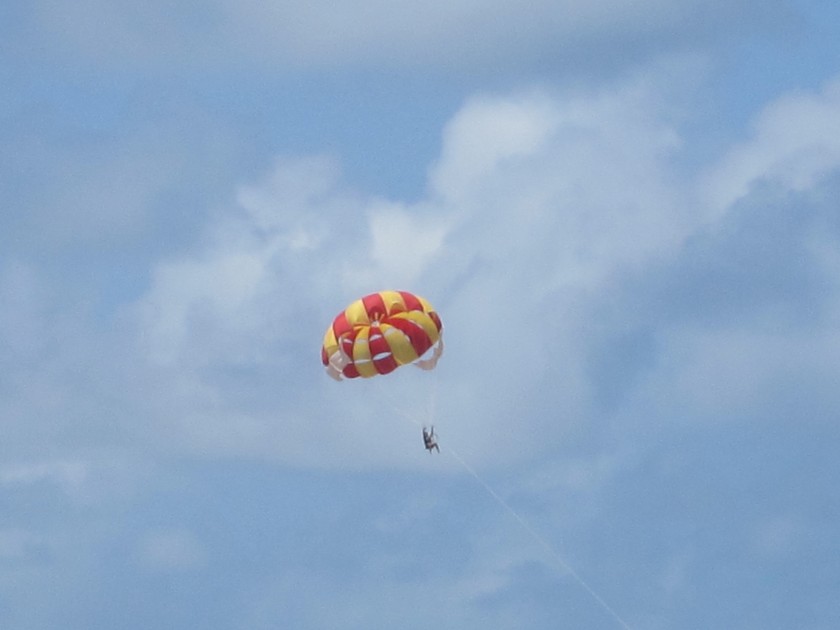
Water sports abound in Maracaipe Beach…

"silence.. the only sound here is from the waves..."

A great alternative to escape from the urban madness, enjoying the warm weather and calm waters


Acadêmicos do Samba, de Olinda, Pernambuco

It’s official: Brazilian Carnival is over. Done. Finished. Has come and gone…

The crude reality is knocking on everyone’s doors – tomorrow is Monday! A true and full working day… [snif, snif] The first real working/school day in a long time (at least, in a week, at some places!)

The year has officially began (as any good Brazilian would know, nothing really happens in Brazil before Carnaval! 😮 ) Now, the only comfort left is the thought of another holiday, maybe some long weekend, a full day at the beach, or, at least, the perspective of a Sunday barbecue, with some good music and positive vibe. With this spirit, here is a bit of remembrance: a Samba Group, from our neighboring city, Olinda. Let’s all enjoy, and walk together towards “reality Monday”! 😮

Acadêmicos do Samba, from Olinda, Pernambuco
Tambores de carnaval, Samba de Roda & Sambão!

Acadêmicos do Samba honoring the Escola de Samba Mangueira, with Sambão!

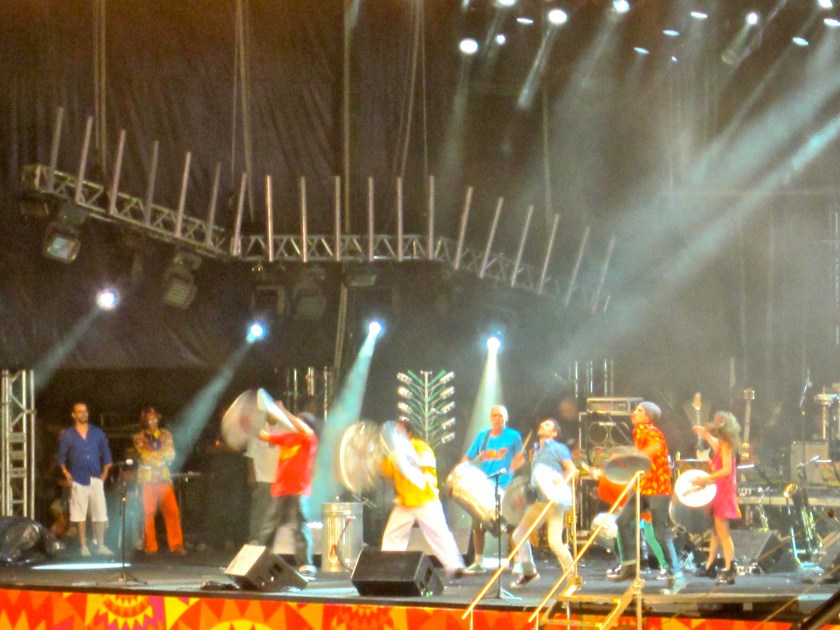
STOMP STAGE EXPERIENCE: Carnaval 2012, Brazil


Stomp (USA) during the Official Opening of Carnaval 2012, at Marco Zero, Recife, Brazil.

Date: February 17th, 2012. No heavy rain would have stopped them! 😮

The giant dolls parade

Venue & Date: streets of Olinda, Carnaval Monday, February 2012.

The wonderful thing about Brazil is that Rio and Salvador aren’t the only places to experience the Carnival. Smaller towns like Olinda and Recife are as imbibed with the effervescent spirit of the Carnival steeped in strong Afro-Brazilian and Indian traditions. Most tourists head to Rio, but Olinda and Recife are extremely popular among Brazilians, as well as, among tourists.

Visitors and families (like ours) headed this Carnaval Monday for an encounter with the so-called Giant Dolls, an old tradition featuring 9 feet tall wood and fabric dolls, throughout the historic cobblestone streets of Olinda. The most famous doll is the “midnight man” or “homem da meia-noite”‘ coming to life at midnight on carnival Sunday, and officially kicking off the giant dolls party.

Parading bands, under the sound of Frevo and samba, accompany the excited crowd, until it’s finishing line, where all the 50 giant dolls, resembling famous people, celebrities, politicians, meet and dance with the cheering public, for hours!

Heading to the Parade

Where it all begins: waiting for the giant dolls to come!


The Maracatu Dancers, a “former president”, a “current president”, more giant dolls and pure joy!

This slideshow requires JavaScript.

2012 Street Carnival: Heads with Style

Carnival Heads: Color & Style!

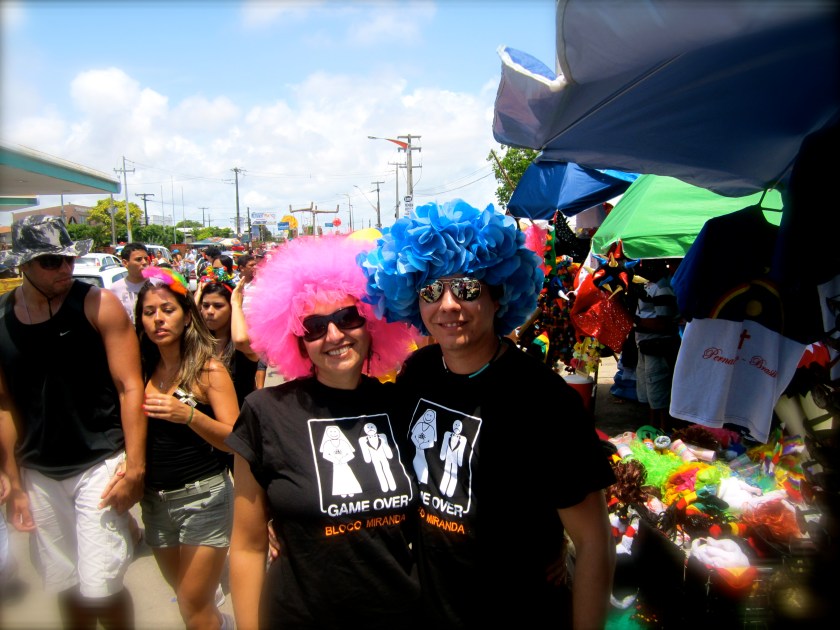
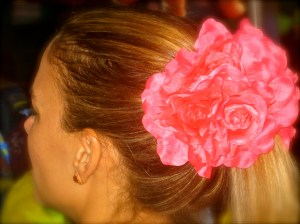
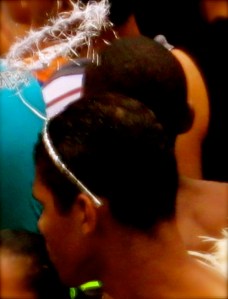
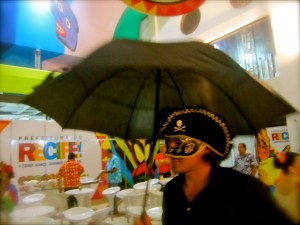
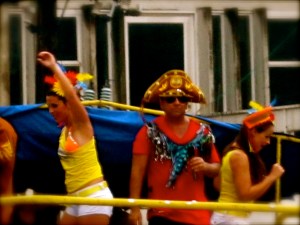
Carnival head decorations, flower arrangements, head pieces, tiaras, hats, colorful hair, any excuse is a good one to come out, taking over the streets, showcasing unique designs when it comes to fun and stylish costumes…

Why not, extend the costumes to “over the head”? 😮 Too many different styles to choose from: conservative, modern, over-the-top… Pick your favorite, or simply enjoy the endless creativity displayed during the most democratic carnival in the world!

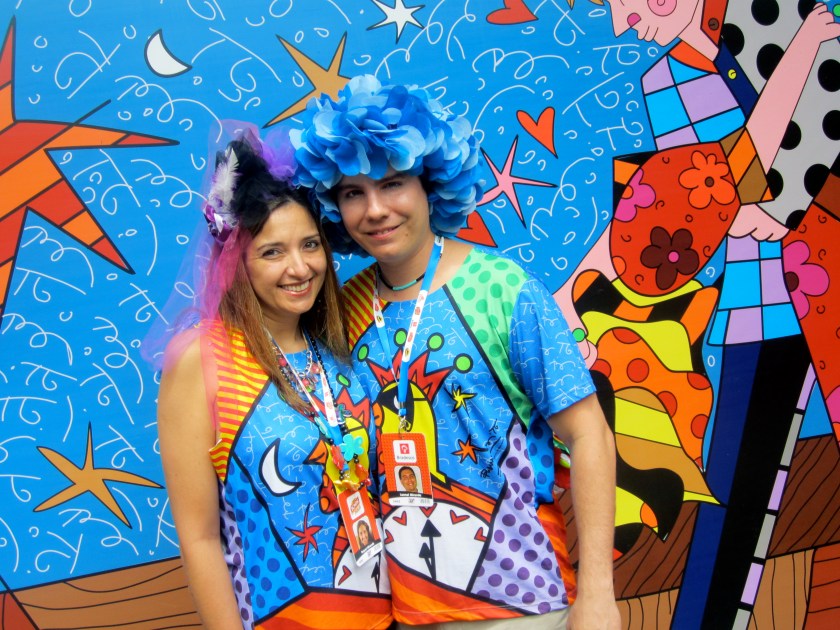
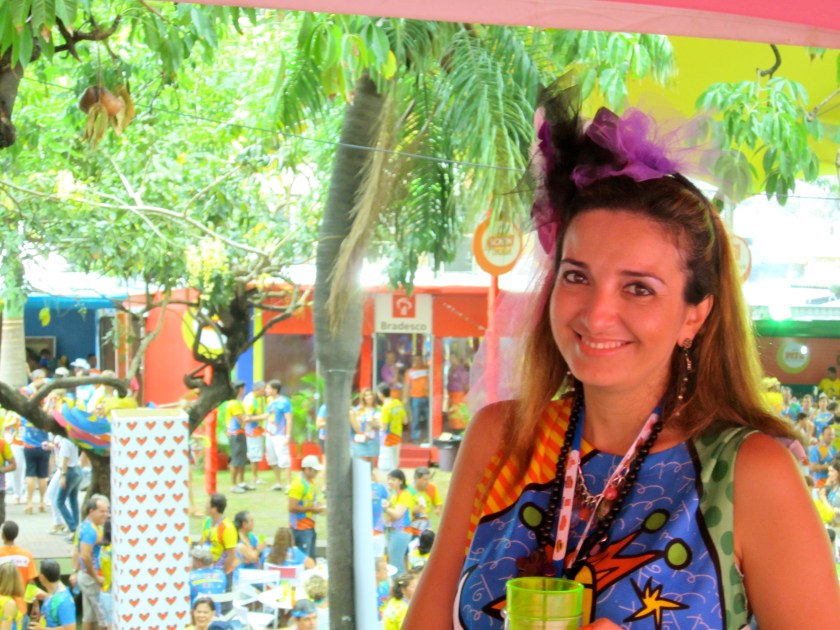
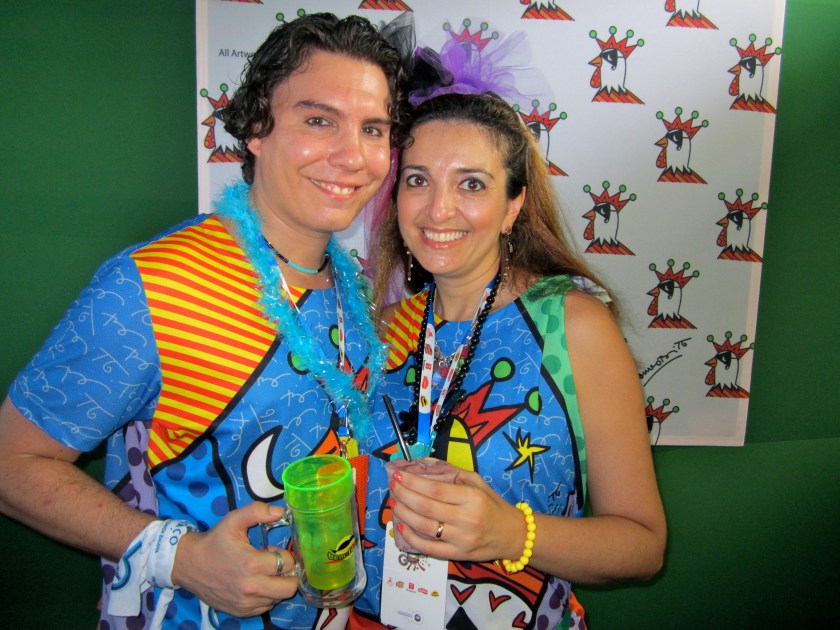
…and of course, as part of this list, our “own” head decoration: when it comes to having fun during carnival, this couple here likes to dare: every day, a different outfit, a different piece of art decorating our heads! 😮

"Married Couple", first night of Carnival
Second day of Carnival: Blue Happiness with Galo da Madrugada

Scientific investigation during Carnaval 2012…

All for Science… good investigation! I for one, just watching and taking notes of the results!

The Materials & Methods

The Conclusion: [science can definitely be fun!]

“Summer Britto” 2012: Galo da Madrugada with art!

“Summer Britto”. Romero Britto is one of the most successful artists of our time. This pop artist uses vibrant colors and bold patterns as a visual language of HOPE and happiness. He has been credited with the largest public art installation in Hyde Park history, and exhibited at the Carrousel du Louvre Museum – an art that appeals to all. what about carnival? The designed outfits for camarote globeleza, as well as tote bags and decoration… All in one place, all during Galo da Madrugada!
É esse o tema do camarote mais disputado do Galo da Madrugada, o Globeleza 2012, na esquina da Dantas Barreto com a Guararapes, na Praça da Independência (Pracinha do Diário). E como o próprio nome diz, é o artista plástico pernambucano, radicado em Miami, Romero Britto, quem inspira e assina toda a identidade visual do espaço, do layout da camisa, com estampa de um Galo, às bolsas do kit-convite, passando por suas típicas ilustrações coloridas e desenhadas exclusivamente a decoração, que terá concepção de Romildo Alves.

E aqui, os “pequenos Globais”… já prontos para a sua festa!

This slideshow requires JavaScript.

[300th post] Bora Bora, but not the French Polynesian island!

What a great way to celebrate the blog’s 300th post! [WOW, it’s amazing how much you can do, when you put your heart to it!] We did not have to cross the seas to find this natural beauty. Not an island, though, but for sure, a paradisiac stop! The name: Bora Bora, but in Brazil!

This slideshow requires JavaScript.

Getting ready for Carnaval! {or Esquentando os Tamborins Part II}

So, here we are, a week before the largest celebration this country is capable of displaying: Carnival or, how we say it Brazil, “Carnaval”… Well, not a week from today, but from last Saturday, February 11th, when these pictures were taken from our veranda… People really can’t wait for the real fun to be here…

streets taken by the crowd
The parade moves on, enchanting tourists and beach-goers!

Environmentally Protected Area (APA): Reserva Biológica do Altinho, Pernambuco, Brazil

Be aware: Cute Animals Ahead!

Find below images from our visit to the “Environmentally Protected Area” of Altinho, a park embedded in the middle of the State of Pernambuco, in the Agreste Region of the country, showcasing the characteristic Caatinga vegetation (desertic, hiperxerophyla, lacking leaves trees). Not far from our home, some good 160 km, or 260 miles – a good weekend getaway!
The protected park borders the (famous for seasonal festivities and their arts & crafts) cities of Caruaru and São Caetano; Cupira, Panelas and Ibirajuba; Agrestina and Cachoeirinha. The park is surrounded by several rivers, but mainly by the Una and Ipojuca rivers. The rivers lead into the Atlantic Ocean, creating deltas, which are a great spot for calming and relaxing baths…

Entering the Park:

Área de Proteção Ambiental, Reserva Ecológica do Saltinho, Pernambuco
Where the Una river meets the Atlantic Ocean
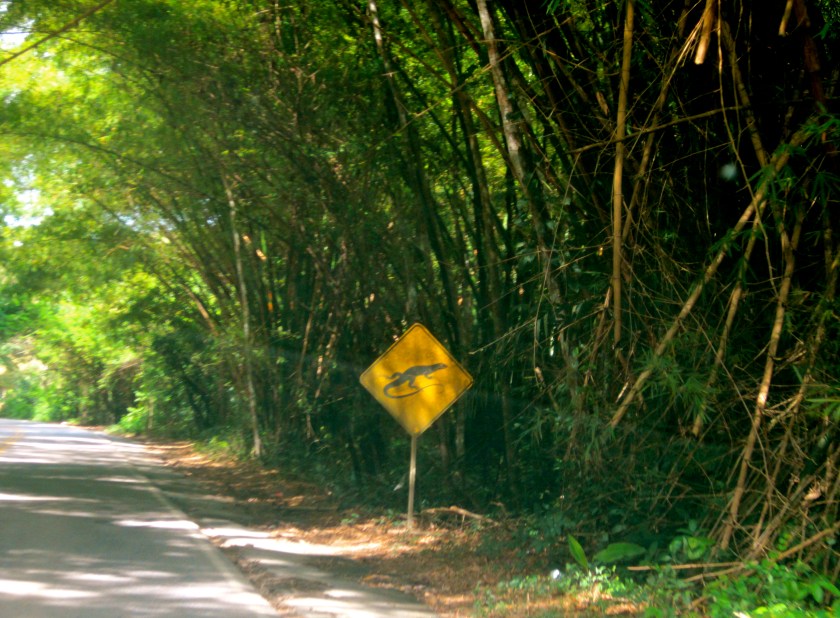
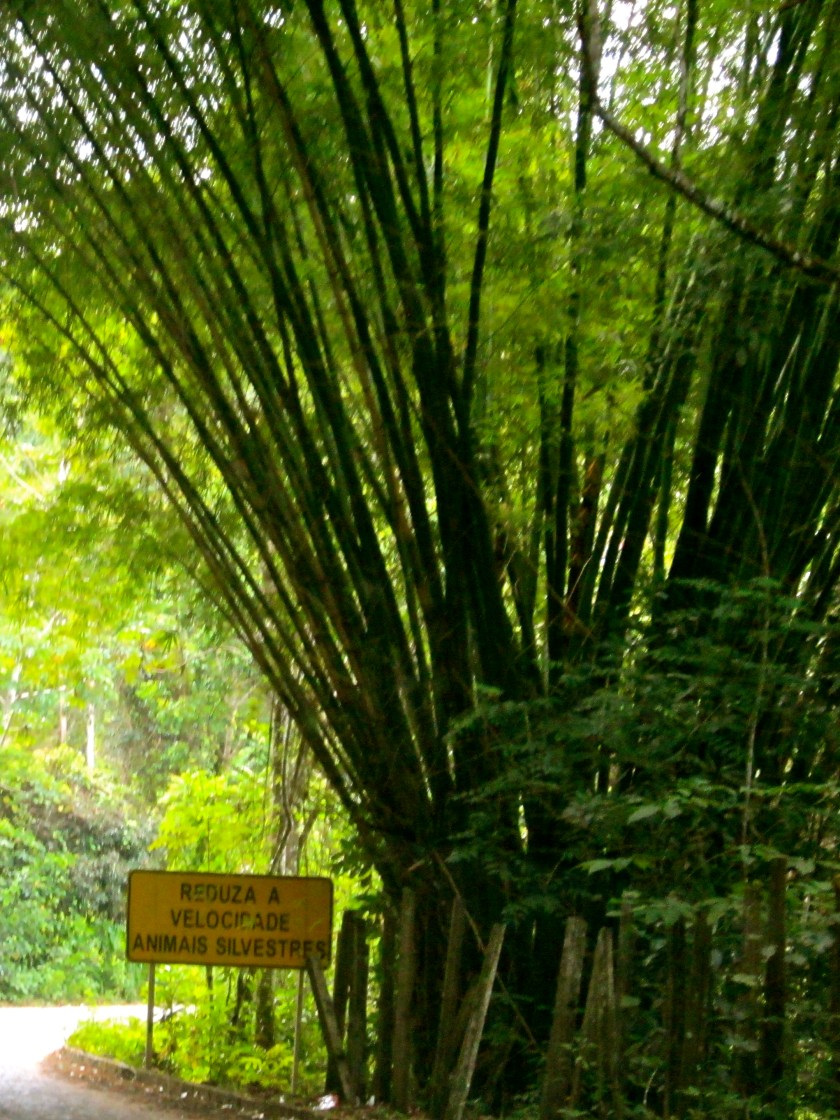
Caution with the animals crossing the road

Exploring one of the largest coral reefs in the world: Carneiros Beach, Pernambuco, Brazil

Waving along the Southern Coast of Pernambuco, Carneiros Beach (“Praia dos Carneiros”) discreetly possesses all the requirements to become a paradise. Sea of calm and crystal clear waters in shades of blue, palm trees, coral reefs and even a river that ends into the ocean.

Rustic bungalows have been built and decorated to meet the needs of comfort, and privacy, so tourists, or vacationing families may enjoy the peaceful setting that reigns in this paradise, still respecting the environment, its unique features and learning about preservation and ecological conscience. [The ‘talk’ about the beach’s intriguing bungalows is reserved for a ‘soon-to-come‘ post!]

bidding farewell...

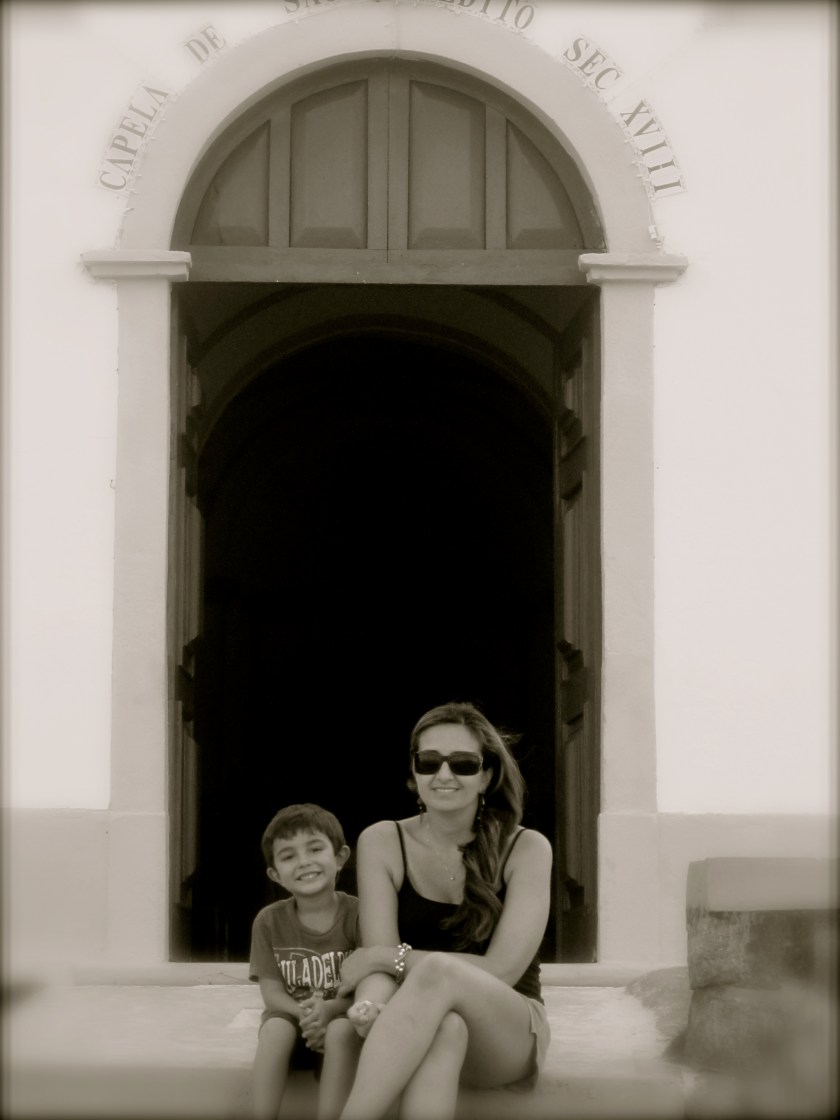
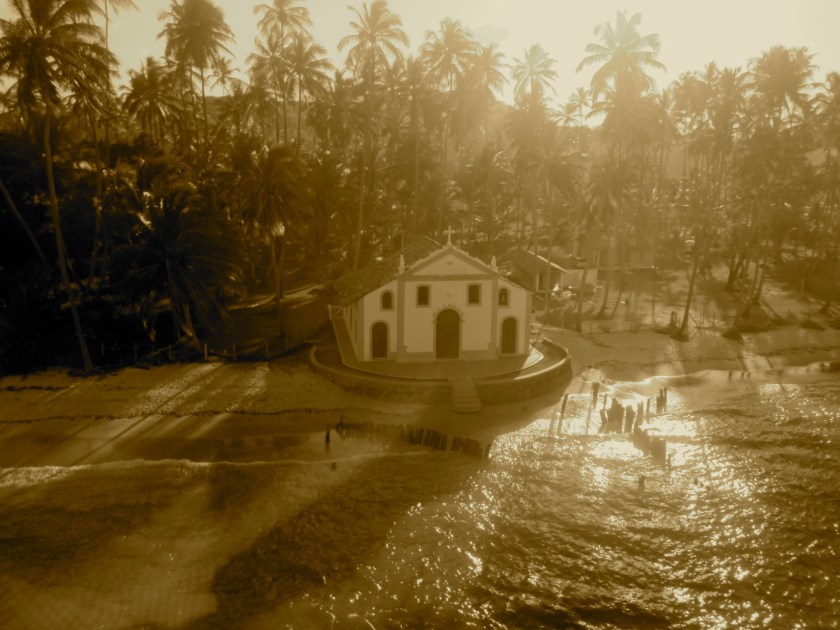
XVIII Century São Benedito Chapel at the sea shore of Carneiros Beach, Northeastern Brazil.

The walk along the beach, leading to the church front

The front of the Secular Church

The young learns about the secular traditions

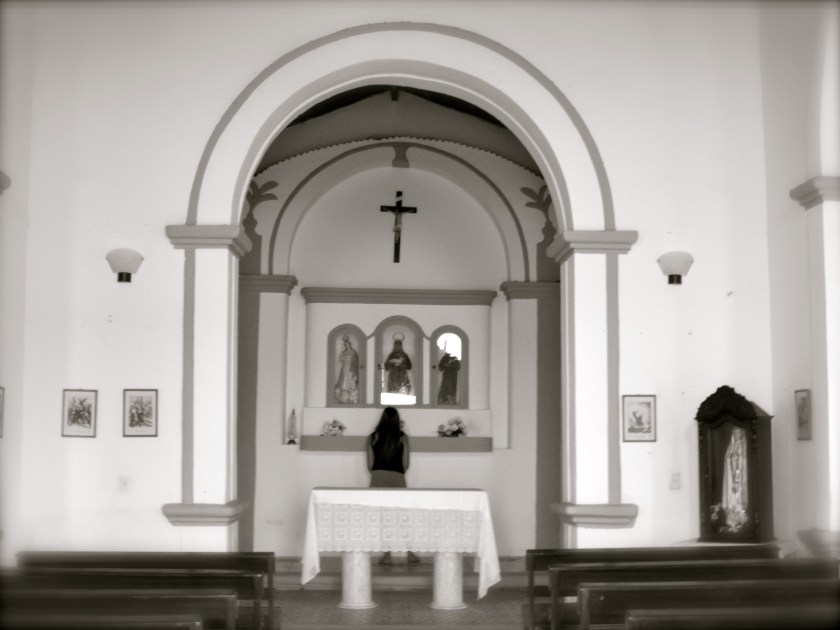
Inside the Church

Church window looks out to the beach front

Bidding farewell to the Church and getting ready to walk back along the beach

mother and daughter

one more photo before leaving the church area

“Twenty Days to Carnaval”, says the beer can!

That’s right! And who says that is a beer can… What?! 

Wait… it’s a bit more than a gigantic beer can on the side of the road… it’s a traffic engineering device… hiding not one, but two traffic-monitoring camera… very clever! 😮

A very “shy” pair of cameras silently watch and monitor the street traffic…

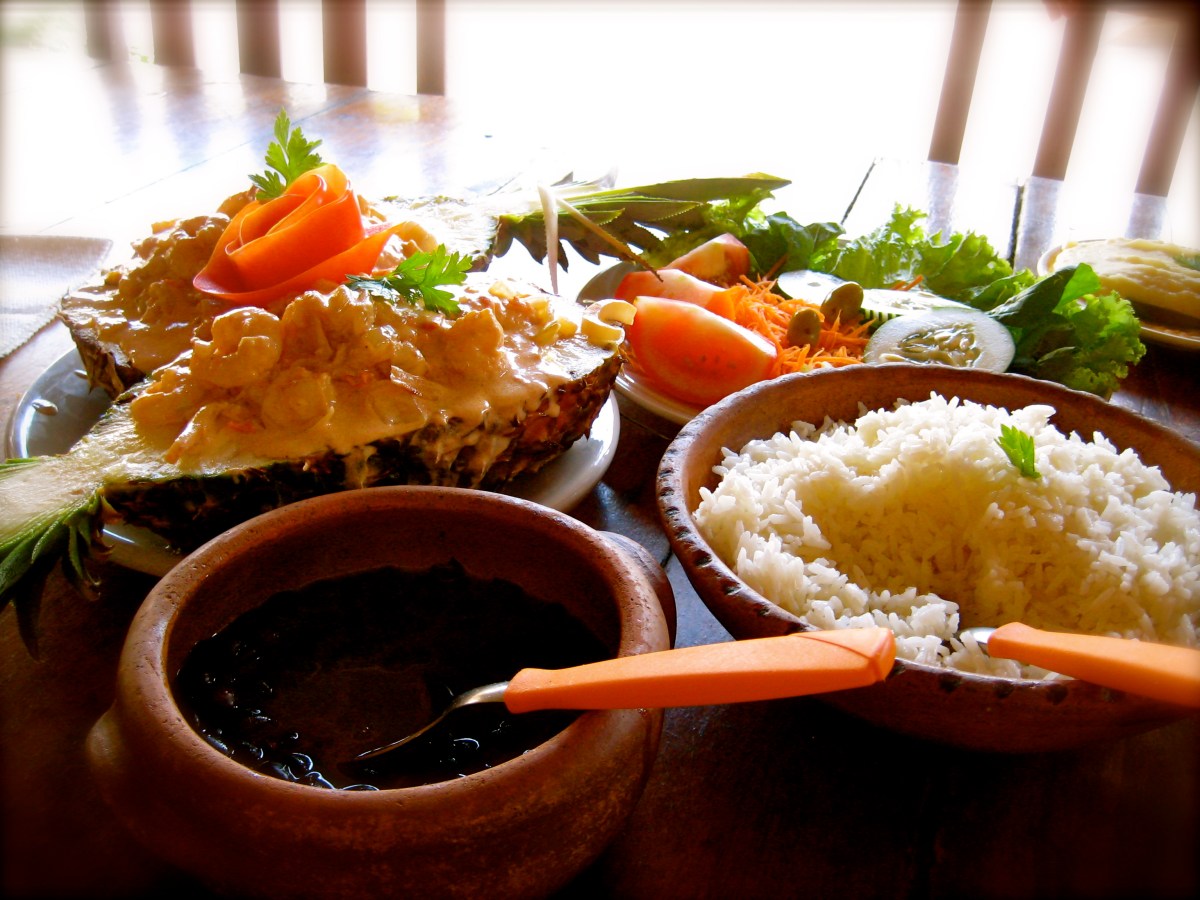
Spicy shrimp casserole with curry and coconut milk

Sunday is the best excuse for a great family lunch! Easy, quick, colorful and delicious!

I just started playing with the ingredients, trying different variations of the shrimp casserole, or Brazilian moqueca – a very popular dish among the members or our household, and responding to the husband’s request, here it is, “step-by-step”, or better saying, “image-by-image”… 😮

First, get all the fresh ingredients (or as fresh as possible, but hey, nothing against a convenient bottle of garlic powder!) together. The shrimp needs to be peeled and cooked. After being cooked, it could be stored in the freezer, if needed. Able to get a some organic vegetables (tomatoes, bell peppers, onions), as well, and they looked beautiful!

Sunday is the best excuse for a great family lunch! Easy, quick, colorful and delicious!

Where hot sauce and curry meet... heaven!

I just started playing with the ingredients, trying different variations of the shrimp casserole, or Brazilian moqueca – a very popular dish among the members of our household, and responding to the husband’s request, here it is, “step-by-step”, or better saying, “image-by-image”… 😮

First, get all the fresh ingredients together (or as fresh as possible, but hey, nothing against a convenient bottle of garlic powder!). The shrimp needs to be peeled and cooked. After being cooked, it could be stored in the freezer, if needed. I was able to get a some organic vegetables (tomatoes, bell peppers, onions), as well, and they looked beautiful!

Starting with some heat… curry & hot sauce:

Can you see the heat in action? look at the color of these bad boys!

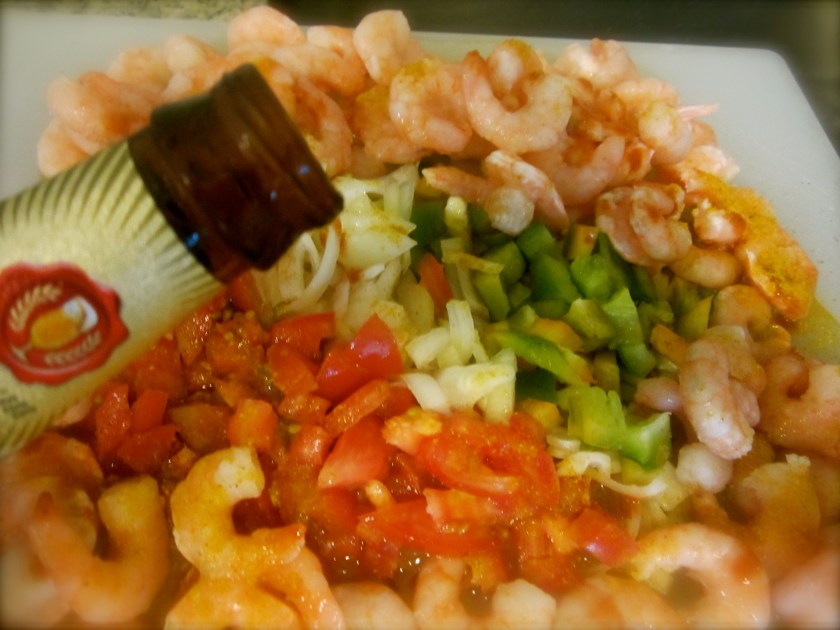
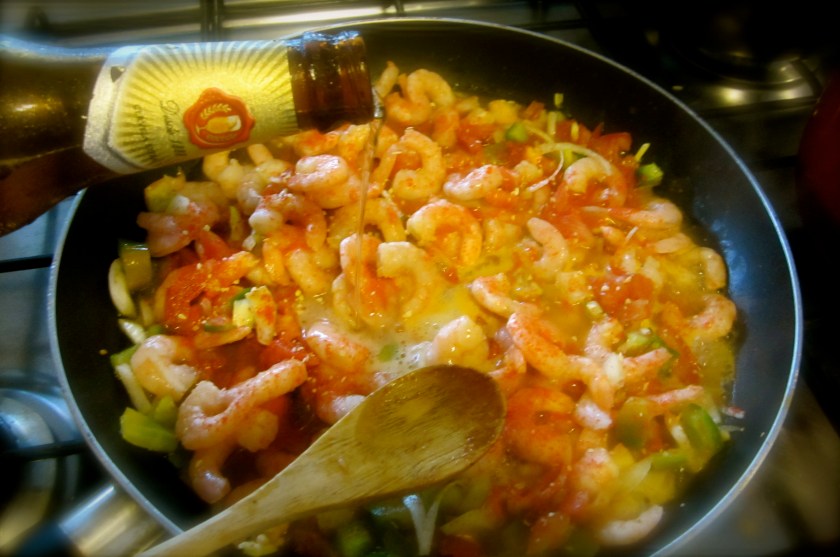
Adding a very important ingredient to the marinating mix: beer!

Simmering all the ingredients.. allowing for all the flavors to rejoice!

...don't forget to add a bit more "liquid" to the mixture...

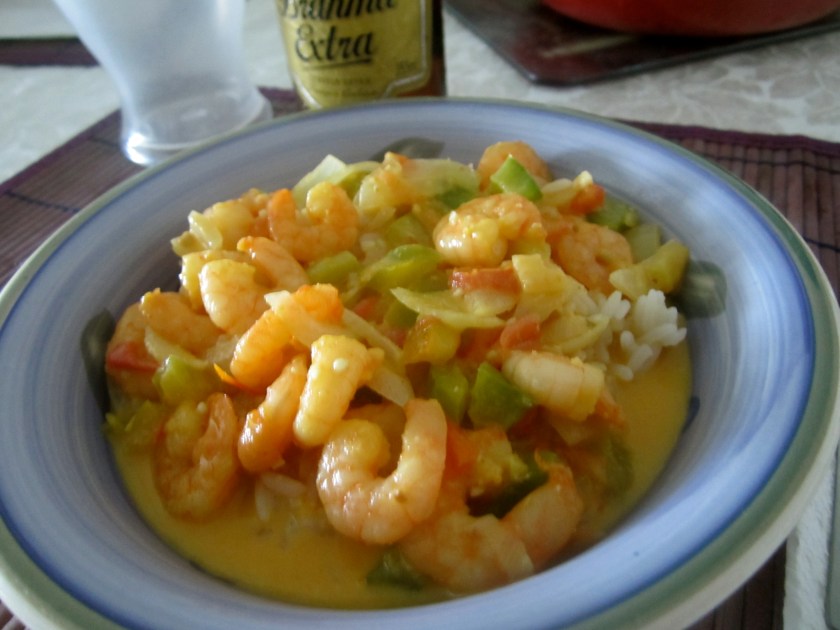
Bringing in another surprising ingredient: coconut milk – very popular member of the traditional Brazilian cuisine!

How should it look? Pretty much like this! 😮

Now, a quick look over the side dishes:

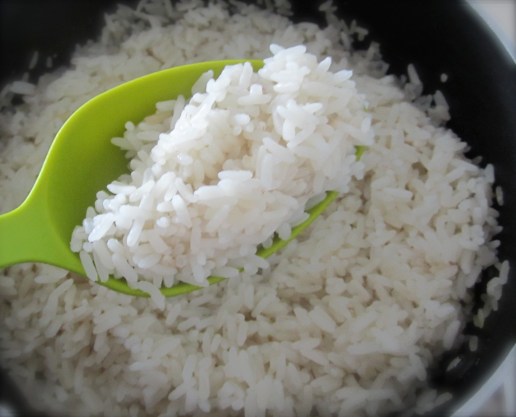
While you were working your magic with the shrimp casserole, rice was being cooked! It's simple like that!

Rice is done!

quick, easy, fluffy! like gradma's homecooking!

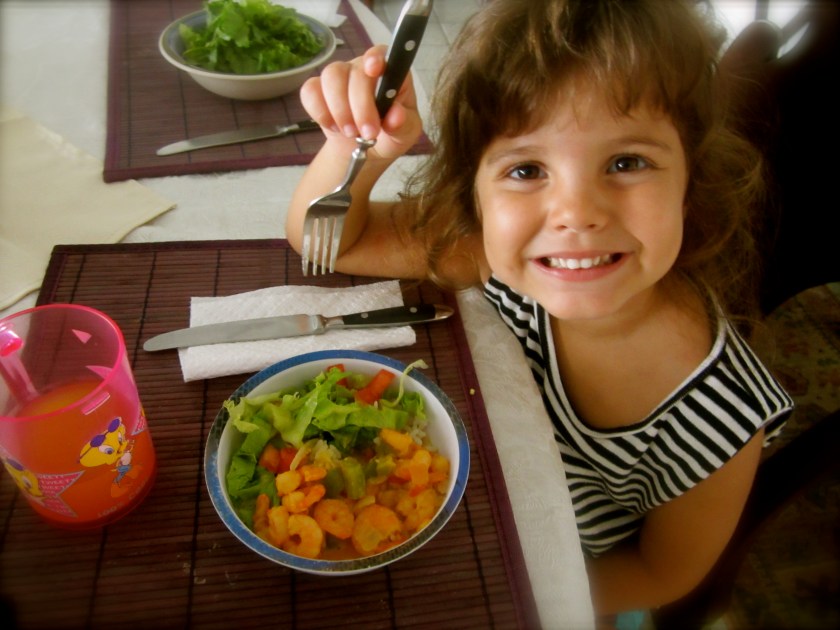
Another side order: organic veggies make a great and tasty salad!

Husband’s plate: [accompanied by his ‘favorite’ cold drink!]

Two of my most demanding [and happy] customers! Happy Sunday!

Eighteen months in Brazil: helping other expat women adjust to new lifestyle (sharing tips).

We’re on countdown mode!

Time has gone pretty fast, but I feel like we still have a lot to do, a lot to see and experience… Lot of planning on my horizon, as well… we’re less than six months before we pack our bags and head out, in preparation for our next assignment. In the meantime, found some time to do some research, ask around and prepare a simplified list of “tips” for expat women living or planning on moving to Brazil.

FIRST: A great blog, listing several expat experiences in Brazil, thank you, TheTaoofMe for working on this fantastic list! 😮

source: The Economist Magazine

We’re on countdown mode!

Time has gone pretty fast, but I feel like we still have a lot to do, a lot to see and experience… Lot of planning on my horizon, as well… we’re less than six months before we pack our bags and head out, in preparation for our next assignment. In the meantime, found some time to do some research, ask around and prepare a simplified list of “tips” for expat women living or planning on moving to Brazil.

FIRST: A great blog, listing several expat experiences in Brazil, thank you, TheTaoofMe for working on this fantastic list! 😮

* * Resources for the “cosmopolitan woman”  * *

American Society of Sao Paulo
http://www.americansociety.com.br/
The Society exists for the following purposes: To promote and maintain friendly relations between the United States of America and Brazil, to provide for the celebration of days of remembrance such as Thanksgiving, Fourth of July, and other holidays traditional to United States citizens, to receive and entertain officials and visitors from the United States, to aid United States citizens and their immediate families who are destitute or have insufficient resources to meet emergencies or other essential needs, to aid and assist newly arrived United States citizens by providing information which helps orient them in their new surroundings, to promote charitable, social, cultural, and athletic activities of interest to the U.S. community in São Paulo.

Associação Beneficente Internacional Women’s Club Porto Alegre
http://br.geocities.com/iwcpoa/
Participation in our Club has given the members the opportunity to meet an international group of people with varied interest, customs, cultures and languages, to learn more about Porto Alegre and the Brazilian way of life. Some have found that special friend to help through the difficult adjustment in a new country.

International Newcomers Club – Rio de Janeiro
http://www.incrio.org.br
The International Club of Rio (InC) is a non-profit organization comprised of individuals from the local and expatriate English-speaking communities.

International Women’s Club of Paraná
http://www.iwcpbrasil.com.br
The aim of the club is to provide opportunities to meet informally, exchange ideas and make new friends as well as helping newly arrived international families settle more easily in their new life. The club is open to expatriate women and their families that are new to Brazil, Brazilian women who have lived abroad for at least three years (within the last 10 years) and (English-speaking) Brazilian women whose husbands are foreigners.

International Women’s Club Porto Alegre http://br.geocities.com/iwcpoa/

Macaé International Women’s Club (MIWC)
http://www.miwc-br.org
A non-profit, volunteer organization offering friendship, guidance and service to women establishing residence in Macaé and surrounding areas. Furthermore the Macaé International Women’s Club provides opportunities for charitable activities and humanitarian assistance to our community.

Newcomers Club – Brazil
http://www.newcomersclub.com/br.html
An English-speaking group that is designed to give you the opportunity to meet and develop friendships with others who live in the same area.

The American Society of Rio de Janeiro (AmSoc Rio)
http://www.americansocietyrio.org/amsoc/default.asp
This organization celebrates American traditions, hosts themed parties, and supports local charitable projects. The group is open to all nationalities and offers opportunities to volunteer, meet new friends, and network through group events, including a Speaker Series. Their Ambassador program links new members with those who have lived there for many years.

Got kids in School?

I grew up here! 😮

American School of Brasília http://www.state.gov/m/a/os/1527.htm

American School of Campinas (EAC)
http://www.eac.com.br
pre-K to 12, co-ed
Follow the American curriculum. Recognized by SACS (Southern Association of Colleges and Schools) and have an excellent program of studies. We have in our community children from all over the world.

American School of Recife http://www.ear.com.br/

Note: worked here for over a year. If you’ve got any questions about the school, and believe I could offer any assistance, feel free to drop me a line! :o

American School of Rio de Janeiro http://www.earj.com.br/

Escola das Nacoes Brasília http://www.edn.org.br/

International School of Curitiba http://www.iscbrazil.com/

Pan American School of Bahia http://www.paspanthers.org.br/

St. Paul’s School Sao Paulo http://www.stpauls.br/

The American Elementary and High School Sao Paulo http://www.graded.br/

The American School of Belo Horizonte http://www.eabh.com.br/

Tip Toe Alphaville’s Montessori School &
Discovery Alphaville’s Elementary School Sao Paulo
http://www.tiptoeschool.com.br/

For now, we’ll keep enjoying the journey! 😮

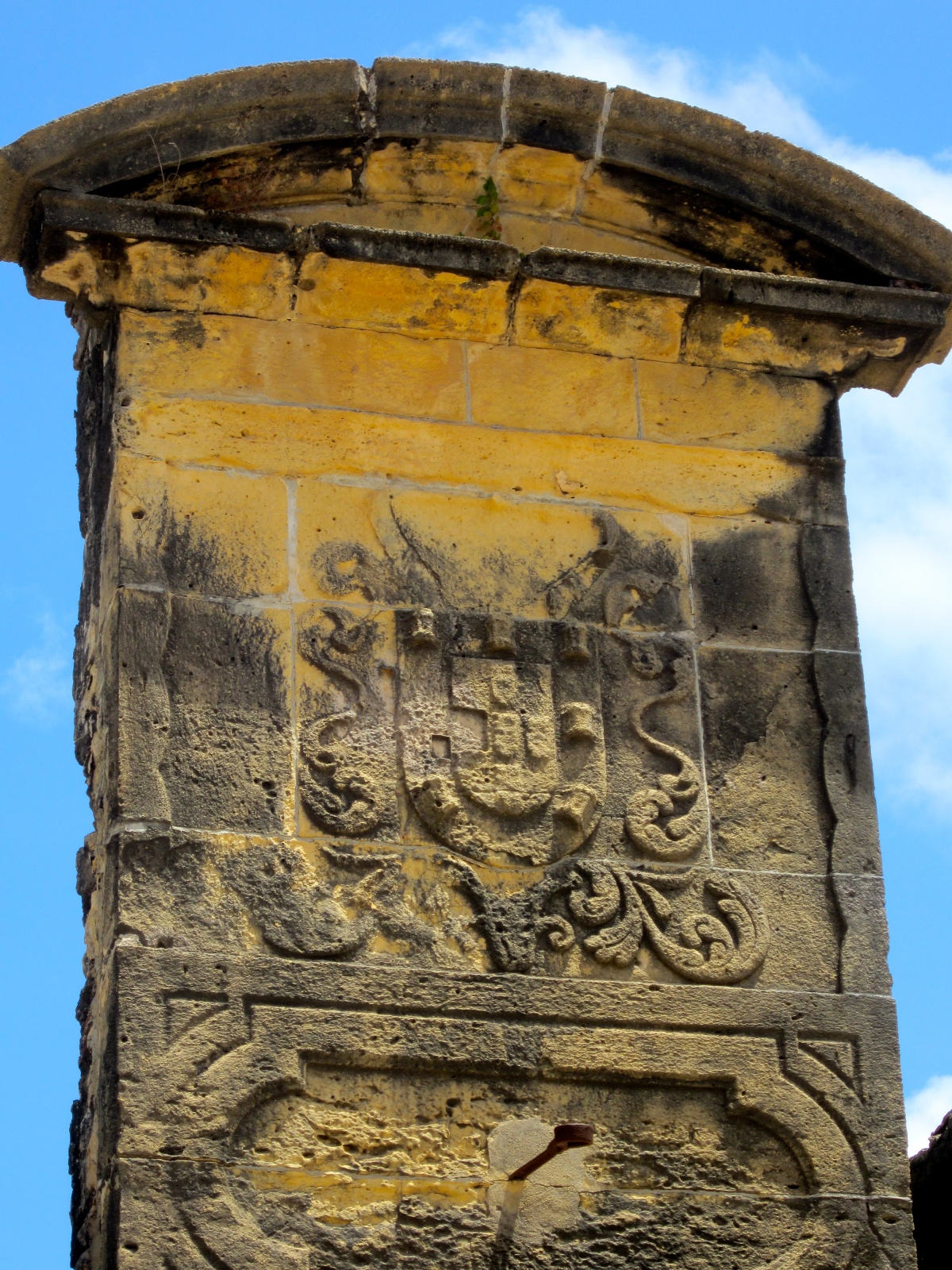
Snapshots from Fort Orange (Dutch Brazil), on Itamaraca Island.

Another day trip endevour, getting to explore our surroundings, and offering our family an opportunity to have fun, enjoy quality time together, and learn more about the local history, geography and social arts.

A bit of historical background, first, bringing everyone to the same page: 😮

“The Fort of Santa Cruz de Itamaracá, popularly known as Fort Orange (“Forte Orange” due to the Dutch Colonization of the Pernambuco territory), located on Itamaracá Island (the word “Itamaraca” means rock that sings, in Tupi-Guarany native language) on the north coast of the state of Pernambuco in Brazil.

In the context of the second Dutch invasions in Brazil, it was originally a small island (now lost) in front of the tip of the Southeast Itamaracá Island, where the bar dominated the southern channel of Santa Cruz.

It was started from May 1631 as a fortification campaign by Dutch forces (Barretto, 1958:133), under the command of Steyn Callenfels and received the name Fort Orange, in homage to the House of Orange-Nassau, which then ruled the Netherlands.

It was garrisoned by a detachment of 366 men under the command of the Polish Captain Crestofle d’Artischau Arciszewski. This effectively resisted the Portuguese forces commanded by Conde of Bagnoli, who defeated (1632), withdrew abandoning its artillery: four pieces of brass brought from Arraial Velho do Bom Jesus. This position formed the basis for the conquest of the island of Itamaracá, defended by the forces of Salvador Pinheiro. After this achievement (1633), the fort was repaired and expanded.

Another day trip endevour, getting to explore our surroundings, and offering our family an opportunity to have fun, enjoy quality time together, and learn more about the local history, geography and social arts.

A bit of historical background, first, bringing everyone to the same page: 😮

“The Fort of Santa Cruz de Itamaracá, popularly known as Fort Orange (“Forte Orange” due to the Dutch Colonization of the Pernambuco territory), located on Itamaracá Island (the word “Itamaraca” means rock that sings, in Tupi-Guarany native language) on the north coast of the state of Pernambuco in Brazil.

In the context of the second Dutch invasions in Brazil, it was originally a small island (now lost) in front of the tip of the Southeast Itamaracá Island, where the bar dominated the southern channel of Santa Cruz.

It was started from May 1631 as a fortification campaign by Dutch forces (Barretto, 1958:133), under the command of Steyn Callenfels and received the name Fort Orange, in homage to the House of Orange-Nassau, which then ruled the Netherlands.

It was garrisoned by a detachment of 366 men under the command of the Polish Captain Crestofle d’Artischau Arciszewski. This effectively resisted the Portuguese forces commanded by Conde of Bagnoli, who defeated (1632), withdrew abandoning its artillery: four pieces of brass brought from Arraial Velho do Bom Jesus. This position formed the basis for the conquest of the island of Itamaracá, defended by the forces of Salvador Pinheiro. After this achievement (1633), the fort was repaired and expanded.

In this structure, Maurice of Nassau reported:

“(…) Inside the bar [of the island of Itamaracá] presents the first strong Orange, situated on a low sand separated from the mainland by a creek, which is fordable low-water mark. This fort dominates the harbor entrance, since such vessels entering have to pass before him the shot gun. It is square with four bastions [the vertices], and lately has been raised and repaired, but almost no gaps, or stockade or palisade, which is necessary to make, and should widen the gap and surround the outside with a counter-scarp.(Nassau, Maurice of.’Short Address. January 14 in 1638.)

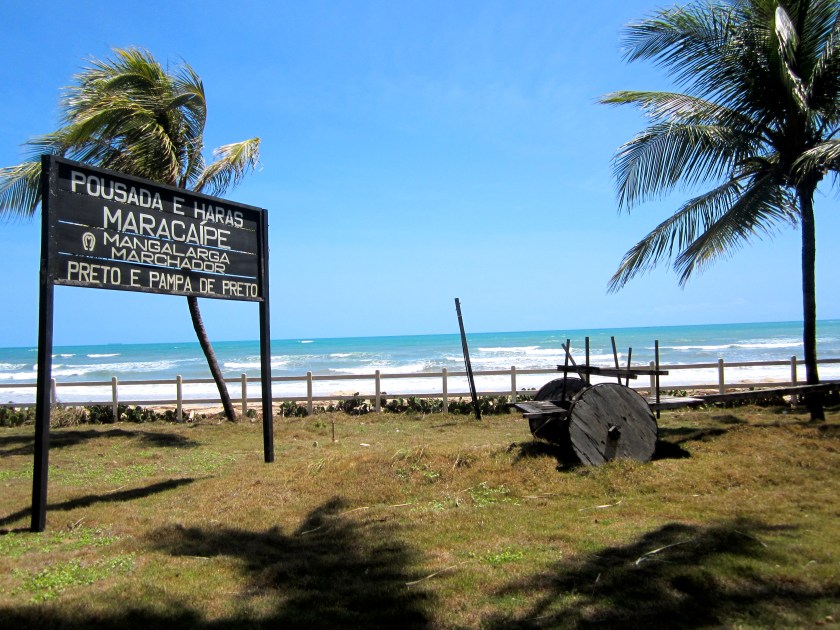
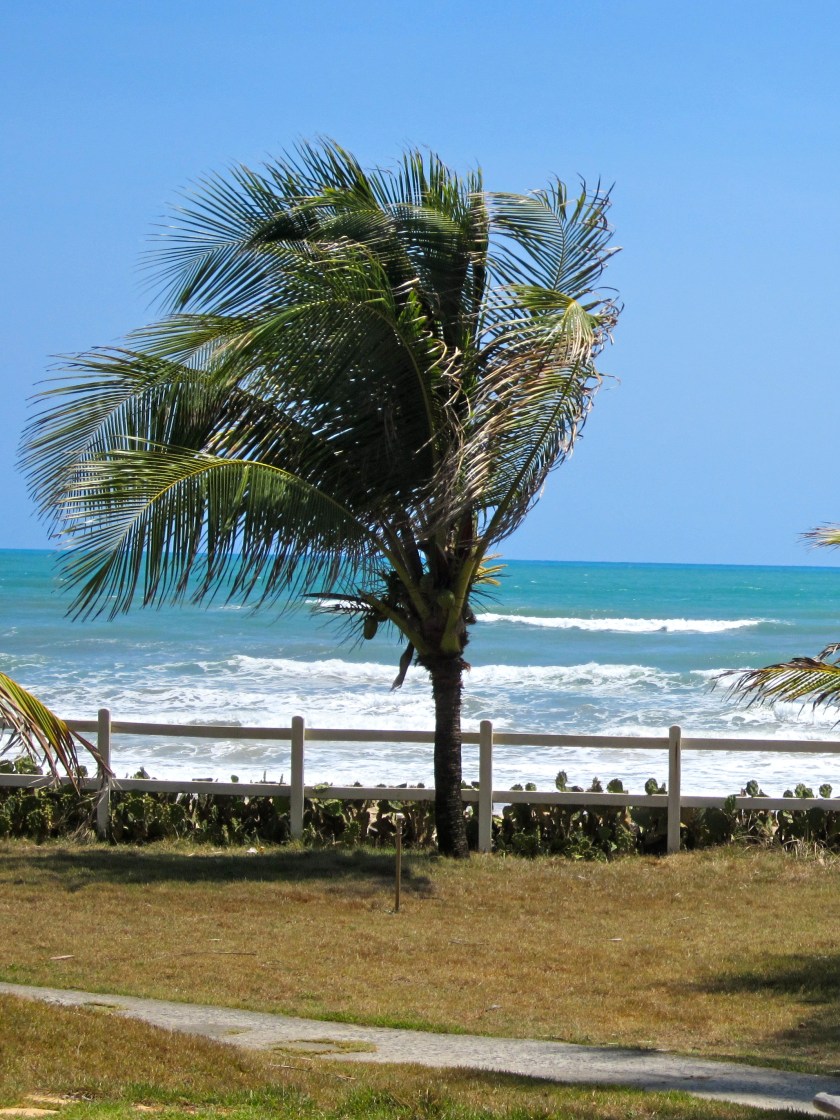
Snapshots from Maracaipe Beach, Pernambuco

Preserve este paraíso. Não deixe nada além de pegadas, não leve nada além das lembranças.”

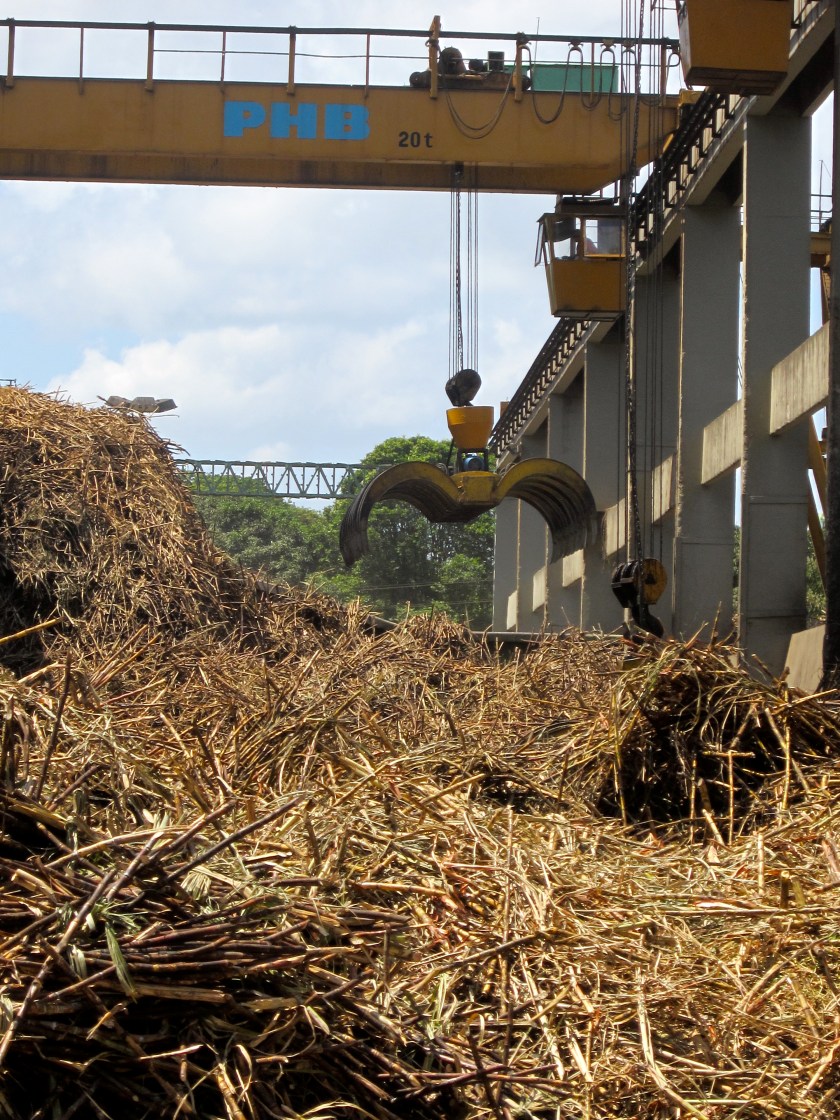
Snapshots from typical sugarcane farm in Brazil

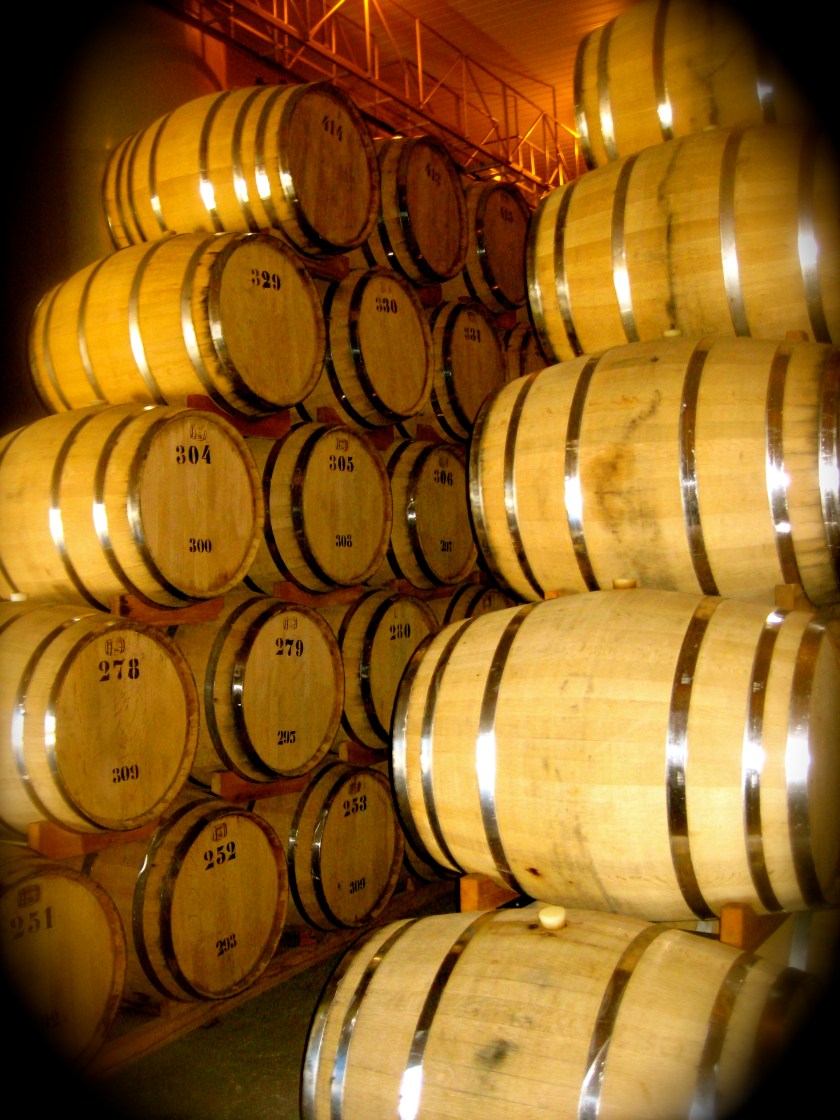
Sugarcane products include table sugar, falernum, molasses, rum, cachaça (a traditional spirit from Brazil), bagasse and ethanol.

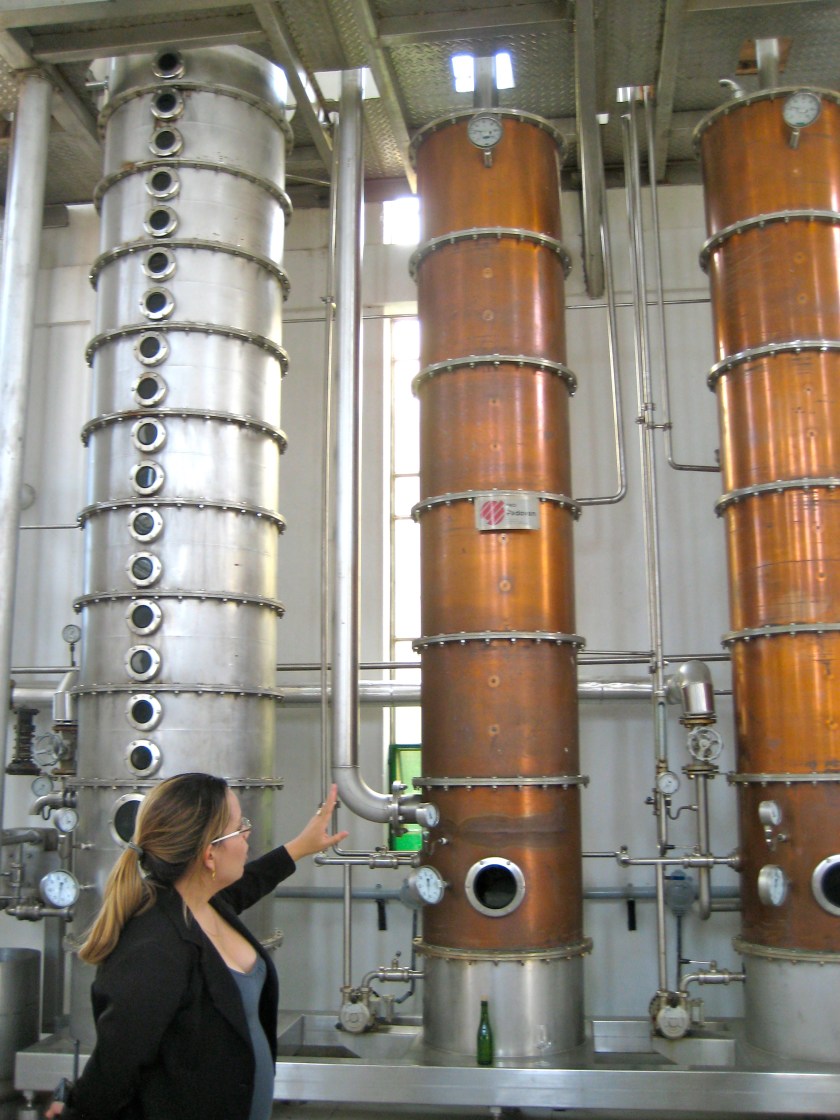
Photography: Sharing some images from recent visit to a traditional sugarcane farm, and its corresponding mill, in the Northeastern region of Brazil.

[From Wikipedia] ”Sugarcane is an important industrial crop of tropical and subtropical regions and is cultivated on close to 20 million hectares in more than 90 countries (according to FAO). Sugarcane products include table sugar, falernummolassesrumcachaça (a traditional spirit from Brazil), bagasse and ethanol”. 

Sugarcane is a renewable, natural agricultural resource, providing not only sugar, but also, biofuel, fibre, fertilizers and a myriad of by-products/co-products, ecologically sustainable. Molasses, sugarcane’s main by-product, is the raw material for alcohol-based industries. Excess bagasse is now being used as raw material in the paper industry, and its use as a potential fuel alternative, has been considered in recent years.

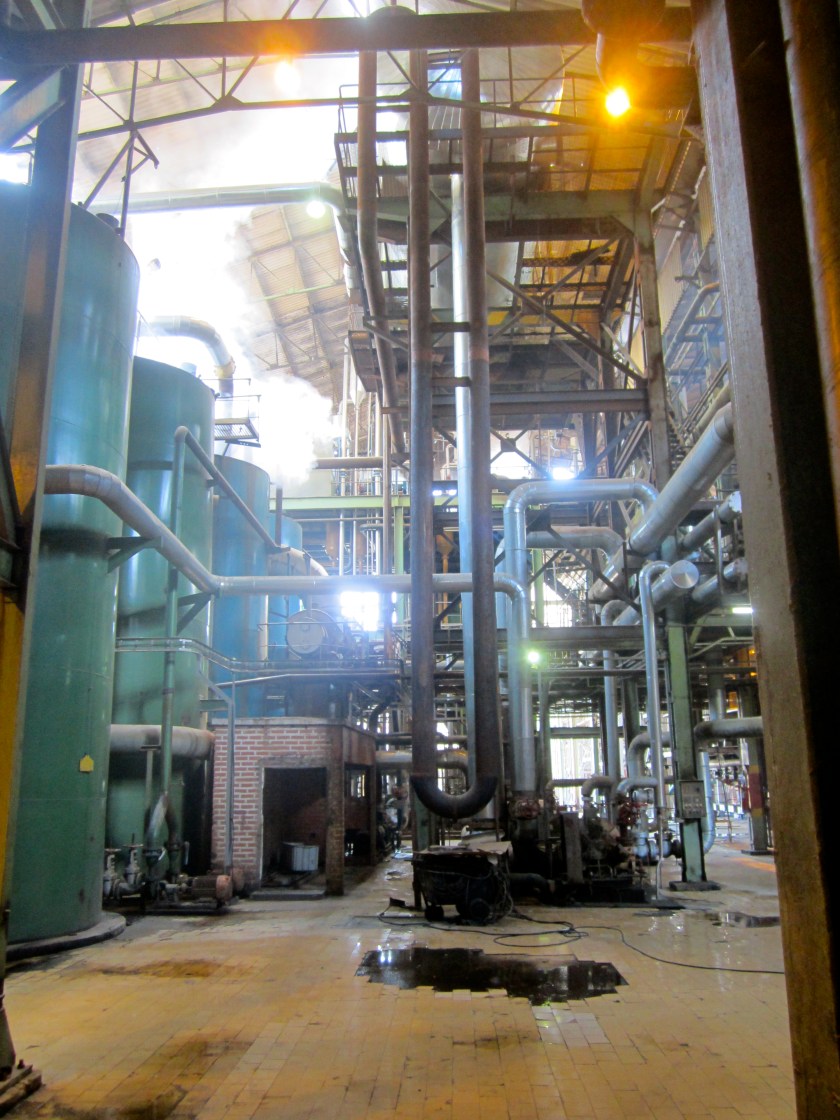
Some images were taken during the flyover, before arriving at the farm, while others, came through the visit to its grounds, the mills, main installations and sugar processing steps. Enjoy this “sweet” journey!

Arriving at the sugarcane farm:

Visiting the sugar cane plant:

Beginning the process of collection, extraction, refining:

general view
"Casa Grande" (owner's house)
old manual mill

it's always nice to live close to work! 😮


A little gift, to bring home…

hummm... sweet!


Departing…


Touring the city of Igarassu, home of Brazil’s oldest church (circa 1535).

Igarassu is one of Brazil’s oldest settlements, located in the island of Itamaraca (“rock that sings” in Tupi-Guarany language) and is full of rich cultural heritage, including the oldest church in Brazil, which dates back to 1535.

The Itamaraca Island is connected to the continent by a bridge, and a short trip there will take you to an enchanting paradise of warm, calm ocean waters and coconut tree forests. One of the singular beauties of the island was already featured here, when our family took a boat trip into the mangrove scenario

The Lima-Miranda family is curious and adventurous: in one single day, we visited the city of Igarassu, and its famous church, the original Dutch Fort (“Fort Orange”), and had time and energy to spend through the intriguing branches of mangrove trees, covered with budding oysters and fresh water crabs! All this is described throughout the blog – if one’s got time and interest to search for! 😮

Today, I’m sharing the images of the Church of Saints Cosme and Damião, built in 1535, in the city of IgarassuPernambuco is Brazil’s oldest church (Roman Catholic):

The Manatee Project (Projeto Peixe-Boi), Itamaraca Island, Brazil

What we do if we’ve got a holiday/day off right in the middle of the week? We get out of the house, hauling the 3 kids around! This time, our family decided to take a day trip to a nearby island, named Itamaraca (“rock that sings” in Tupi-Guarany language – there’ll be a later post about it!)

The island of Itamaracá, located 40 km from Recife, is separated from the continent by the Jaguaribe River. It has calm beach waters, with coconut trees, natural swimming pools, reefs, sandbanks and a fort (originally built during the Dutch Colonization Period), Besides the cultural and historical features, its ecological reservations with native forests, the island shelters the Manatee Preservation Center.

The native name for the manatee is “peixe-boi“, an enormous creature that intrigues any curious souls – especially, our toddlers’ curious eyes and minds!

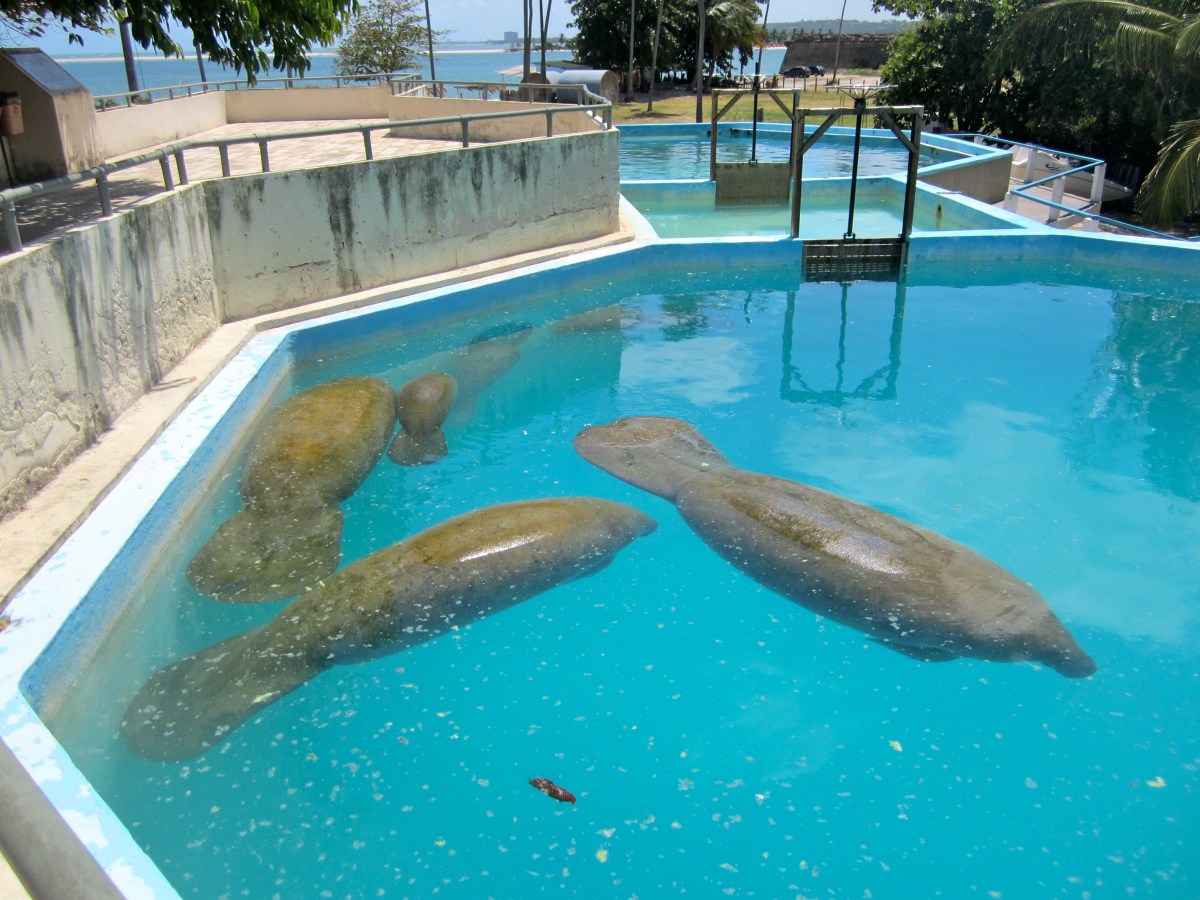
Centro de Preservação do Peixe-Boi” (Manatee Preservation Center) – is open for visitors from Tuesday to Sunday, from 10 am to 4 pm, it is an excellent opportunity to see the manatee so closely, this exotic sea mammal..


“We’ve got the power!” Women scientists in Brazil punching above their weight, in technology.

Resultado do edital Futuras Cientistas
FU TU RE SCI EN TIS TS

The original idea for this project came from the joint interest of the Brazilian government to establish innovative ways to stimulate the participation of young adult women in Science and Technology. Different partnerships have been established since then, and now, high school students, and teachers from public schools in Brazil are having an unique opportunity. They’re the pioneers of an age (thanks, Giovanna Machado!) – women coming from limited-resorces settings are been offered the chance to learn and work in science, thanks to the largest Center for Technology in the North-Northeastern regions of Brazil, CETENE. CETENE is a research centre developing technological innovations for the development of the North-Eastern region of Brazil. It is the North-Eastern branch of the National Institute of Science and Technology of the Ministry of Science and Technology. They have an institutional network in the North East and rest of the country. They have a biofactory (Biofabrica) of scaled up production of sugar cane, pine-apple, banana, orchids, flowers and new development of other materials. The biodiesel unit is operational and a new, larger one is under construction. The network Rede NanoCETENE is linked to the nanotechnology and electron microscopy lab (LAMM). Research fields include nanobiotechnology and nanostructured materials. This network is open to anyone who is interested in cooperation, also with Europe. The focus is on applying natural resources of the North-Eastern region of Brazil.

Get ready: we're coming!

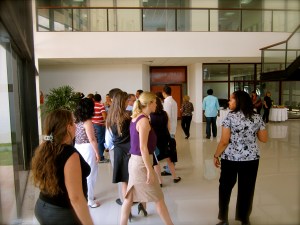
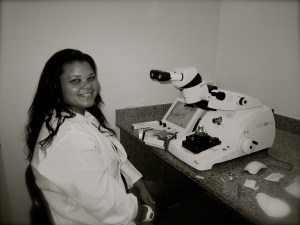
This month, the Center of Technology received the visit of 8 US women scientists, who came as part of this project for “Future Scientists”, which offered me the opportunity to get to know a bit more about the innovative work that’s been carried out at CETENE. See below some of the images from our visit, as well as the guest participants, from different research institutes in the USA, with different backgrounds, but all of us sharing the same goal: improving the participation of women in Science & Technology; recognizing the work that’s already been done, and preparing the future generations for an equal and fair tomorrow… 😮

Guests/Visitors:

1-Lauren Armstrong – PhD candidate in chemical engineering
Nanotechnology for the United States Army, New Jersey

2- Candace Caroll, PhD – Postdoctoral fellow
Biochemistry at St. Jude’s Hospital, Tennessee

3-Parinaz Massoumzadeh, PhD – Researcher
Radiology at Washington University, Missouri

4-Ofelia Olivero, PhD – Associate Scientist
Cancer biology and genetics at (NIH), National Institute of Health, Maryland

5-Amelia Patrick, MS – Structural and civil engineer for Walter P Moore, Texas

6-Erin Pettit, PhD – Assistant Professor
Geophysics and glaciology at University of Alaska, Alaska

7-Donnette Sturdivant, MS – Environmental Engineer
Air quality monitoring at the Environmental Protection Agency (EPA), North Carolina

8-Diane Wray-Cahen, PhD – Science Advisor
Animal biotechnology at (USDA)United StatesDepartment of Agriculture Washington, DC

This slideshow requires JavaScript.

Birthday at the Beach

The best way to celebrate Maria Cecilia’s first birthday: she was born by the beach, and is completing a full year of life – with a beach birthday party! Easy. Fun. Zero-stress!

This slideshow requires JavaScript.

Photography: Exploring the mangrove biome on Itamaraca Island, Brazil.

Our family went on a day trip to the Itamaraca Island, located in northern coast of Pernambuco. There, we had the opportunity to go an boat expedition through the the mud flats (mangue) area. The name of the island, Itamaraca, comes from the Tupy-Guarany language, and means “rock that sings”. The tropical holiday Island of Itamaracá is connected to the main land by a 400 meter long road bridge and is situated just 45 minute drive from the city of Recife and it’s international airport. It has an area of round 65 km² and rises to an altitude of about 20 meters.

The island was annexed for the Portuguese crown in 1526 by Francisco Garcia and in that year the first settler was Duarte Coelho from Portuguese Pernambuco. In 1631 the large fortification Forte Orange was built by the Dutch under Frederico Henrique de Orange, who at one time lived on Mauritius Island. In 1866 a lighthouse was erected on the island. Nature in abundance, cultural and historical sites are to be found on this island which is separated from the mainland by the “Canal de Santa Cruz”.

The “mangue” is a type of vegetation found in areas where the waters from the sea and from rivers are mixed, adapted to the high salinity and to the muddy soil – an unique experience to a biologist mom, a passionate photographer dad and, for our delighted and curious children… See below some of the images taken during the the “Miranda Family expedition” – hope you all enjoy them, as much as we have!

Our family went on a day trip to the Itamaraca Island, located in northern coast of Pernambuco. There, we had the opportunity to go an boat expedition through the the mud flats (mangue) area. The name of the island, Itamaraca, comes from the Tupi-Guarany language, and means “rock that sings“. The tropical holiday Island of Itamaracá is connected to the main land by a 400 meter long road bridge and is situated just 45-minute drive from the city of Recife and the international airport. It has an area of round 65 km² and rises to an altitude of about 20 meters.

The island was annexed for the Portuguese crown in 1526 by Francisco Garcia and in that year the first settler was Duarte Coelho from Portuguese Pernambuco. In 1631 the large fortification Forte Orange was built by the Dutch under Frederico Henrique de Orange, who at one time lived on Mauritius Island. In 1866 a lighthouse was erected on the island. Nature in abundance, cultural and historical sites are to be found on this island which is separated from the mainland by the “Canal de Santa Cruz“. The “mangue” or mangrove is a type of vegetation found in areas where the waters from the sea and from rivers are mixed, adapted to the high salinity and to the muddy soil – an unique experience to a biologist mom, a passionate photographer dad and, our delighted and curious children… See below some of the images taken during the the “Miranda Family expedition” – hope you all enjoy them, as much as we have!

View from the island

Getting ready for some good shots

Entering the “mangue jungle”

oyster colonies growing along the tree branches
deeper into the 'mangue'
'aquatic jungle'
closer look at the populations of oysters and mangrove crabs
tree roots make the best shelter for mangrove crabs

Getting “stuck”… our boat got trapped!

nowhere to go... 😮
We're stuck! Great opportunity for pictures!
intriguing roots and branches...
budding oysters all over the place!

Thrilled “explorers”

family back from 'manguetown'
lots of green on our way back to the island
a fantastic experience!
one happy explorer!

Photography: Escaping from the urban madness…

… a good way to spend the Thanksgiving Weekend with family and close friends. Left the “concrete jungle” behind us. instead, traded the car rides for horseback experiences; went from taking elevators to climbing trees; completely forgetting the crowded streets, instantly replaced by the white sanded coastline…

… a good way to spend the Thanksgiving Weekend with family and close friends. Left the “concrete jungle” behind us. instead, traded the car rides for horseback experiences; went from taking elevators to climbing trees; completely forgetting the crowded streets, instantly replaced by the white sanded coastline…

Our son’s classroom featured on Rede Globo: good eating habits can be taught.

28/11/2011 Um hábito que os especialistas em nutrição recomendam que seja incentivado desde cedo e que começa a mudar a rotina de muitas salas de aula.

Ren Taiko: Japanese drums in Recife


Getting ready for this year’s Japanese Fair in Recife: (text in Portuguese)

Tendo como tema os tradicionais tambores japoneses, conhecidos como Taiko, no próximo dia 27 de novembro, o Recife Antigo irá sediar a 15ª edição da Feira Japonesa do Recife.

Aberta ao público e com atrações culturais que envolvem desde apresentações de corais e danças típicas a perfomances de cosplays e karaokê, o último domingo de novembro dará um gosto mais oriental à capital do frevo. Então, marque na sua agenda e aproveite a feira para conhecer um pouco mais da cultura nipônica.

Tropical Oktoberfest 2011

A few images from this year’s Oktoberfest in Recife, Brazil. Festivities hosted by the German Club Pernambuco.

A few images from this year’s Oktoberfest in Recife, Brazil. Festivities hosted by the German Club Pernambuco.

This slideshow requires JavaScript.

Feijoada, friends, fun, fairly relaxing Sunday…

Spending Sunday surrounded by energetic kids. Lots of fun, good food, great conversation. That’s how Sundays should always be!

Spending Sunday surrounded by energetic kids. Lots of fun, good food, great conversation. That’s how Sundays should always be! 

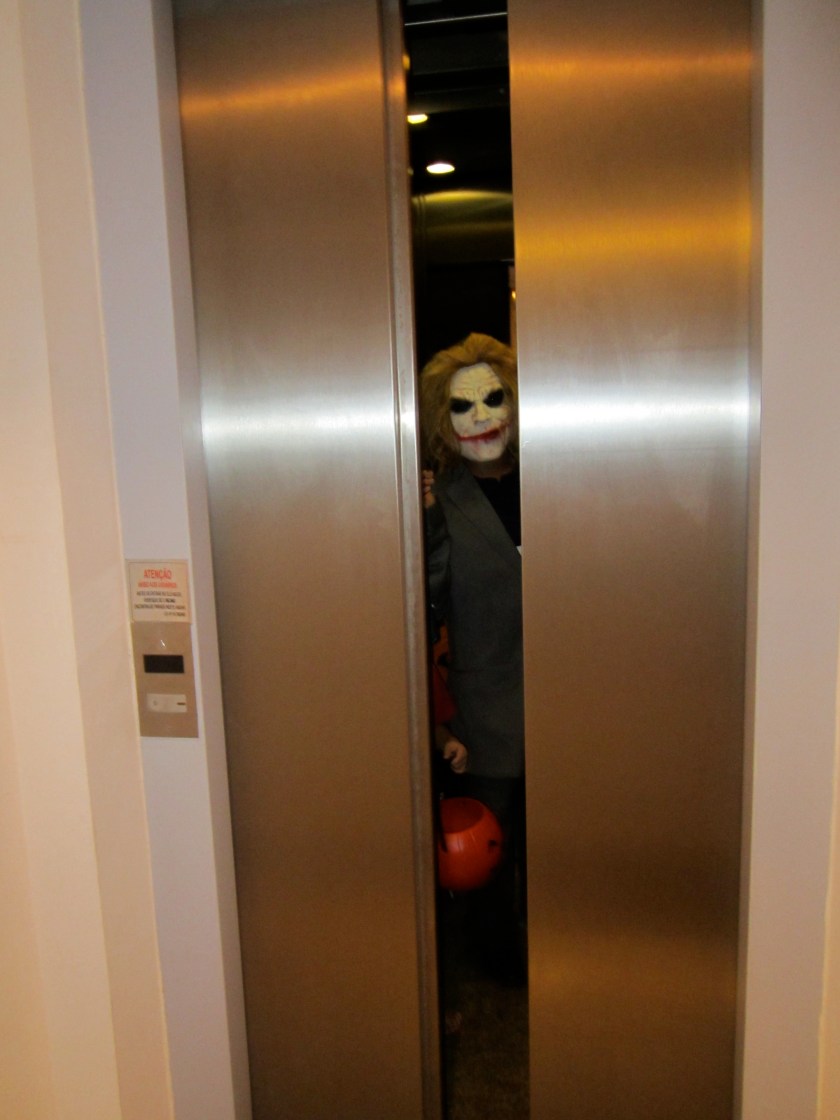
“Dia de Los Muertos, Halloween Weekend, Snapshots from Scary School and Last Minute Trick-or-Treating”

It’s still Thursday, and we’re already looking forward to the weekend. Our family’s been on a roll since last Friday, with the preparations for Halloween Weekend and all that came with it!

Halloween parties at two different schools, one “scary” birthday party, and a last minute trick-or-treating that caught us by surprise on a Tuesday night (it was Halloween night, so, neighboring kids were just doing their job!) 😮

After spending the afternoon at School #1, getting ready for Halloween at School #2

[caption id="attachment_6701" align="aligncenter" width="300" caption="presenting the contestants for best costume!"][/caption]

[caption id="attachment_6702" align="aligncenter" width="225" caption="a happy witch!"][/caption]

The (scary) seniors…

An interesting costume for a teacher/mom…

Coming directly from the Movie to School!


And games for the “cyber-kids”:

Weekend event #3, Saturday: Classmate’s birthday party. The theme? Guess! 😮

And wrapping it up, husband and I were caught by surprise on Tuesday evening (the 31st), by some neighboring kids, who asked to “borrow” our toddlers for some “last minute trick-or-treating”! We couldn’t say no to that! 😮

[caption id="attachment_6713" align="aligncenter" width="645" caption="gotta give them candy.. whatever you have!"][/caption]

Good bye, Joker!

It’s still Thursday, and we’re already looking forward to the weekend. Our family’s been on a roll since last Friday, with the preparations for Halloween Weekend and all that came with it!

Halloween parties at two different schools, one “scary” birthday party, and a last minute trick-or-treating that caught us by surprise on a Tuesday night (it was Halloween night, so, neighboring kids were just doing their job!) 😮

After spending the afternoon at School #1, getting ready for Halloween at School #2

presenting the contestants for best costume!

a happy witch!

The (scary) seniors…

An interesting costume for a teacher/mom…

Coming directly from the Movie to School!


And games for the “cyber-kids”:

Weekend event #3, Saturday: Classmate’s birthday party. The theme? Guess! 😮

And wrapping it up, husband and I were caught by surprise on Tuesday evening (the 31st), by some neighboring kids, who asked to “borrow” our toddlers for some “last minute trick-or-treating”! We couldn’t say no to that! 😮

gotta give them candy.. whatever you have!

Good bye, Joker!

Fun with the Brazilian grandparents!

Nothing better than a holiday in the middle of the week. This year, Brazil’s National Day fell on a Wednesday, allowing the pair of Brazilian grandparents to fly in, and spend a few days with their favorite American kids!

This slideshow requires JavaScript.

Collecting Brazilian states: Bahia has more than just Carnival… what about a winery?!

From Recife, Pernambuco
To Casa Nova, Bahia
Distance: ~ 517 miles  or 832 km

Hiding in the middle of the state of Bahia, there’s the district of Casa Nova, famous not only for its dunes, but also for housing one of the best known wineries in the Northeastern Brazil.

The initiative of “new irrigation” and “deviation of the river course” for irrigation purposes, comes from observing the way Californian wines are produced, and taking advantage of the similar weather, soil and temperature between the two countries, try to replicate in Brazil the already well-established North American success.

Mapa da região vinícola do Vale do São Francisco
Here is a map showing the area by the São Francisco River, in the northeastern part of Brazil, and the corresponding states involved in the production of national wine.
The state of Bahia is the south of the region, bordering the southeastern state of Minas Gerais, neighbors with Rio and São Paulo, but all that’ll be for future posts… 😮
For now, enjoy the images from the Bahian winery:

São Francisco River valley

guided tour around the factory and winery

inside the wine factory

São Francisco river – river’s course is deviated for the “new irrigation”and to serve the winery

some of the final products – fine wine from the São Francisco Valley!

displaying for retail

a nice view from one of the vineyard’s sights…


“I love you dad!”: Schools in Brazil celebrate Father’s Day

This past weekend, schools in Brazil found their way to honor and celebrate fatherhood, offering activities for the whole family, sports games, craft projects… you name it!

It’s a national celebration, honored by public and private schools throughout the country, famous or unknown school groups; simple or modern academies; sophisticated or just a room in a house where a teacher shares her experiences with the students – in some way, fathers were remembered during the second week of August. It’s a tradition. There are a few exceptions – some schools choose not to do anything, for different reasons, leaving the few parents a bit disappointed and somewhat frustrated, but it’s just a small portion… The majority of the schools open their doors to happy and proud dads, guaranteeing that at least once a year, they will be able to share the joy with their ‘offspring‘, saying: “I’m his/her father. I’m a school dad”…

I’m now sharing a few images from this past weekend’s school activities – the American School of Recife offered a breakfast for the dads (and moms!), followed by an Open House. Our kids’ school had a full Saturday of activities, shown below. It was great to share the experience with other parents, nationals or expats. First-time parents or skilled ones; single dads, grandpas, godparents, older siblings… All in all, a very happy Brazilian Father’s Day

9 Mountains in 4 continents

Brazil
Table Top Mountain, South Africa
East-Timor, with ongoing construction of a smaller version of the Christ the Redeemer
East-Timor
Along the West Coast of Brazil
Burgundy Mountains in Brazil
view from the top of Table Top Mountain, Africa
Cape Town, South Africa
Mid-West of USA

This slideshow requires JavaScript.

Adding more to the collection: the warm state of Piauí

From São Luiz, Maranhão

To Teresina, Piauí

Distance: 205 Miles or ~ 330 Km

state of Piauí, northeast of Brazil

Teresina, the capital of Piauí, is the only capital in the Northeastern Brazil, not located on the shores of the Atlantic Ocean. Although the state carries the unfair lable of being warm and not as attractive as the other northeastern states of Brazil, Teresina, as well as all the other major cities, are surrounded by interesting natural attractions, like several river paths.

several rivers cross the state of Piaui

This slideshow requires JavaScript.

Collecting states: a visit to São Luis, capital of Maranhão

From Recife, Pernambuco
To São Luis, Maranhão
Distance: ~ 1,600 km (1,000 miles)

São Luís do Maranhão is the only Brazilian state capital founded and ruled by the French, later being defeated by the Portuguese.

Founded in 1612, the city is named after French King Louis XIII. After the French left, São Luis was also occupied by the Dutch, until the Portuguese colonizers took over.

Unfortunately, not a lot of material evidence remains from the French and Dutch periods, but the historic downtown buildings (+ 3,500), mainly covered with tiles in the manner of Portuguese architecture, respond for naming São Luis a Unesco World Heritage Site in 1997. Brazilian folkloric traditions, cultural expressions, and a resemblance with the “caribbean reggae” are well alive in São Luís. The most important among them is the bumba-meu-boi, a festive pantomime which takes place during June Festivals.

São Luís is known as Brazil’s Reggae Capital. Cultural affinities between São Luís and the not-so-distant Caribbean turned reggae into a local passion with unique traits such as “cheek-to-cheek” dancing and distinct lingo.


This slideshow requires JavaScript.

“Talk to me, Goose”. Flying from Pernambuco to Alagoas after flooding season

This year’s rainy season is almost over for most northeastern states in Brazil. Heavy rains tend to cause extensive flooding. A good way to visit the sites is by air, since roads are taken by the floods.
Here are images from a visit to the state of Alagoas, after the relief actions.

landing in Alagoas
tents distributed to the misplaced population
overview of the flooding damage (city's outskirts)
a typical resident of the city's outskirts
aerial view of the state capital
aerial view of the coastline