…you’re expected to love, honor and respect them both.
This week we are honoring the US Independence, bringing back memories from other assignments, sharing our thoughts:
Living in-between cultures, besides being an exciting experience, could be pretty challenging, as well. Raising children from hybrid cultures offers countless possibilities to keep traditions alive, maintaing memories and links to the home country always fresh. It takes a great deal of effort. But it’s worth the trouble. Witnessing your kids cherishing different traditions, honoring and respecting your and your spouse’s home countries, is worth any extra work. It’ll pay forward.
Our kids are learning to love and respect their mixed culture. They’re beginning to understand historical events, their causes and consequences. They’re learning that any country is not just about land, but also, its people, their beliefs and their sense of social respect. Hybrid cultures are a rich experience. Hopefully, our three TCKs will grow up comprehending that the world they live in is much bigger than geography may present itself. And a country’s boundaries go as far as its people. We bring our culture with ourselves. Our traditions, our honor, our respect to others. Wherever we are. Wherever we move to. It’s good to know that some of us in the Service bring more than one country in our hearts..
This week, our hearts are proudly filled with red, white and blue colors… and as we’re heading out of Brazil, our hearts are overflowing with green, yellow and of course, blue! 😮 One day, I’ll look back at our time in Brazil as a family, piece together the best moments, best images, the favorite memories. One day, but not today. Not this week… We’re in-between cultures right now…
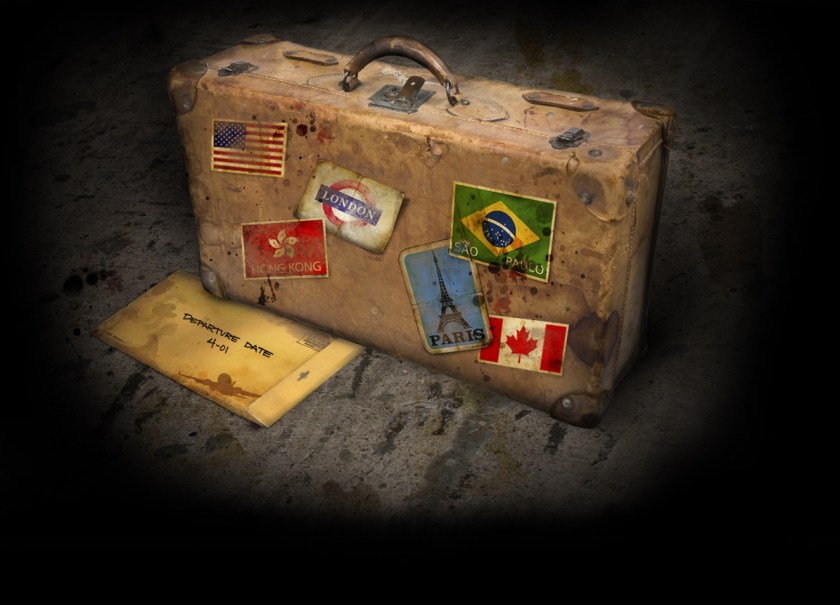
Every time we feel sad, lost, or a bit scared of the ‘unknown’, I tend to go find ‘shelter’ and comfort among some of our dear pictures, our memories from previous postings, and this brings me back to a more ‘stable’ self… Anyway, this week’s been bittersweet… Last days of school for our children, a few days left in country… so much to do, people we’d like to see/visit again… so little time… Moving is not easy, and this week, a little ‘less easy than usual’… This blogpost represents the transition that’s waiting for us – my appreciation to Where’s my backpack? for the inspiration! 😮
African Bath
Our family is also getting ready for our new assignment: 2012 marks the move to our first Spanish speaking post: La Paz, Bolivia. Our household will formally have 3 languages… we’ll be writing our stories and tales in different ways now… Hope it’s appreciated… 😮
The best recipe for a good time at a new posting/assignment: making friends. Interesting… already mentioned that here… Last week’s theme was about friendship… and a while back, about togetherness… Why not have a bit of all? For this week´s WordPress Photo challenge, a tribute to friendship, close friends, and the will to be together, for the long, long haul!
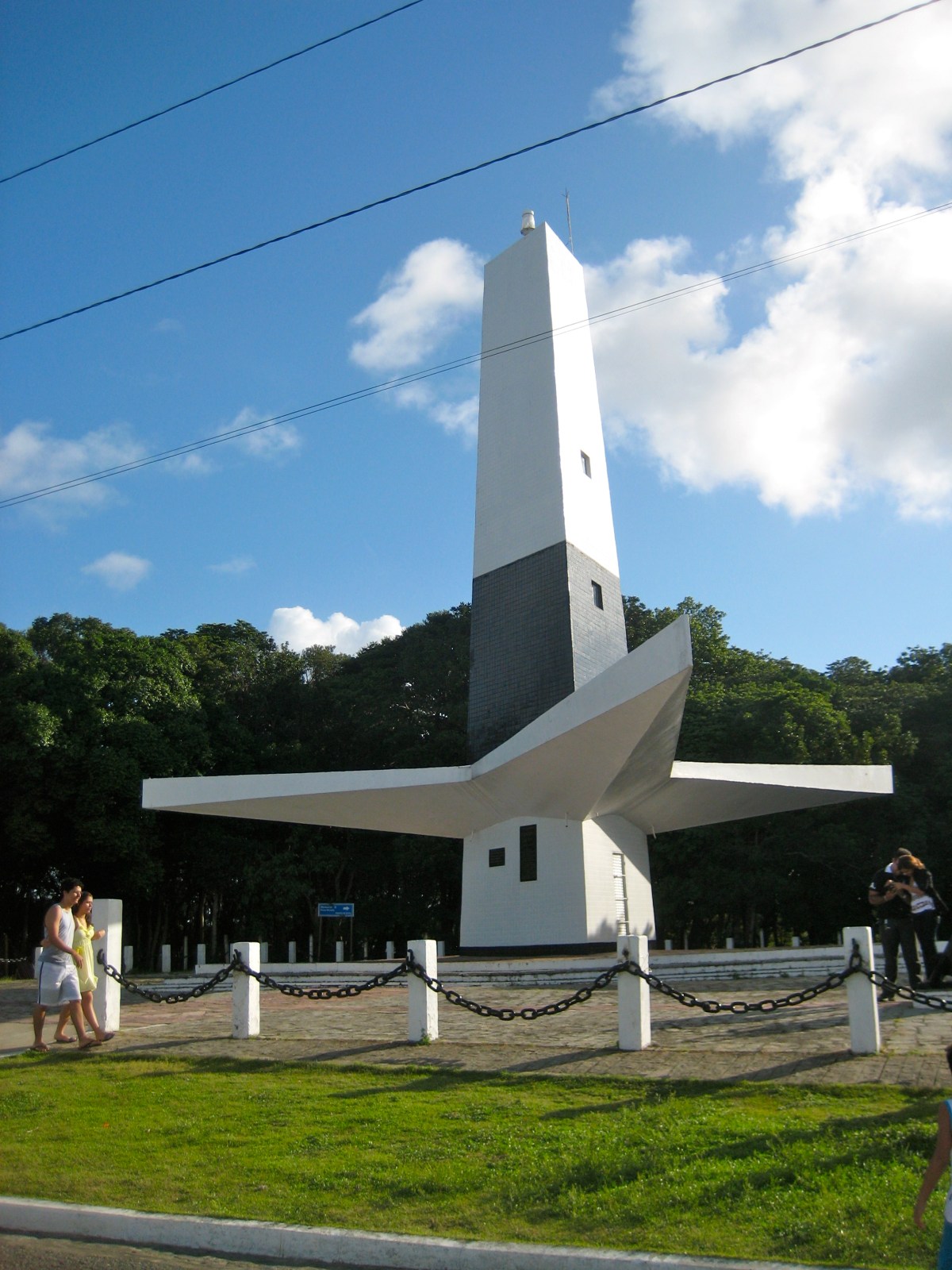
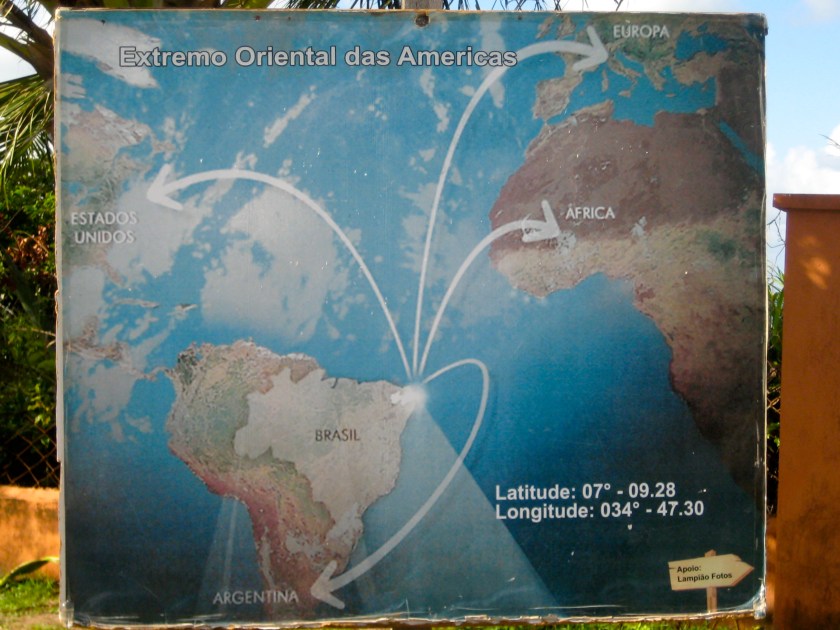
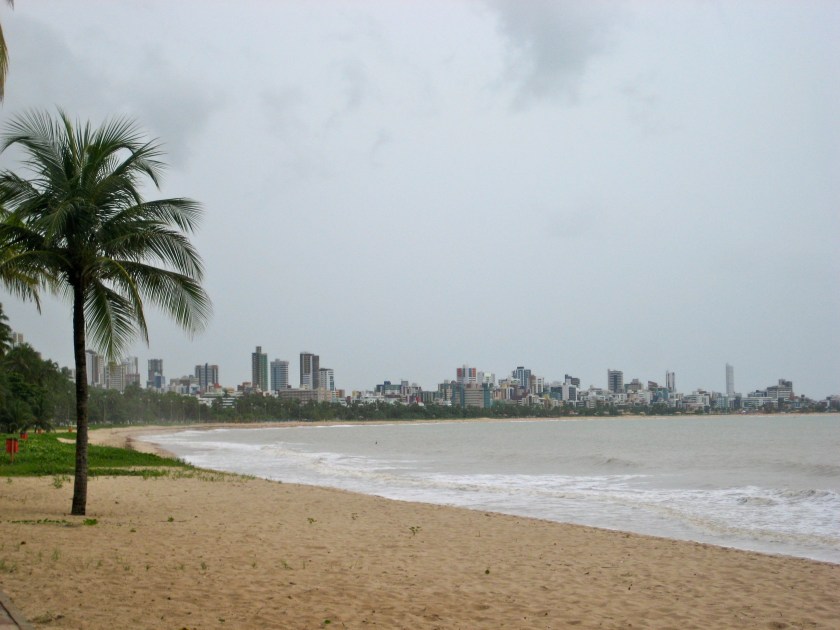
Family day trip to Cabo Branco, in the State of Paraíba. Hidden in one of the Norteastern Brazilian states, it’s possible to discover this ‘gem‘, the geographic place, corresponding to a cape on the Atlantic coast of Paraíba state, which forms the easternmost point of the American continent, five miles southeast of João Pessoa, the state capital. It is surrounded by beautiful white sand beaches bordered by flat-topped forms of sedimentary strata called “tabuleiros“, which rise sharply above the beaches to heights between 150 and 500 ft, and enjoys abundant rainfall. The name of the State comes from the combination of the Tupi words pa’ra (river) and a’íba (unsuitable for navigation). The Ponta do Seixas, on Cabo Branco beach, where, according to a traditional saying, “the sun rises first” is the land of the sun indeed, and of an enviable shore — but also of other historical, ecological and cultural beauties.
We got to see the famous lighthouse of Ponta Seixas, and enjoy the idea of being by the farthest East of the Continent.
A Ponta do Seixas é o ponto mais oriental do Brasil e da América continental, localiza-se na Parte Leste da cidade de João Pessoa, capital do estado da Paraíba, a 14 quilómetros do centro da cidade e 3 quilômetros ao sul do Cabo Branco, que já foi considerado o ponto mais a leste do continente e que devido à erosão marinha que ao longo dos anos fez com que suas ondas desgastassem o Cabo Branco e depositasse estes sedimentos na Ponta Seixas (fazendo-a aumentar) e passando a ser atualmente o ponto mais oriental das américas.
Do alto da Ponta do Seixas, erigido sobre uma falésia, fica o formoso Farol do Cabo Branco, no formato de um pé de sisal, de onde se tem uma bela vista da orla e do oceano Atlântico. Muitas pessoas confundem a Ponta do Seixas com a falésia do Cabo Branco. São duas formações geológicas diferentes. A ponta é que representa o ponto mais a leste da América e não a falésia do Cabo Branco. A ponta do Seixas é uma estreita faixa de terra mais ao sul da barreira que se prolonga para o leste.
Taking advantage of the opportunity to teach the kids a bit of Geography:
Waving along the Southern Coast of Pernambuco, Carneiros Beach (“Praia dos Carneiros”) discreetly possesses all the requirements to become a paradise. Sea of calm and crystal clear waters in shades of blue, palm trees, coral reefs and even a river that ends into the ocean. Likely, our last weekend at the beach in Brazil, surrounded by close friends – at least, the last one, for a while… Who knows what the future has is planning for us?! 😮
Rustic bungalows have been built and decorated to meet the needs of comfort, and privacy, so tourists, or vacationing families may enjoy the peaceful setting that reigns in this paradise, still respecting the environment, its unique features and learning about preservation and ecological conscience.
Like many of us, Jennifer Seminara is another FSO spouse, who worked while her husband was serving overseas in Macedonia, Trinidad and Hungary. She’s been invited by Dave, the husband, to offer her thoughts on what it’s like to be a “trailing spouse.” Not pessimistic, and not overly optimistic. Just very honest, clear, realistic and sweet. My appreciation to Dave and his wife Jennifer for sharing this. Hope you enjoy it as much as I did. Good reading!
“I really had no idea what I was getting into when I agreed to be a Foreign Service (FS) spouse. My boyfriend of five years joined the Foreign Service and asked me to marry him right before he left Chicago for his training in Washington. I didn’t know where he was headed but a life overseas as a diplomat’s wife seemed exciting and I was in.
I was in graduate school at the time, pursuing a master’s degree in public health and had grand ideas about working on public health programs in developing countries. At the time, I didn’t realize how difficult it is for the “trailing spouse” to have a career.
Being a FS spouse can be a great opportunity to stay home and raise children or pursue hobbies. Housing is covered by the U.S. Government, which makes it much easier to get by on one income, especially when living in a country with a low cost of living. Having a career as a FS spouse, however, is not easy for most. For those that would like to work, Eligible Family Member (EFM) positions are available at most embassies but these administrative and/or low level (and usually low paying) jobs can be difficult to secure since there aren’t enough jobs for everyone who wants one. I worked as the Community Liaison Office Coordinator at two posts; there were also EFM positions for Consular Associates (which requires CON-GEN training) and Office Management Specialists (OMS/administrative assistants) in various departments. My CLO predecessor at our first post described the position as the cruise director for the embassy. There are the more serious and important parts of the job, which include providing information to newly assigned employees and families, advocating for employees and families, advising post management on quality of life and reporting to the Family Liaison Office in Washington, D.C., on education and employment at post, but a large part of the job is to build community spirit and enhance morale. In other words, the CLO plans a lot of parties, happy hours and all kinds of events to help maintain American traditions (super bowl parties, Easter egg hunts, BBQs, trick or treating, visits by Santa, etc.) and tours to help Americans get to know the host culture. I really enjoyed being a CLO but it wasn’t quite what I was expecting to do as a career and the salary I earned was far below what I could have been making in the U.S. in my field. Spouses who would rather work outside of the embassy have limited options. Despite reciprocity agreements, which the U.S. has with a number of countries, it’s difficult for many spouses to secure gainful employment at many posts around the world. Even when spouses have the legal right to work in a country, many lack the local language skills needed to find jobs.
Spouses are entitled to take language training at the Foreign Service Institute but many can’t afford to devote months to classroom study due to financial or family issues and those who do still may not be able to achieve the fluency needed to get jobs. Also, finding a job in many foreign countries is all about networking and who you know, and if you don’t know anyone and can’t speak the local language, you’ll have an uphill climb. And even if you can find a job on the local economy, salaries in many countries can be as low as $500 or $1,000 per month. FS spouses that tend to have the most luck finding work are often in fields where they can find a U.S. job that will allow them to work remotely. Teachers are always in demand, as there are international schools everywhere and you need not know the local language to teach at most of them. Personal trainers can find work in some posts, as can nurses and development workers. For spouses that don’t find jobs, it can be difficult to adapt to life overseas. Foreign Service Officers (FSO’s) have a network of Americans to interact with at the embassy, but the stay at home spouse can feel isolated and bored, especially if they don’t speak the local language well. In a way, they’re the ones who are truly living in the local culture, while their spouses are in an English-speaking, American bubble at work. Up until the 1950s, the wives of FSO’s were given formal evaluations along with their husbands, and spouses who weren’t viewed as being good hostesses – planning and hosting representational events – could negatively impact their husbands’ careers. While that’s now ancient history, some spouses do feel subtle pressure to attend all sorts of cocktail parties and events that might seem glamorous but are actually quite boring. Most trailing spouses are female and posts with large expatriate communities have plenty of groups they can join, and a lot of women manage to forge their own networks easily. But trailing men often have a harder time, because some feel awkward joining female dominated clubs or groups, and men with no jobs tend to feel a loss of identity more acutely than women do. But despite all the personal drawbacks, and career sacrifices, being a FS spouse can also be a lot of fun. Many spouses make really close friends overseas and become part of social circles that are tighter than the ones they had at home. Since all expats are by nature away from their lifelong friends and relatives, everyone has an incentive to be open to meeting new people and making friends.
Last, but definitely not least, is the fact that life overseas can be more exciting than life in the U.S. If you’re an adventurous person who is curious about the world, you’ll enjoy having the opportunity to experience a new culture, not as a tourist but as a local. And if you love to travel, living overseas will open up possibilities that would be impossible when based in the U.S. If you want to live overseas, but aren’t sure if you could do it on your own, doing it as a Foreign Service family is the way to go. You’ll have a U.S. mailing address, so you can order products online to your heart’s content, you’ll have a network of people at the embassy to help you navigate the local culture, and you’ll have free housing and education for your kids. And for those in countries with a low cost of living, you can afford the kind of household staff – cooks, cleaners, nannies, gardeners – that would be impossible in the U.S. Some get a little carried away and get so addicted to this sort of neo-Colonial lifestyle that they don’t want to return to Washington, where they have to live the kind or ordinary middle class lives they left behind before they joined the Foreign Service.” Read more from “A Traveler in the Foreign Service” here.
The April issue of the Foreign Service Journal(FSJ, April 2012) discussed the Family Member Employment, and the search for meaningful work overseas. Reading through the whole edition, you’ll find great stories about living and working as a Foreign Service spouse. Several FS spouses shared their experiences and impressions regarding working overseas. It’s an honor to be one of the contributors to this edition. Congratulations to all who contributed to that month’s issue. Here’s the link to another FS blogger, also sharing her impressions about family member employment.
Definitely, not betraying our favorite Sushi & Sashimi Tuesday evening place, not at all! I’ve mentioned it before here, and one of their specialties, but, this time, wanted to share a few images from a different experience: authentic sashimi (while marlin), prepared at a friend’s boat (one of the local yacht clubs) – our deepest appreciation to Mr Jeremere! 😮
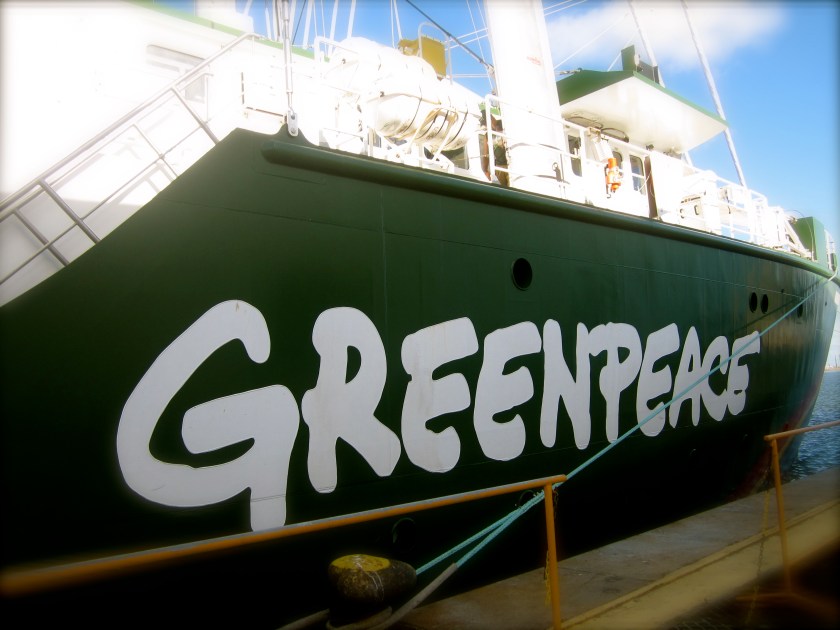
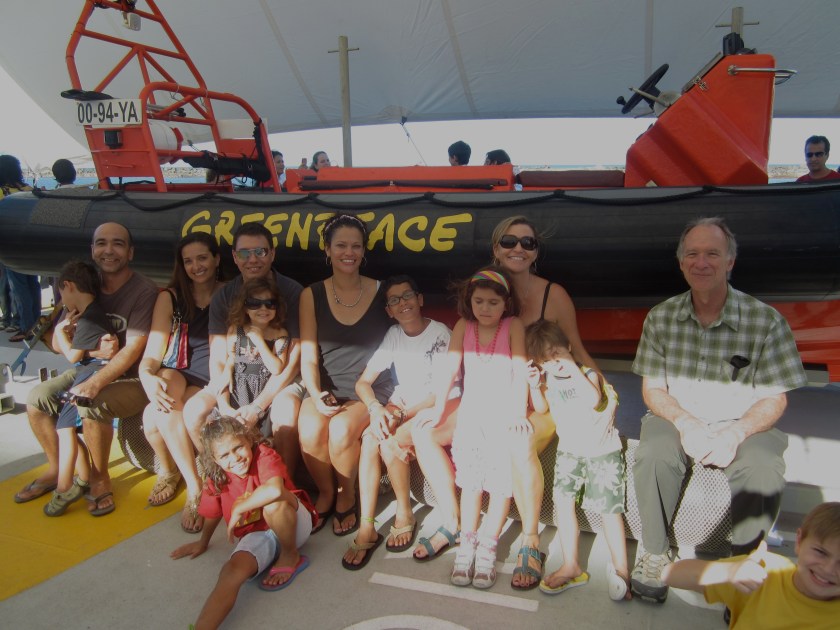
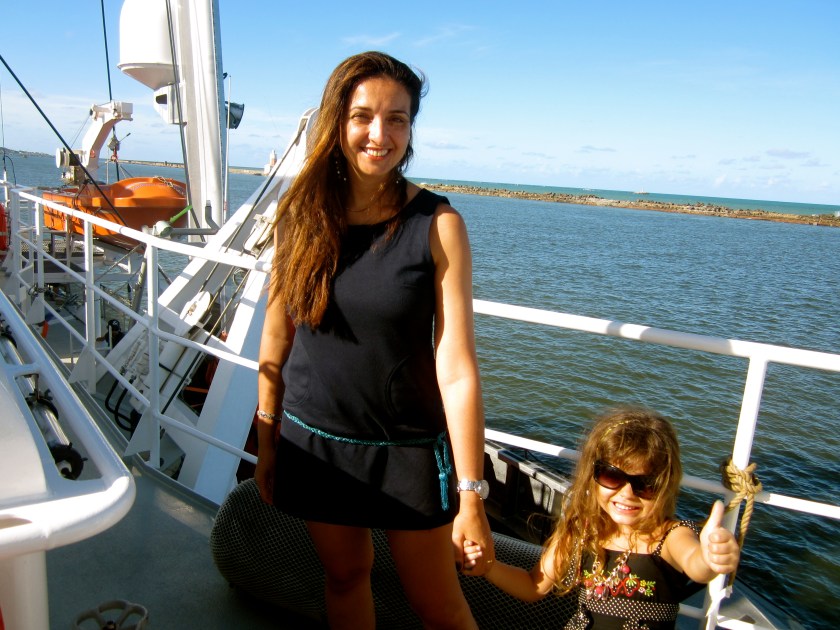
We had the opportunity to go on a guided visit through its compartments, talk with the captain, and learn more about the current projects involving the Greenpeace Initiative and Brazilian NGOs.
The visit also included the solar kitchen installations and the solar panels.
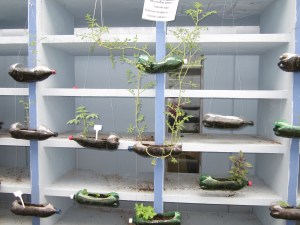
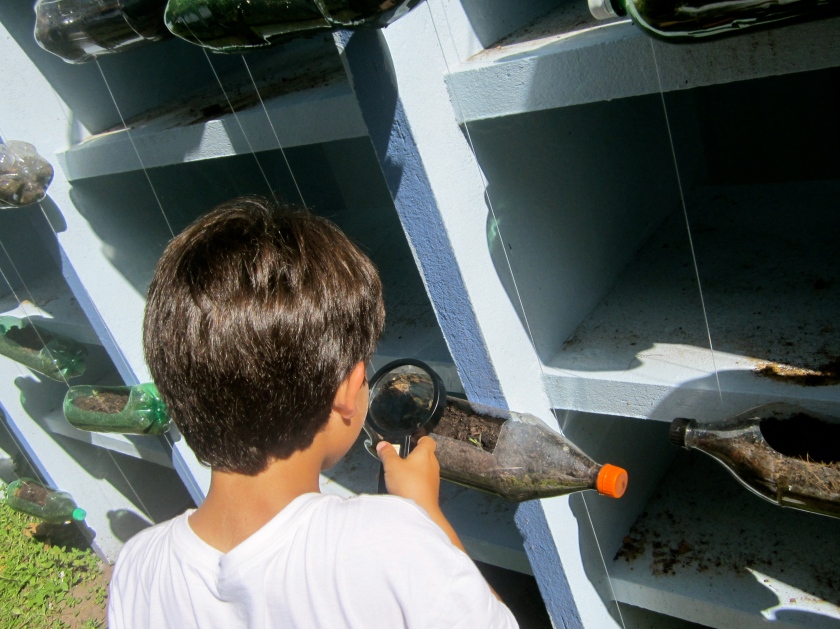
Great use of a recycled PET bottle!The Recognition EcoClub Pizza! Harvest time is approaching for the Hanging Gardens of the EcoClub. We’ve talked the School Canteen into turning the garden’s produce into Pizza (and Salad!) for lunch on June 11.:o Stay tuned!
That said, I’ve been asked to provide updates on our Hanging Garden Project. We’ve got new ORGANIC VEGGIES, all from ‘freshly donated seeds’… Our middle/high school students have been deeply involved in building a system with planters made from recycled PET bottles, as seen on the right. What originally was a school research project, has become a multidisciplinary task (see left), and a passion for all the gardening lovers! Besides that, we’ve discovered a great source of cost-free clean/distilled water for all the watering needs: the several air conditioning devices, spread throughout the school campus.
Imagens de uma mamãe super orgulhosa, conversando e demonstrando “experiências científicas” com a turminha do Infantil III, da minha filhota! Vou sentir muita saudade desta escola…
Muito grata pela oportunidade, Profa. Suzy!
Na hora de despedir, minha “assistente” resolveu lembrar-se que, apesar de todo do ‘glamour’ da ciência, queria mesmo era colo de mãe… Pode uma dessas??! 😮 😮
Today I decided to have fun writing, revisiting my long-lost past in research and natural sciences, as well as, a result of the ongoing inspiration (or should I call it “daily challenges”? :o) my current Physical Science students offer… The topic I chose to revisit, showcases one of the family’s trips to Natal, Rio Grande do Norte, while husband went to visit the Wind Power Park.
A little bit of background: A few years back, a drought in Brazil that cut water to the country’s hydroelectric plants, prompted severe energy shortages. The crisis underscored Brazil’s pressing need to diversify away from water power.
Brazil’s first wind-energy turbine was installed in Fernando de Noronha Archipelago, in 1992. Later, the government created programs to encourage the use of other renewable sources, such as wind power, biomass, and Small Hydroelectric Power Stations (PCHs). Such stations use hydropower, the flagship of Brazil’s energy matrix, which comprises around three-quarters of Brazil’s installed energy capacity.
High energy production costs, coupled with the advantages of wind power as a renewable, widely available energy source, have led several countries to establish regulatory incentives and direct financial investments to stimulate wind power generation. Brazil held its first wind-only energy auction in 2009, in a move to diversify its energy portfolio.
The Brazilian Wind Energy Association and the government have set a goal of achieving 10 gigawatts of wind energy capacity by 2020. Let’s just hope. Renewable resources: the greener and cleaner, the better!
The visiting team Recife and local experts
O Parque eólico Alegria é um complexo de propriedade da Multiner, localizado no munícipio de Guamaré, no Rio Grande do Norte (RN). O complexo refere-se aos parques Alegria I e Alegria II.
This week’s WordPress photographic theme is “Summer“. Considering I had a few “pics to spare”, from our sort-of-large collection of paradisiac places in Brazil, here’s a second part of the original post… Hope you all enjoy the images as much as we did! 😮
Traveling could be seen as a passion. No matter if it’s for work or leisure. Photography is another passion, trying to capture, as much as possible, some of the unique sights visited during the several trips throughout the Northeastern region of Brazil. This is another post from the “Collecting Brazilian States” segment.
the sign indicates that this is the largest artificial lake in Latin America - "generating energy for the whole country"
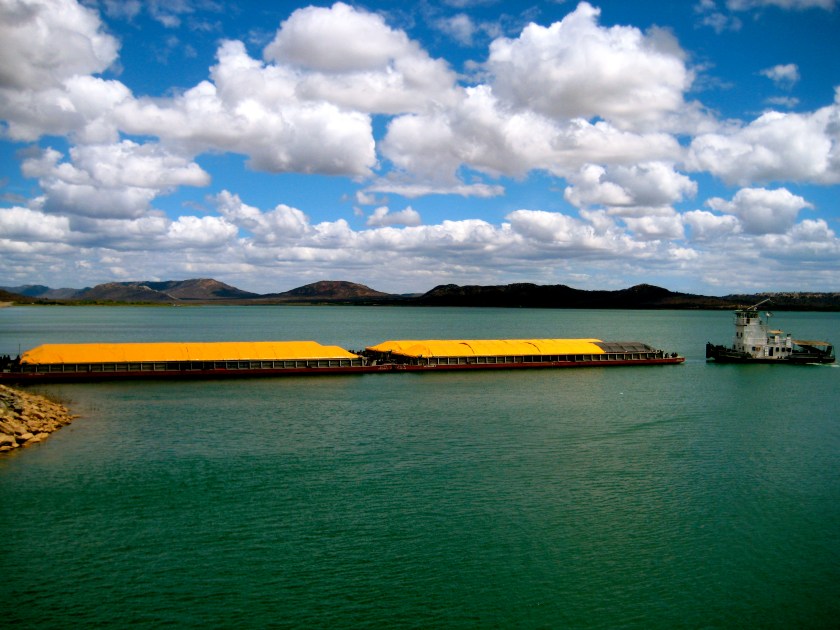
Sediments from the São Francisco River give Sobradinho Lake coloring that changes from brown, to golden tan, to green. The lake is located in the northern part of the Brazilian state of Bahia, already showcased here on a previous post.
Created by the construction of the Sobradinho Dam (“Represa de Sobradinho“), the reservoir itself is the largest in Brazil, covering a surface area of 4,225 km2. It has a mean depth of 8.6 m and a maximum depth of 30 m. Watch below the concrete bridge/platform being lifted, to give passage for the large ships, transporters and storing units! Really something!
Paraiba is one of the prime Brazilian states, situated on the Atlantic Ocean in the northeast region of the country. The state is famous for producing leather goods of various types.
The capital of the state is rich in historical monuments as well as contemporary buildings, many of which are great examples of baroque-style architecture. Nevertheless, the greatest enchantments are still related to the sea. In addition to the beach of Cabo Branco, with its beautiful, unique lighthouse, the beaches of Tambaú, Manaíra, and Bessa are among the most urbanized on the coast and known for their lukewarm waters.
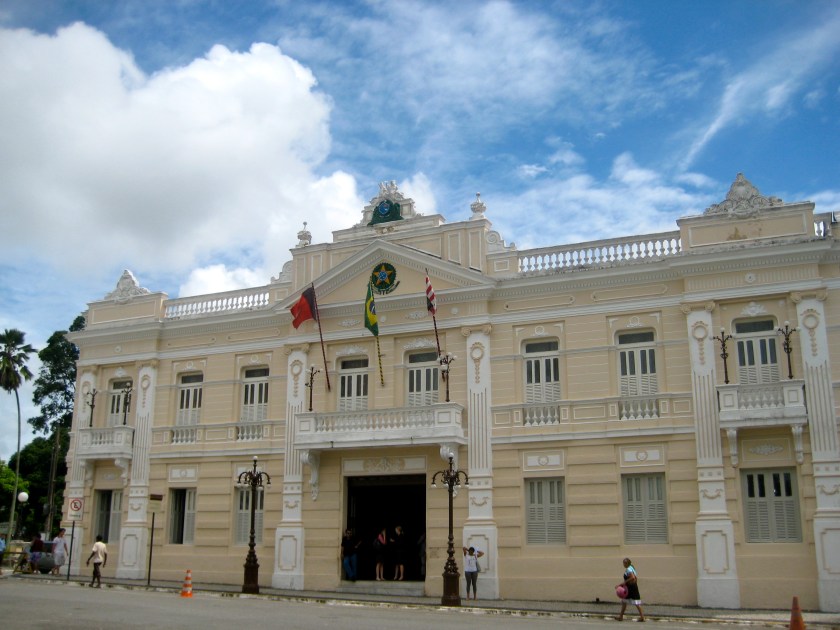
In the capital of João Pessoa, old meets new – a great example is the newly developed Convention Center.
The Natural
The modern, newly designed Convention Center, ready for 2014!
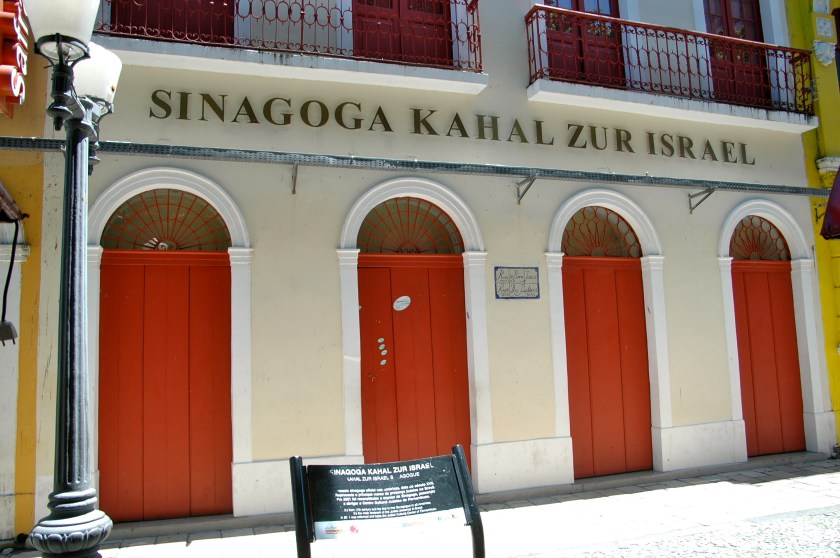
We are always trying to collect unique images from our host city. Downtown Recife encloses several little architecture gems (shown here), gifts from the Portuguese, Spanish and Dutchinfluences. In the world’s largest Catholic nation, the Recife synagogue has become an important symbol of the Jewish heritage in Brazil. It is one of the main stops on the city’s tourist circuit, located at the Rua Bom Jesus, old town Recife and its archives attract Brazilian and foreign historians.
What is Motherhood? I’m still trying to figure the answer out… some days I just feel like we’re “getting by”, instead of living… other days, are simply wonderfully perfect…. and, most of the days, are plain regular, filled with lots of “mom!!! come here, please!!!” or “mom!!! she took something from my bedroom!!!” or even, a gibberish cry that could mean anything from hunger, pain, to simply: “mom, hold me in your arms…”
Anyway, here are a few shots from this past “Mother’s Day (weeklong celebration)”
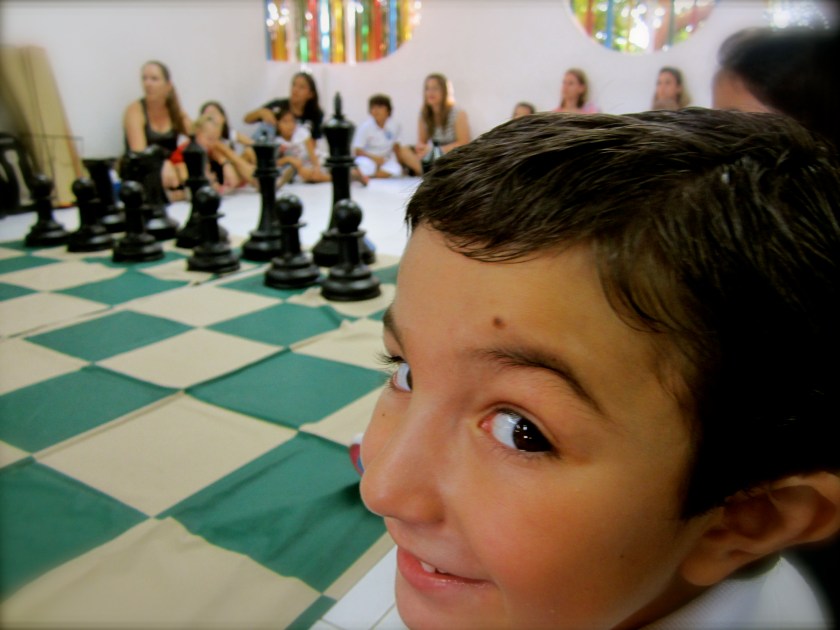
Learning Math and having fun while doing it? Humm…
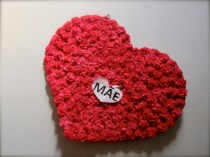
The heart on the wall saying: “MOM”…
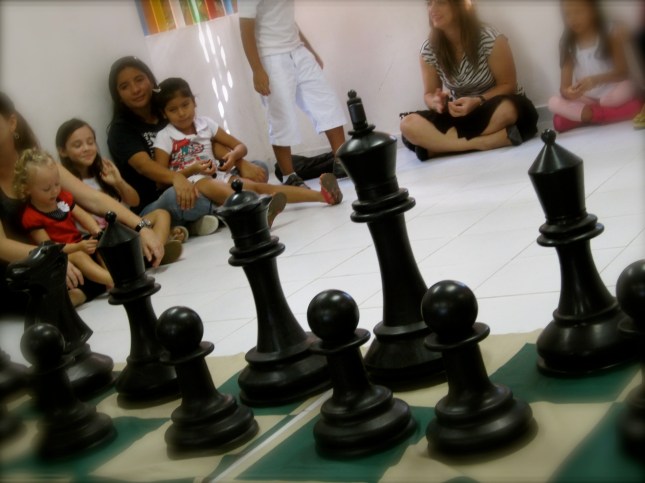
School all decorated for the ‘mom-players’
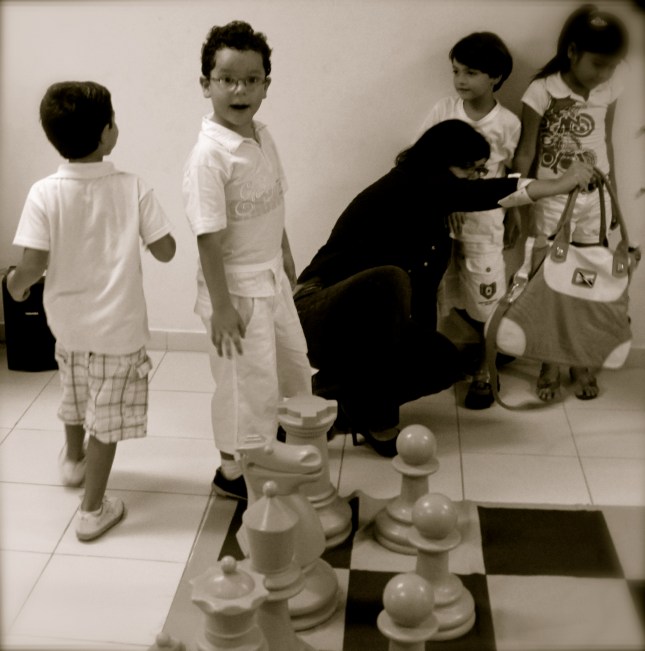
Another activity for children, organized by our kids’ school. And why this? A different way to honor and motherhood, celebrating Mother’s Day, showing the children’s appreciation for all the heartfelt work and effort every mom offers freely…
Learning Math and having fun while doing it? Humm…
The heart on the wall saying: “MOM”…School all decorated for the ‘mom-players’
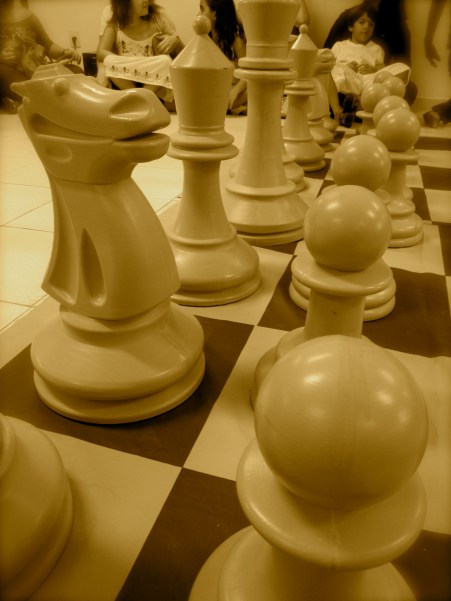
Another activity for children, organized by our kids’ school. And why this? A different way to honor and motherhood, celebrating Mother’s Day, showing the children’s appreciation for all the heartfelt work and effort every mom offers freely… This time, all the moms were involved, as well! First graders had the opportunity to enjoy quality time with their moms (it was Mother´s Day Week at the School!), show their knowledge of the ´strategy game´, creating links with real mathematical situations… all that while playing with their classmates! Could it be any better? 😮
We’re on countdown mode. Soon, our family’ll be heading out of Recife, towards our new assignment… Now, it’s time to organize our photos, and begin sorting to the memories we’ve built during our time here. One of our favorites, the city of Olinda, another UNESCO heritage site…
Any traveller loves to take pictures! We are no different.
Imagine our surprise and joy when we discovered this Argentinean “street photographer” during one of our walks along the many historical streets in Olinda, Pernambuco.
street in Olinda“Daniel the Argentinean” lives and works in Olinda. Before, lived in Paraty (RJ) and Ouro Preto (MG)
The man responds to the name of “Daniel the Argentinean“, and with his original equipment, offers the by-passers a unique opportunity to have an antique-style picture taken. He’s got it all: the chemical mixtures, developers, films, and once done, surprises you with a nostalgic impression – reminding me from when I was a child growing up in Brazil, and my mom would take my brother and I for the 2×2 photographs, for school’s documents…
There has been an ongoing interest in blue crab fisheries in the northeast of Brazil since the 1960’s, when the state of Alagoas recorded an average annual yield of 57 tons. Being a Biologist and a teacher, I became curious to find out a bit more of this intriguing wild population… official or unofficial literature on the activities of blue crab fisheries in Brazil are scarce, but this resource is known to be the bycatch of several fisheries. There is great fishing potential for the species of the genus Callinectes, since blue crab fisheries are still mostly artisanal, located in small fishing communities scattered along the Brazilian coast. 😮 Now worries… there’ll be no Science over here, though, only interesting snapshots of these beautiful creatures!
Due to blue crabs’ productivity and socioeconomic importance, they’ve been constantly monitored and evaluated, with the purpose of maintaining sustainability, ensuring the continuing existence of the fisheries. Here, a quick sample of their “protected homes” 😮
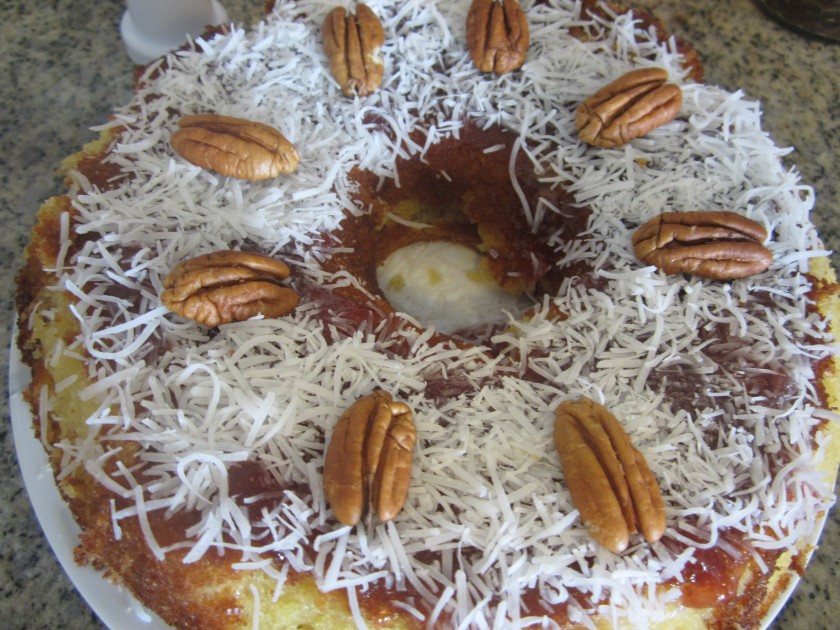
Sunday is always for food… what about, let’s say… dessert and drinks?
Our “quasi-Mexican creative juices” are constantly boiling, and when there’s time to “experiment something new in the kitchen”, I’m all for it! This time, snapshots from two quick ideas:
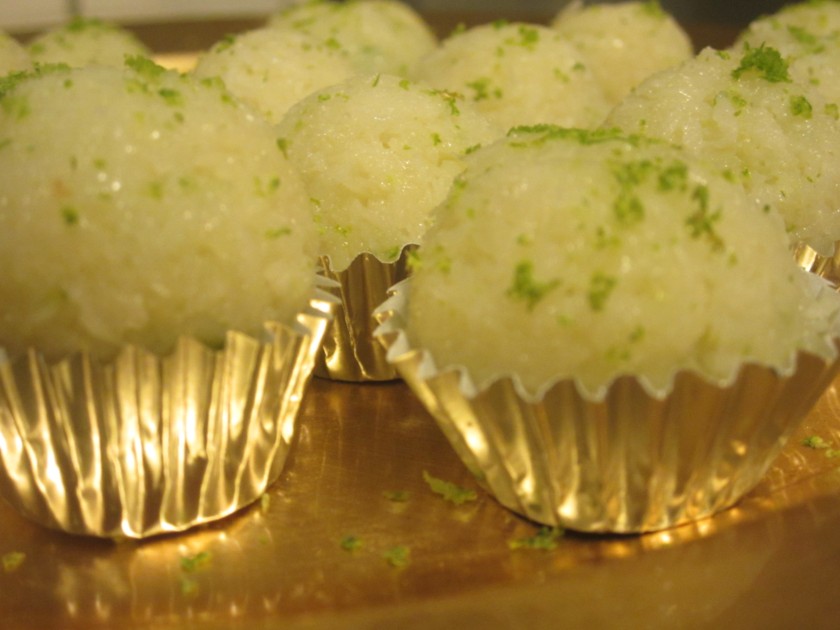
One Mexican drink, “Paloma Cocktail” and one dessert, “Margarita Cupcakes”, all “adjusted” to our reality here in Brazil (it’s not always possible to find the perfect ingredients for that perfect recipe – also, I’m far from perfect, when it comes to cooking/baking/mixing, but I’m pretty venturous for trying to make something intriguing, interesting, or, at least, cool-looking…) 😮
How to make the “Paloma”?
For a refreshing, thirst quenching cocktail, the Paloma is definitely at the top of the list and it’s a favorite in Mexico. It’s a light, fruity drink with a fizz and one of the smoothest tequila drinks out there. With a splash of soda instead of a grapefruit soda like Squirt (or, in our case here in Brazil, “Sprite”!).
Fill the glass with ice and add the tequila and lime juice. Top it all off with a splash of Sprite. (need to share this with another fellow blogger, who loves “Brazilian challenges“!)
The original recipes for the margarita cupcakes may be found here: Margarita Cupcakes and here Margarita Cupcakes – I had to “adapt” a little, making the frosting myself with lime jello mix and chantilly cream – “Brazilian-style”, but it worked! 😮
Sharing great tips from a friend, Julien, from the Expat Blog Project, who, driven by her passion for discovering new cultures, and herself being an expatriate for several years, launched the Expat Blog project seven years ago. Her goal is to gather all the expatriates’ blogs throughout the world on a unique platform. Expat blog is mostly aimed at sharing experiences of people living abroad. According to Julien, she’s always thought that the real life and experience of expatriates could really help those people wishing to start a new life abroad.
So now, that expat platform is announcing the launch of two functions which would greatly help expats and soon-to-be expatriates. Definitely, a great resource, for any moving/relocating plans…
What’s Expat blog? It’s a web portal launched in 2005 by expatriates, for expatriates. Its ambition is to help people living or willing to live abroad, wherever they are from or would like to go. Expat blog is the most active online community of expatriates, with 420 000 members from 206 countries and 400 big cities.
Who is it for? For all the people living or wishing to live abroad. It is a platform of expression and exchange, an information source about expatriation.
How does it work? The website offers various tools to help expats and potential expatriates:
– discussion forums
– expatriate blogs directory
– guides
– photo albums
– business directory
– classifieds.
New features : Jobs and Housing sections, focus on Brazil!
To meet the demands of expatriates and soon-to-be expatriates in Brazil, Expat blog has launched two new dedicated spaces: a jobs section and a housing section. They are aimed at helping people in their job and accommodation search, two essential steps when expatriating.
The idea is to get access to job offers in Brazil, wherever you are. You can have access to the Brazil job offers, per job category and job contract. You can also create your CV and contact potential employers.
The Brazil Housing section enables you to look for or to offer an accommodation: rental, sale, flat share, flat, house… it’s up to you! You can see pictures of the apartment and get in touch with the person via Expat blog (need to be a member of Expat blog to post an ad).
And here, from a previous post, when we began preparing for our countdown, but still feeling the need to share tips with other expats planning on moving/relocating to Brazil:
source: The Economist Magazine
We’re on countdown mode!
Time has gone pretty fast, but I feel like we still have a lot to do, a lot to see and experience… Lot of planning on my horizon, as well… we’re less than six months before we pack our bags and head out, in preparation for our next assignment. In the meantime, found some time to do some research, ask around and prepare a simplified list of “tips” for expat women living or planning on moving to Brazil.
FIRST: A great blog, listing several expat experiences in Brazil, thank you, TheTaoofMe for working on this fantastic list! 😮
* * Resources for the “cosmopolitan woman” * *
American Society of Sao Paulo http://www.americansociety.com.br/
The Society exists for the following purposes: To promote and maintain friendly relations between the United States of America and Brazil, to provide for the celebration of days of remembrance such as Thanksgiving, Fourth of July, and other holidays traditional to United States citizens, to receive and entertain officials and visitors from the United States, to aid United States citizens and their immediate families who are destitute or have insufficient resources to meet emergencies or other essential needs, to aid and assist newly arrived United States citizens by providing information which helps orient them in their new surroundings, to promote charitable, social, cultural, and athletic activities of interest to the U.S. community in São Paulo.
Associação Beneficente Internacional Women’s Club Porto Alegre http://br.geocities.com/iwcpoa/
Participation in our Club has given the members the opportunity to meet an international group of people with varied interest, customs, cultures and languages, to learn more about Porto Alegre and the Brazilian way of life. Some have found that special friend to help through the difficult adjustment in a new country.
International Newcomers Club – Rio de Janeiro http://www.incrio.org.br
The International Club of Rio (InC) is a non-profit organization comprised of individuals from the local and expatriate English-speaking communities.
International Women’s Club of Paraná http://www.iwcpbrasil.com.br
The aim of the club is to provide opportunities to meet informally, exchange ideas and make new friends as well as helping newly arrived international families settle more easily in their new life. The club is open to expatriate women and their families that are new to Brazil, Brazilian women who have lived abroad for at least three years (within the last 10 years) and (English-speaking) Brazilian women whose husbands are foreigners.
Macaé International Women’s Club (MIWC) http://www.miwc-br.org
A non-profit, volunteer organization offering friendship, guidance and service to women establishing residence in Macaé and surrounding areas. Furthermore the Macaé International Women’s Club provides opportunities for charitable activities and humanitarian assistance to our community.
Newcomers Club – Brazil http://www.newcomersclub.com/br.html
An English-speaking group that is designed to give you the opportunity to meet and develop friendships with others who live in the same area.
The American Society of Rio de Janeiro (AmSoc Rio) http://www.americansocietyrio.org/amsoc/default.asp
This organization celebrates American traditions, hosts themed parties, and supports local charitable projects. The group is open to all nationalities and offers opportunities to volunteer, meet new friends, and network through group events, including a Speaker Series. Their Ambassador program links new members with those who have lived there for many years.
American School of Campinas (EAC) http://www.eac.com.br
pre-K to 12, co-ed
Follow the American curriculum. Recognized by SACS (Southern Association of Colleges and Schools) and have an excellent program of studies. We have in our community children from all over the world.
Note: worked here for over a year. If you’ve got any questions about the school, and believe I could offer any assistance, feel free to drop me a line!
Images captured during one of our visits to downtown Recife – historical “Recife Antigo”… Ponte do Imperador (“Emperor’s Bridge”), an example of the several cultural footprints from the old Portuguese days in Brazil…
View from the Emperor’s Bridge and Old Town Recife
So, Mother’s Day is for family. It’s a family day, for decades making Hallmark’s top sales, because, people need to say how much they love and cherish their moms – in writing, if all possible! Give it up to the greeting cards’ industries – they’ve got it down. And they’re right: Mother’s Day is for fathers, and sons, and daughters, and… for soccer! Again, this year, Mother’s Day Sunday will be celebrated with… soccer??!
That’s right. Our city, Recife, is completely immersed into the whole “soccer team passion”, and the two most important clubs are playing today, for the championship…
Last year, Mother’s Day was the first-legged game. This year, it’s the final match, so, here are my “motherly impressions” of this not-so-common way to express their love for their Mothers Soccer Teams!
😮 😮 😮 😮 😮 😮 😮 😮
Impressions from last year’s Mother’s Day Weekend: the two teams facing each other… We stayed at home… safely watching the matches!
After a full week of ‘motherly celebrations‘, the weekend arrived. A dry weekend – the rains, which recently have scared and confused the population, seemed to have ceased. Good news. The city needed to get back into its routine. And with the arrival of weekend, came the excitement of enjoying quality time with the kids, watching them perform the little songs learnt in school, find the opportunity to have that long-lost face time with husband to chat and catch up… That’s right, here in Recife, Brazil, Mother’s Day Sunday just happened to be the first game of the “two-legged” championship final. Here is an idea on how exciting things may get when we’re talking about soccer in the Northeast of Brazil. The two competing teams arrest Sport Club Recife, the favorite, and the bearer of five previous championship victories. Its opponent: the Santa Cruz (“Holy Cross”) Soccer Club, the underdog, who today tried to pull out a miracle: win at the opponent’s ground.
Santa Cruz Futebol Clube, or simply Santa Cruz is a Brazilian football club in Recife, Pernambuco. On February 3, 1914, eleven young men aging from 14 to 16 years founded a football society. Because the boys used to play football on the streets by the yard of the Santa Cruz Church, the club was named after that church, which is situated on Santa Cruz Street in Recife. The first official meeting of the members was at 2 Mangueira St. In this meeting they decided the position of each member, the name of the club “Santa Cruz Football Club”, and society’s colors. Sport Club do Recife was founded on May 13th 1905, when Guilherme de Aquino Fonseca, from Pernambuco, returned after a season estudying in England. He got deeply interested in the British football, so, with some associates in Recife, he had the idea to create the club that would eventually become the greatest club in Brazilian’s North and Northeast Region. Sport Club Recife’s clubhouse is located in Praça da Bandeira, in the Ilha do Retiro, district in Recife. The club’s big structure has a number of areas, such as tennis courts, volleyball and hockey quarters. There is also a big aquatic complex, a training center and the house of all “rubro-negros” (red-and-blacks): the Adelmar da Costa Carvalho Stadium, commonly known as Ilha do Retiro.
Today’s match, the first one of the 2-legged final, happened at Sport Club’s home. It was a home game for Sport – who lost! This small victory tonight made the Santa Cruz’s gain new hope: hope that everything is possible, and miracles may happen – at least in Brazil. At least in Soccer.
And, if my Mother’s Day celebration had to include a couple of guest friends home for the game, so be it. If the price (if any!) for having a peaceful in-doors Mother’s Day Sunday was to rejoice my two boys during the match, I’ll take it. At the end, Mother’s Day is about family, and being together with the ones you love. Even if surrounded by loud screamers and over-excited kids.
Next week is the “final-final”. The second final game. And it’ll be on Santa Cruz’s grounds. I hope I have the same pleasant Sunday I had today: surrounded by my “amateur soccer fans”. Won’t care for the full house. Won’t care for the screaming at every wrong or crazy pass… Won’t really care for who wins or looses – just wanna hold on to this “Mother’s Day” feeling for another Sunday. Happy week to us all and good luck to both Santa Cruz and Sport Club!
How to be a full-time mom of little kids, capable of helping them with homework despite the baby’s high pitch crying, not forgetting to devote some attention to the hubby, and yet trying to look good and stylish according to the Brazilian trends? ? I know, pretty hard, right? We all try to be the “perfect woman-wife-mom”, fully committed with school activities, extra-curricular schedules, reserving some quality time for the growing family, keeping up with friends, being a committed professional…
Sometimes, it’s just too much… And then, you remember: you’re still a girl, and you’d like to (once in a while!) to look good, trendy, fashionable, stylish… not for your friends, your partner, your colleagues at work – but for your OWN SELF.
The question: how? You don’t have a whole lot of time for any pampering, and you’re not willing to spend a lot of money. Hummm… The answer: just give your hands/nails a make-up… a few minutes later and, voilá! The beauty of living in Brazil is that one is over-exposed to whatever is trendy/hot…. Why not try something new? And, I gotta say, I went for the nails thing… why not a different color a week? Why not try something metallic (see the pictures below, thanks to Lu Tranchesi, and I’m in love with it! Easy, quick, simple, and very, very affordable! Why not go for something different, just for the fun of it? And be a “very trendy & cool busy mom”, even if it’s only for a week! 😮
How to do it? Simply get your favorite nail polish (or the one you’ve got handy!), borrow some glitter from your kids, and sprinkle a gentle layer of glitter powder over the freshly coated nail… Just like that! Was it easy? Absolutely! Wanna try it? Let me know how it goes! 😮
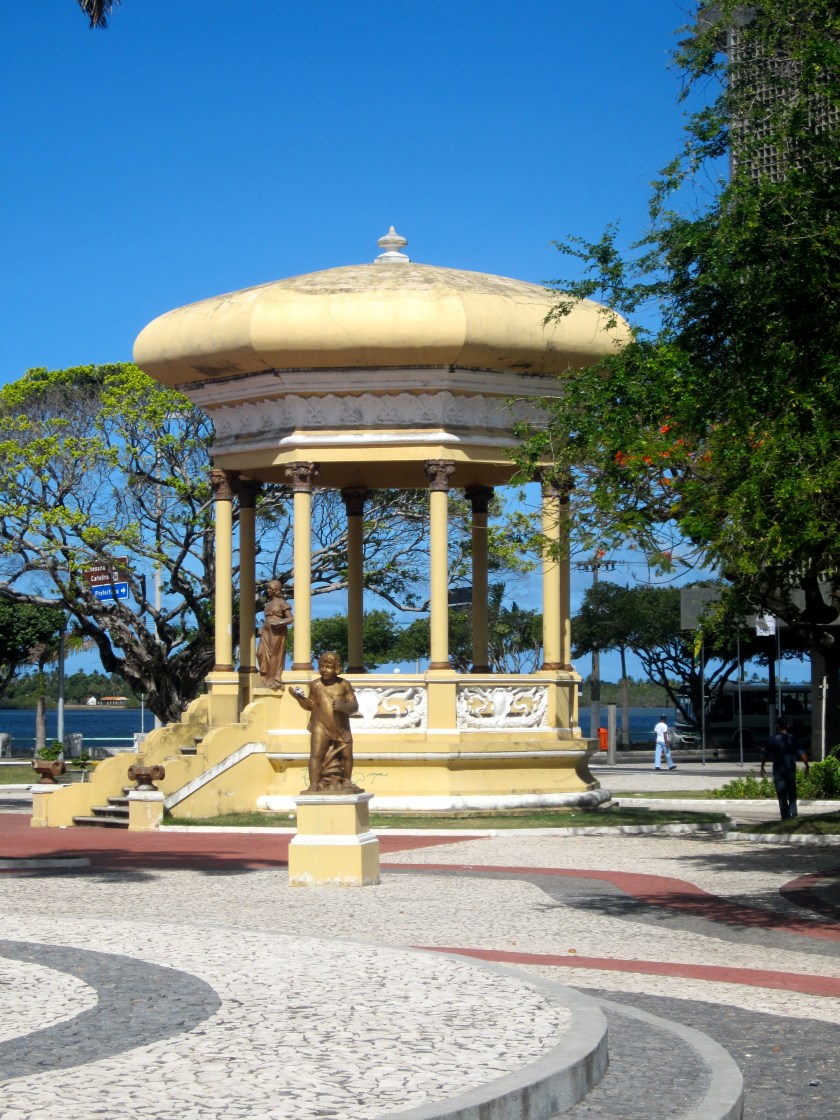
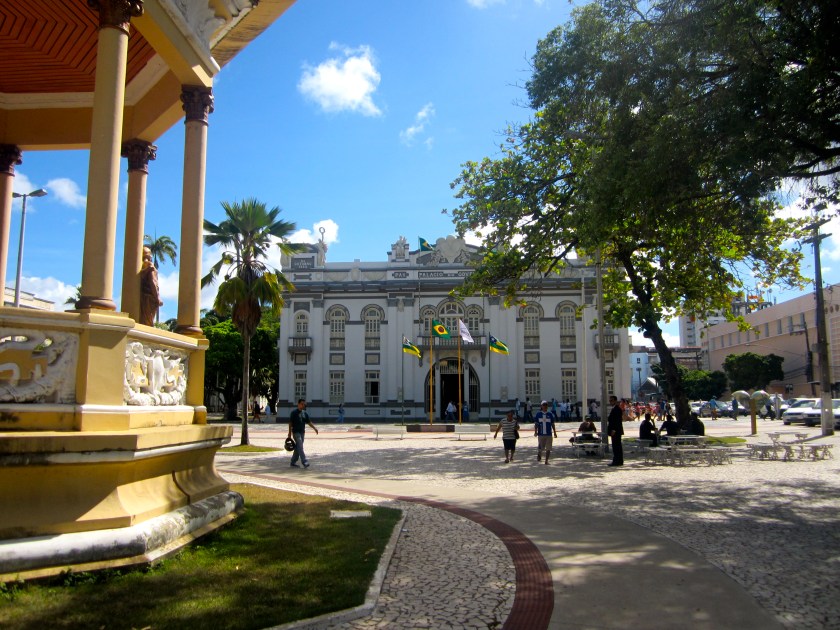
Aracaju is the capital of Sergipe, one of the Northeastern States of Brazil, and coincidently, the smallest one, but nonetheless, full of history and beautiful touristic sites.
Aracaju, is an example of the first planned cities in Brazil, and was built with the intention of becoming the state capital. It was founded in 1855, as the capital of Sergipe.
Enjoying the night beauty of Aracaju:
Thank you, Marcelle Cristinne, for the beautiful photo! Great angle! 😮
Other historical cities from the northeast of Brazil:
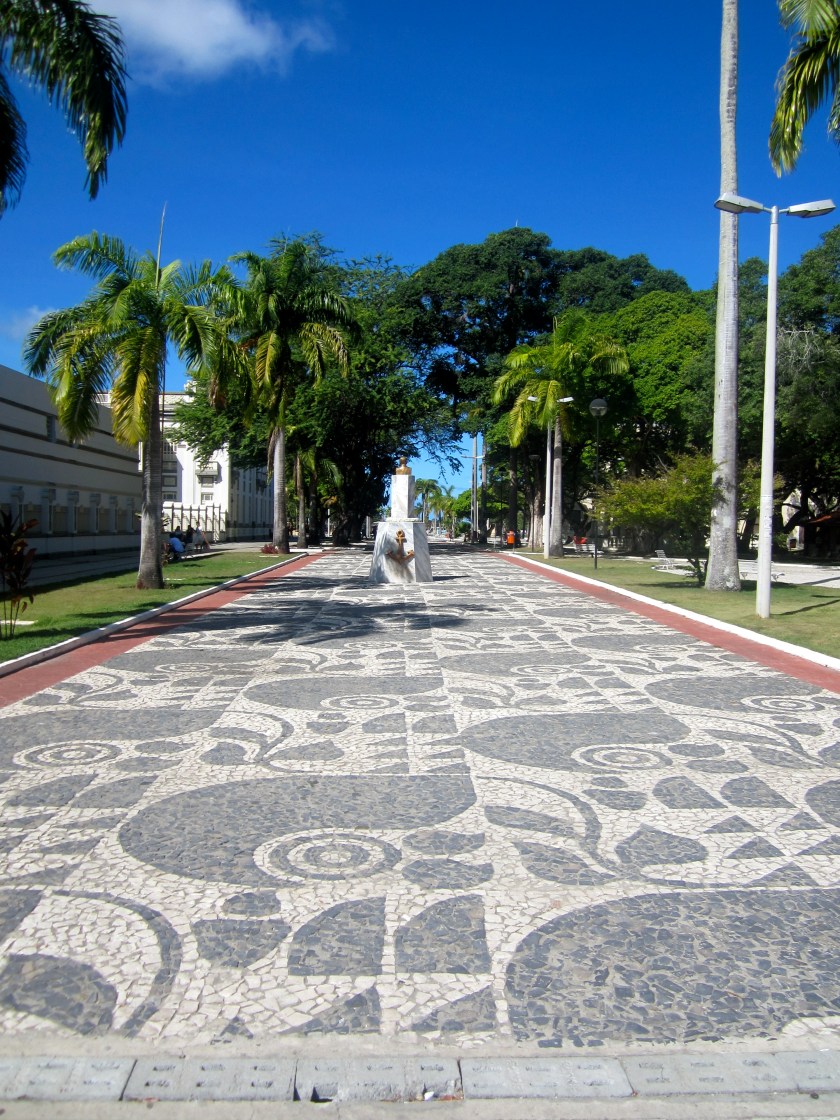
The city of São Cristóvão is located 25 km from Aracaju, capital of Sergipe, another northeastern state of Brazil, and the Praça de São Francisco (shown here) is the reason why the site is a holder of a World Heritage title.
The cobblestones are originally from the Philippines, and it’s the only city in Brazil with that type of street stone!
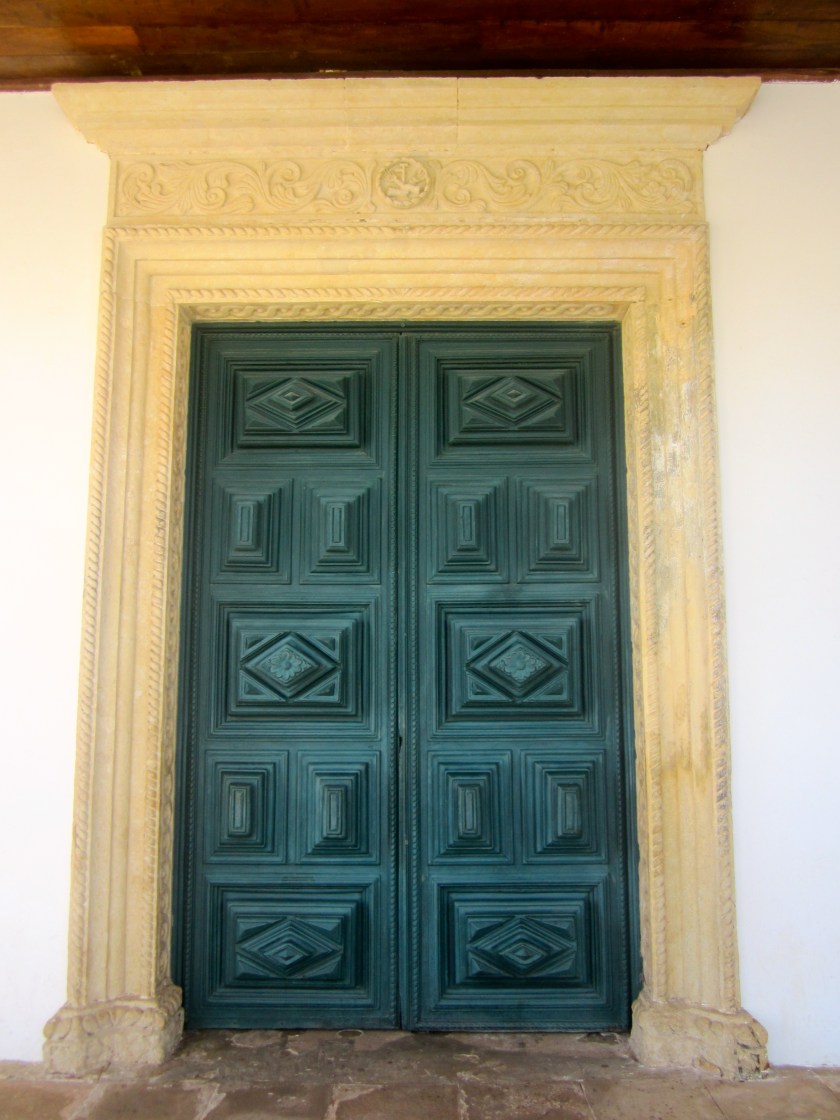
It was founded in 1590 and is considered the fourth oldest city in country. With fast and easy access from the state capital, what was before called he “capital of the Province of Sergipe del Rei” is now registered at the Institute for National Artistic and Historical Heritage – Iphan – preserving its colonial architecture, which delights any curious eyes and souls. A UNESCO World Heritage Site– and, so close to us! 😮
The large Praça de São Francisco presents an architectural group formed by the Church and Convent of São Francisco, during the seventeenth century, which today houses a beautiful Baroque building that was the first hospital in the province of Sergipe, as well as the Historical Museum, where the old Provincial Palace hosted Dom Pedro II, while visiting the city in 1860.
This architectural complex of Praça de São Francisco was recently recognized by UNESCO, and awarded a World Heritage Site title.
In the Carmo Square visitors will find the Church of Our Lady of the Rosary of Black Men, built by the Jesuits in the eighteenth century.
The saint, who lends his name to the church, was the target of devotion of the slaves. At the Praça is also possible to find the Church and the Carmelite Convent, and the Museum of ex-votos. In the Convent, now home to Benedictine nuns, one of the attractions are the delicious cookies made by religious and fought over by tourists!
We try to travel as much as we can, work permitting! 😮
Other historical cities from the northeast of Brazil:
This is an experiment in blogging motivation from the folks atWordPress.com. Every week, they post blogging ideas and tips to help you get the most out of the blog. This week’s photo challenge from WordPress is Unfocused. According to Sara Rosso, from WP, “Unfocused”. You may curse or cheer this week’s theme. We’re looking for that picture which is unfocused. It may be completely intentional, or accidental. You might have thought about trashing it, but in the end it definitely conveys something“.
I have to confess: I was a bit disappointed with the whole ‘lack of a glorious super moon‘ this past May 5th… Where was it??
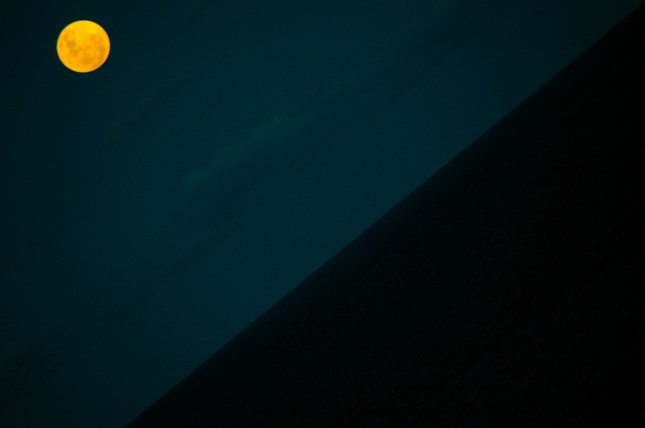
At least, from my very own point of view. Last year we got amazing views and unique snapshots from La Luna, but this year… not so much. Last night, after having all three kids in bed, their morning school backpacks ready, I was doing my regular ‘night round’, going around the house, checking windows, locking doors… when, while checking the sliding glass doors [which lead into our apartment’s veranda], there it was – Miss Luna, again, prettier than this past Saturday… I hope I was able to get a few good shots [had to use an old camera, since husband is out of town with our “good camera”]. Pictures taken, off to bed: “Good night, Moon…”
In case you missed it, yesterday was Super Moon night. And it was also Cinco de Mayo…
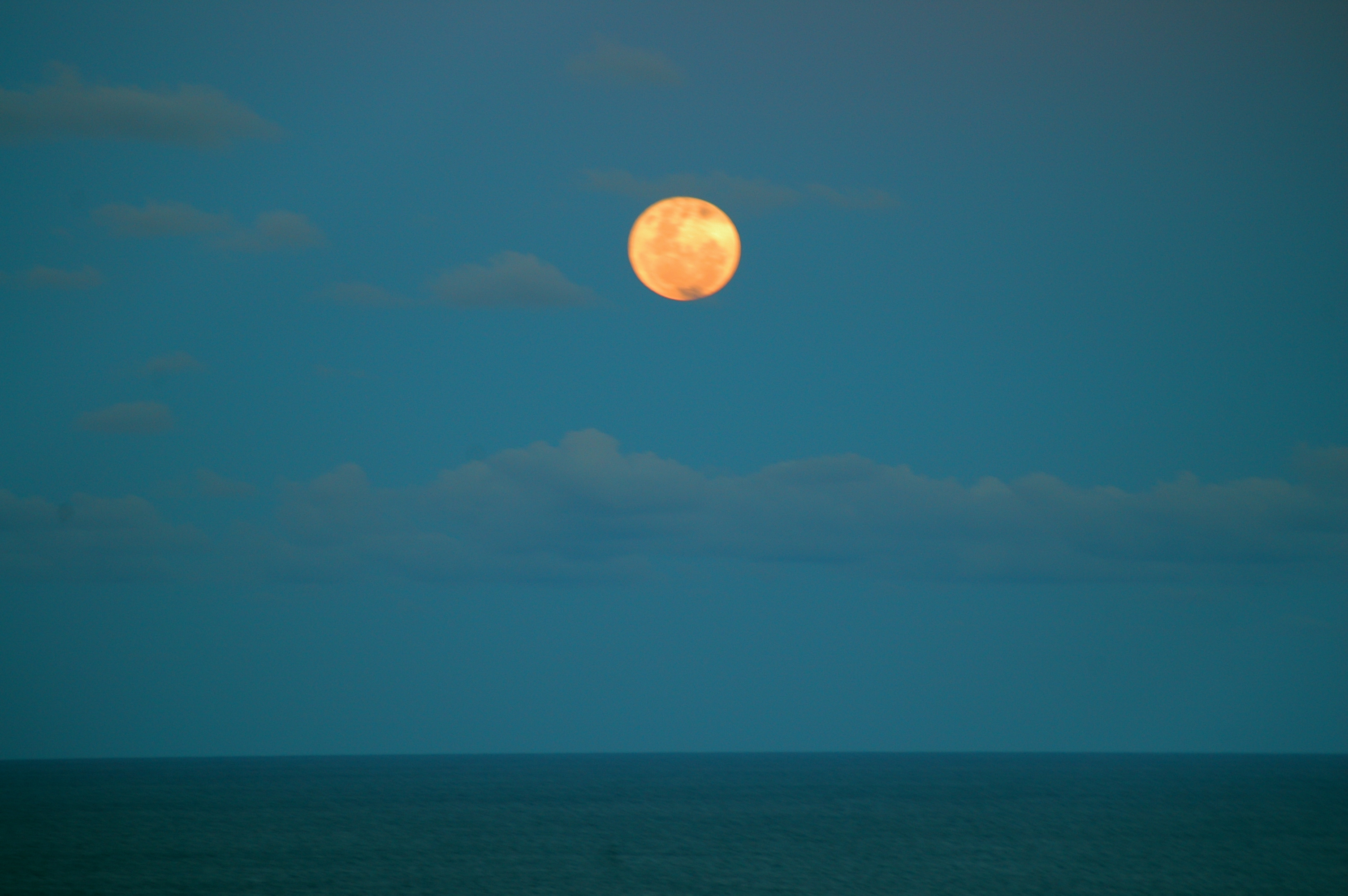
At the end of the afternoon, a very shy, though gigantic moon, kept hiding behind the dark clouds, refusing to come out and share with us its full glory… and we kept waiting, but no success… we then realized, there would be no super moon over the northeastern coast of Brazil,like what we were able to witness last year, from our beachfront setting… Disappointment? Maybe, but then plan B kicked in: its Cinco de Mayo, with or without the magnificent moon! Let the party begin, and, if the moon is too shy to show us it’s grace, the party could continue until the other star – the sun! – would greet all the party people!
And so, enjoying good food, good music and great conversation, a Brazilian-Mexican Celebration went through the night… Happy Cinco & Happy 2012 SuperMoon!
A ‘super Lua’ e o Cristo Redentor, no Rio de Janeiro, na madrugada deste domingo (Ricardo Moraes/Reuters)
😮 😮 😮 😮 😮
Here, from last year’s unique impressions:
Just wanted to share a few pictures with you all. The Supermoon, seen from our apartment, in Recife, Pernambuco, Brazil, on March 20, 2011.
Feel free to use and/or share the photographs, just remembering to indicate the source! Thanks!
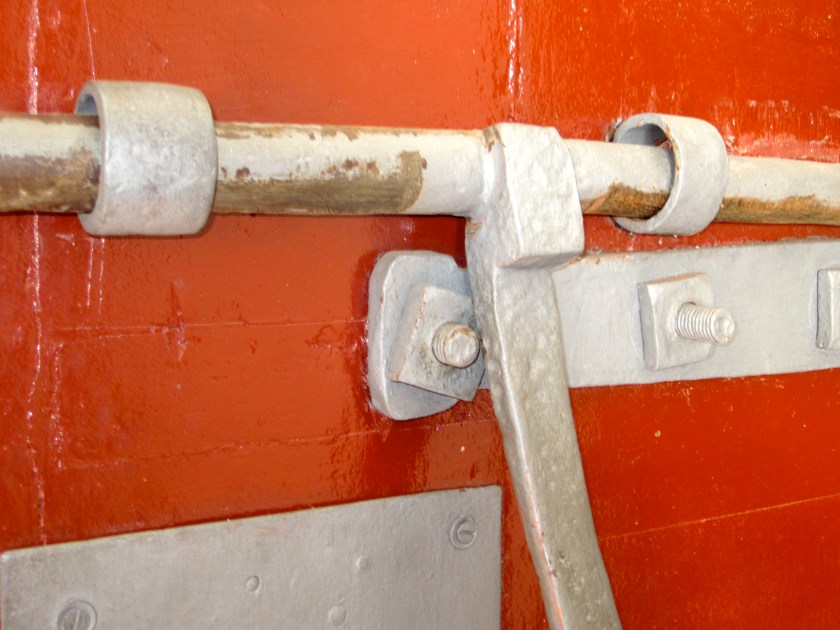
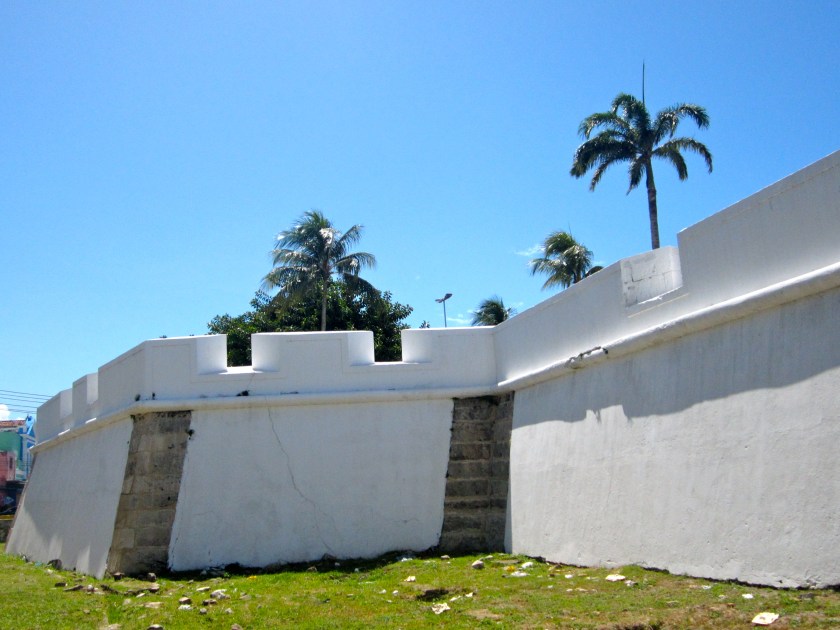
Nome histórico: Forte das Cinco Pontas. Designação popular: Forte das Cinco Pontas. Nome de tombamento: Forte das Cinco Pontas. Outras designações históricas:
Forte Frederik Hendrik;
Fortaleza de São Tiago das Cinco Pontas;
Forte Frederico Henrique;
Forte Frederick;
Heinrich Trots Den Duivel (Desafio Ao Diabo);
Vijfhuck (Cinco Pontas);
Fortaleza de Frederico Henrich.
Muralhas desgastadas, fossos secos e aterrados, paliçadas em grande parte caídas pela deterioração das madeiras, foi este o quadro que apresentava o Forte Frederick Henrich, quando da chegada de Nassau a Pernambuco. Logo pode Nassau constatar a pouca defesa que em tais condições aquele forte poderia oferecer; e se tratava de um importante posto, pois era o único capaz de garantir água no caso de um cerco à cidade. Mandou alargar e aprofundar os fossos; construir uma contra-escarpa na face externa do fosso; alargar e elevar as muralhas; e do lado do mar, construir uma sapata. Posteriormente ampliaram as defesas externas, com a construção de novos fossos em direção ao sul.
Quando da Restauração Pernambucana, o Forte das Cinco Pontas foi a última fortaleza a ser conquistada pelas tropas luso-brasileiras.
Foi ainda no Forte das Cinco Pontas, onde se encontrava aquartelado o general Sigismund Von Schkoppe, que foram elaborados os termos da rendição das tropas holandesas. E a 28 de janeiro de 1654, na Campina do Taborda, o general Francisco Barreto de Menezes, recebeu oficialmente os termos de capitulação, quando ficaram definidos os moldes da evacuação dos holandeses de Pernambuco.
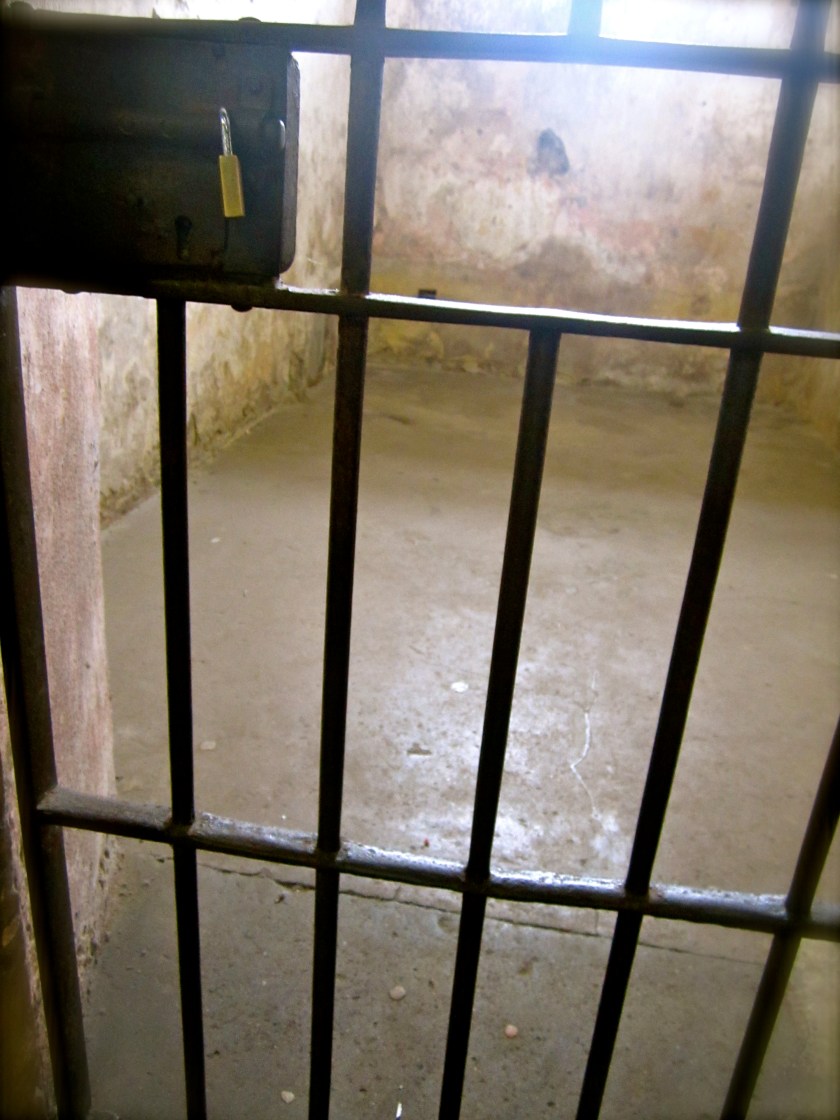
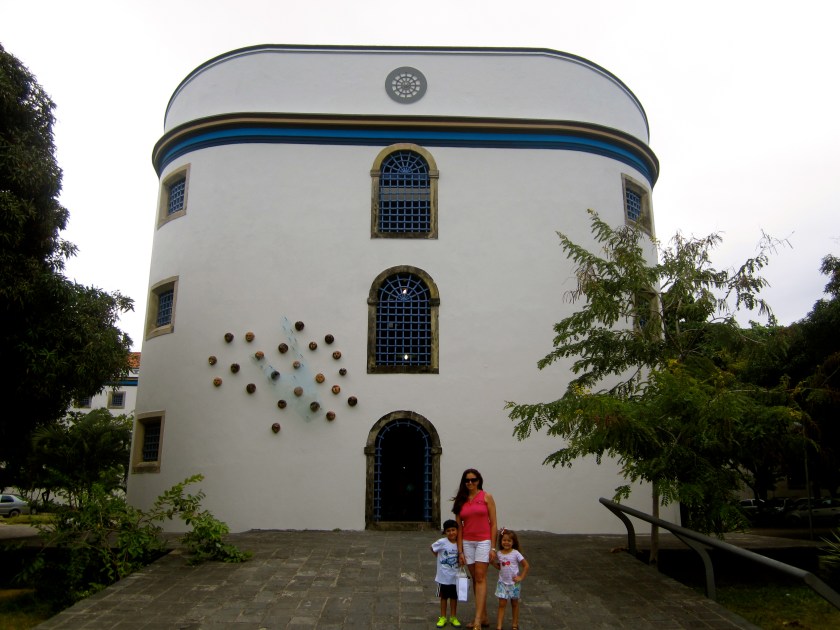
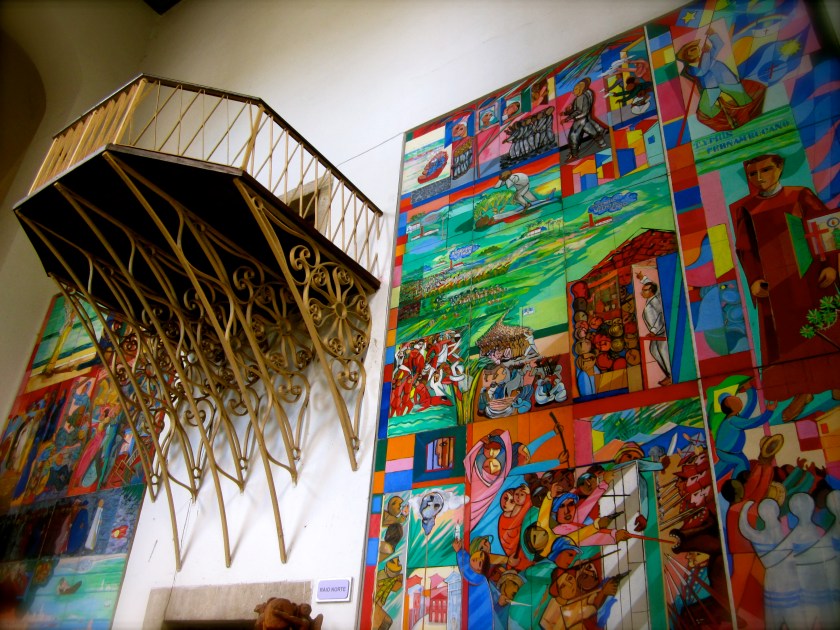
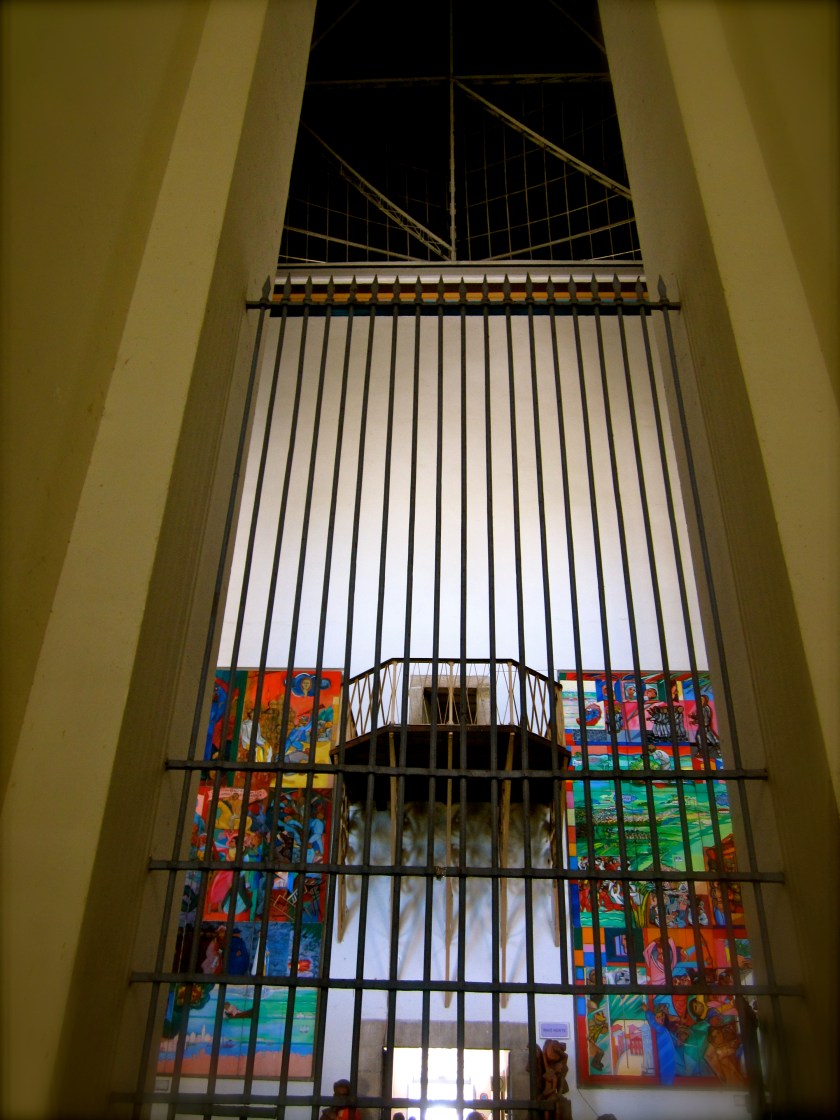
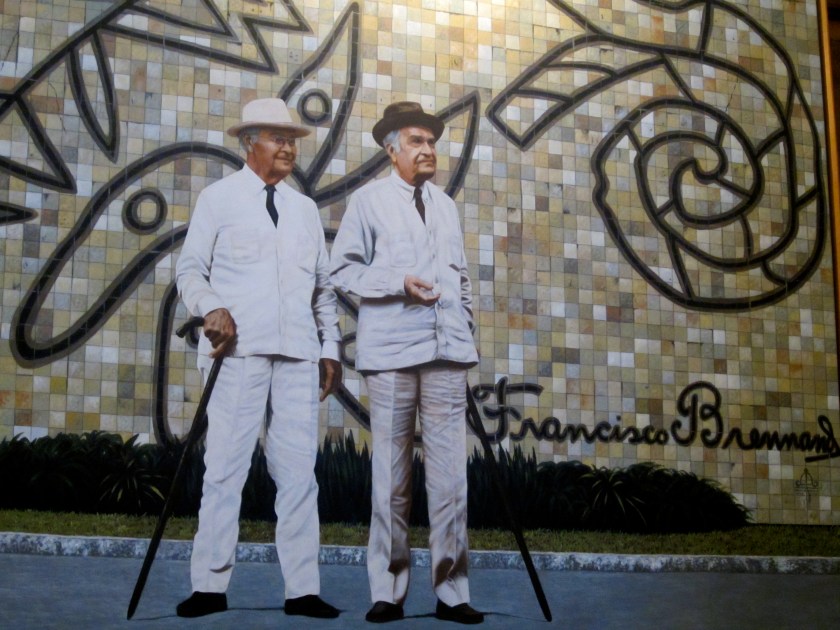
An old detention house, closed in 1973, was transformed under Brennand’s supervision (read more about this visionary, collector and artist, here), in a shopping mall.
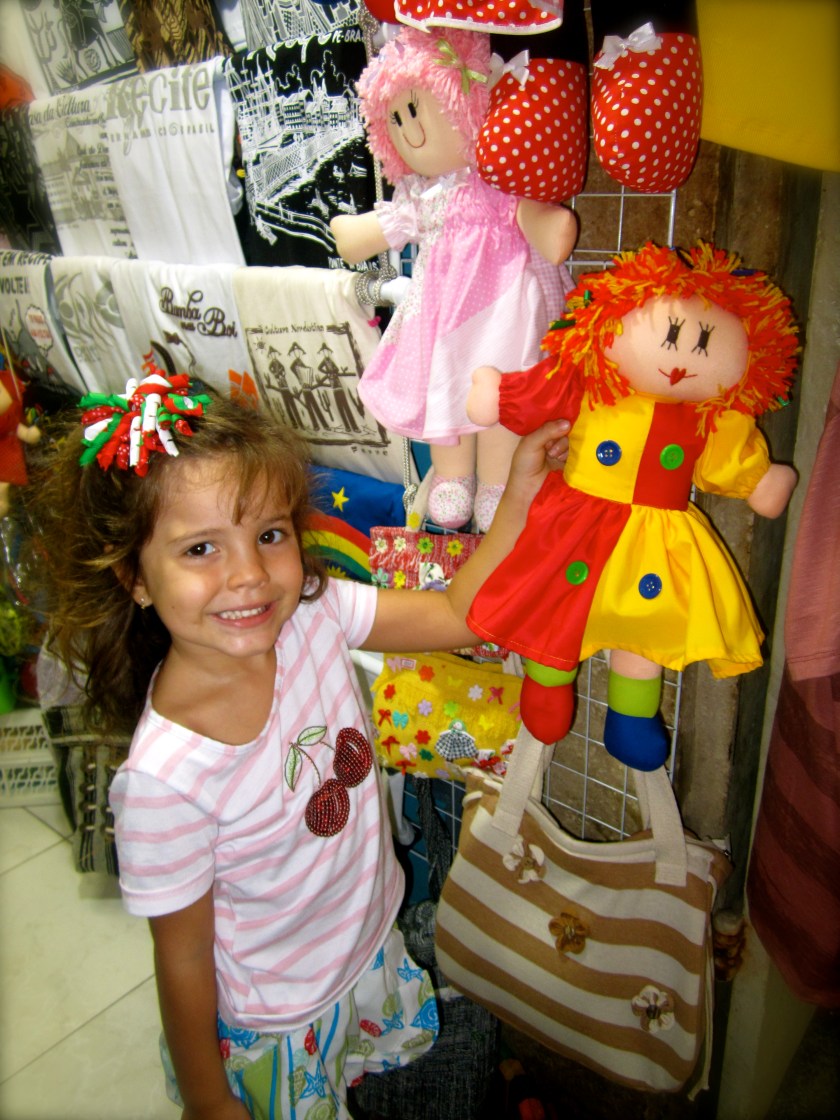
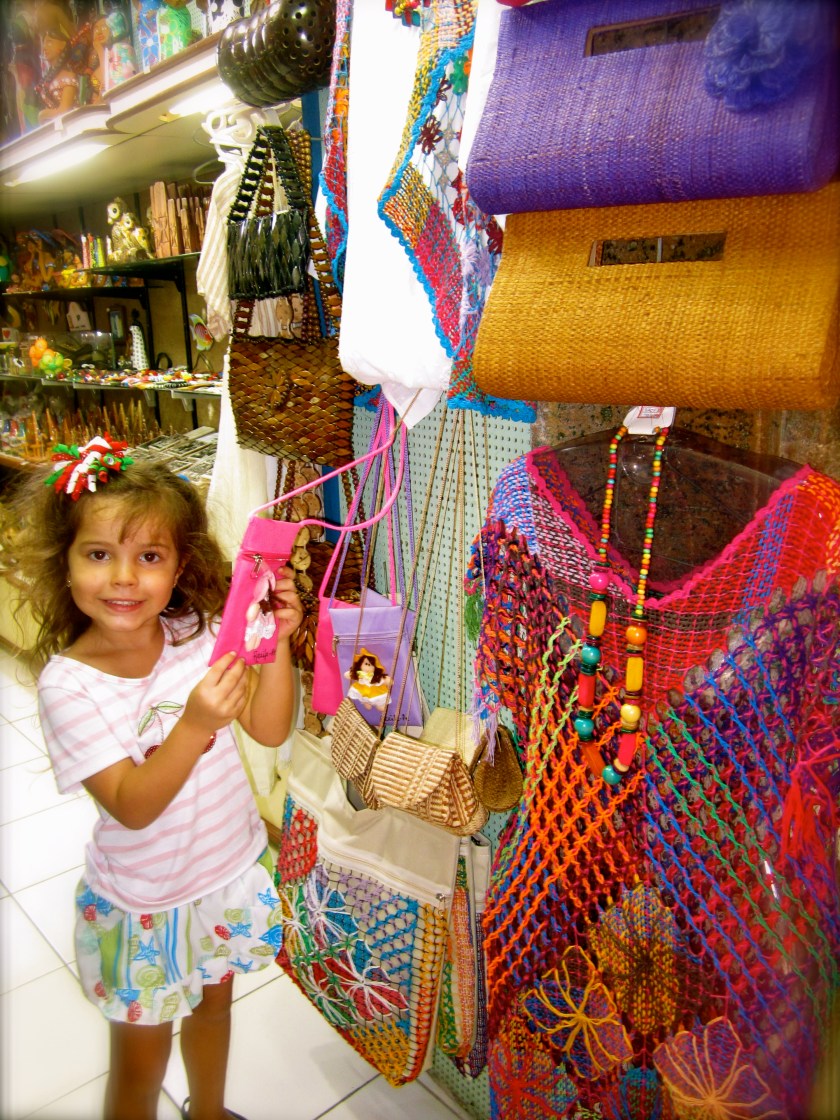
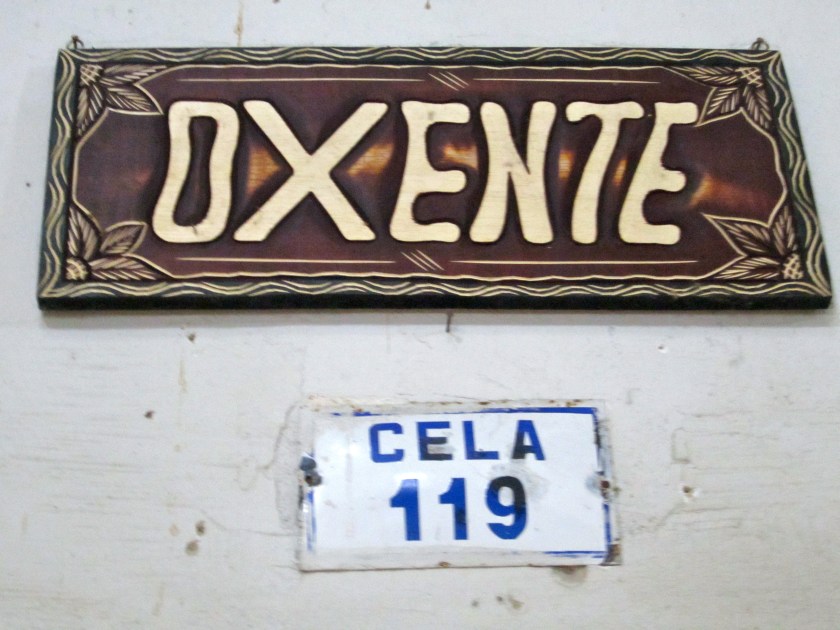
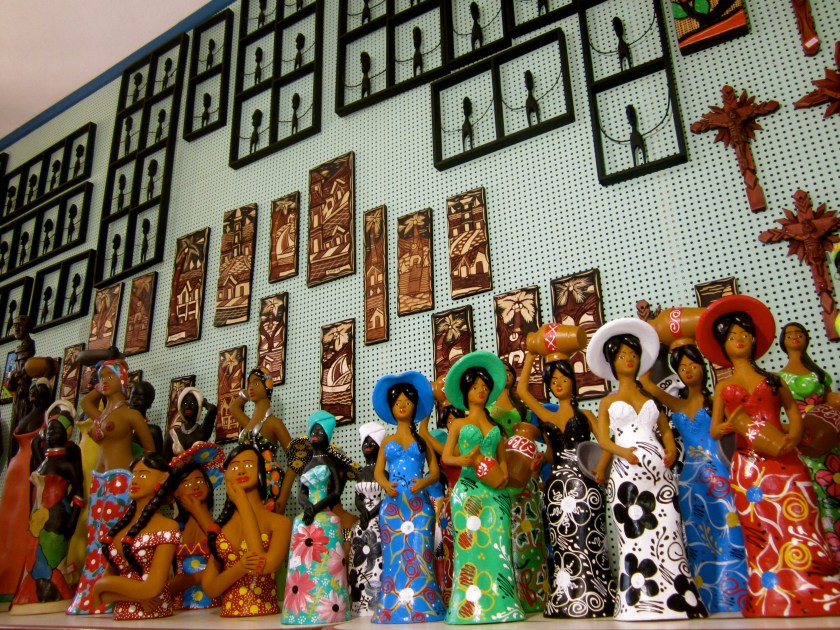
The architecture has been preserved, and the cells were occupied by dozens or small shops, selling local crafts.
detail, the prison seen from above, a project all made with wood
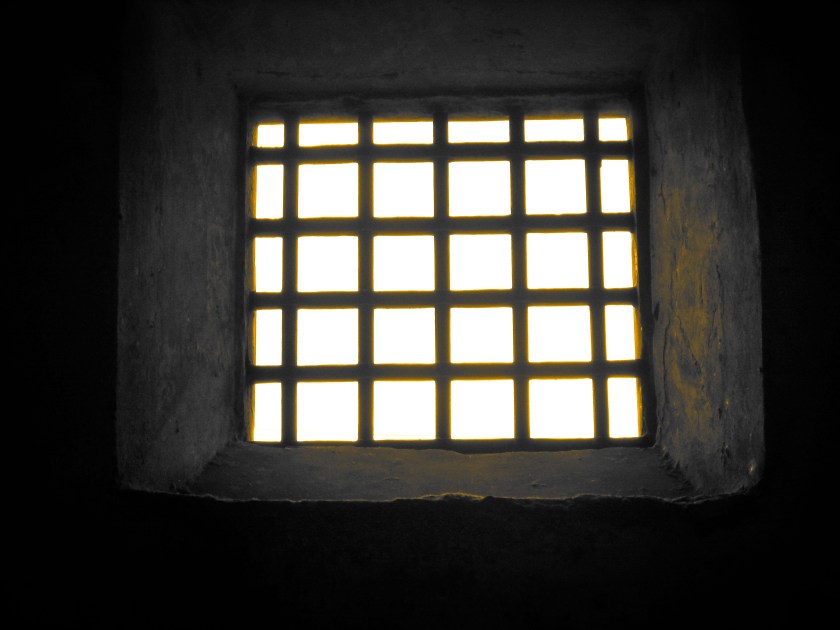
Even where interior walls were removed, to allow a little bigger shops, the look was maintained, only two lifts give a dispensable sign of modernity and comfort, in contrast with the strong grills in the center of the building, and one may find beautiful wood work, resembling the ones found in the colorful nearby city of Olinda.
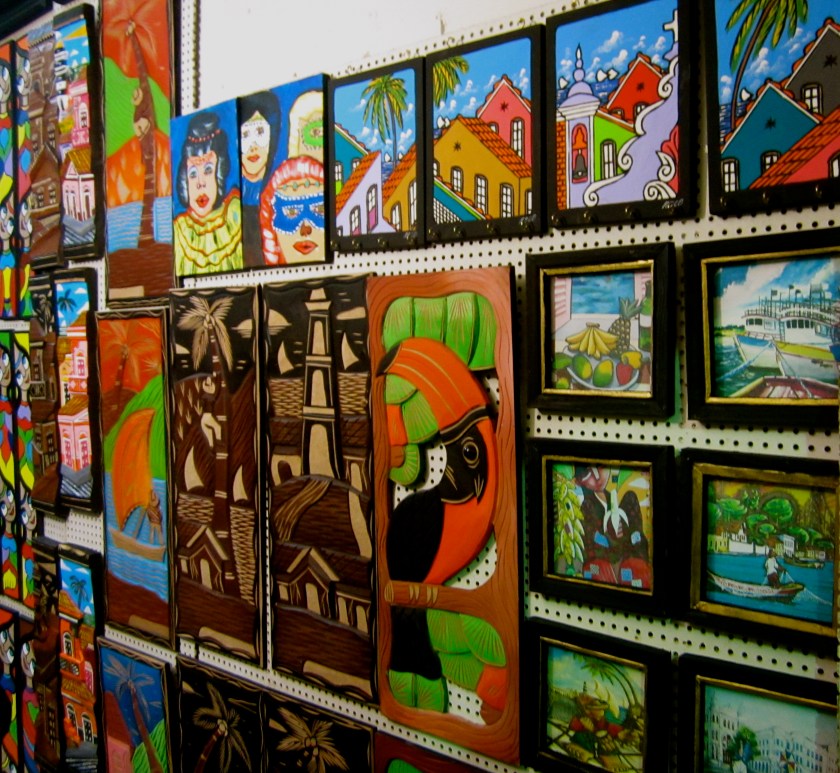
Throughout the galleries it’s possible to find several different examples of the influence of Master Vitalino, when it comes to lively arts and crafts.
Excellent musical and dance performances often take place right outside the building. The Casa da Cultura is an excellent place to obtain tourist information and start an acquaintance with the region’s cultural arts.
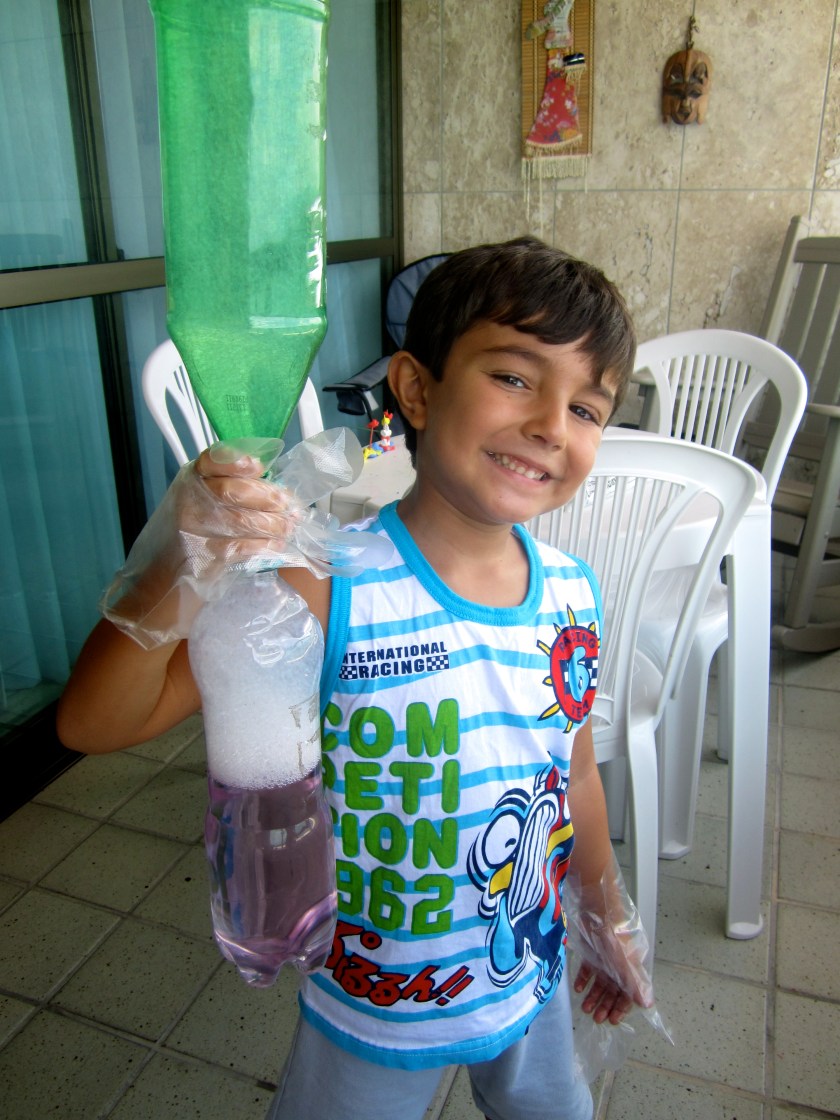
Brazilian Labor Day. Long weekend – 4 days with no school, but a great opportunity to spend time in family… Here are some of the ways our children like to spend their “school-free” time: one of their favorites is playing scientists… Growing colorful crystals, creating a magic wand made out of gel… understanding water movement through a ‘diy PET bottle tornado‘! 😮
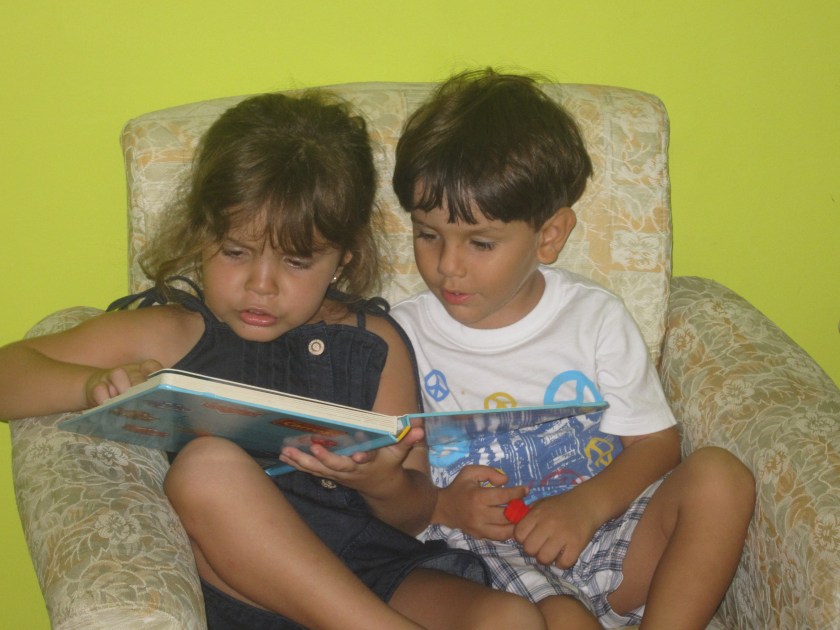
We’re very thankful for the endless possibilities of “home science fun”! Even the ‘grown-ups’ enjoy the fun of making pizza… while kids are ‘traveling through the worlds’ presented by story books… Something else to do? What about spending a couple of healthy hours at the pool?… lots to do, thankfully! But being outside is definitely, the all-time winner! A must-do, for our 3 kids! 😮
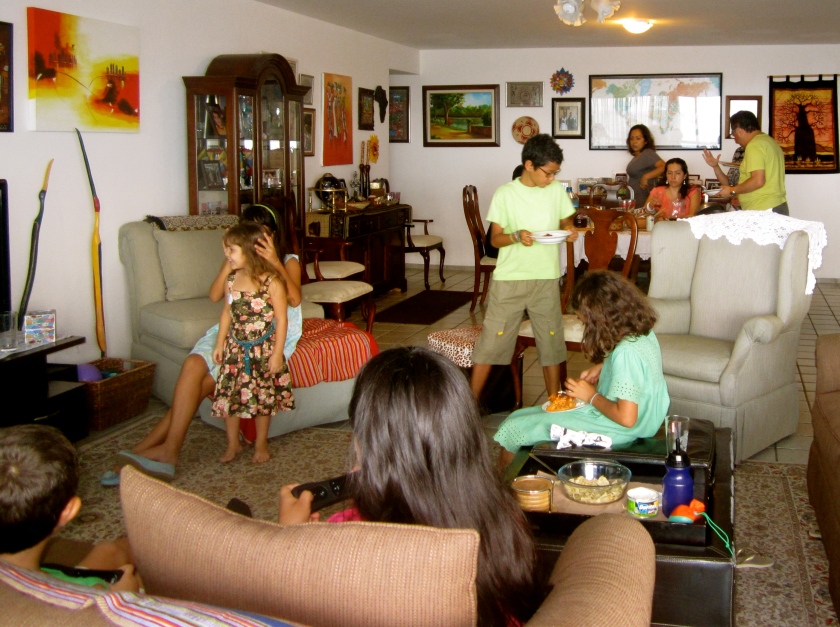
The best recipe for a successful Sunday: Gather friends and neighbors around good food, great conversation, games (for the children) and wait for the relaxing sunset…
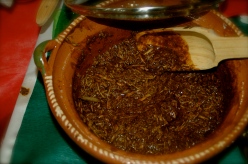
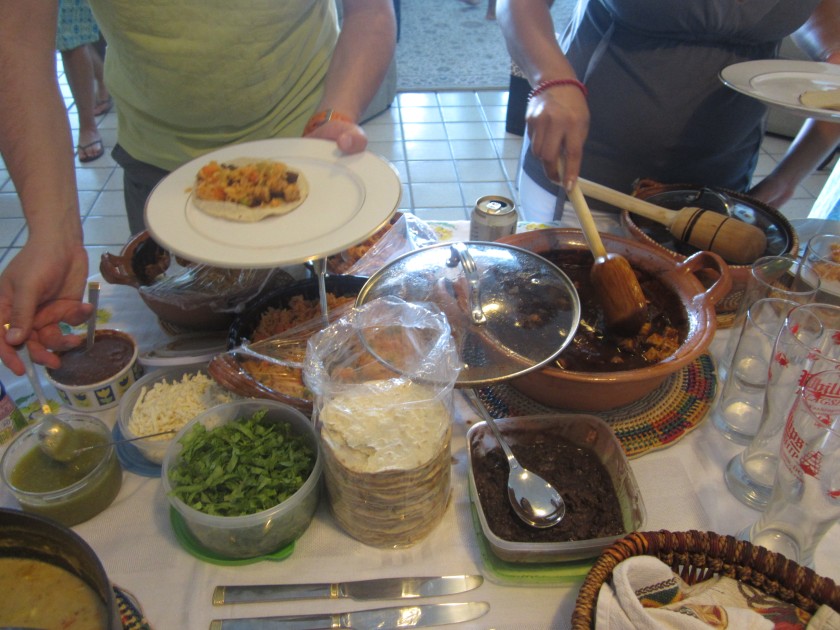
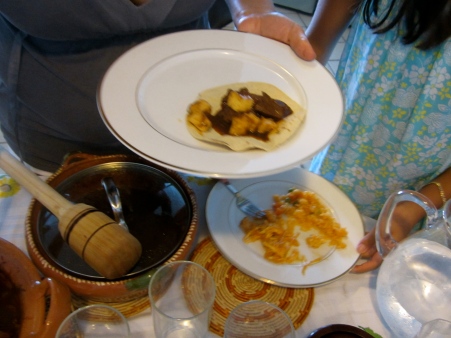
This is the authentic image of a genuine Mole Poblano… The recipe is not mine, unfortunately… Its preparation and execution are all credit to two of our lovely neighbors, both are Mexican families currently living in Recife due to work relocation. Click here for more images and their recipe! This past Sunday our Mexican neighbors brought to our place a quasi-Mexican fiesta, including delicious deserts, and we’ were happy to host [and still embarrassed for not knowing how to cook as well as they did!) 😮 … making sure everyone finished their plate!…and getting ready to wait for the calming sunset over the sea! Also, check this other post out. It’s about honoring the Mexican Culture, from another fellow blogger, passionate by Mexico, good food and cheerful celebrations!
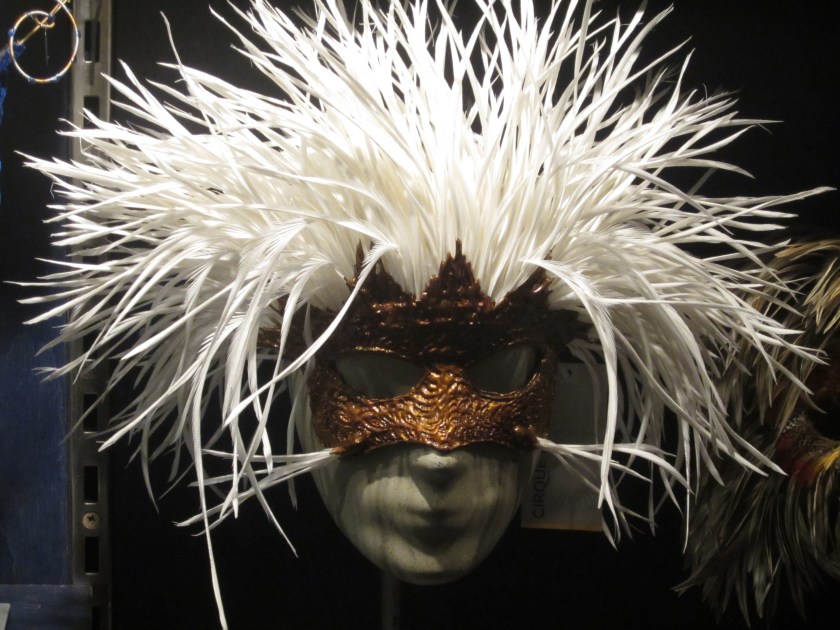
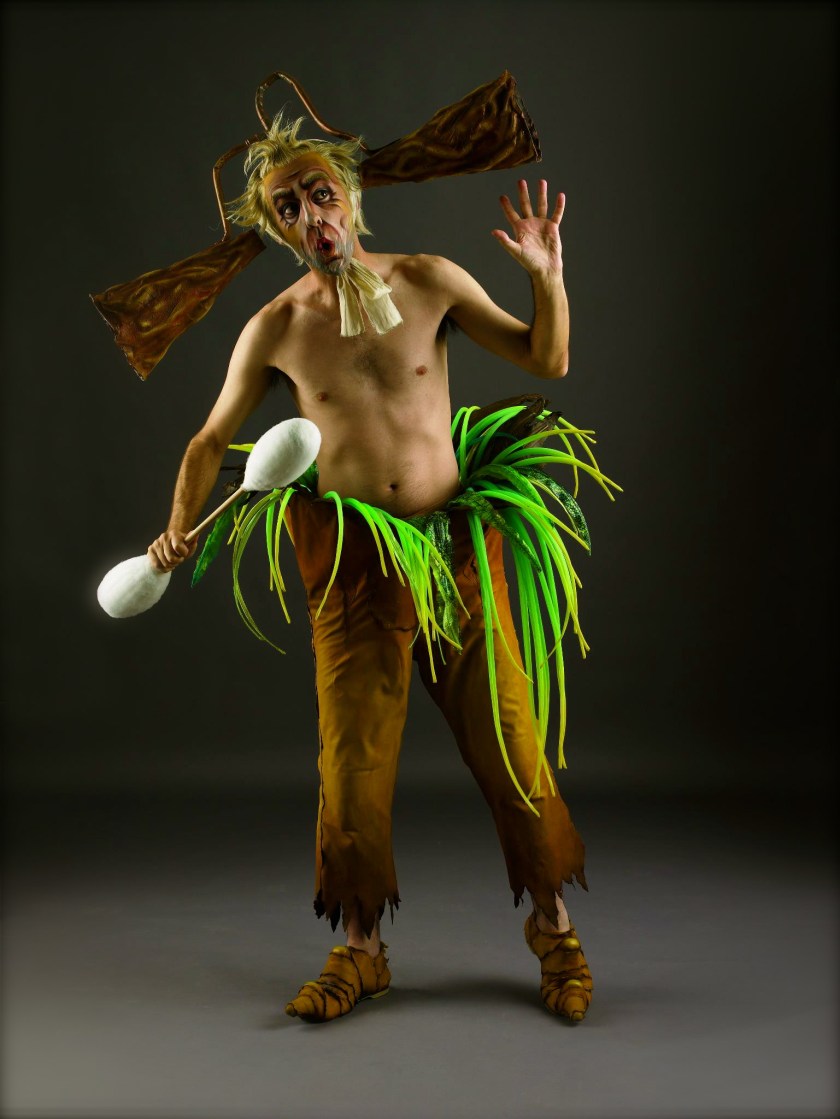
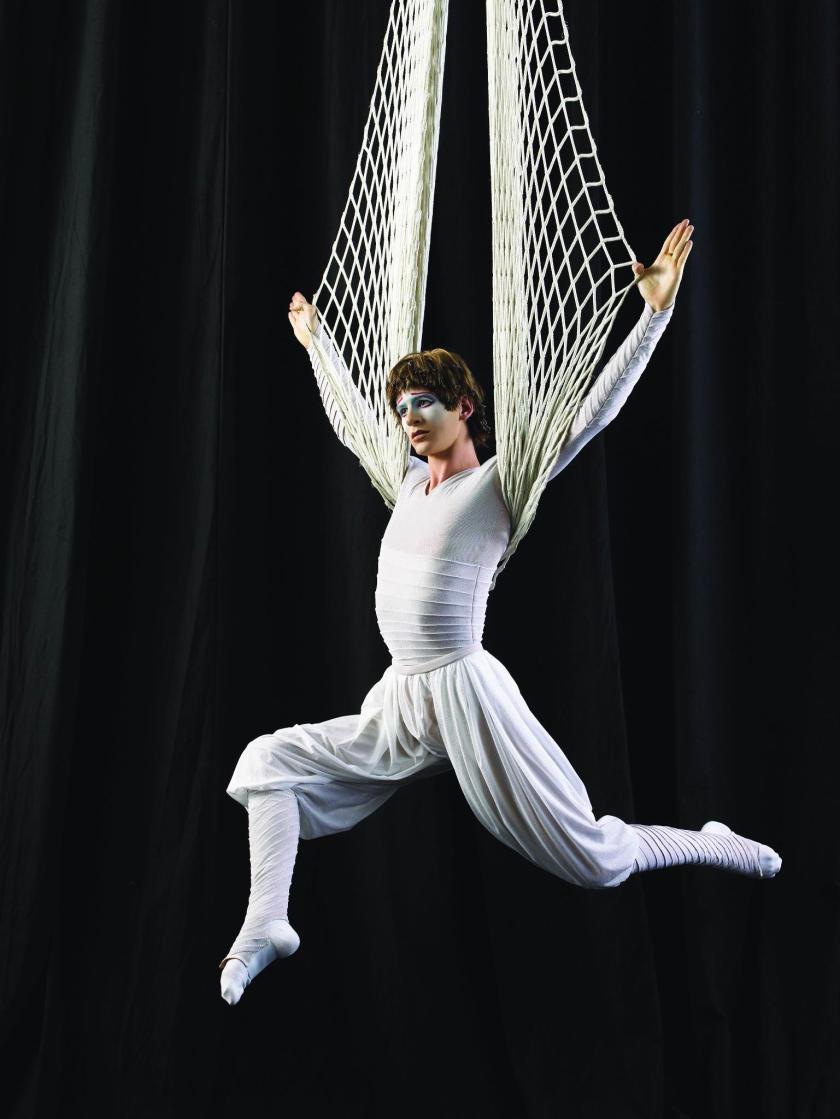
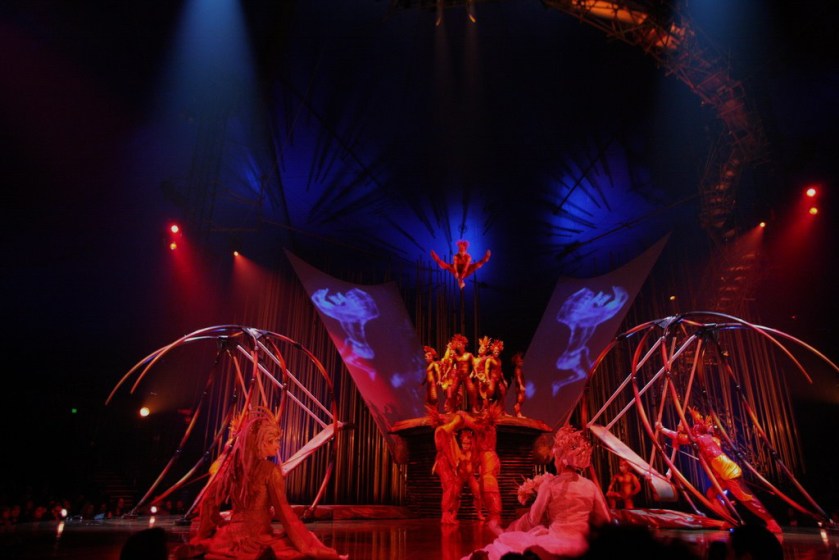
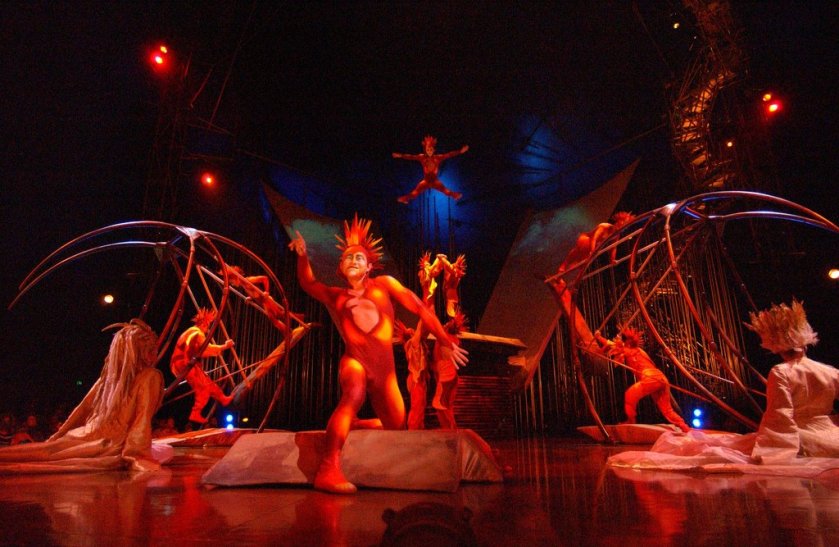
“From the sky falls a solitary young man, and the story of Varekai begins.
Parachuted into the shadows of a magical forest, a kaleidoscopic world populated by fantastical creatures, this young man sets off on an adventure both absurd and extraordinary. On this day at the edge of time, in this place of all possibilities, begins an inspired incantation to life rediscovered. [Find Icarus at the end of this post!]
The word Varekai means “wherever” in the Romany language of the gypsies the universal wanderers. This production pays tribute to the nomadic soul, to the spirit and art of the circus tradition, and to the infinite passion of those whose quest takes them along the path that leads to Varekai.”
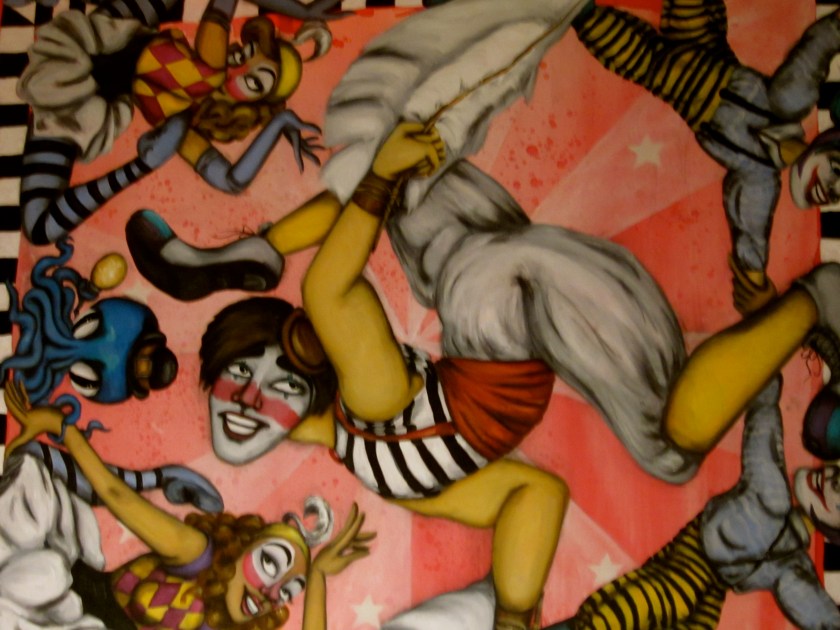
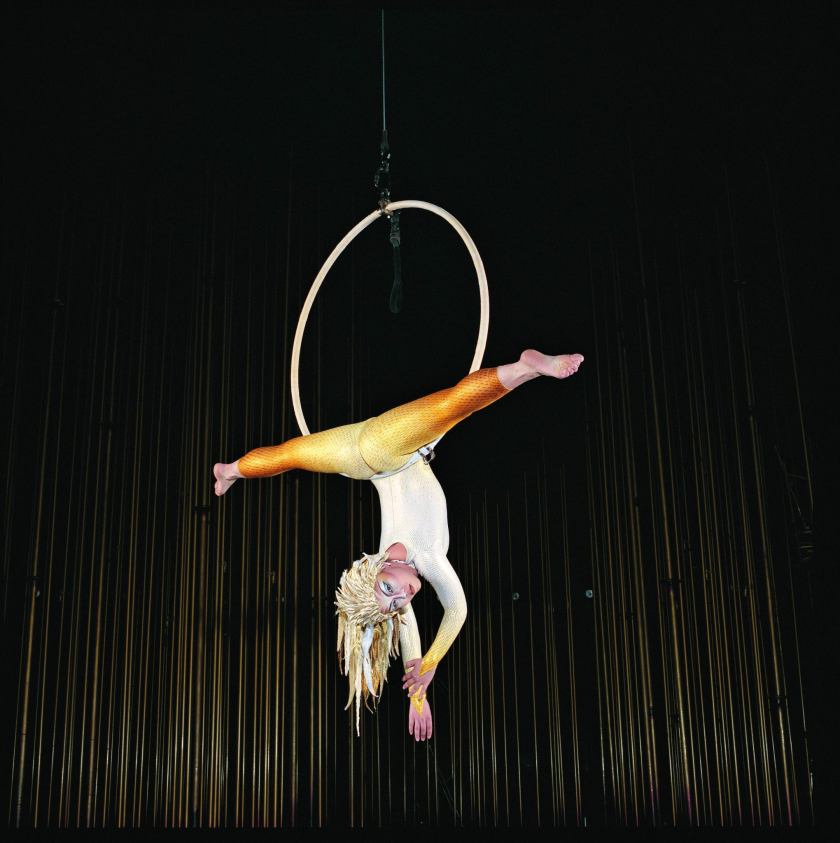
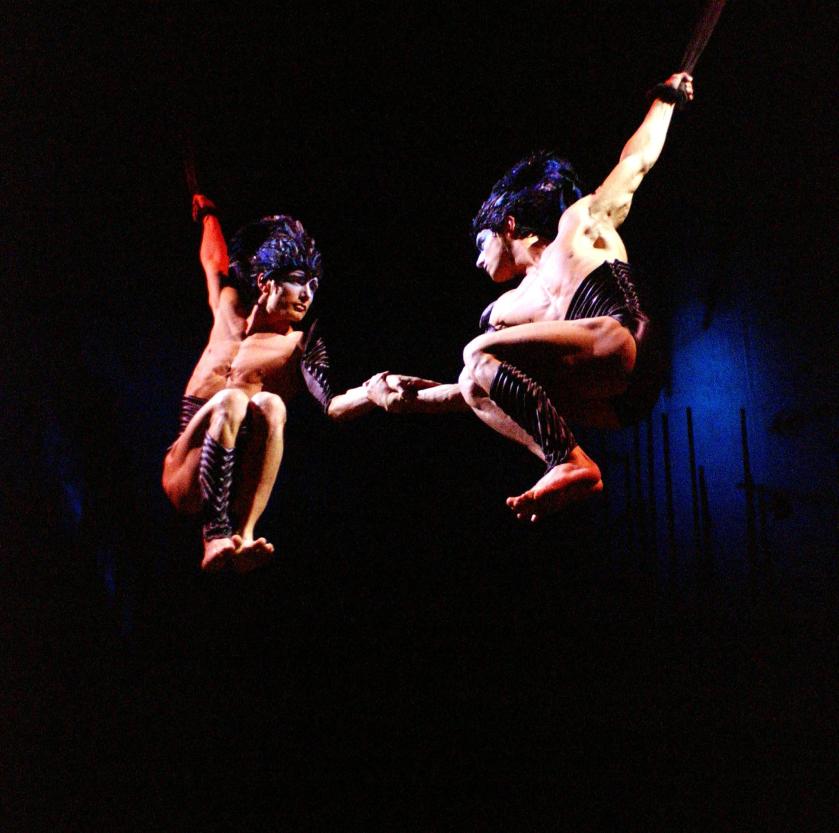
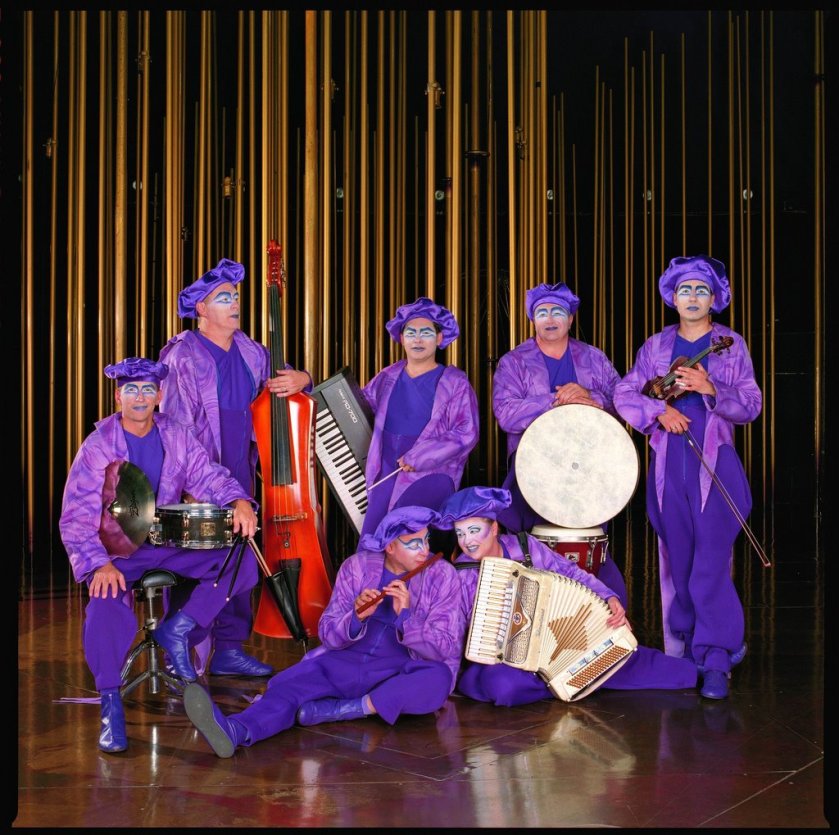
I’d like to state my “big thank you” for the Show’s production, it’s official website, from where these quotes are borrowed. We were fortunate in having the opportunity to watch the “trupe” in Recife, Brazil, during their last presentations. What a treat! Enjoy the images! [photographic shots were not allowed during the show/performance, but permitted during the 25 min. interval, and at the outside areas…] Most of the photos presented here were taken with our camera. Some pictures (all indicated as such) were borrowed from the Cirque du Solei official website and/or its official Fan Page. My deepest appreciation!
Source: Varekai, Cirque du Solei Fan PageSource: Varekai, Cirque du Solei Fan PageSource: Varekai, Cirque du Solei Fan PageSource: Varekai, Cirque du Solei Fan Page
Source: Varekai, Cirque du Solei Fan PageSource: Varekai, Cirque du Solei Fan PageSource: Varekai, Cirque du Solei Fan PageSource: Varekai, Cirque du Solei Fan Page
This past week, husband had the opportunity to enjoy its perfect architecture, while facing very long working days at the Capital, a lot happened in Brasília during this past week, including the meetings for the Open Government Partnership.
From the partnership goals: “It takes political leadership. It takes technical knowledge. It takes sustained effort and investment. It takes collaboration between governments and civil society. The Open Government Partnership is a new multilateral initiative that aims to secure concrete commitments from governments to promote transparency, empower citizens, fight corruption, and harness new technologies to strengthen governance. In the spirit of multi-stakeholder collaboration, OGP is overseen by a steering committee of governments and civil society organizations. To become a member of OGP, participating countries must embrace a high-level Open Government Declaration; deliver a country action plan developed with public consultation; and commit to independent reporting on their progress going forward.
The Open Government Partnership formally launched on September 20, 2011, when the 8 founding governments (Brazil, Indonesia, Mexico, Norway, Philippines, South Africa, United Kingdom, United States) endorsed an Open Government Declaration, and announced their country action plans. Since September, OGP has welcomed the commitment of 43 additional governments to join the Partnership.”
I’d stated before my deep admiration for this city. Unique and beautiful, in every single way. Brasília is part of who I am, and who I’ll always be…
This past week, husband had the opportunity to enjoy its perfect architecture, while facing very long working days at the Capital, but this talk will be left for an upcoming post – a lot happened in Brasília during this past week.
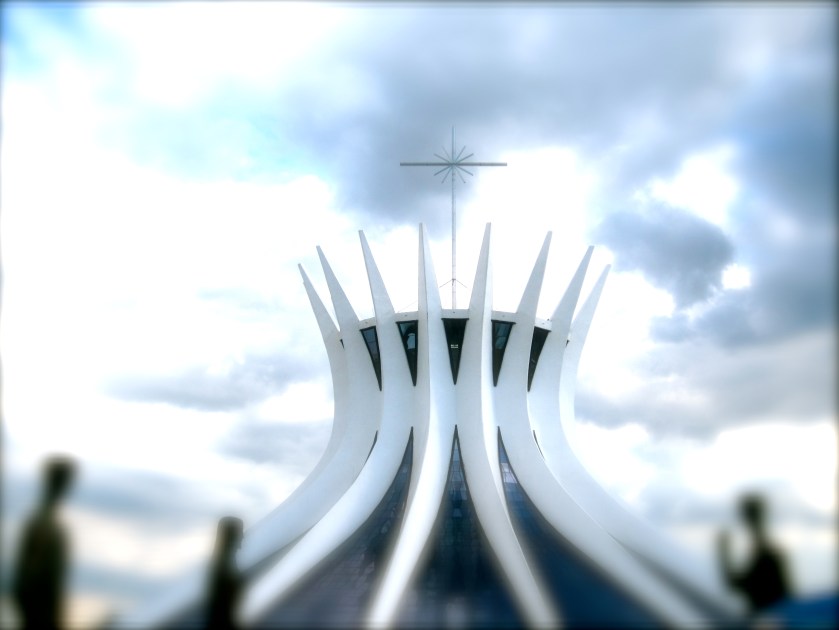
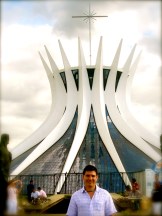
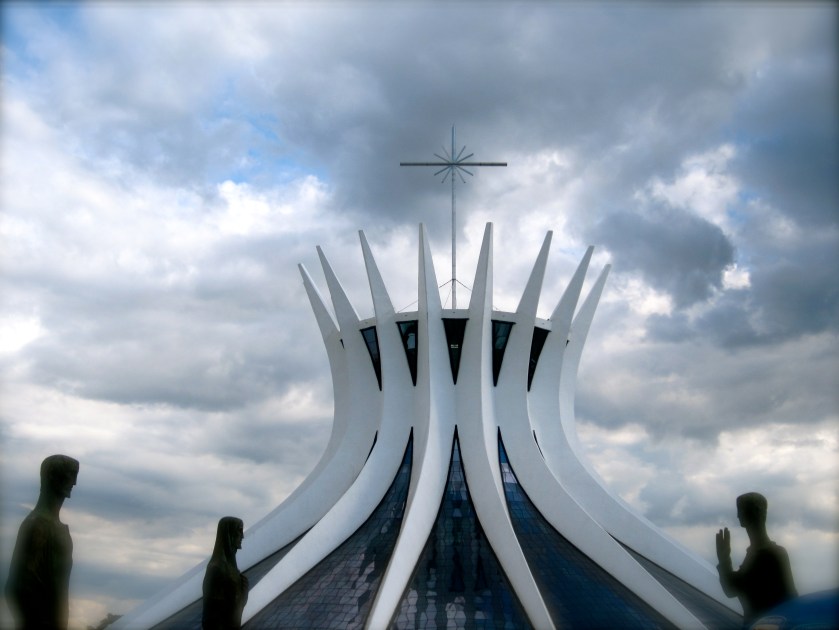
For now, I’m dedicating this series of posts to him, showing my deepest appreciation for this efforts in bringing back home (daytime & nightlight) pictures of my hometown, during his quite scarce free time… 😮 This first post will be about the dream of a visionary man, and the idea of constructing a cathedral resembling two hands together, reaching up…
Image Source (left): “aboutBrasilia.com” Brasilia is without any doubt a singular city, different from all others; even those ones considered moderns and planned.
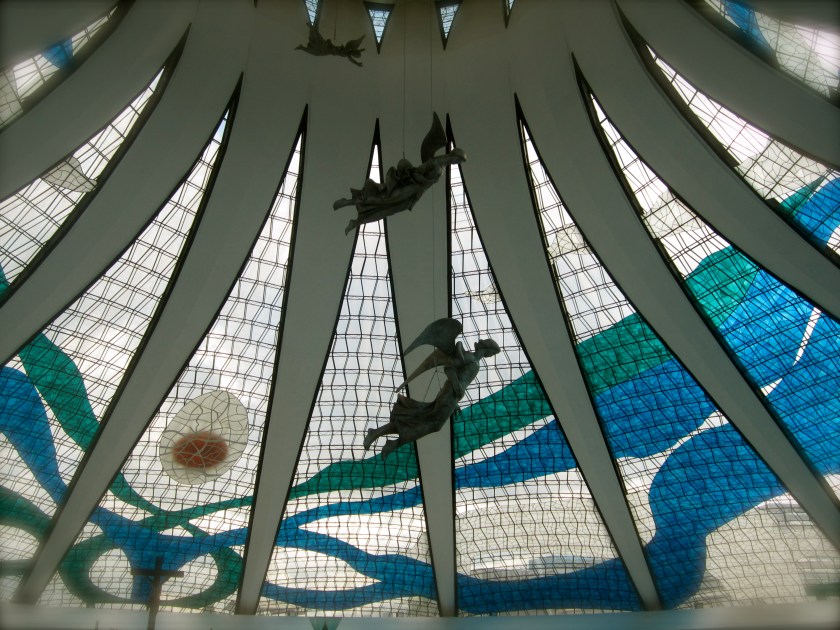
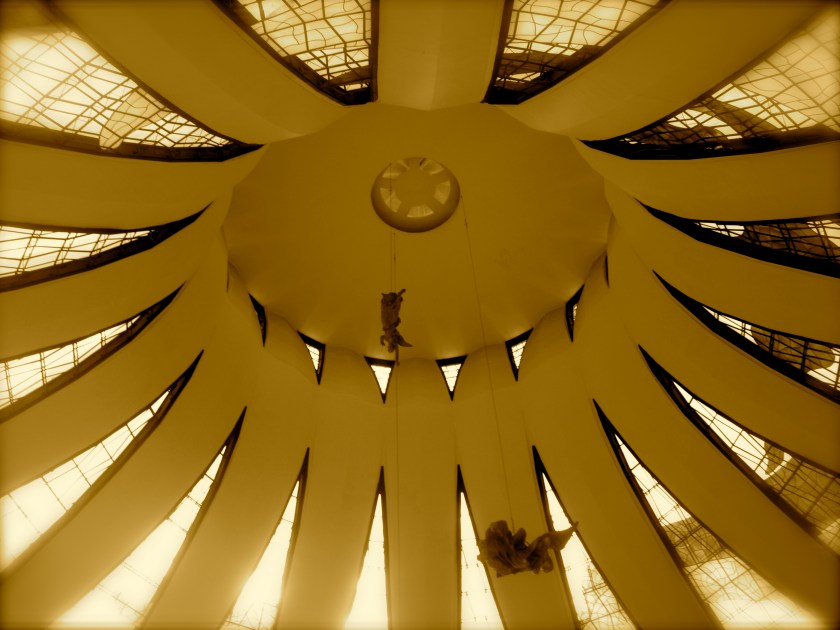
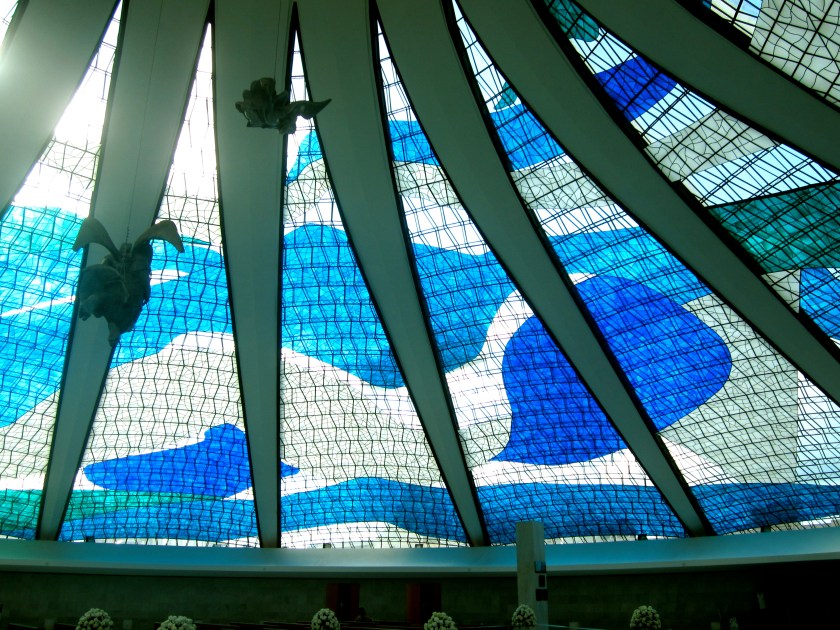
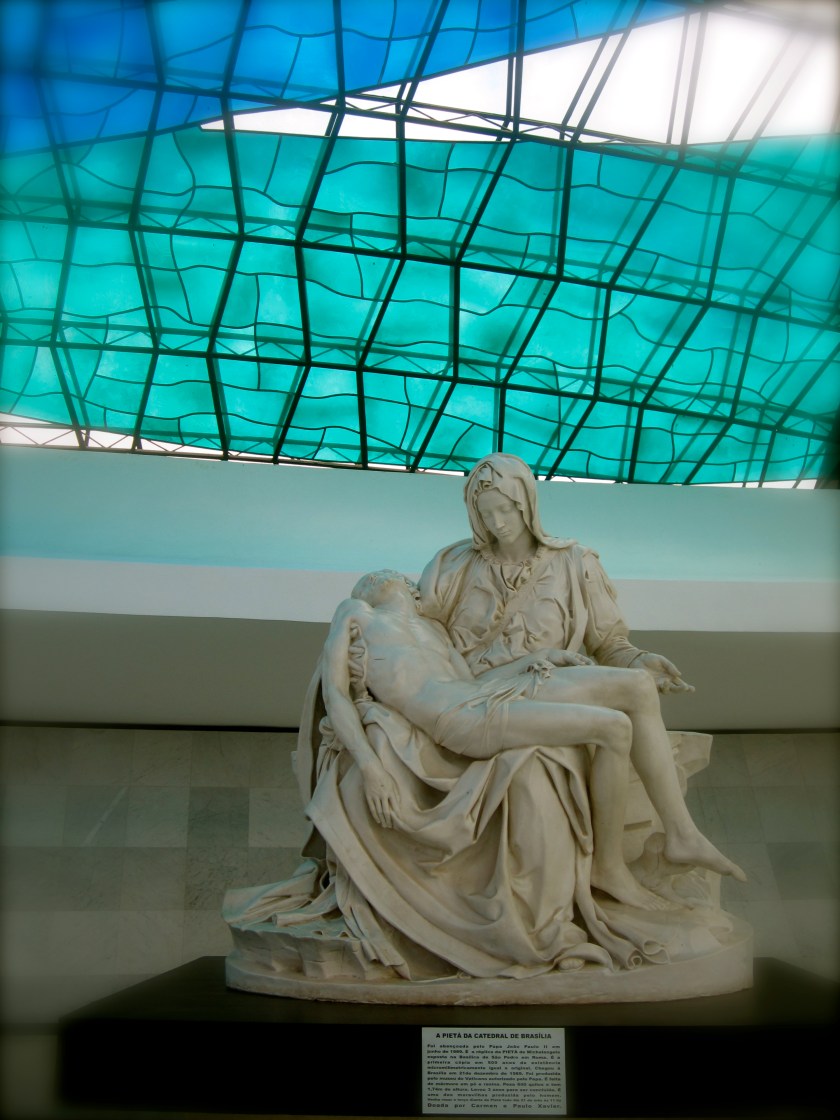
For such special city, an equally singular Cathedral was designed and built. On 12th September 1958, the Cathedral’s cornerstone was laid. The Metropolitan Cathedral of Brasilia is an expression of the geniality of the architect Oscar Niemeyer. In 1960, the Cathedral’s structure was finished, and only the 70 m diameter of the circular area and the 16 concrete columns were visible. These columns, having parabolic section and weighing 90 t, represent two hands moving upwards to heaven. The Cathedral was dedicated on the 31st May, 1970. At that time it had already the external transparent window. Four bronze sculptures 3 m high, representing the Evangelists, can be seen at the external square in the entrance of the Temple. These sculptures were made with the help of the sculptor Dante Croce, in 1968. Inside the nave, three sculptures of angels are suspended by steel cables.
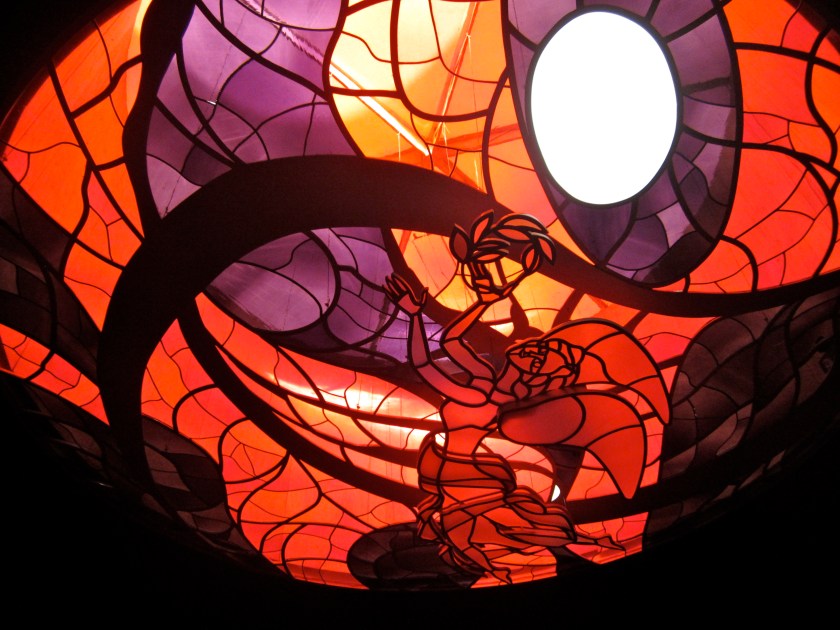
The smallest angel has 2,22 m of length and weighs 100 kg. The medium one has 3,40 m of length and weighs 200 kg. The big one has 4,25 m of length and 300 kg weighs. The sculptures were made by Alfredo Ceschiatti, with the help of Dante Croce, in 1970. The nave stained glass is made of 16 pieces of fibreglass. These pieces, in colours of blue, white and brown, were fixed between the concrete columns, in triangles of 10 m of base and 30 m of height. They were painted in 1990 by Marianne Peretti. Having an oval form, the Baptistery has its walls covered by a panel of ceramic tiles painted in 1977 by Athos Bulcão. The local architecture is completed by a bell tower. Its four big bells were donated by Spain.
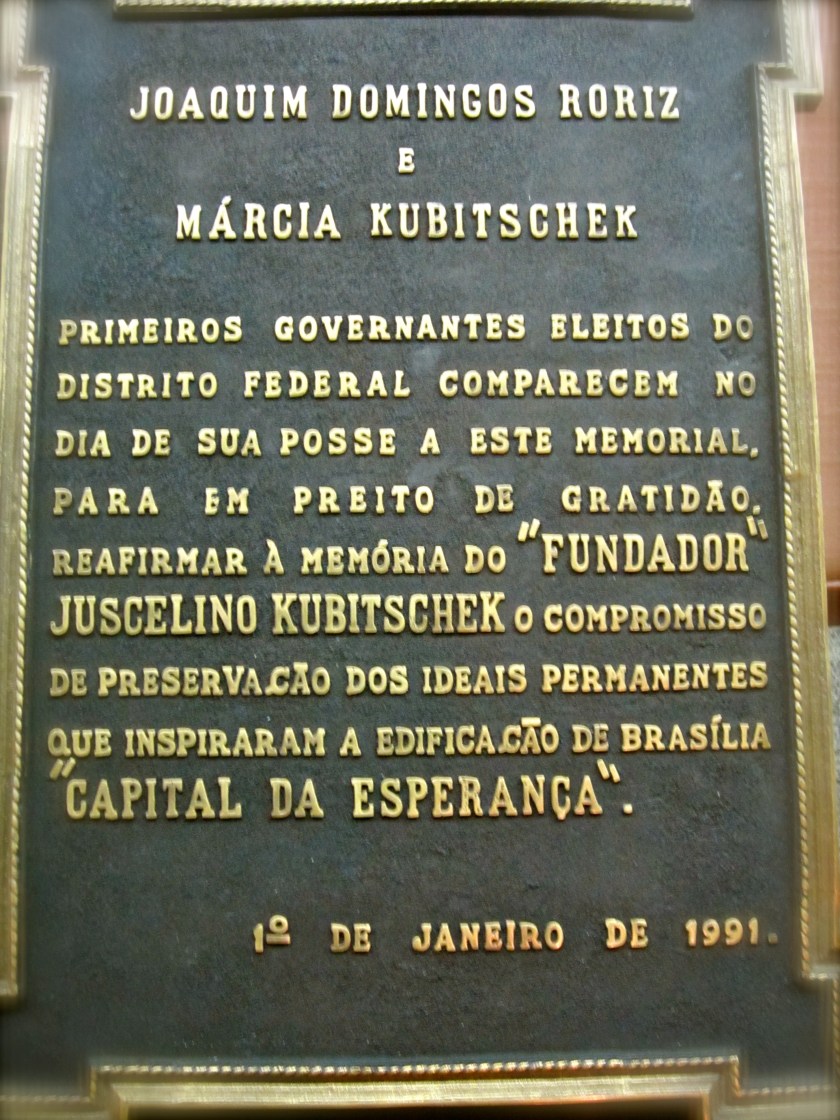
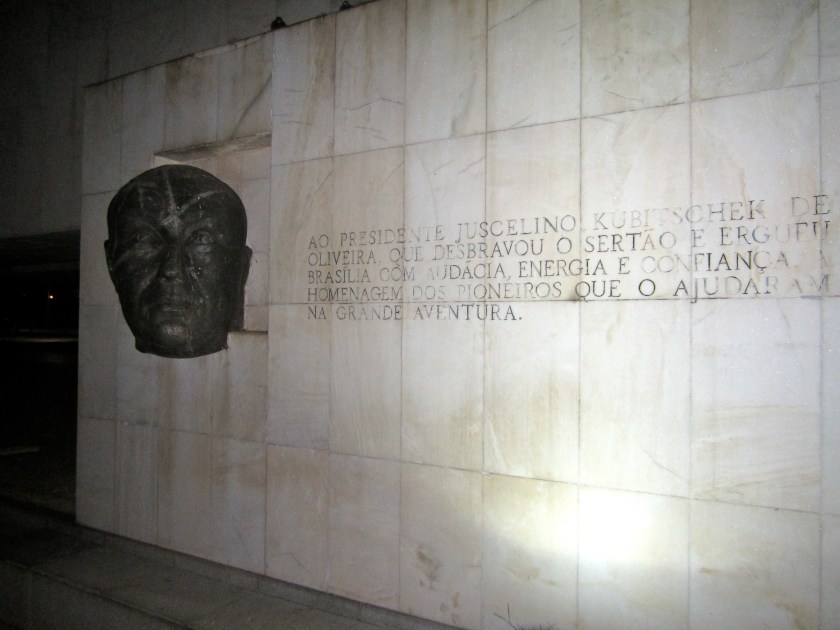
Continuing with the series of posts about the singular city of Brasilia, and again, very grateful for all my husband’s efforts in bringing back home pictures of my hometown, during his time at the Federal Capital…Today, the City of Brasília, the “Capital of Hope” (Capital da Esperança, in Portuguese), as it’s known by all Brazilians, celebrates its 52nd Anniversary. One man, a visionary, was responsible for its creation/construction, a former President, Juscelino Kubitschek, known as President JK. This post is dedicated to his memory and the city of his dreams. Find below images from the JK memorial – the external building and its interior:
JK, in the words of another traveler, a contributor to Lonely Planet:
“The man had guts.. Moved the capital away from the mobsters, created a social system that worked – he had an unfortunate ‘accident’ that ended his life but cemented his legend. His visitors included much of S.America’s leaders, European heads of state, ministers of state of Canada and President Eisenhower of the USA. They came for the commodities, but remained friends for other reasons. Brazil has been an ally since before WWII and committed and lost mariners to support Western freedoms. Friends continue to remember who helped pay for the freedom. The collection of artifacts from JK’s and his wife, Sara’s personal effects and those items they touched in the course of their professional lives provide a colourful narrative of gentil and caring people intent on helping the people of Brazil. JK was a conservative man. His clothing demonstrates a focus on the essentials – not frivolity. Gifts to the president are similarly modest and suggest his support was not purchased but rather was what was important for the country at the time. Woven into the details about JK – the man, is the story of the design and creation of Brasilia. Evolving sketches, photo images document many of the design choices made by the Niemeyer team, who purpose built each of the major components of the city’s buildings, roads and services. JK lays entombed in granite on the second floor of the museum, surrounded by a stone rotunda where visitors can enter and pause over the man who created the new Brazil. In contrast to the rest of the dramatic exhibit, but in keeping with his nature, his resting place is solemn and remains reverent despite the comings and goings of many school children and tourists outside the rotunda. The JK Memorial is an essential part of a visit to Brasilia – a city that is completely different from any other and one that changed the perception of Brazil to the world.”
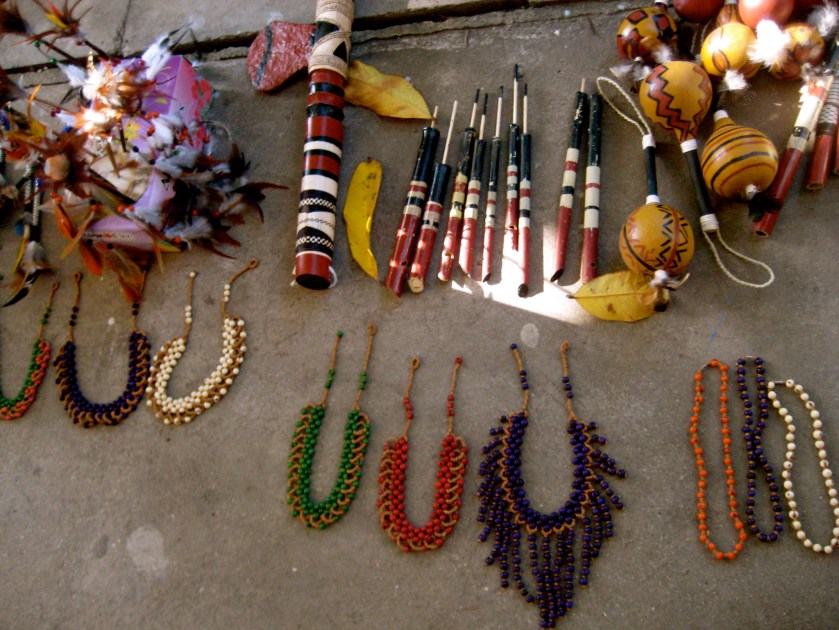
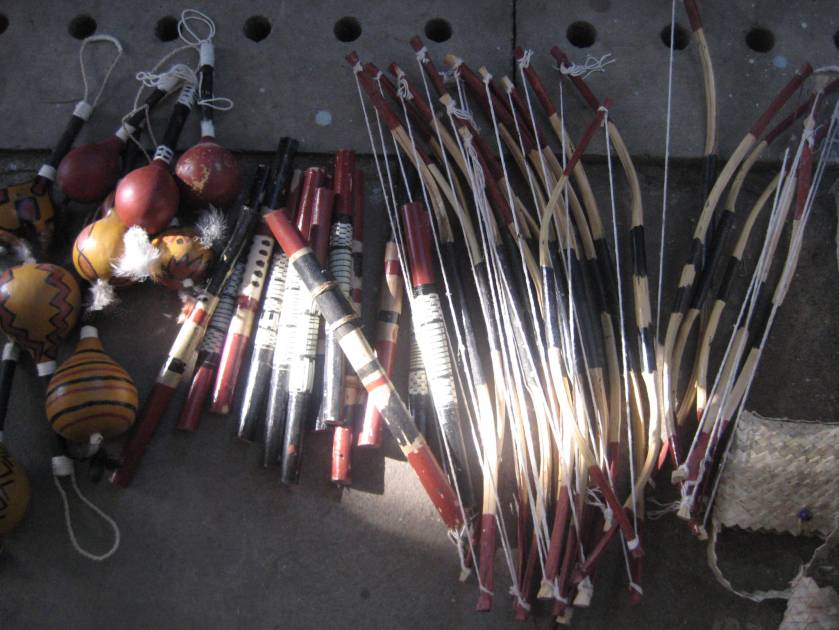
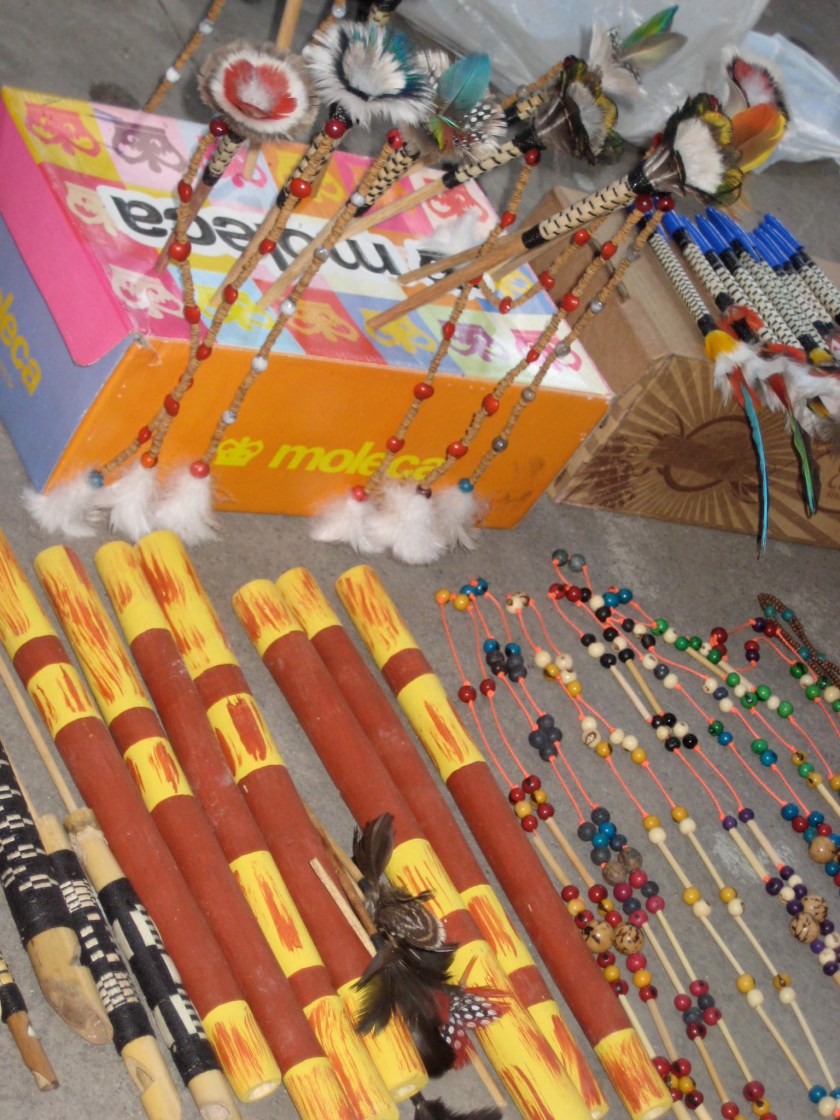
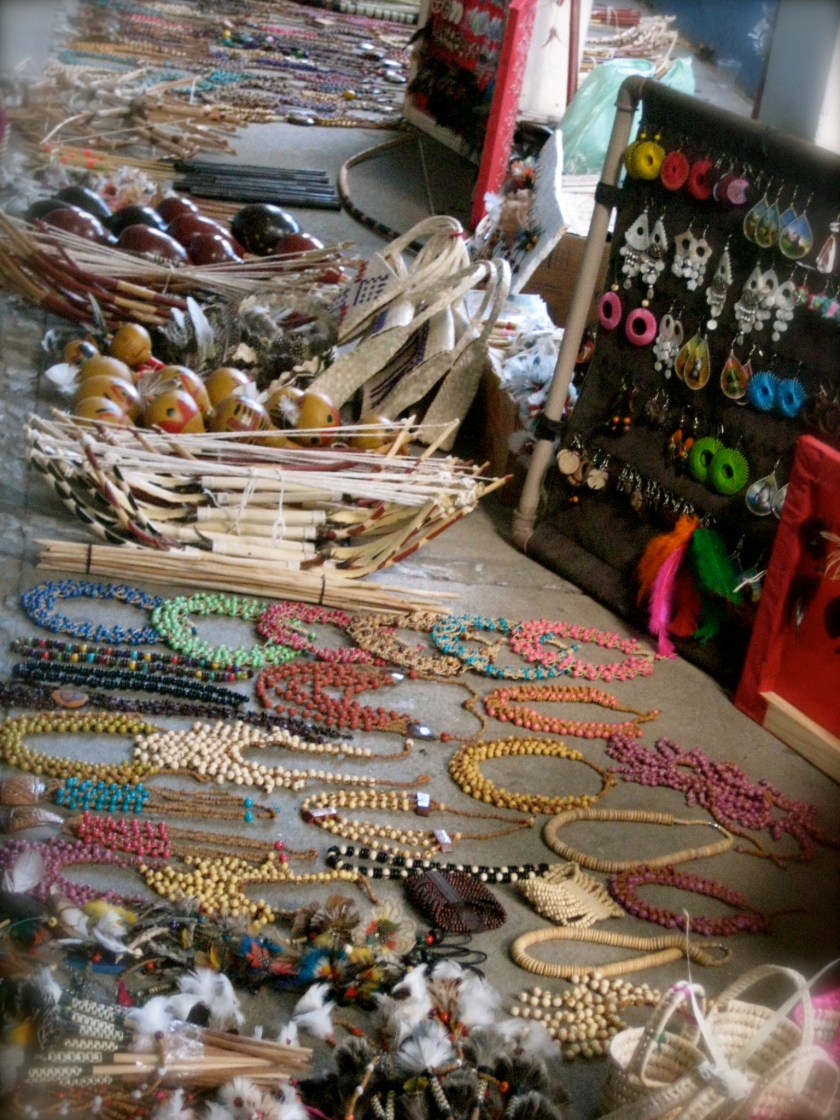
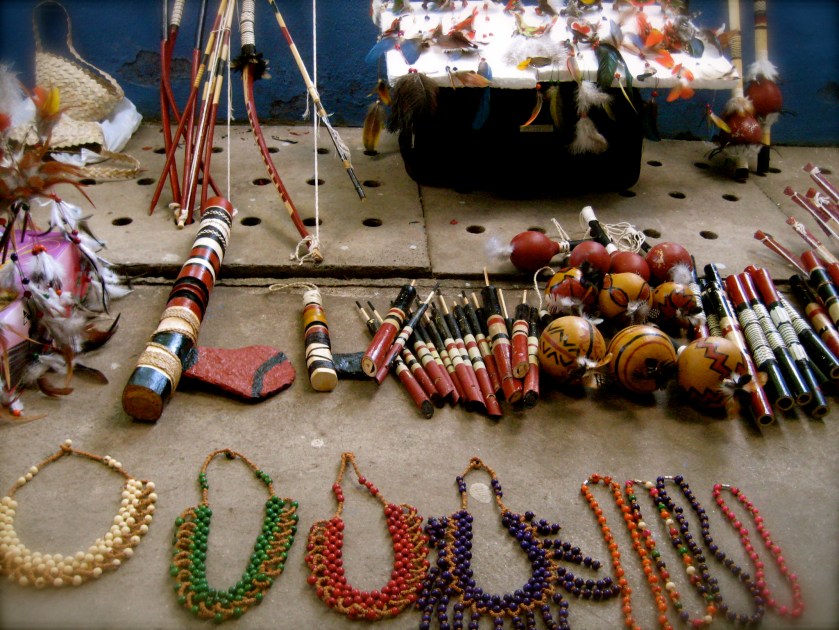
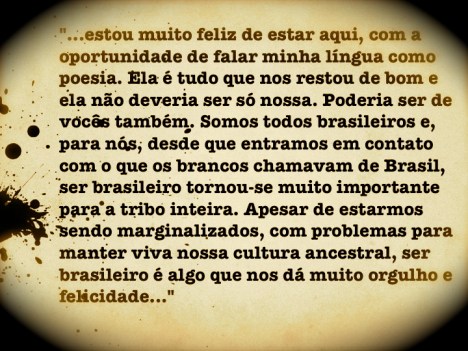
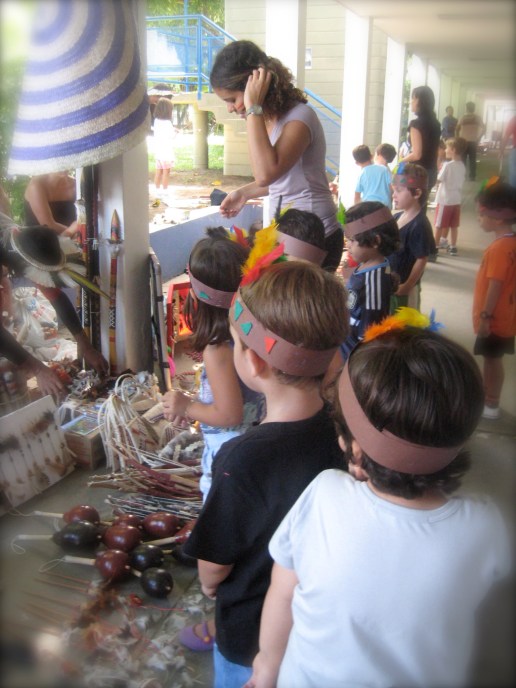
In Pernambuco, the state of Brazil we’re currently calling ‘home’, there are still a few indigenous tribes – and most important of all, some of them still keep their native language, like the ones featured here.
The most common indigenous tribes in Pernambuco are: the Xucuru, the Fulni-ô, the Pankararu, and the Truká.
Recently, other groups were added to the list, although, with fewer representatives:the Atikum, the Kambiwá and the Kapinawá. In order to honor today’s date, please find below a few images from the artistic tribe Fulni-ô, with 3,229 confirmed members.
Being a parent/caretaker requires lots of diplomacy, negotiation, peacekeeping, policy implementation and strategy skills. That said, managing a household, its respective juvenile population and the consequent budgetary implications, is a… HUGE, EXPERIMENTAL and UNFORESEEN task! There is a never-ending need to keep kids and parents sane (as much as possible!). Family outings require loads of planning and logistics management – even if we’re just talking about a Sunday lunch! We’re 20 months into our assignment, and our current post wasn’t a totally new experience for us, since we’ve visited Brazil several times before we moved here. Visiting was fun and care-free. Living and adjusting as a family, a little harder than we’d expected, but still very manageable.
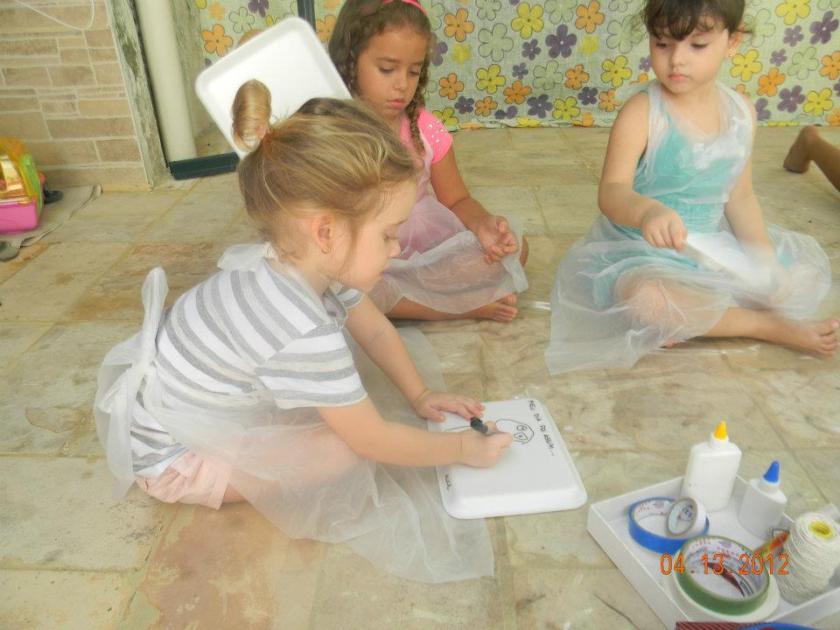
This week we happily discovered a new resource for parents, like us, looking for an alternative for our children [we’d already shared a list of activities/places for children on a previous post]. Here it is: the First Toy Library (“brinquedoteca“) in Recife, Pernambuco.
CASA DA LINDA, BRINQUEDOTECA:
Surprise your children. Here are some links on good stuff to do around Recife:
Praia de Boa Viagem (beach) – natural war water pools protected by coral reefs guarantee a delicious time a the beach. The sand and waters are continuously monitored by the state’s environmental agency, CPRH and are pollution-free.
Jardim Botânico de Recife (Botanical Gardens) – a natural reservation measuring 25.7 acres, a member of the Brazilian network of Botanical Gardens.
Parque Dois Irmãos (park) – one of the most beautiful and picturesque green areas of the city, the 38.7 ha park is a zoo, botanical and environmental education centre and an Atlantic Rainforest reservation. Ecological walking trails are guided by Biologists.
Parque da Jaqueira (park) – located by the Capibaribe river, the park covers 7ha and its the city’s largest one. Very green and has got beautiful gardens designed by Burle Marx.
Parque 13 de Maio (park) – also designed by Burle Marx, in downtown Recife. Children’s playgrounds, jogging lanes, benches, royal palm trees and sculptures.
Museu do Homem do Nordeste (museum) – one of the most historical and anthropological museums in Brazil. Hosts the “Family at the Museum” program.
“Two Subjects”. That’s the inspiration for this week’s photo challenge from WordPress. This “theme” is more of a composition challenge, than the usual single themes we’re used to post about. Let’s see how this week’s compositions turn out… mix of natural and man-made two-subject themes…
I’ve been asked to provide updates on our Hanging Garden Project. We’ve got new planters, ‘freshly donated seeds’… and a cost-free watering system. For the ones not (yet!) familiar with the ‘mathematics behind getting cost-free water‘, here’s how it works: Our middle/high school students have been deeply involved in building a system with planters made from recycled PET bottles, as seen on the right.
Besides that, we’ve discovered a great source of clean/distilled water for all the watering needs: the several air conditioning devices, spread throughout the school campus. So, the students began collecting the not-before-managed water… But, how could they find out how much water would be “released” by the AC devices?
The answer to that question morphed into a mini-mathematical project: Math students were asked to develop a strategy to evaluate the volume of water released by the AC equipments, write their assumptions down (hourly rate, number of school days, etc), and today presented their results: on average, an AC device is capable of releasing over 6,000 liters of water during the course of a regular school year.
Way more than enough for keeping the Hanging Garden alive and growing! 😮
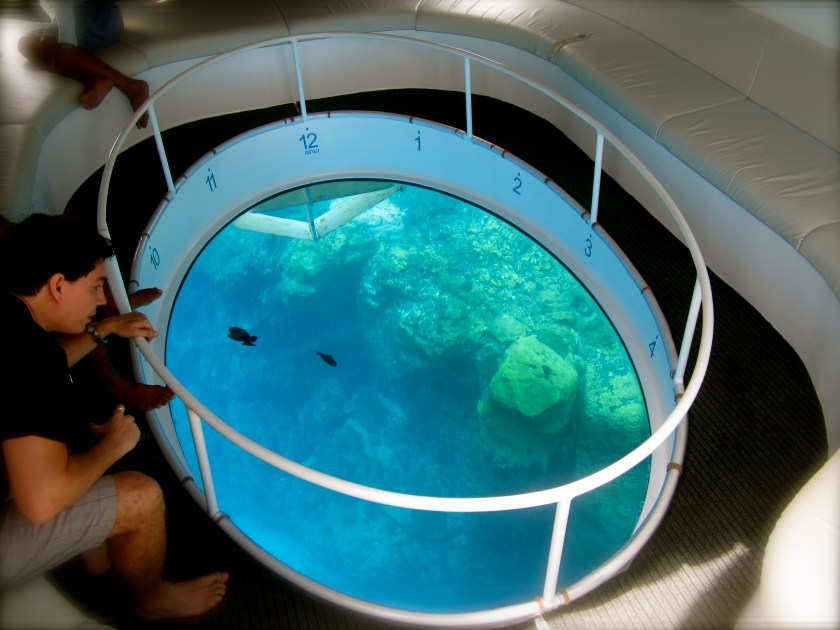
Eng. Leo Veras takes responsibility for the Navi Project (Projeto Navi), a pioneer experiment at the archipelago – unique, and wonderful!
We were taken to observe the marine life, 16 meters deep, thanks to the ship’s glass bottom, resistant to pressure, high volume and speed. Talk about biology, math, physics, all at once! Lovely and fantastic! We were able to snap several shots, as well as, a couple of videos during our expedition. All 3 images from the Project’s Website (above) are used with permission from the Project’s Coordinator. [We are very thankful to Mr Leonardo Veras for his attention, kindness and, obviously, for the private tour!] All other photographs, (including all the videos to come!) presented below, are part of our family’s personal collection (feel free to use or share them, just remembering to mention the original source!) 😮 Thanks for the interest!
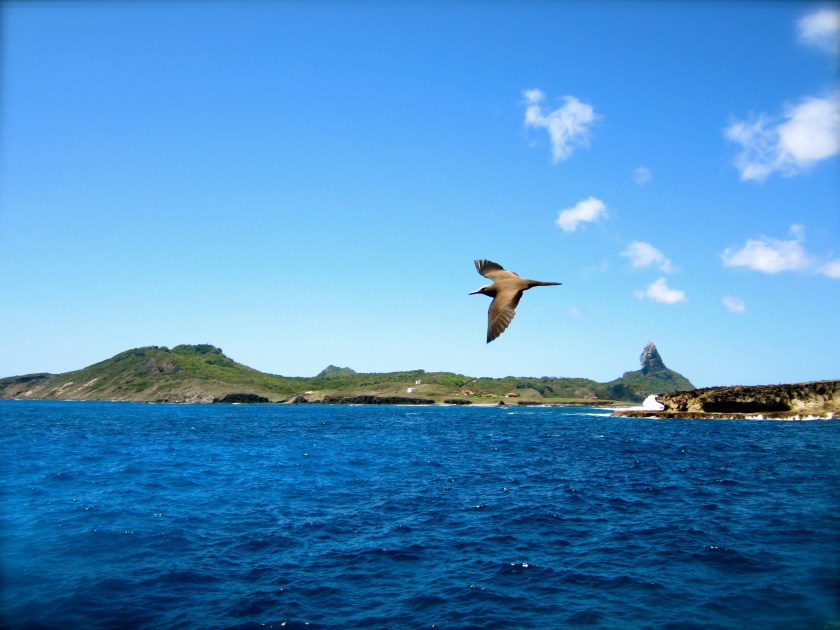
Fernando de Noronha has caught the imagination of travelers for centuries and many urban myths are associated with this gloriously surreal island. The archipelago is made up of one 11-square-mile chunk of volcanic rock and 20 smaller islands, three degrees south of the equator, 220 miles from Brazil’s north-eastern coast. Fernando de Noronha’s claim to fame is its diverse and rich ecosystem.
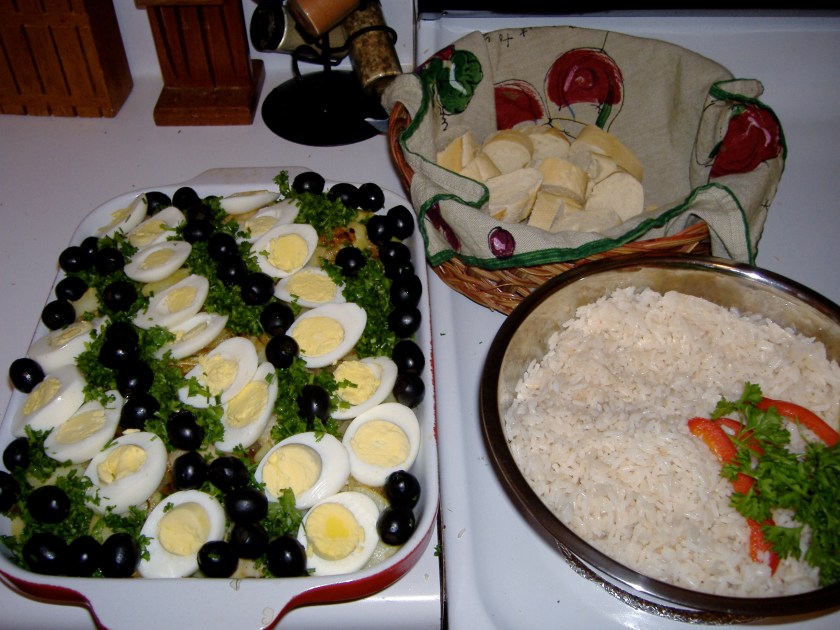
Although I may be able to take credit for the photo, the “execution” and recipe belong to my mother, and to her Portuguese heritage. For the past ten years, I’ve been promising my husband I’ll make, one day. One day… not today… not yet! [smiles!]
Bacalhau à Gomes de Sá is essentially a casserole of cod, potatoes, eggs, olives, olive oil and onion. It is a speciality from the northern city of Porto, being today popular throughout Portugal, and is considered one of Portugal’s greatest bacalhau recipes.
Suggestion for a delicious Easter Sunday, or in good Portuguese: “Domingo de Páscoa”… Sharing my mother’s favorite recipe: Portuguese Codfish – Bacalhau a Gomes de Sá… Got a lot of positive feedback when I first published this recipe, that, I’m getting it out – again, now, as a great suggestion for Sunday’s luncheon! Showing the deepest appreciation to my Portuguese heritage… thanks, mom! 😮
**********************
Originally published:
Although I may be able to take credit for the photo, the “execution” and recipe belong to my mother, and to her Portuguese heritage. For the past ten years, I’ve been promising my husband I’d make it one day. One day… not today… not yet! [smiles!]
Bacalhau à Gomes de Sá is essentially a casserole of codfish, potatoes, eggs, olives, olive oil and onion. It is a speciality from the northern city of Porto, being today popular throughout Portugal, and is considered one of Portugal’s greatest bacalhau recipes.
Origin of the name
Gomes de Sá was the son of a rich nineteenth century merchant, in Porto. The family fortune dwindled and the son had to find a job at the famous restaurant Restaurante Lisbonense in downtown Porto, where the well-known recipe was created.
Bacalhau à Gomes de Sá
“É um prato alourado no forno, formado por uma mistura de lascas de bacalhau amaciadas em leite, batatas cozidas e um refogado ligeiro. É enfeitado com ovo cozido, salsa e azeitonas”.
Alguns pratos tradicionais da culinária recebem o nome de seus criadores. Este é o caso do bacalhau à Gomes de Sá, tradicional receita portuguesa deste peixe, de autoria de José Luís Gomes de Sá, falecido em 1926, e na época cozinheiro do Restaurante Lisbonense, no Porto, lugar em que criou a receita. Sua receita tradicional propõe que o bacalhau seja cortado em pequenas lascas marinadas no leite por mais de uma hora. Assado no forno, com azeite, alho, cebola, acompanhando azeitonas pretas, salsa e ovos cozidos.
Este é um prato típico da região Norte de Portugal. É de preparação simples e relativamente rápida.
Gomes de Sá era um comerciante do Porto nos finais do Séc. XIX. A ele se deve esta receita de bacalhau que, segundo a lenda, terá sido criada com os mesmos ingredientes (à excepção do leite) com que semanalmente fazia os bolinhos de bacalhau que deliciavam os amigos. Com efeito, os ingredientes são os mesmos, mas a receita resulta de uma confecção cuidada e de grande requinte. A receita que se segue é retirada de um manuscrito atribuído ao próprio Gomes de Sá que terá dado a receita a um seu amigo, João, com a deliciosa nota: “João se alterar qualquer cousa já não fica capaz”
Receita em Portugues:
3 Porções
400 g Bacalhau
500 g Batata
2 Ovos
1 dente Alho
3 Cebolas
0.35 g folhas louro
1 ramo salsa em rama
Q.B. Azeitonas Pretas
Q.B. Azeite
Q.B. Sal
Q.B. Pimenta
Cortar o bacalhau em postas e demolhar durante 48 horas. Colocar panela ao lume com água e deixar ferver. Juntar o bacalhau, deixar cozer, retirar e lascar.
Lavar bem as batatas com a pele. Cozer em água, temperada com sal, retirar e deixar arrefecer. Pelar as batatas e cortar em camponesa.
Cozer os ovos (duros), arrefecer e picar.
Descascar os dentes de alho e picar e descascar as cebolas e cortar em meia-lua. Colocar um tacho ao lume, adicionar o azeite. Juntar os dentes de alho, as cebolas e as folhas de louro; deixar refogar lentamente. Temperar com sal e pimenta. Retirar as folhas de louro e guardar.
Colocar uma frigideira ao lume. Adicionar a cebolada e o bacalhau lascado e saltear. Juntar a batata e temperar com sal e pimenta. Colocar dentro de um tabuleiro, regar com azeite aquecido com alho picado e levar ao forno. Retirar e empratar. Decorar com salsa picada, azeitonas pretas e os ovos picados e servir.
And in English: (from EMERIL)
INSTRUCTIONS
Soak the cod in cold water to cover for 24 to 36 hours, changing the water occasionally, drain. Flake the cod into small pieces, removing any bones. Set aside. In a large sauté pan, over medium heat, add 1/4 cup of the oil. When the oil is hot, add the onions and the garlic. Season with salt and pepper. Sauté until slightly golden, about 6 minutes.
Preheat the oven to 350ºF.
Grease a medium ovenproof casserole dish with 1 teaspoon of olive oil. Season the potatoes with salt and pepper.
Spread half of the potatoes over the bottom of the prepared dish. Sprinkle half of the salt cod over the potatoes. Place half of the onion mixture over the salt cod. Top the onion mixture with more salt cod. Place another layer of potatoes over the top of the cod. Drizzle the entire pan with the remaining 1/4 cup of oil. Place in the oven and bake for 30 to 40 minutes, or until golden. Place on a serving platter. Garnish with the sliced eggs, olives, and parsley.
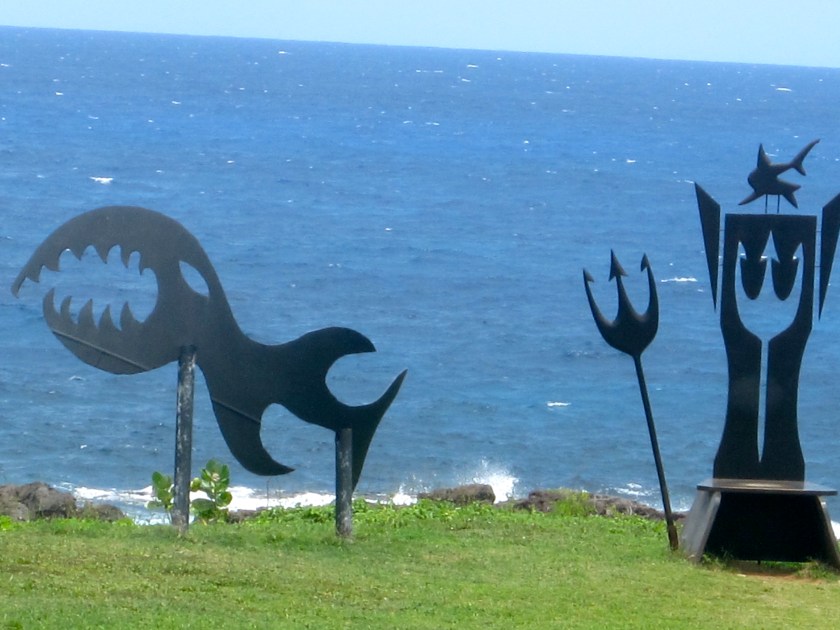
The "Two Brothers" hill - Morro Dois Irmãos, viewed from the Praia da Cacimba do Padre, FN. All images from 3rdculturechildren.com
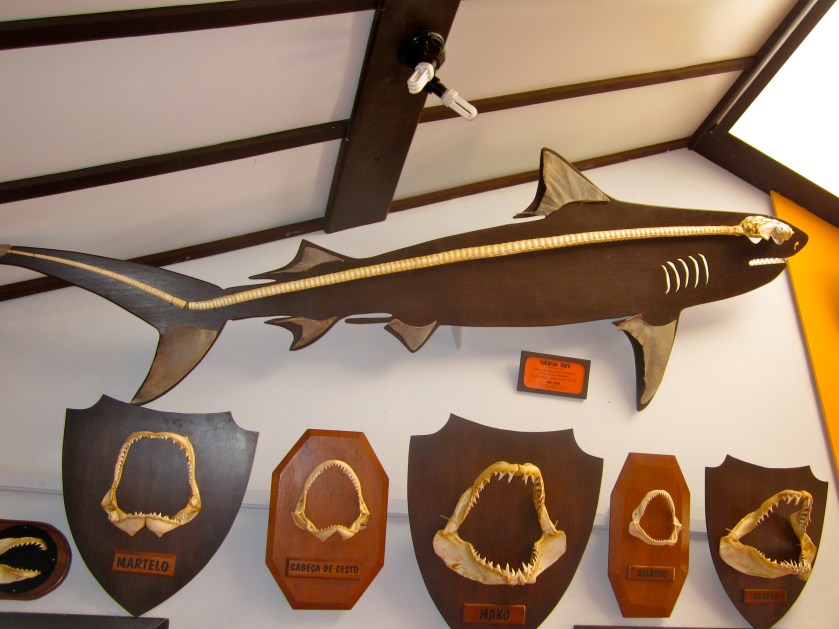
This post was promised a long time ago…It’s already been a month we came back from the archipelago, and finally, got through the last photos – the last two posts, a bit on the “scientific side”, but still, very enjoyable. Sharks and Marine investigation. Today, it’s all about the sharks. Backstory: Just like the Atlantis, Fernando de Noronha has caught the imagination of travelers for centuries and many urban myths are associated with this gloriously surreal island.
The archipelago is made up of one 11-square-mile chunk of volcanic rock and 20 smaller islands, three degrees south of the equator, 220 miles from Brazil’s north-eastern coast.
In Atalaia Beach, we were able to snorkel with fishes and juvenile sharks, checking out the swarms of hawksbill and green turtles, and also, witness rare island species like iguanas. Other adventure seekers like us, engaged in underwater activities, diving and snorkeling to experience the prolific marine life including albacore, barracuda, snappers, cangulos (fish)… Continuing with our experiences in Noronha, we reserved some time to visit and enjoy the company of Leonardo Veras, the curator for Fernando de Noronha’s Shark Museum (“Museu dos Tubarões”). Leo, as he prefers to be called, is a passionate engineer who lives and works at the main island, and was kind enough to take us on an unforgettable trip through the marine world! An upcoming post will share our adventures with Leo Veras and his Navi Project, investigating the deep open ocean waters. For now, you’ll be left with images we snapped while visiting the “Museu dos Tubarões” – current residence of Leo Veras, his own sculpture garden and his “front yard view”. Check them all out! 😮
Our host, Eng. Leonardo Veras
This slideshow requires JavaScript.
Fernando de Noronha’s claim to fame is its diverse and rich ecosystem. And while nature lovers throng to this eco-paradise, the volcanic island with its splendid marine life, dramatic rock formations and long lazy stretches of beaches is the perfect romantic destination as well… We’ll miss it!
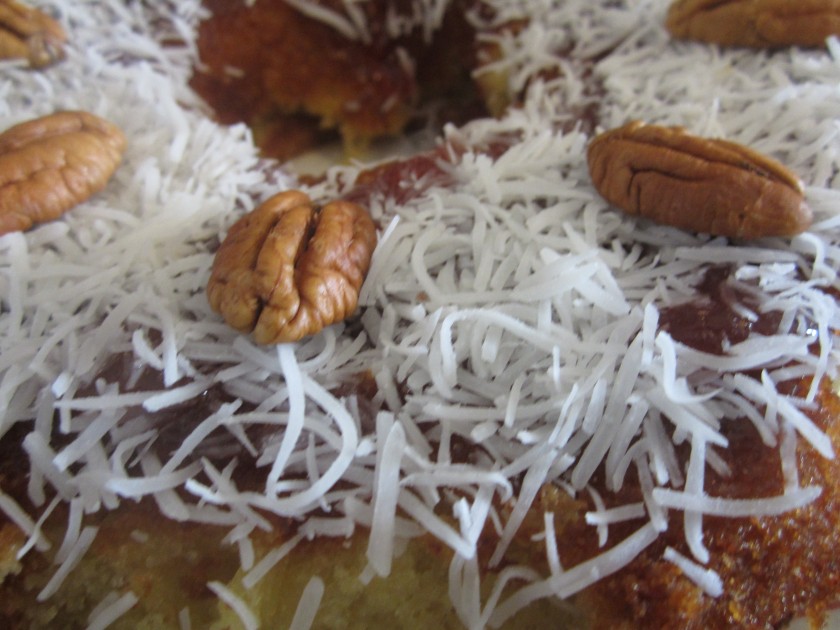
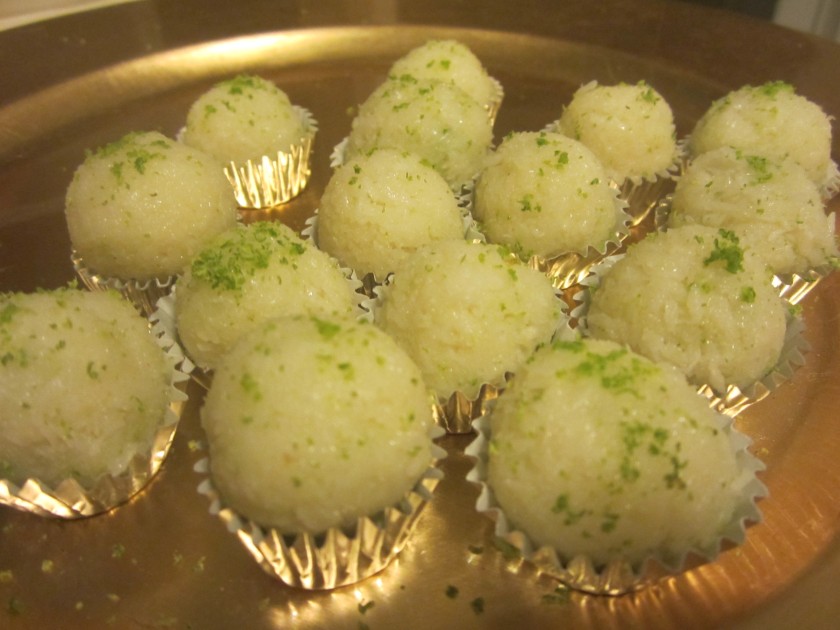
Well, last week I ventured trying to make the most famous Brazilian candy/after meal sweet: Brigadeiro, a bit adapted, thanks to a forwarded recipe, which included adding Caipirinha to it! So, this time, I’m coming with the second most traditional and well-known sweet: Beijinho de Côco (“Coconut Kiss”, if I could translate it). Again, using last week’s recipe, and why not, venturing to discover how the little coconut kiss would taste, if a bit of “caipirinha” was added to the mix! 😮 The recipe is the same one from last week, just adding 100g of shredded (unsweetened) coconut to the mix. Don’t forget to have the lemon zest for a beautiful topping effect!
Here is the result:
"Beijinho de Côco com Caipirinha!"
Remembering, from last week’s recipe:
Remember “brigadeiro”? Those little chocolate candies that one may find at birthday parties? Well, this one resembles a famous Brazilian drink: “The Caipirinha”… a candy made with ingredients for a mixed drink… The main ingredient?
A little bit of cachaça, Brazil’s famous “sugar cane aguardiente”… 😮 And, obviously: “enjoy responsibly”…. Enjoy at a friend’s house, after a great feijoada… Take a good nap afterwards… find yourself a comfy hammock and forget about getting behind the wheel! 😮 No “eating and driving”, okay? 😮
Here is the image, and the recipe, in Portuguese, with comments in English:
Receita do Brigadeiro de Caipirinha
Ingredientes
1 lata de leite condensado
2 colheres de sopa de manteiga
50 ml de cachaça
Açúcar cristal
Raspas de limão para decorar
Opcional: suco de um limão e ½ caixa de creme de leite
Modo de preparo
Leve ao fogo uma panela com o leite condensado, o creme de leite e a manteiga. Vá mexendo em fogo baixo até dar ponto e desgrudar da panela. Tire um pouco do fogo e adicione a cachaça/vodca, e o suco do limão. Volte a panela ao fogo e deixe dar o ponto novamente. Use uma assadeira untada (de manteiga) pra colocar a “massa”, e deixe reservado até esfriar.
Pra fazer as bolinhas: unte as mãos com manteiga, pegue um pouco da “massa” e vá boleando, fazendo movimentos circulares. Passe a bolinha no açúcar cristal, com raspas de limão, para decorar. (Obs: existe um açúcar especial, de confeiteiro, que parece um gelo triturado e também é uma boa opção).
One may add lemon/lime zest over the candy, making it look even more similar to the original drink… Humm!
[Portuguese] Há quem goste de colocar um pouquinho de raspas de limão na massa no lugar do suco. Deve deixar um azedinho bem gostoso!
This is the second part of our visit to the Brennand Institute in Recife, Brazil, which encompasses museum and castle. The theme for this last post covers the beautiful and pristine gardens surrounding the Institute, as well as the sculptures garden, and the sculptures throughout the museum. Again, all collections longtime cared by Mr Ricardo Brennand. Ricardo Brennand Institute is a cultural institution that holds a museum, an art gallery, a library, a cafe, as well as, a large park. The collector Ricardo Brennand is its creator and owner.
During our visit, we were able to appreciate objects of art from many different locations and times, from Middle Ages Europe to the 15th century, through Colonial Portuguese & Spanish Brazil, Dutch Brazil, 17th century, and Brazil in the 19th century. All photos were taken by one of the members of our family (even the 4 year old!). Stop by the Slideshow at the end of this post for a treat! 😮
For 50 years Brennand acquired those objects. The Institute owns Brazilian e foreign paint colections, like the largest Frans Post colections outside the Netherlands, one of the biggest armory in the planet, sculptures from all over the world, carpets and many others objects of art.
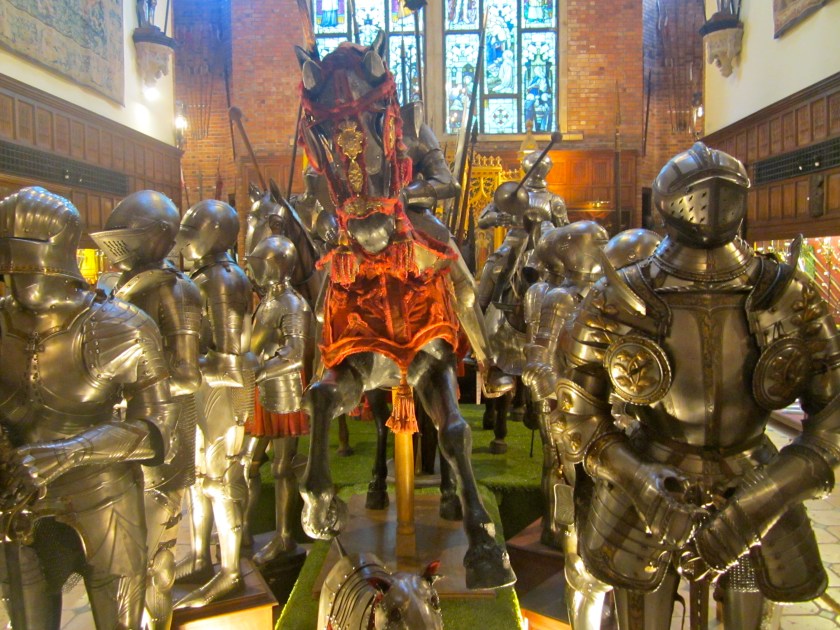
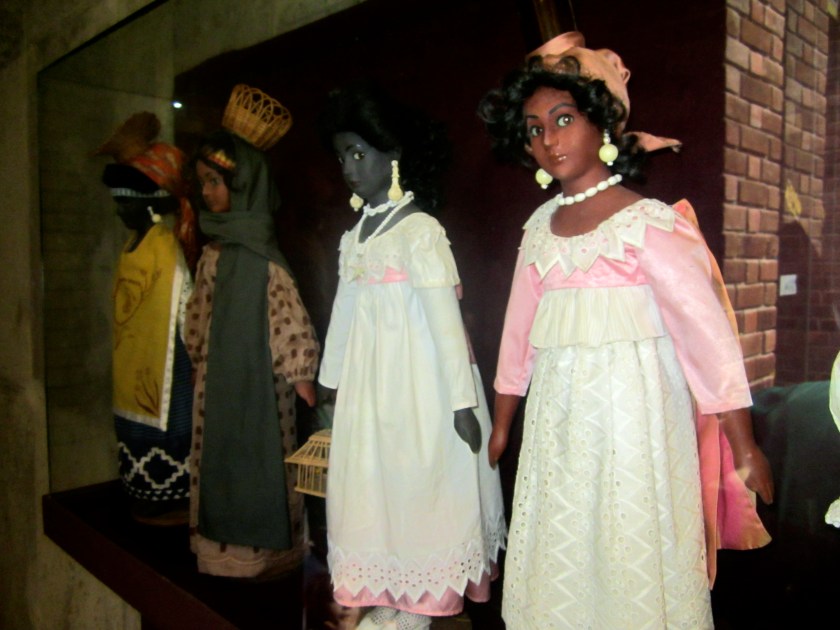
Weekends are always reserved for quality time with the family (obviously, after we’re done with the necessary grocery shopping!). Why not offer our children the opportunity to truly experience culture, learn about the Colonial Brazil, the first settlers, and yet, have a great deal of fun? And that’s exactly what our family did! This post showcases one of themes from our visit to the Institute & Brennand Castle, focusing on two very distinct collections/areas: the dolls and the armors, longtime cared and collected by Mr Ricardo Brennand. A follow up about the gardens and overall view of the Institute, a product of the visionary Mr Brennand will be coming soon…
Ricardo Brennand Institute is a cultural institution that holds a museum, an art gallery, a library, a cafe, as well as, a large park. The collector Ricardo Brennand is its creator and owner.
During our visit, we were able to appreciate objects of art from many different locations and times, from Middle Ages Europe to the 15th century, through Colonial Portuguese & Spanish Brazil, Dutch Brazil, 17th century, and Brazil in the 19th century. For 50 years Brennand acquired those objects. The Institute owns Brazilian e foreign paint colections, like the largest Frans Post colections outside the Netherlands, one of the biggest armory in the planet, sculptures from all over the world, carpets and many others objects of art – these last ones will be subject of another post!
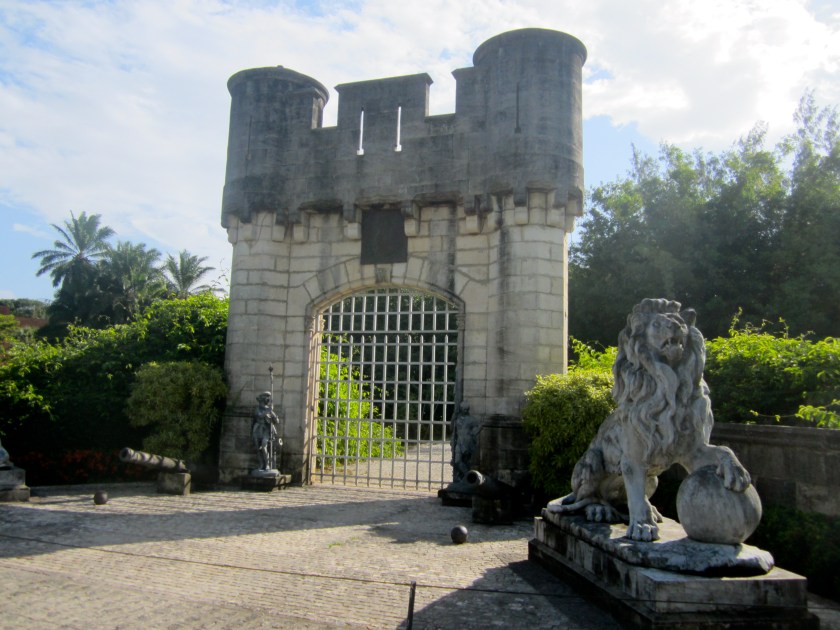
The Entrance to the Complex: Institute & Castle
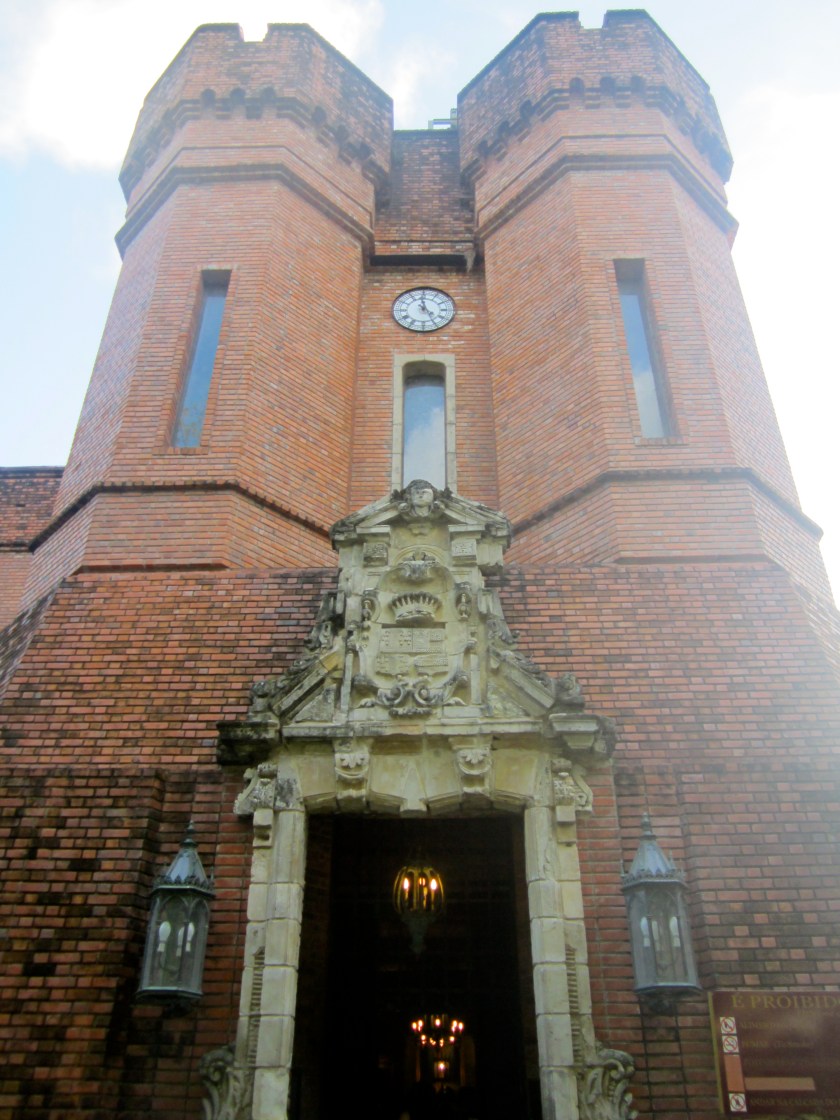
The doors leading to the Castle
Porcelain Dolls quietly observe the visitors...
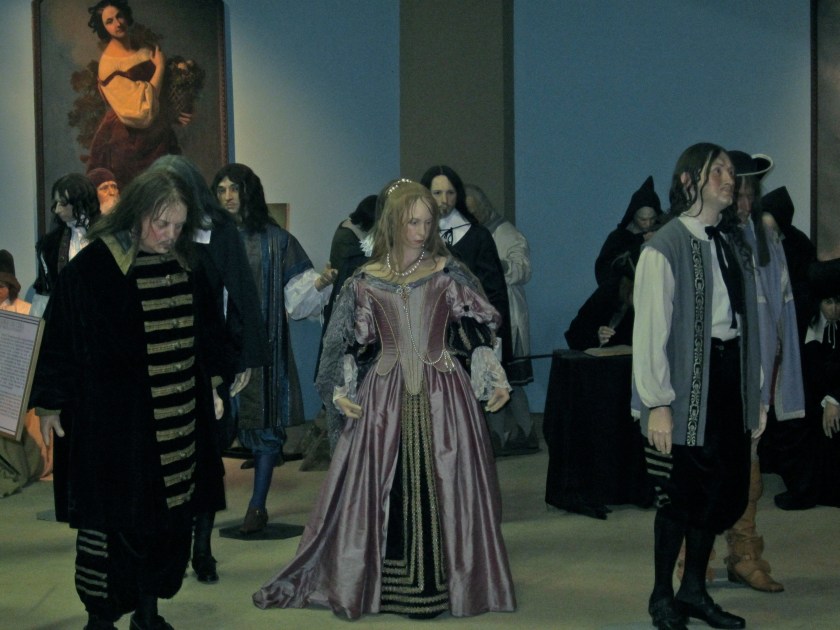
“Peeking” into the Wax Museum: live-size people re-enact a socio-political meeting
The latest issue of the Foreign Service Journal(FSJ, April 2012) discusses the Family Member Employment, and the search for meaningful work overseas. Reading through the whole edition, you will find great stories about living and working as a Foreign Service spouse.
Several FS spouses shared their experiences and impressions regarding working overseas. It’s an honor to be one of the contributors to this edition.
Congratulations to all who contributed to this month’s issue. Here’s the link to another FS blogger, also sharing her impressions about family member employment.
“Through”. That’s the inspiration for this week’s photo challenge from WordPress. Humm… Physically speaking?Emotionally through? A passage? A rite of passage? Too many different interpretations for this one single theme. What’s “through” for you? For me, it means passage, strategy, possibilities to overcome challenges…
Since we’re getting through one more week, let’s see how it goes regarding the challenge:
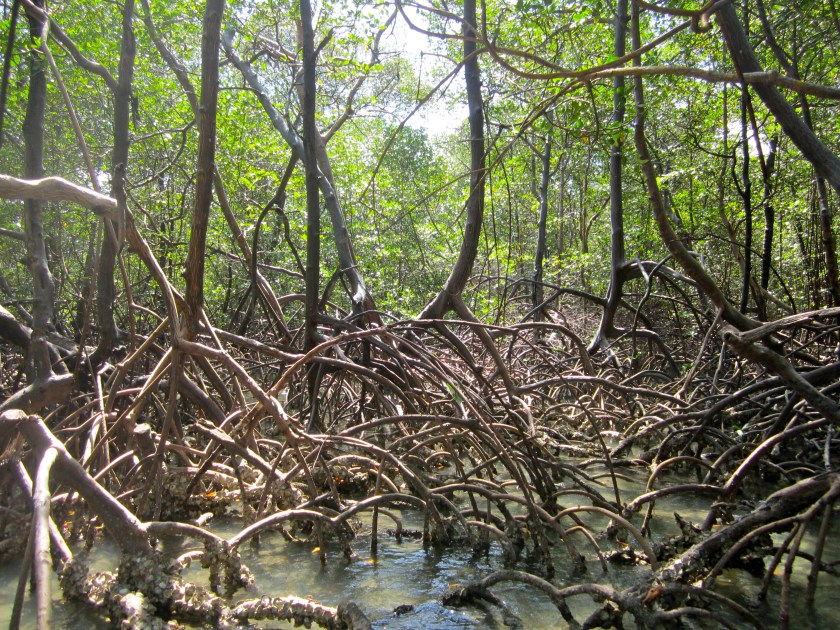
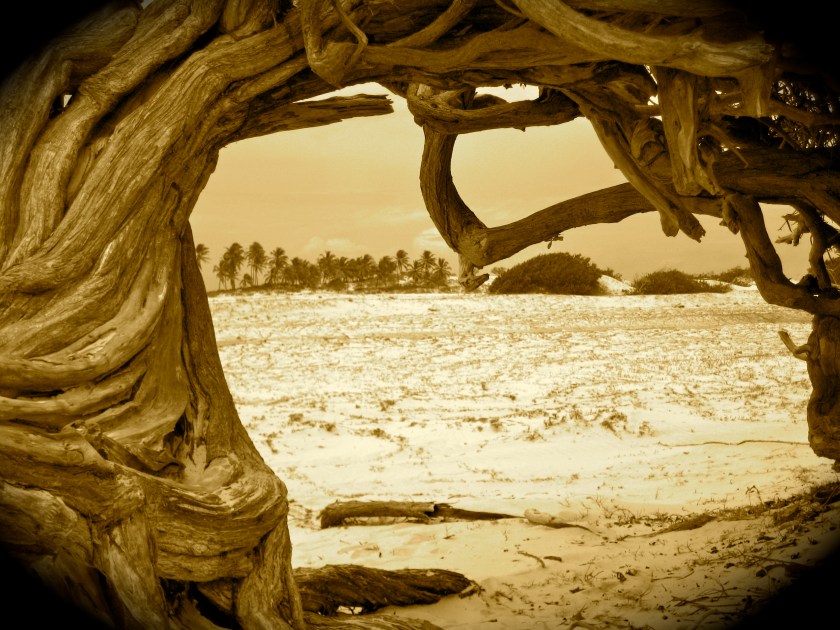
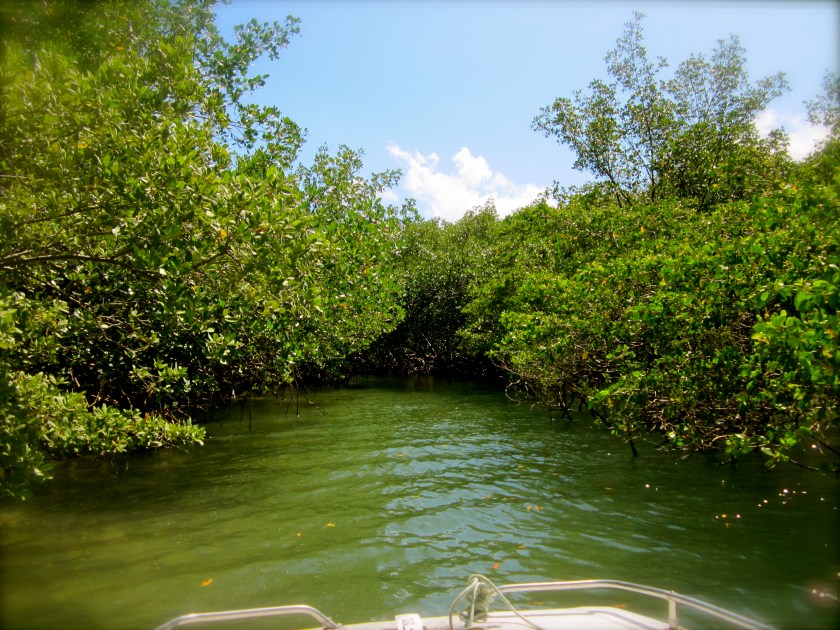
A detailed view from a particular site at the Reuben Island Prison, South Africa - many tried to escape through...Walking through the city, through old cobblestone steps, São Luis do Maranhão, BrazilTaking a boat trip through the mangrove in Itamaracá Island, BrazilWatching the sunset through the rocks in Jericoacoara Beach"Take my hand and walk me through this path... through your lens I'll see your world..."
And finally, walking through the excited crowd, experiencing the largest street carnival in the world!

 This week we are honoring the US Independence, bringing back memories from other assignments, sharing our thoughts: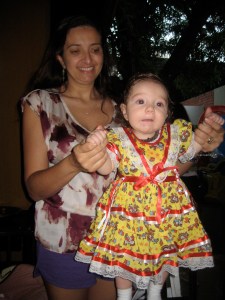
 Our kids are learning to love and respect their mixed culture. They’re beginning to understand historical events, their causes and consequences. They’re learning that any country is not just about land, but also, its people, their beliefs and their sense of social respect. Hybrid cultures are a rich experience. Hopefully, our three TCKs will grow up comprehending that the world they live in is much bigger than geography may present itself. And a country’s boundaries go as far as its people. We bring our culture with ourselves. Our traditions, our honor, our respect to others. Wherever we are. Wherever we move to. It’s good to know that some of us in the Service bring more than one country in our hearts..
 This week, our hearts are proudly filled with red, white and blue colors… and as we’re heading out of Brazil, our hearts are overflowing with green, yellow and of course, blue! 😮 One day, I’ll look back at our time in Brazil as a family, piece together the best moments, best images, the favorite memories. One day, but not today. Not this week… We’re in-between cultures right now…






























































 A ‘super Lua’ e o Cristo Redentor, no Rio de Janeiro, na madrugada deste domingo (Ricardo Moraes/Reuters)







































































 3rdculturechildren