Weekly photo challenge: Solitary.

Cheri Lucas

Solitary. I love capturing a person in a quiet and often unexpected moment. These kinds of images can be reflective, mysterious, or even sad, conjuring strong emotions and stirring up stories in my head. I snapped this photograph in the grand Hagia Sophia in Istanbul, Turkey. That afternoon, it was very busy and crowded inside, but I turned a corner at one point and walked into the empty, bright, airy space pictured above. I experienced a few moments of silence as I watched a woman walk to the end of the room. We were strangers—yet alone, together. A solitary moment, frozen with my lens.

According to Cheri Lucas, whose photograph was portraited as this week’s photo challenge inspiration at WordPress, “Solitary. I love capturing a person in a quiet and often unexpected moment. These kinds of images can be reflective, mysterious, or even sad, conjuring strong emotions and stirring up stories in my head… We were strangers—yet alone, together. A solitary moment, frozen with my lens.”

And here, my few impressions of solitary:


Focus On: Expat Life Blogs

Día Internacional de La Paz

Friday September 21st is the UN’s International Day of Peace. The first Peace Day was celebrated in 1982; this year marks the 30th anniversary. The theme for 2012 is ‘Sustainable Peace for a Sustainable Future’.

From the UN web site: There can be no sustainable future without a sustainable peace. Sustainable peace must be built on sustainable development.

The message from the UN Secretary-General Ban Ki-moon reads:

Armed conflicts attack the very pillars of sustainable development.

Natural resources must be used for the benefit of society, not to finance wars.

Children should be in school, not recruited into armies.

National budgets should focus on building human capacity, not deadly weapons.

On the International Day of Peace, I call on combatants around the world to find peaceful solutions to their conflicts.

Let us all work together for a safe, just and prosperous future for all.


In addition to ‘Walk to Work’ Day, Friday, September 21, is also International Peace Day. This day provides an opportunity for indi-viduals, organizations, and nations to create practical acts of peace on a shared date. International Peace Day was established by a UN resolution in 1981 to coincide with the opening of the General Assembly. The first Peace Day was celebrated in 1982. During the discussion of the UN Resolution that established this day, it was suggested that:

“Peace Day should be devoted to commemorating and strengthening the ideals of peace both within and among nations and peoples. This day will serve as a reminder to all peoples that our organization, with all its limitations, is a living instrument in the service of peace and should serve all of us here within the organi-zation as a constantly pealing bell reminding us that our permanent commitment, above all interests or differences of any kind, is to peace. “

Friday September 21st is the UN’s International Day of Peace. The first Peace Day was celebrated in 1982; this year marks the 30th anniversary. The theme for 2012 is ‘Sustainable Peace for a Sustainable Future’.

From the UN web site:  There can be no sustainable future without a sustainable peace. Sustainable peace must be built on sustainable development.

The message from the UN Secretary-General Ban Ki-moon reads:

Armed conflicts attack the very pillars of sustainable development.

Natural resources must be used for the benefit of society, not to finance wars.

Children should be in school, not recruited into armies.

National budgets should focus on building human capacity, not deadly weapons.

On the International Day of Peace, I call on combatants around the world to find peaceful solutions to their conflicts.

Let us all work together for a safe, just and prosperous future for all.

Source: http://www.internationaldayofpeace.org/


Laguna de Cota Cota, La Paz: Pedal boat, ducks and fun with schoolmates. It’s a day off!

School was off for a day – a staff meeting. What to do with our super energetic, active, children? Get them to run, enjoy the playground together, ride the pedal boat, chase ducks, walk (several times!) along the bridges, have a picnic at the park! That’s exactly what some four families (Chilean-Argentinean, Greek-American, Brazilian-American and Norwegian-American) did! It’s one of the beauties of this (sometimes crazy & intense!) expat life! ♥

It is one of the largest parks of the city of La Paz, with a surface area of 2 hectares. Here we find an aquatic lagoon with fish and ducks, games, a suspension bridge, bike path, green areas with games for children, adult areas and barbecues to enjoy a pleasant field day for the family. The park of Cota Cota is in the Southern district of the city.

[Español] Es uno de los parques más grandes de la ciudad de La Paz, tiene una superficie aproximada de 2 hectareas. Aquí encontramos una laguna con peces y patos, juegos acuáticos, un puente colgante, ciclovía, áreas de juegos para niños, adultos, áreas verdes y parrilleros para disfrutar de un agradable día de campo con la familia. El parque de Cota Cota se encuentra en la zona sur de la ciudad.


Creativity

Expat definition maze

Ute Limacher-Riebold's avatarExpat Since Birth – A Life spent "abroad"

I was reading several blogs about expats, Third Culture Kids, Adult Third Culture Kids, Global Nomads and was wondering about the definitions of all these terms. An expat is “a person temporarily or permanently residing in a country and culture other than that of the person’s upbringing”. The “country and culture… of the person’s upbringing” isn’t necessarily the country or culture the parents come from. But in a strict sense, an expatriate is someone who “lives out of the fatherland” (ex-patria). It can be any person living in a different country from where he or she is a citizen from. I’m a german citizen who was born in Switzerland and grew up in Italy. – According to this definition, I am either an expat since birth or since the age of 18, when I left Italy to go to study in Switzerland. Assuming the latter case, what was I before?

View original post 971 more words

180 years later, an analogy with Charles Darwin’s Beagle Voyage.

The most recent Wordpress Writing Challenge, is about “writing style”. Quoting WP:

“Like it or not, we all have our own style. Where we’re from, our local colloquialisms, our favorite writers, and our preferred subject matter all influence the tone and language in our posts. We do not blog in a vacuum…Better yet, you can tell us about your favorite writer’s tone, or you can take it a step further — after all, imitation is the sincerest form of flattery. Highlight a particular element of your favorite writer’s style, and incorporate it into a post of your own. Whether it’s their delightfully wry wit, the rhythmic insertion of repeated phrases, or lackadaisical sentence structure, become your favorite writer for a day (or an hour).”
Here’s my original post, writen under the format of a ‘quasi-journal’, taking advantage of the suggested Writing Challenge from Wordpress, and the fantastic journey reports from another Biologist,Charles Darwin… Am I trying to ‘imitate’ Darwin’s style, comparing our family’s journeys with his? Not at all – trying to be humble, and realistic…But, as a researcher, former scientist, and now traveling mom, the challenge of comparing both memories is intriguing and exciting. Hope you enjoy it!

Brazil-PTWP

The most recent WordPress Writing Challenge, is about  “writing style“. Quoting WP:

“Like it or not, we all have our own style. Where we’re from, our local colloquialisms, our favorite writers, and our preferred subject matter all influence the tone and language in our posts. We do not blog in a vacuum…Better yet, you can tell us about your favorite writer’s tone, or you can take it a step further — after all, imitation is the sincerest form of flattery. Highlight a particular element of your favorite writer’s style, and incorporate it into a post of your own. Whether it’s their delightfully wry wit, the rhythmic insertion of repeated phrases, or lackadaisical sentence structure, become your favorite writer for a day (or an hour).”
Here’s my original post, writen under the format of a ‘quasi-journal’, taking advantage of the suggested Writing Challenge from WordPress, and the fantastic journey reports from another Biologist,Charles Darwin… Am I trying to ‘imitate’ Darwin’s style, comparing our family’s journeys with his? Not at all – trying to be humble, and realistic…But, as a researcher, former scientist, and now traveling mom, the challenge of comparing both memories is intriguing and exciting. Hope you enjoy it!

“Our traveling family has just departed from Brazil. On a plane, not on a ship. We didn’t have a crew, nor shipmates, just the five of us, 2 intense parents and 3 children aged 6 and under – but still keeping a diary of our experiences, encounters, a way to tell our stories, share lessons learned and comment on challenges and small victories…

In July 5, 1832 – HMS Beagle and Charles Darwin departed Rio de Janeiro, Brazil. He was in Brazil from Feb 28 until Jul 5, 1832. The same week he departed, but, 180 years later, our family also departed Recife, Pernambuco, northeastern coast of Brazil, heading to our next adventure… An interesting coincidence, for several different reasons, and one of them, for sure, led a fellow blogger/researcher to kindly invite me to prepare a guest post for his blog, The Beagle Project. According to the site’s author, Rob Viens, “The Beagle Project – is an attempt to read and reflect on Charles Darwin’s Beagle Diary in real time over a five year period – 180 years to the date the original entries were recorded.” As the author likes to describe himself, “He currently resides on the planet Earth, on the Eocene Blakeley and Renton formations in Bellevue, with his wife, daughter, son and cats“. Find more about the creation of this Project, here.

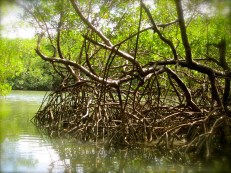
Photography: Exploring the mangrove biome on Itamaraca Island, Brazil.After departing Brazil, 180 years ago, Charles Darwin headed South… nice coincidence: our next posting is La Paz, Bolivia, and after a short stop back in the US, our family, led by the International Affair’s father and his right-hand Biologist wife (aka, the Mother), will again, be heading to South America! 😮 Hey, please don’t get me wrong: no intention to compare between the 2 biologists! 😮 I’m humble enough to admit myself as being a passionate researcher, who loves to learn and is eager to share experiences I’ve acquired through life, with our growing children.oyster colonies growing along the tree branches

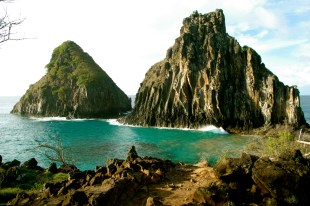
During these 2 years in Brazil, our family had the opportunity to really immerse into the culture, and personally, I was grateful for the possibility of letting my children experience what I grew up with in Brazil. As a family, we traveled through most of the northeastern region of Brazil, visited historical sites, dating from the Dutch, Portuguese, Spanish colonization days. We experienced the intriguing architecture of this nation’s capital, Brasilia; and as an exploring couple, my husband and I got to visit several unique sites, like the paradise beach coast of Jericoacoara, one of the ten most beautiful beaches on Earth and the world’s heritage site, [Archipelago of] Fernando de Noronha, coincidentally, one of the Brazilian sites visited by Charles Darwin’s expedition [other posts about Fernando de Noronha here and here]. and . We saw spinning dolphins, volcanic rock formations, horizontal trees, manatees, baby sharks, deep blue lagoons, and hiked through untouched natural settings… We experienced life to its fullest – always sharing our findings with our offspring… who knows, maybe one day, they’ll also become passionate explorers, life their parents? 😮

Through the aerial roots of this old tree...

While living in Brazil we saw different color sunsets, and once-in-a-lifetime sunrises. We lazed in hammocks dipped in the deepest blue water, listened to volunteers talking and showing the importance of preserving the sea and green turtles, and watched them hatch… at the end, we simply enjoyed the wonders of nature… We learned about conservation and the importance of respecting the natural creations, as well as, its limits. We learned about the use and potential of the “green energy resources“, and talked about it with our colleagues. We boarded on the visiting Rainbow Warrior Greenpeace ship for a live lesson on Conservation of Natural Resources…IMG_4108

Our children are learning to love and respect their mixed culture and the importance of learning how to explore, how to care, how to preserve.

They’re beginning to understand historical events, their causes and consequences. They’re learning that any country is not just about land, but also, its people, their beliefs and their sense of social respect. Hybrid cultures are a rich experience. They will grow up comprehending that the world they live in is much bigger than geography may present itself. And a country’s boundaries go as far as its people. We bring our culture with ourselves. Our traditions, our honor, our respect to others. Wherever we are. Wherever we move to. We’ve departed Brazil with a heavy heart and lots of good memories, that we’re trying to register through this interactive quasi-travel diary… And, as Charles Darwin himself wrote on his Diary, our adventure will also continue:

[July, 1832] 5th A little after 9 oclock we tripped our anchor, & with a gentle breeze stood out of the bay.— Capts Talbot & Harding accompanied us beyond Santa Cruz.— As we sailed past the Warspite & Samarang (our old Bahia friend) they manned the rigging & gave us a true sailor-like farewell, with three cheers.— The band at the same time striking up “To glory you steer”.— The Captain had intended touching at Cape Frio, but as the lightning did so.— we made a direct course for the South.— Near to the Isle de Raza the wind lulled, & we are now becalmed & shall probably remain so during the night: |190| The moon is now shining brightly on the glassy water.—every one is in high spirits at again being at sea & a little more wind is all that is wanted.— The still & quiet regularity of the ship is delightful; at no time is “the busy hum of men” so strongly perceived as when leaving it for the open ocean.—”

Thank you, WordPress Readers! And the journey continues!

Picture the World Project: Representing Brazil! (3rdculturechildren.com)


Weekly Photo Challenge: Everyday Life

This week’s photo challenge is guest hosted by Jon Sanwell of Without an H. Read on for more about this week’s theme and his photography tips!

Everyday Life. This challenge is all about people and the things they do every day: working, eating, drinking, chatting, dreaming, walking, exercising, or any of those things we do all the time without really thinking about it. Take a walk around your neighbourhood, or around the streets where you work or study, and take a look at the people you see. (The shot above was taken at lunch time on a street in Ho Chi Minh City.) You might think that your neighbourhood isn’t very interesting, but imagine that you’re giving a guided tour to someone from the other side of the world—what’s normal for you might be extraordinary to them.

From

This week’s photo challenge is guest hosted by Jon Sanwell of Without an H. Read on for more about this week’s theme and his photography tips!

“Everyday Life. This challenge is all about people and the things they do every day: working, eating, drinking, chatting, dreaming, walking, exercising, or any of those things we do all the time without really thinking about it. Take a walk around your neighbourhood, or around the streets where you work or study, and take a look at the people you see. You might think that your neighbourhood isn’t very interesting, but imagine that you’re giving a guided tour to someone from the other side of the world—what’s normal for you might be extraordinary to them”.

A few interpretations for the idea of everyday life:

Simple pleasures of life. From a toddler sneaking in, and climbing up on the desk, to adults enjoying a bottle of wine with homemade dinner, from getting ready for your first day in school, to being a ‘kid veteran, posing for a shot at your new school… or simply spending time playing outside, a collection of ‘everyday images’.

This slideshow requires JavaScript.

See what others have to show, for this week’s photo challenge!

Weekly Photo Challenge: Everyday Life « Express with Photos ¡A por un café matinal! « La Mandraka Weekly Photo Challenge: Everyday Life « Flickr Comments Weekly Photo Challenge: Everyday Life « e-Shibin Weekly Photo Challenge: Everyday Life « MaanKind Weekly Photo Challenge: Everyday Life « Ruined for Life: Phoenix Edition Weekly Photo Challenge: Everyday Life – Joy and Woe Weekly Photo Challenge – Everyday Life | Alastair’s Blog Trying to Keep Balanced « Broken Light: A Photography Collective Everyday life: Rainy day (weekly photo challenge) | Cardinal Guzman Weekly Photo Challenge: Everyday Life « Jinan Daily Photo WordPress Weekly Photo Challenge: Everyday Life « A year in the Life weekly photo challenge : everyday life | bodhisattvaintraining The Weekly Challenge: Everyday Life – Elderly Advice « What’s (in) the picture? Weekly Photo Challenge: Everyday Life | A Little British Pea … weekly photo challenge: everyday life « Curls n Skirls Weekly Photo Challenge: Everyday Life | Humbled Pie Friendly faces in unknown places « Detours by Deepali Weekly Photo Challenge: Everyday Life « Fenland Photos Weekly Photo Challenge: Everyday Life « Beijing Daily Photo 2 Weekly Photo Challenge: Everyday Life « The Other Courtney Weekly Photo Challenge : Everyday Life « Les Petits Pas de Juls Weekly Photo Challenge: Everyday Life | Cee’s Life Photography Weekly Photo Challenge: Everyday Life | acieartikulasi Weekly Photo Challenge – Everyday Life « The Urge To Wander Weekly Photo Challenge: Everyday Life | Wind Against Current Weekly Photo Challenge: Everyday Life « wingrish Weekly Photo Challenge: Everyday Life… a day in the life | A barbaric YAWP across the We  WEEKLY PHOTO CHALLENGE: EVERYDAY LIFE « Francine In Retirement Next Stop … | Beyond the Brush Weekly Photo Challenge: Everyday Life On the job « patriciaddrury Weekly Photo Challenge: Everyday Life « Jag gör världen vackrare Weekly Photo Challenge: Everyday Life « The White Pumpkin Light Photo Challenge: Everyday Life (Loving Aachen XVI) « A Happy and Beautiful World  | 50 Year Project « AbstractUnknownBoy « Rois « A Happy and Beautiful World | Creativity Aroused

How sweet! The Super Sweet Blogging Award!

I simply love cupcakes – even shared before a personal recipe for “Margarita Cupcakes”, with and without alcohol, for little ones… 😮
Although I love baking them, especially for my kids birthday parties, this year, I’ll take a break – beginining this October, I’ll be BUYING ALL SWEET TREATS for my little ones special day… And why? Just because I’m realizing that, between the sweetness of all the planning, and the crude execution, assembling, decoration, there’s pretty STRESSED PERSON – somebody who ends up changing from a sweet mom into a CRANKY, TIRED bossy baker… And from this point on, I’ve decided: I want the ‘sweet, kind mommy’ back into my kitchen!

I simply love cupcakes – even shared before a personal recipe for “Margarita Cupcakes“, with and without alcohol, for little ones… 😮
Although I love baking them, especially for my kids’ birthday parties, this year, I’ll take a break – beginning this October, I’ll be BUYING ALL SWEET TREATS for my ones special’ special day… And why? Just because I’m realizing that, between the sweetness of all the planning, and the crude execution, assembling, decorating, there’s  pretty STRESSED PERSON – somebody who ends up changing from a sweet mom into a CRANKY, TIRED, bossy, baker…
And from this point on, I’ve decided: I want the ‘sweet, kind mommy’ back into my kitchen! My kids deserve better than a stormy mother running around the kitchen, before breakfast time! And their dad deserves a caring partner, instead of a screaming wife, telling him to get the decorations ready, while she’s finishing up with the toppings! 😮
That said, I’m retiring from my “home-baking goods mommy business” – at least, until one of my girls, now aged 4 and almost 2, are able to jump in and help mom in the kitchen. Until then, dear ‘commercial bakers out there’, I’m all yours! 😮
Coincidently, right after I had this ‘realization’, I found out my blog had been nominated for a SUPER SWEET BLOG AWARD! 
Maybe, it’s the sign I was looking for: I can still write, share experiences and images, discuss with other parents about the challenges of raising TCKs all over the map, and enjoy celebrating my kids special days… with ZERO STRESS! Loved it!
So, here is the award, its rules and next steps: Enjoy! ♥

Thanks to Catherine, from Mezzaphonically Speaking for being super sweet and nominating me for the Super Sweet Blogging Award!  I appreciate this special honor and opportunity!

Rules for this award include:
– Thank the super sweet blogger who made the nomination.
– Nominate a baker’s dozen of other bloggers:

They are bloggers talking about life, food, kids, adventures… All in all, a ‘treat’ to read! Go check them out – they’re some of the examples of readings that keep me going!

And answer five questions:

  • Cookie or cake? Cookie
  • Chocolate or Vanilla? Vanilla
  • What is your favorite sweet treat? Brazilian Dark Chocolate (the tiny ones with caramel!)
  • When do you crave sweet things the most? Night
  • If you had a sweet nickname, what would it be? Cupcake! 

Related articles

Super Sweet Blogging Award (thebruisedcandle.wordpress.com) Super Sweet Blogging Award (frankoshanko.wordpress.com) Super Sweet Blogging Award (luccav.com) Nominated For The Super Sweet Blogging Award !!! (ravenswitch.wordpress.com) Super Sweet Blogging Award (managuagunntoday.wordpress.com) The Super Sweet Blogging Award! (homedesirable.wordpress.com) Super Sweet Blog Award (beebeesworld.wordpress.com) Super Sweet Blogging Award (thesugarlump.com) WOW…Nominated For The Super Sweet Blogging Award A Second Time! (ravenswitch.wordpress.com) Super Sweet Blogging Award (terry1954.wordpress.com)

Funny (and realistic!) facts about ‘Transport in La Paz’.

Sharing today a bit of feedback on what we´re calling, “our newest home”. After being in La Paz, Bolivia, for a month, our overall experience is pretty positive, which is fantastic, considering we´re still waiting for our household effects to arrive, and kids don´t have a lot of toys to play with. All in all, very positive, and we`re enjoying every moment.

Sharing today a bit of feedback on what we´re calling, “our newest home”. And thanks to Ailsa, from Where is my Backpack? for the usual inspiration! After being in La Paz, Bolivia, for over 4 months, our overall experience is pretty positive, which is fantastic, considering we´re still waiting for our household effects to arrive, and kids don´t have a lot of toys to play with. All in all, positive vibes, and we`re enjoying every moment.

20120824-182537.jpgOne thing that I find very ´peculiar´ is the traffic/transportation/driving dynamics here. Although, I shouldn´t, I suppose, after living and driving in Mozambique/South Africa/Swaziland, on the “wrong side” 😮 of the road, for some 3 years, and in Recife (Brazil), for another 2 years, nothing should come as a real surprise.

But, in fact, there´s always something new at you. And, it actually makes me laugh on any regular day: not one single dull moment throughout this beautiful city here! I was quite happy to find a post that shared similar thoughts, and am adding it here, with a few comments. My appreciation to Strolling South America, another blogger with WordPress, for sharing actual/realistic and funny facts about the ´transportation´ in La Paz! I added my comments below each original statement. Have fun reading!

Obviously, cropped the bottom of the pic… respecting the driver’s privacy… 😮

Taxi

This is the quickest option. I know it’s hard to believe, but some taxi drivers overcharge foreigners, so make sure you negotiate the price before you leave. The driver can tell you’re a foreigner even if you aren’t wearing stripey hippie pants and standing by Sagarnaga street. Also, make sure it’s a licensed taxi if you don’t want to risk getting EXPRESS KIDNAPPED. If you’re lucky, the front seat will have a seat belt. The back seats will not, but take comfort in the fact that the driver isn’t wearing one either as he passes on the right and runs red lights.

Comment: Gotta love the taxis here. For a mom of 3 little ones, still waiting for our family car, I became quite dependent on taxis, know already a few companies/agencies, and even names of drivers. But the notion of strongly hugging/hauling your kids during any drive (especially the ones towards the downtown area, waving through the curves), is  let´s say, exciting, but in not a great way! Something else about the taxis here: for some reason, they don´t have a meter (!!), so, the driver has to inform the passenger about the cost. After a while, one gets to know how much a certain trip would cost, and we`re all good. But, going back to the ´lack of a meter situation´, according to one of my drivers (I´m becoming quite familiar with cab drivers here!), there´s a simple explanation: THE ALTITUDE. That´s right! The high altitude of the city would ´damage´ any meter they tried to have installed… 😮 Believe it or not, the important thing is that cab drivers and their companies swear by this quasi-fact. That said, one has to trust their driver.

                    Train

You’re in the wrong city! Try Santiago, Buenos Aires, São Paulo or Rio de Janeiro.

Comment: Haven´t had a chance yet… Let´s wait and see what impressions come out of that!

                    Minibus

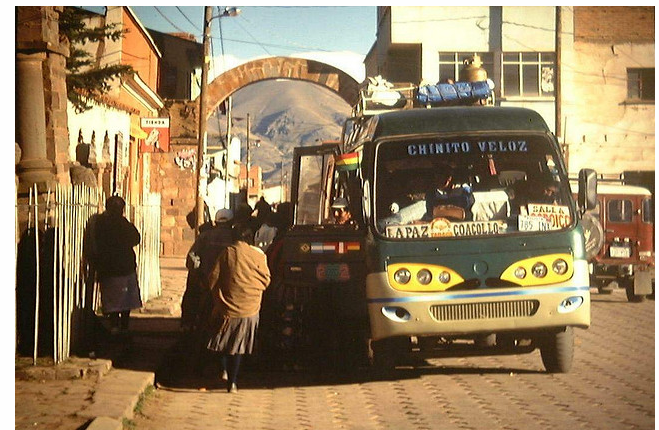
Mini-bus in La Paz

Always wished you were a little bit taller? You won’t as your head hits the ceiling while the driver goes over a bump. More like a van than a bus, this is the most intimate of travel choices. Passengers often greet those seated with a “Buenas tardes” as they board. This is because they’re probably going to be cozily squeezed between a couple of them. Probably the safest of travel options as the driver has to frequently slow down to pick up passengers. No, there aren’t any seat belts, but if that’s what you’re looking for you’ll have to rent a car. Look at the sign in the front window to see where the bus is going. Failing that, listen for the fare collectors shouting the destinations out the open door.

                   Microbus

Microbus in La Paz

Despite the name, microbuses are actually the largest type of intra-city transport. Usually blue or yellow, they are bigger than minibuses, but smaller than your average bus back home. When the seats fill up it’s standing room only. This is the slowest and cheapest of transport options. I wouldn’t recommend it unless you’re really broke, or if you’re in a hurry and the minibuses and trufis are all full.

Trufi

The famous “trufi”!

This is really just a mini-bus disguised as a taxi. Trufis, which also advertise their destinations with a sign in the front window, run set routes like buses, the only difference is that they’re generally a bit faster as they don’t stop as often to let people on and off. They’re ever so slightly more expensive than mini-buses, but the difference is negligible unless you’re on a really tight budget. And if you are on a really tight budget, well you knew that this job only paid 30 bolivianos an hour when you signed up.

Comment: Right now, my position is just watch, listen and learn. what I´ve learned so far? I guess that there´s a very strong possibility I won´t be riding on a Minibus or using a Trufi, as intriguing and exciting they might look to foreigner eyes… I´m fine with my taxis, for the time being… Even though, I know there´ll be no seat belts on the back seat, and there´s a great chance they won´t be able to load their trunk with my groceries, due to the tank of gas (propane, I think!) – hey, I guess it´s a cheap way to beat the economic crisis, getting more driving than with regular oil… 😮   

Bicycle

It was nice knowing you. It’s honestly safer to cycle on this road.

ok, ok… this is actually mountain biking… got a couple friends who’ve got a biking/sports business, so, biking is definitely part of my “TO DO” list while here!

Comment: Well… I´m actually looking forward to try that, despite a few warnings about biking in the city… Don´t have a bike yet, but it´s part of my plans… Kids need to get their bikes, as well, so, I´ll try to be a good role model, reminding myself from my biking-to-work days in Davis, CA.  Again, let´s wait to see what the future brings, but so far, I´m up for the challenge.


Foot

La Paz is a great city in which to take a stroll if you’re training for the Olympics. The altitude combined with the hills will put you in peak physical condition, which you’ll need to fight off food poisoning. The cobblestone streets can be slippery, so I wouldn’t recommend parkour. Keep in mind that crosswalks are merely for decoration.

Comment: Very true. The slippery streets and my knees have already met. Once… or twice, before. Not a fun experience, but a good lesson to learn when one goes out grocery shopping and decides to come back home (uphill) wearing boots and carrying groceries bags… Maybe, it wasn´t a smart decision from my part. From now on, I´ll stick with a cab ride on my way back from the market. Yes, those taxis, the fun ones, with no seat belts nor meters! 😮

ABIA da la bienvenida a sus nuevos socios

Más de 70 personas fueron convocadas para conocer sobre la importante labor que realiza ABIA, cuya ayuda se orienta a cuatro instituciones: el comedor popular de San Calixto, el Hospital del Niño, el proyecto Luz de Esperanza y el centro de rehabilitación y salud mental San Juan de Dios.

Nos comentaron que, además de pasar un agradable momento y dar la bienvenida a los nuevos integrantes, los presentes quedaron gratamente sorprendidos con la fina decoración y los originales bocaditos que caracterizan a The Ambassador’s Table.

American British International Association (ABIA) anualmente ofrece una recepción para dar la bienvenida a sus nuevos integrantes, en esta oportunidad realizó un Wine and Cheese en el  The Ambassador’s Table.

ABIA da la bienvenida a sus nuevos socios.

Travel Theme: Red.


According to Ailsa, from “Where’s my Backpack?” “Red is a terribly versatile colour. It can indicate both anger and love; danger and celebration. You can paint the town red, roll out the red carpet or have a red letter day. I’ve been seeing red recently – southern Utah will do that to you. Everywhere you look there is red rock and red sand. There are even red mountain ranges. Here are a few of the red landscapes that caught my eye.”

Traveling is also made of colors… Let’s see what ‘kinds’ of “RED” we’re able to come up with, for this week’s travel theme…

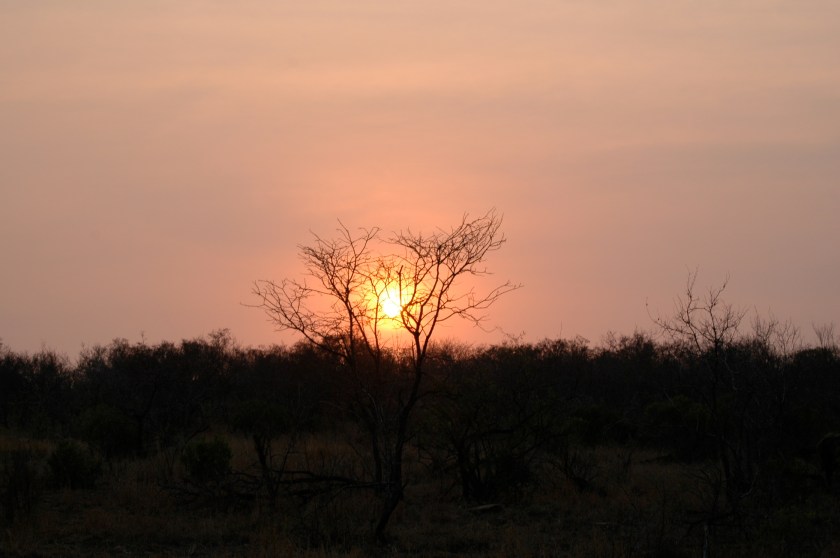
Red sunset, at the Kruger Park, South Africa.
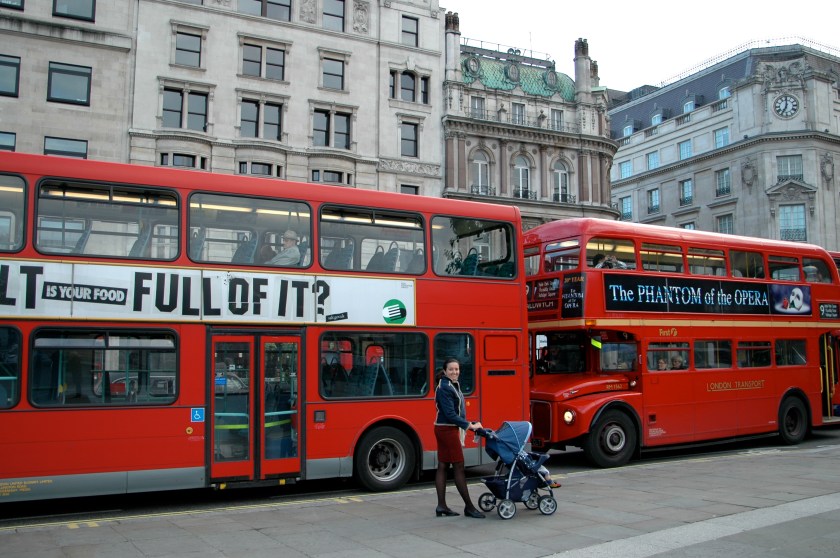
Red Double-Decker, Oxford, England.
Red “Happy Birthday” in Portuguese!
Red candles at an Indonesian Temple.
Door to a Dutch Fort in NE Brazil.
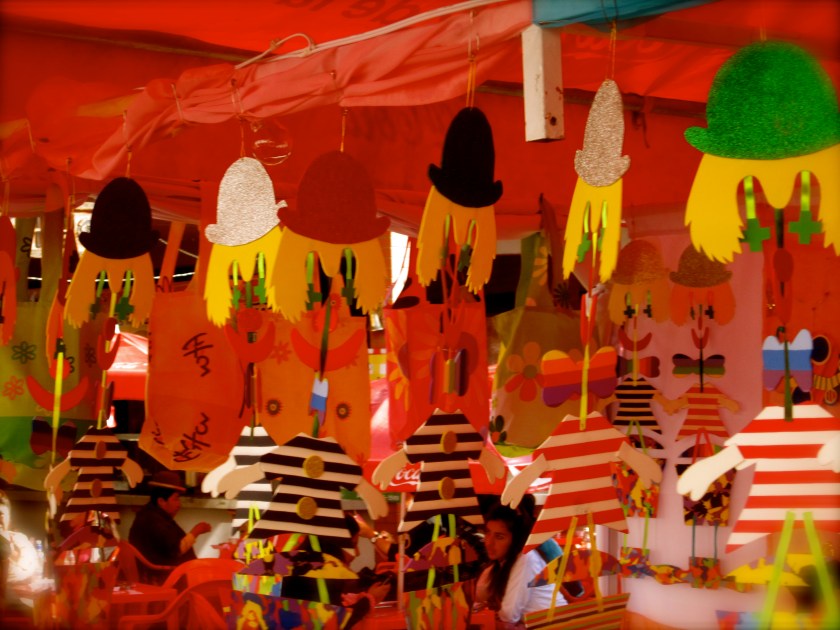
Art Fair in La Paz, Bolivia
“Kids in Red”, Delaware, USA.

My appreciation to Where’s my backpack? for the inspiration! 😮

Weekly photo challenge: near and far.

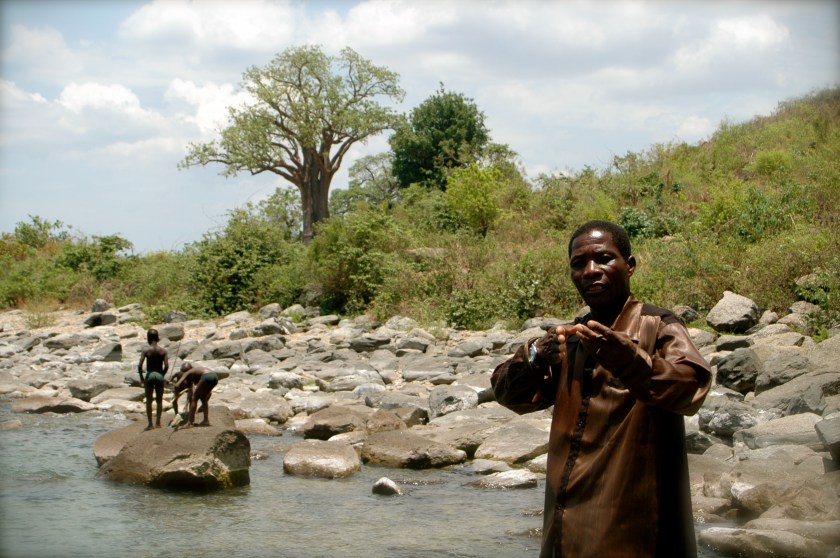
near & far in Africa

This week’s photo challenge is guest hosted by Brian Cooney. Read on for more about this week’s theme and his photography tips!

Near and Far. We’re excited about this week’s photo challenge, near and far, and hope it inspires you to play with perspective, which can give sweeping images of beautiful locations more oomph and power. Perspective is what makes a flat two-dimensional image, such as a photograph, appear like it is three-dimensional. To create this effect, you can use features like diagonal lines, which converge within the frame and literally suck in the viewer.

A few interpretations for the idea of near and far: perspectives in 4 different scenarios, 4 countries, one family affair…

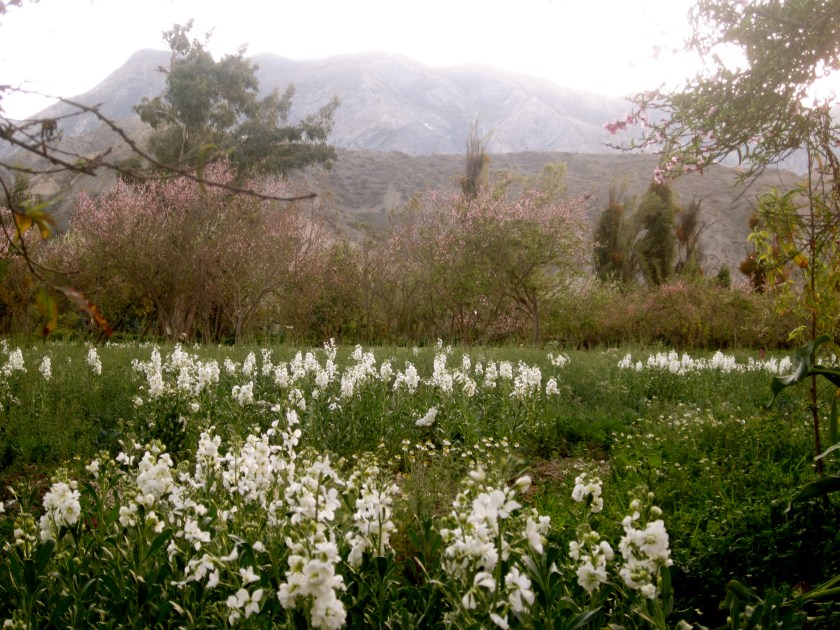
near, the flowers…. far away, the Andine mountains
the girl and the Brazilian coast island …
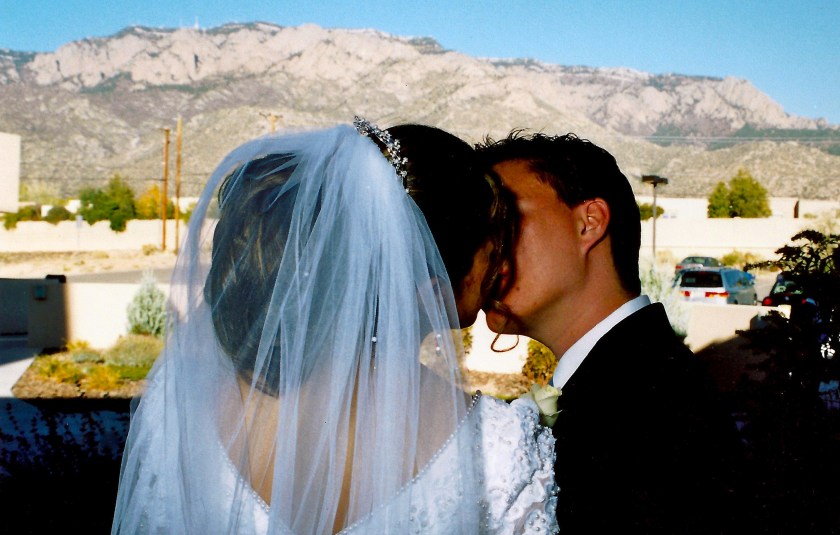
wedding couple placed  against the US Southwestern mountains

See what others have to show, for this week’s photo challenge!

Joy and Woe  « Flickr Comments El sonido del bronce español « La Mandraka « Form Your Troika  Chittle Chattle Just Snaps « The Great Escape » Life from behind a lens  A Little British Pea … Cardinal Guzman Weekly Photo Challenge: Near and Far « britten « beyond toxicity Weekly Photo Challenge: Near and Far « e-Shibin Weekly Photo Challenge: Near and Far « Fenland Photos Weekly Photo Challenge: Near and Far « thegirlinthesunglasses Photo Journal – «  (With the Wind) « A drifter off to see the world Travel Challenge; Near and Far « So where’s the snow? « Connie’s World « A year in the Life Near and Far | Figments of a DuTchess  | nirvanatrails Weekly Photo Challenge: Near and Far « wingrish  « The Other Courtney Near and Far « bukaningrat ™ Weekly Photo Challenge : Near and Far | a weirder fetish Weekly Photo Challenge: Near and Far | Wind Against Current Weekly Photo Challenge – Near and Far « mtlawleyshire Weekly Photo Challenge: Near and Far « Jacob Marchio Miles Away (Weekly Photo Challenge: Near and Far) | Noke Yuitza Weekly Photo Challenge: Near and Far « Olivia May Photography Photo Challenge: Near and Far « Detours by Deepali  Mondrak’s Blog \ acieartikulasi « Queen’s Gems

190 anos de Brasil Independente. Let’s keep moving forward… please!

Chinese proverb says: “If you are planning for a year, sow rice; if you are planning for a decade, plant trees; if you are planning for a lifetime, educate people.”  

Road trip from La Paz to Mecapaca, Bolívia.

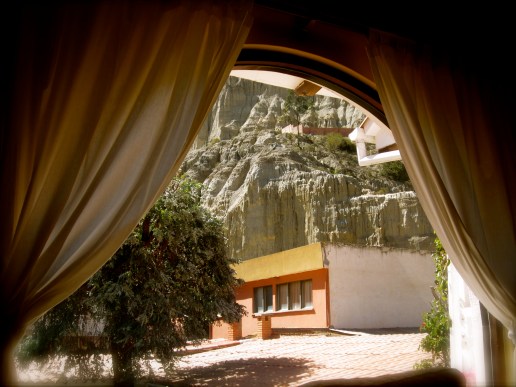
One of the great attractions of Mecapaca is that it is only 45 minutes from La Paz city center and even closer to the Zona Sur (the southern suburbs of La Paz). Moreover, it is easily reached by taxi or one of the regular minibuses. Minibuses (number 253–look for the “Mecapaca” sign on the dashboard) leave for Mecapaca regularly from Plaza Humbolt, a small plaza on the right as you cross into the Zona Sur. Mecapaca is the “end of the line” so transportation back is not a problem. We went by car, a family of friends (2 adults, 2 kids) kindly invited us to join them for lunch at a popular hotel/restaurant in Mecapaca. Close by to our end-point, is the well-known Valle de la Luna (Valley of the Moon), a popular tourist destination with strange eroded sandstone formations – but hopefully, will be hit on a future trip… we’re still adjusting to the new lifestyle, altitude and the curvy roads, so, would’ve been a bit much to ask the kids to endure… For the time being, enjoy the images from our recent road trip!

view from the Hotel Andino, Mecapaca

One of the great attractions of Mecapaca is that it is only 45 minutes from La Paz city center and even closer to the Zona Sur (the southern suburbs of La Paz). Moreover, it is easily reached by taxi or one of the regular minibuses. Minibuses (number 253–look for the “Mecapaca” sign on the dashboard) leave for Mecapaca regularly from Plaza Humbolt, a small plaza on the right as you cross into the Zona Sur. Mecapaca is the “end of the line” so transportation back is not a problem. We went by car, a family of friends (2 adults, 2 kids) kindly invited us to join them for lunch at a popular hotel/restaurant in Mecapaca. Close to our end-point, is the well-known Valle de la Luna (Valley of the Moon), a popular tourist destination with strange eroded sandstone formations – but hopefully, will be hit on a future trip… we’re still adjusting to the new lifestyle, altitude and the curvy roads, so, would’ve been a bit much to ask the kids to endure… For the time being, enjoy the images from our recent road trip!

How we got there:

The Curvy, Bumpy, No-Shoulder Roads… and the Reward!

{Urban Art} Exposición: “Poetas en tiempos de escasez”, Museo San Francisco, La Paz.

Artists: Chen Chieh-Jen (Taiwan) – Harum Farocki (Germany) – Chris Larson (USA) – Sol Mateo (Bolivia) – Roman Signer (Switzerland) – Pablo Lobato (Brazil)

Curator: Alfons Hug (Brazil-Germanyl)

Co-curators: Paz Guevara (Chile-Germany) y Cecilia Bayá Botti (Bolivia)

[Project’s Fan Page]

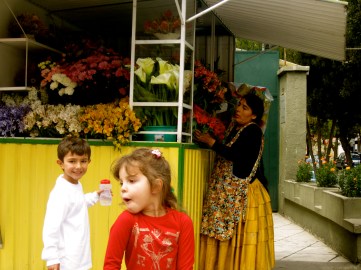
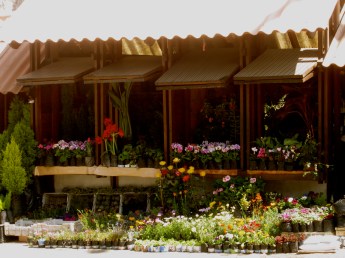
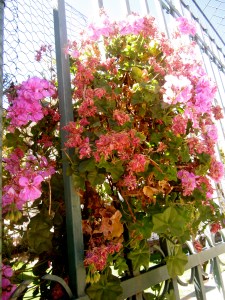
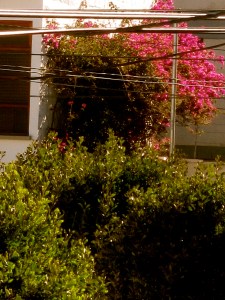
Urban Beauty Photography: Flowers along the Streets of La Paz.

Pluck not the wayside flower;
It is the traveler’s dower.
~William Allingham

Celebrating our first month in Bolivia – our new post assignment, our new home. New life brings new expectations… Here’s what we’re seeing:
“Flowers have spoken to me more than I can tell in written words.  They are the hieroglyphics of angels, loved by all men for the beauty of their character, though few can decipher even fragments of their meaning”.  Lydia M. Child

“Pluck not the wayside flower;
It is the traveler’s dower”.
William Allingham


“For myself I hold no preferences among flowers, so long as they are wild, free, spontaneous.  Bricks to all greenhouses!  Black thumb and cutworm to the potted plant!”  Edward Abbey

“The flowers of late winter and early spring occupy places in our hearts well out of proportion to their size”.  Gertrude S. Wister

“Every flower is a soul blossoming in nature”.  Gerard de Nerval

“The artist is the confidant of nature, flowers carry on dialogues with him through the graceful bending of their stems and the harmoniously tinted nuances of their blossoms. Every flower has a cordial word which nature directs towards him”. Auguste Rodin

“Flowers have an expression of countenance as much as men or animals. Some seem to smile; some have a sad expression; some are pensive and diffident; others again are plain, honest and upright, like the broad-faced sunflower and the hollyhock”.  Henry Ward Beecher


“Perfumes are the feelings of flowers, and as the human heart, imagining itself alone and unwatched, feels most deeply in the night-time, so seems it as if the flowers, in musing modesty, await the mantling eventide ere they give themselves up wholly to feeling, and breathe forth their sweetest odours. Flow forth, ye perfumes of my heart, and seek beyond these mountains the dear one of my dreams!” Heinrich Heine

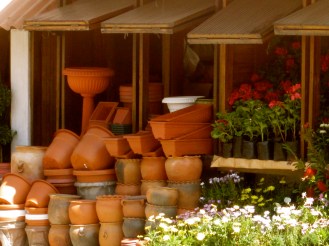
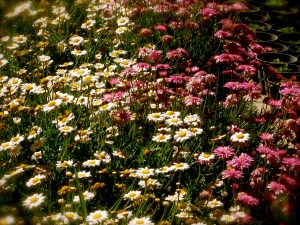
Plant Nursery Photography: A visit to the ‘Vivero de Aranjuez’ in La Paz.

New country. New home. A brand new garden to work on! ♥ And believe me: there’s a great deal of gardening to be done before our front yard gets to where we’d like it to be – full with native plants, adapted to the high altitude, able to endure the cold and dry weather, and yet, displaying colorful plants, flowers, and trees. Soon we’ll be sharing images of our newest project: The Miranda Garden! For now, my main responsibility is bringing it back to life, finding new seedlings for transplant, planting, and, with the help of our newly hired gardener, offer the yard a lot of TLC!

Detail, from a coffee plant

New country. New home. A brand new garden to work on! ♥ And believe me: there’s a great deal of gardening to be done before our front yard gets to where we’d like it to be – full with native plants, adapted to the high altitude, able to endure the cold and dry weather, and yet, displaying colorful plants, flowers, and trees. Soon we’ll be sharing images of our newest project: The Miranda Garden! For now, my main responsibility is bringing it back to life, finding new seedlings for transplant, planting, and, with the help of our newly hired gardener, offer the yard a lot of TLC!

I’m a planner. I live by ‘lists’. Maybe I’m even a controller… hard to say… [my husband should be the one to address that!]. Anyway, my very first chore was a visit to one of the best-known plant nurseries in town: The Vivero de Aranjuez.

Over 180 different species of plants. Most of the workers are women, who take pride on what they do, and claim to understand more about plants than any man would…

Fuchsias, daisies, calla lilies, geranius, coffee plants, palm trees, gerberas… you name it! And I brought them all back home… gotta get the Project started!

Here are images from our visit (baby girl also came): Click on the image to see it blossom! Enjoy!♥

Weekly Photo Challenge: Free Spirit

This week’s photo challenge is guest hosted by Strauss Louw. “Free Spirit. I chose this as the topic for this week’s photo challenge as it lends itself to so many possibilities for subject matter and composition. I work exclusively with film and believe this element is quite important concerning a theme such as the free spirit, as it allows for more experimentation and creative exploration due to how film reacts differently to light than a digital sensor would. To capture this idea of the free spirit, I would suggest breaking some rules. Sometimes it is necessary to overexpose a frame slightly and point the lens to the sun for a bit of glare to capture that sense of a different, free, moving reality. I shot this image at the Fish River Canyon in Namibia on a road trip with a dear friend of mine who likes writing and always keeps her typewriter close by. When she took it out and started writing at the edge of the canyon, it was just too perfect of an opportunity for some interesting shots to pass on”.

This week’s photo challenge is guest hosted by Strauss Louw“Free Spirit. I chose this as the topic for this week’s photo challenge as it lends itself to so many possibilities for subject matter and composition. I work exclusively with film and believe this element is quite important concerning a theme such as the free spirit, as it allows for more experimentation and creative exploration due to how film reacts differently to light than a digital sensor would. To capture this idea of the free spirit, I would suggest breaking some rules. Sometimes it is necessary to overexpose a frame slightly and point the lens to the sun for a bit of glare to capture that sense of a different, free, moving reality”.

My take on the theme? A very free-spirited fisherman! 😮

Thanks for the inspiration! ♥

Travel Theme: Curves.

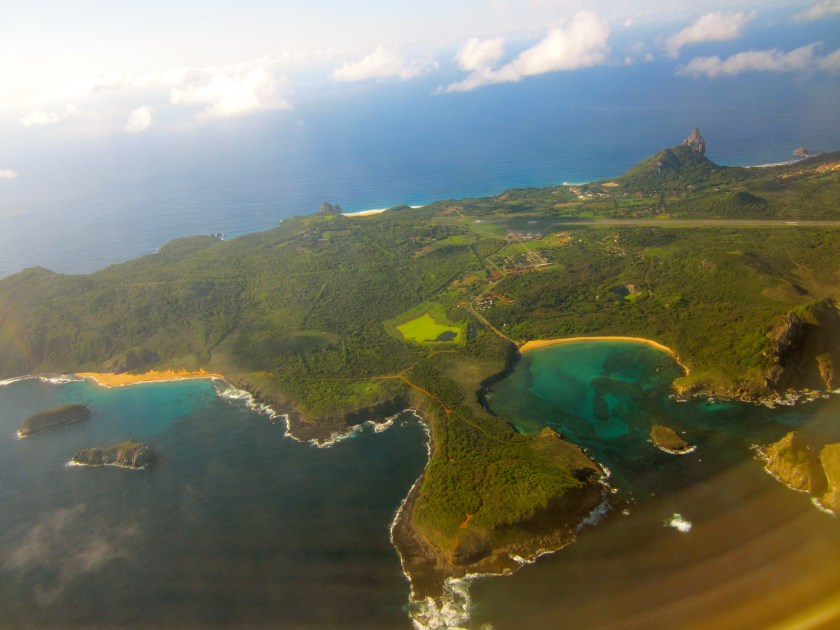
Ailsa, from “Where’s my Backpack?” asked this week’s question: “Are you ready to show off your curves?” Sometimes, the best way to see and ‘feel the curves’ while traveling, is not actually by road… what about by plane? Definitely, a different experience!

“Curving over’ the archipelago of Fernando de Noronha, South AmericaMy appreciation to Where’s my backpack? for the inspiration! 😮

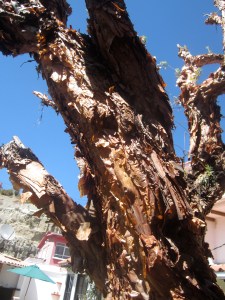
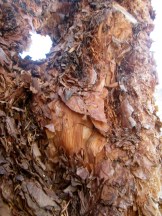
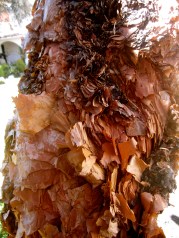
The Quenoa Tree (Polylepis spp.): higher than any other in the world, is part of our front yard!

This tree, with its beautiful red bark, grows higher than any other tree in the world.

What a fantastic find, for a Biologist like myself, having this beauty as part of our yard is simply a blessing!

[Español] La keñua o queñoa de altura (Polylepis tarapacana) es una especie de planta con flor de la familia de las rosáceas (Rosaceae). La especie se distribuye a lo largo de la Coordillera Andina desde Perú hasta Chile, incluyendo Bolivia. [ref. Wikipedia]

La especie se distribuye en un rango elevacional entre 3900 hasta 4700 msnm, algunos individuos aislados pueden llegar hasta 5200 msnm en el Parque Nacional Sajama. Es conocida mundialmente porque en su distribución la especie alcanza más altitud que cualquier otro árbol en el mundo.QUEÑOALES – Comunidad vegetal en que es dominante la Queñoa (Polylepis spp.), árbol característico del Altiplano. Los troncos, de madera dura, son generalmente retorcidos, y están cubiertos por una corteza exfoliante, formada por múltiples láminas de color castaño rojizo. La especie se encuentra en floración entre diciembre-enero y marzo-abril. Fructifica abundantemente, en racimos. Parte de las hojas y de las últimas ramificaciones, cae durante el invierno; cuando el nuevo follaje está completamente desarrollado, se desprenden las hojas restantes.

[English] Polylepis woodland is a distinctive, high-elevation Andean forest habitat that occurs above cloud level (3,500-5,000 m) as patches of woody vegetation surrounded by paramo (e.g., Festuca species) or puna (e.g., Ichu species) grass and shrub

The Queñoa Tree

This tree, with its beautiful red bark, grows higher than any other tree in the world.

And we get to enjoy this unique beauty every day… just walk out to the front yard!

What a fantastic find, for a Biologist like myself, having this beauty as part of our yard is no less than a blessing!

[Español] La keñua o queñoa de altura (Polylepis tarapacana) es una especie de planta con flor de la familia de las rosáceas (Rosaceae). La especie se distribuye a lo largo de la Coordillera Andina desde Perú hasta Chile, incluyendo Bolivia. [ref. Wikipedia]

Detail, tree trunk with ‘peeling layers’, a result from the cold weather (physiological adaptation response).

La especie se encuentra en floración entre diciembre-enero y marzo-abril. Fructifica abundantemente, en racimos. Parte de las hojas y de las últimas ramificaciones, cae durante el invierno; cuando el nuevo follaje está completamente desarrollado, se desprenden las hojas restantes.
La especie se distribuye en un rango elevacional entre 3900 hasta 4700 m, algunos individuos aislados pueden llegar hasta 5200 msnm en el Parque Nacional Sajama. Es conocida mundialmente porque en su distribución la especie alcanza más altitud que cualquier otro árbol en el mundo. Queñoales eres una comunidad vegetal en que es dominante la Queñoa (Polylepis spp.), árbol característico del Altiplano. Los troncos, de madera dura, son generalmente retorcidos, y están cubiertos por una corteza exfoliante, formada por múltiples láminas de color castaño rojizo.

[English] Polylepis woodland is a distinctive, high-elevation Andean forest habitat that occurs above cloud level (3,500-5,000 m) as patches of woody vegetation surrounded by paramo (e.g., Festuca species) or puna (e.g., Ichu species) grass and shrub (e.g., Baccharis species) communities. These high-altitude woodlands tend to be relicts of a once-widespread habitat and comprise mainly evergreen trees of the genus Polylepis (Rosaceae) which are highly drought tolerant. The trunk and branches are laminated with brown-reddish bark that peels off in paper-like sheets as a protection against extremely low temperatures, and often have mosses and lichens growing on them. ♥ Learning something new everyday here! 😮
the peeling trunk [detail]

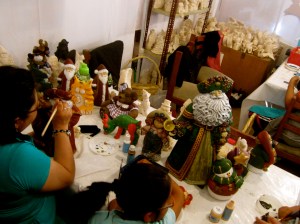
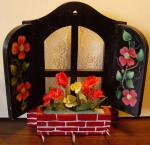
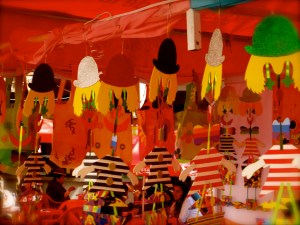
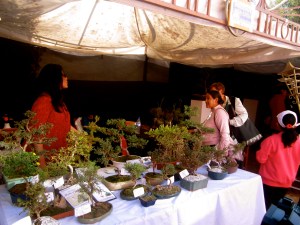
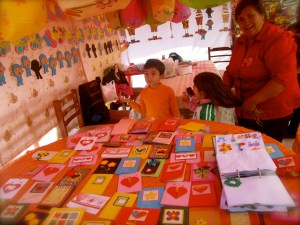
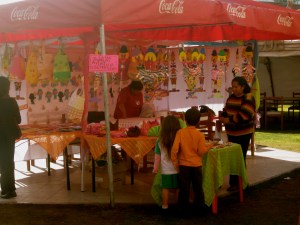
Recuerdos y Souvenirs at the Feria Internacional de Arte Decorativo, La Paz, Bolivía.

El evento internacional, en su cuarta versión, tuve más de 180 expositores que llegarán de diferentes distritos del país y el exterior para mostrar y enseñar sus nuevas técnicas en el arte decorativo. El Ministerio de Culturas en apoyo al arte popular, la artesanía, desarrollo y promoción de proyectos productivos de las artes manuales e incentivando el intercambio cultural brinda su respaldo a la IV Feria Internacional del Arte Decorativo Fidad – Bolivia 2012. “La feria internacional será inaugurada este miércoles en el Círculo de Oficiales del Ejército (COE), donde se ha instalado un circuito cerrado para la difusión de los talleres y de espacios recreativos para los niños”, informó la Coordinadora de la Fidad, Gladys de Rodríguez.

La Paz Feria de Arte Decorativo

El evento internacional, en su cuarta versión, tuve más de 180 expositores que llegarán de diferentes distritos del país y el exterior para mostrar y enseñar sus nuevas técnicas en el arte decorativo. El Ministerio de Culturas en apoyo al arte popular, la artesanía, desarrollo y promoción de proyectos productivos de las artes manuales e incentivando el intercambio cultural brinda su respaldo a la IV Feria Internacional del Arte Decorativo Fidad – Bolivia 2012. “La feria internacional será inaugurada este miércoles en el Círculo de Oficiales del Ejército (COE), donde se ha instalado un circuito cerrado para la difusión de los talleres y de espacios recreativos para los niños”, informó la Coordinadora de la Fidad, Gladys de Rodríguez.

[English] What could be a better idea for an “after school Friday activity”? This past Friday, decided to take the kids to the Military Circle, in La Paz, for a Fair on Arts, Crafts and Decoration, complete with short-classes, and courses on how to make ceramic, plaster, paintings… Kids loved the experience and this mom over here left very pleased with the results, after over 2 very intense/active hours! 😮

 El objetivo fue de estimular la creatividad de las personas que están relacionadas con las artes decorativas, para ello, los expositores mostrarán y enseñarán las nuevas técnicas en sus propios stands que se convertirán en talleres para que cada visitante opte por el aprendizaje de un arte en breve tiempo, según el reporte oficial.

A manera de incentivar al público asistente, los organizadores de la Fidad – Bolivia 2012 programaron pasarelas de moda con modelos de Top Secret, presentaciones de ballets y espacios de comida rápida.

a green house for bonsai classes!

home made chocolate and treats – all teachable!!


¡Biénvenidos a la Escuela, con Salteñada! Images and Recipe.

School year just begun… nothing says “Welcome” better than a morning filled with fun activities for the whole family, topped off with typical (and delicious!) “salteñas!

Bolivia is known for its special kind of empanada called a salteña Oddly, the salteña takes it’s name from a city in Argentina (Salta), but it’s definitely a Bolivian specialty. You can recognize salteñas by the repulgue (the braid-like fold that seals the filling inside) which runs across the top of the pastry instead of along the side.

There are many varieties, but in general the meat and vegetable filling in a salteña tends to be runnier and sweeter (yet spicy) than most other empanadas. They are tricky and time-consuming to prepare, with traditional recipes calling for gelatin in the filling, so most salteña fans buy them from restaurants and street food carts. Salteñas are typically enjoyed as a mid-morning snack in Bolivia.

Salteñas are often served with a plate and a spoon, but expert salteña eaters know how to enjoy them without letting the juices run down their sleeves, by kind of pouring the liquid into their mouth as they take bites!! 😮

This slideshow requires JavaScript.

And here, the recipe for this delicious treat!

Filling – Ingredients:
1 cup lard or margarine
1 cup ground spicy red pepper (cayenne) mixed with water

½ tablespoon ground cumin
½ tablespoon black ground pepper
½ tablespoon crumbled oregano
1½ tablespoon salt
2 cups white onion, cut into small cubes
1½ cups green onion, finely chopped
3 pounds lean meat, cut into small cubes
1 cup potato, peeled, cooked, and cut into small cubes
½ cup cooked green peas
¼ cup granulated sugar
½ tablespoon vinegar
½ cup parsley, finely chopped
2 spoonfuls unflavored gelatin dissolved in 3 cups water
½ black olive per salteña
3 raisins per salteña
1 slice of boiled egg per salteña

Preparation:

  1. In a casserole add the margarine and the spicy red pepper. Set to boil over high heat until the margarine separates from the pepper. Next add cumin, ground black pepper, oregano, and salt. Let cook for ten minutes over low heat so that the mixture does not stick. Stir constantly. Next add the white onion and let it cook for five more minutes. Finally add the green onion.
  2. Remove the casserole from the heat, add the sugar, vinegar, parsley, potato and cooked peas.
  3. In another casserole add the three gelatin cups. Let it cook over high heat and as soon as it starts to boil, add the meat. Mix quickly and remove from the heat.
  4. Mix the first preparation with the gelatin and meat. Let it cool in the refrigerator one night or until it thickens. If wanted, add the olives, raisins and egg before it thickens or add them directly on the dough when preparing the salteñas.

DOUGH
Ingredients:

12 cups flour
1½ cups lard or margarine (boiling)
6 whole eggs
½ cup sugar
3 teaspoons salt
2¼ cups lukewarm water (more or less)

Preparation:

  1. Sift the flour in a bowl and add the boiling lard or margarine. Mix quickly with a wood spoon. Let it cool for a few minutes and add the eggs, the sugar and lukewarm water with salt. Knead until getting a dry dough. Cover the dough with a kitchen towel  and let it rest for ten minutes.
  2. Divide all the dough into fifty small balls and thin them out one by one with a roller, until getting round-shaped pieces (about ¼ of and inch thick by 5 inches of diameter).
  3. On each round-shaped piece put a spoonful of the filling with the olive, raisins and egg, if these ingredients were not mixed before.
  4. Dampen the edges of each piece with water, fold each one and join the edges very well so that each salteña is closed perfectly. Leave the closing on top.
  5. Put salteñas, on a backing sheet sprinkled with flour. Place each salteña separate from the next one.  Bake them at a high temperature (European oven: 300 C.; American oven  572 F.) between seven to ten minutes. Serve them warm.

NOTE 1: If desired, paint salteñas before baking them. In a frying pan add 6 spoonfuls of lard or margarine, 2 spicy red peppers (ground), 4 spoonfuls of water and a teaspoon of salt. Mix the ingredients and cook them over low heat until the water evaporates. Remove the mixture from the heat and paint eachsalteña with a kitchen brush. NOTE 2: If desired, you can substitute meat with chicken, or you can combine both.

Weekly Photo Challenge: Silhouette.

SILHOUETTE. The proper definition of a silhouette is “the outline of a body viewed as circumscribing a mass.” In photography, often we achieve that effect by putting light behind the object whose silhouette we want to capture, effectively darkening out the features of the subject instead of highlighting them – according to this week’s challenge, from the Daily Post, in Wordpress.

According to Ailsa, from “Where’s my Backpack?”: It fascinates me how a silhouette; a two-dimensional outline of a person or object, can suggest a story just as clearly as if you could see the scene in its entirety. Perhaps it makes our imagination work overtime, trying to fill in the details we cannot see.”

SILHOUETTE. The proper definition of a silhouette is “the outline of a body viewed as circumscribing a mass.” In photography, often we achieve that effect by putting light behind the object whose silhouette we want to capture, effectively darkening out the features of the subject instead of highlighting them – according to this week’s challenge, from the Daily Post, in WordPress

According to Ailsa, from “Where’s my Backpack?”: It fascinates me how a silhouette; a two-dimensional outline of a person or object, can suggest a story just as clearly as if you could see the scene in its entirety. Perhaps it makes our imagination work overtime, trying to fill in the details we cannot see.”

Our family arrived at our new assignment less than 3 months ago, as many of you may know by now: 2012 marks the move to our first Spanish speaking post: La Paz, Bolivia. The ‘model’ for this photograph is our oldest son, and adventurous and curious boy, pictured against our view through the backyard. The idea of the ‘unknown’ is, at the same time, scary and intriguing… The silhouette against the beautiful mountain scenario tries to represent that – even though we’re not totally sure about what’s ahead of us, we can still enjoy the little bit of beauty that our eyes are able to catch… we’ll be writing our stories and tales in different ways now… This particular blogpost represents the transition that’s waiting for us – my appreciation to Where’s my backpack? for the inspiration! 😮

Weekly Photo Challenge: Urban

This week’s inspiration is “urban”. The idea behind urban photography is to photograph your city and the streets where you grew up as they are. Unlike the photoshopped pictures to which we are accustomed nowadays, urban photography presents a more direct, unaltered view of life. It is about documenting urban living space and how people adapt their environment to certain needs and vice versa. Urban photography shots provide cultural, social, economical, and ecological context all at once, and can capture social tension. Think of urban photography as a complement to street photography—it provides the context in which street photography unfolds.

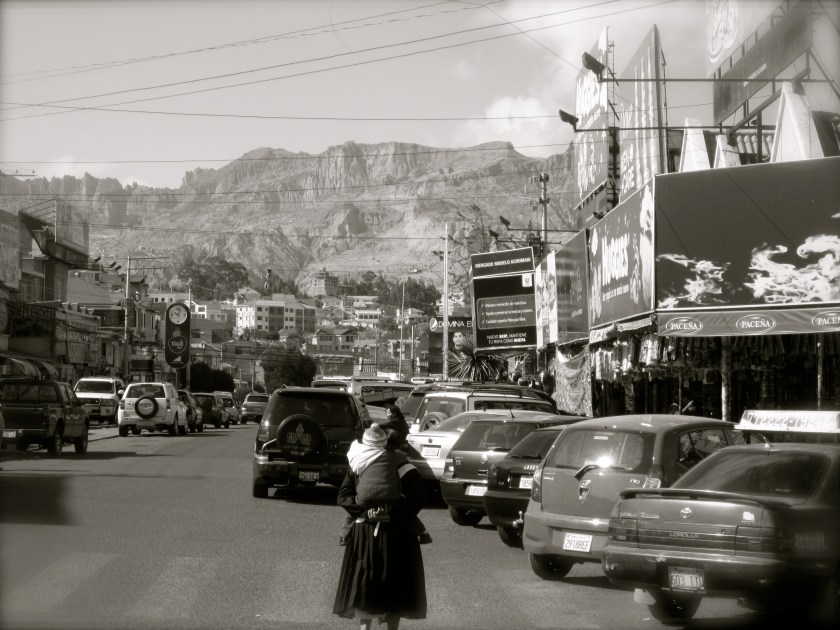
“Colorless Urban”


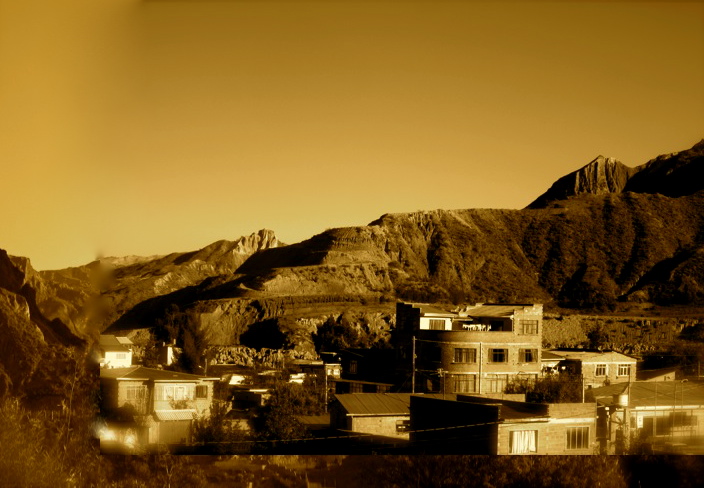
This week’s photo challenge is guest hosted by This week’s photo challenge is guest hosted by Terence S. Jones of A Guy With a Camera. Here, I’m presenting two views of the same city, a ‘colorless urban”, and a ‘colorful’ one, seen below. Urban settings can be whatever we want them to be – sad and colorless, or lively, colorful, pleasant!

“Colorful Urban”

This week’s inspiration is “urban“. The idea behind urban photography is to photograph your city and the streets where you grew up as they are. Unlike the photoshopped pictures to which we are accustomed nowadays, urban photography presents a more direct, unaltered view of life. It is about documenting urban living space and how people adapt their environment to certain needs and vice versa. Urban photography shots provide cultural, social, economical, and ecological context all at once, and can capture social tension. Think of urban photography as a complement to street photography—it provides the context in which street photography unfolds. Thanks for the inspiration! ♥

Photography: Fog, Snow and Fireplace… in August?!

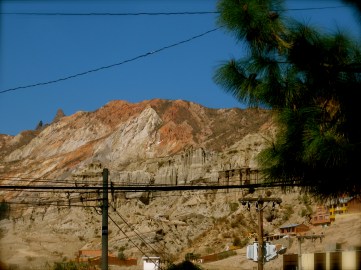
It’s August, and surprisingly enough, we’re keeping ourselves warm while enjoying our new settings. This is what we see, throughout the neighborhood of Achumani in La Paz. The prominent peak that that dominates the skyline over the city of La Paz is the beautiful snow capped Mount Illimani. It lies just south of La Paz at the eastern edge of the Altiplano.

Mount Illimani has an elevation of 6,438 meters (21,122 ft), making it the highest mountain in the Cordillera Real mountain range (name of mountain chains in the Andes Mountains) of western Bolivia. It is the second highest peak in Bolivia, after Nevado Sajama and the eighteenth highest peak in South America. The mountain has five main peaks. The highest is the south summit known as Pico Sur. On the west side is Nevado Illimani, where the normal climbing route is located, which is a popular ascent for mountain climbers. At this time of the year, it’s possible to see the mountains covered in fog and thin snow, result from the cold night, and the perfect excuse for lighting up the fireplace… in the middle of August! 😮

Related articles:

So… where’s home? [from a TCK’s perspective]

Adjusting to School…

School’s begun, kids are adjusting to their ‘newest’ challenges: new friends, without forgetting their ‘previous’ ones, new teachers, with different teaching techniques, strategies, and a brand new schedule… All in all, they seem to be taking it in pretty well (at least for these past 2 weeks!). Let’s see what future will bring to this foreign service family ♥

Adjustments are never easy, nor smooth, but as committed parents, we’re trying our very best to make sure our 3 kids have an enjoyable social/emotional/psychological experience at this new posting/assignment. Not all is under our control, unfortunately, but… it’s all part of life, and life’s challenging on itself – otherwise, what’d be the meaning of pursuing different lifestyles?

That said, during one of my ‘blog hopping’ ventures, found a very interesting video discussing the meaning of ‘home, from a TCK‘s perspective, totally worthy the time, and maybe, a good way to generate some discussion/questioning about the theme. Here it is:

So Where’s Home? A Film About Third Culture Kid Identity from Adrian Bautista on Vimeo.

Learning about Culture and Presidents at the National Museum of American History, Washington DC.

                    George Washington Statue at National Museum of American History – Washington, D.C.

This is the last post of a series – images and stories from our experiences during the US Home Leave. Before we arrived to our newest work and life adventure, we got to spend some time with family back in the US, sharing our stories and experiences of the past two years living and working in Brazil; do a bit of traveling, spend some great quality time with our kids at parks in Delaware and Virginia… and visit the National Mall in Washington, DC. A lot done during our ‘home leave’, now, being shared with our friends, family and curious readers! :All of that will be presented here… one at a time, though! 😮 

Sixth stop: The Presidents Hall, at the National Museum of American History, Washington DC: Link to the exhibit is here.

Día Nacional de Los Pueblos Indígenas, Plaza San Francisco, La Paz.

Celebración del Día Internacional de los Pueblos Indígenas en la Plaza San Francisco, La Paz el 9 de Agosto 2012.

Fotos: Kathrine Dalsgaard

Buenos Días at the Achumani Market [B&W photography].

Good Morning in La Paz… sharing a few images from the Achumani Market.

Snapshots of The Smithsonian Natural History Museum, Washington DC.

Well, we’re in La Paz, Bolivia, now. But before we arrived to our newest work and life adventure, we got to spend some time with family back in the US, sharing our stories and experiences of the past two years living and working in Brazil; do a bit of traveling, spend some great quality time with our kids at parks in Delaware and Virginia… and visit the National Mall in Washington, DC. A lot done during our ‘home leave’, now, being shared with our friends, family and curious readers! :All of that will be presented here… one at a time, though! 😮 

Fifth stop: Halls at the Museum of Natural History, Washington DC: Link to the exhibit is here.


As a Biologist, mom/teacher and former volunteer at the Natural History Museum (2004), I can say the visit, the explanations, and the teaching/learning combinations are well worthy a day trip with your own children, class students, friends, or simply, a ‘curious soul’… Related articles

Images from an exciting visit to the O. Orkin Insect Zoo, in Washington, DC.


Before assuming post at our newest work/life assignment in La Paz, Bolivia, like many other foreign service families, we spent our four weeks of home leave in the US. We visited with family in Virginia and Delaware. We reconnected with friends from the past and from the present. We had fun at parks, public libraries, museums and galleries. We learned and shared experiences about history, culture, nature and life, with our kids. A very intense period – and totally worthy! A lot done during our ‘home leave’, now, being shared with our friends, family and curious readers! All of that will be presented here… one at a time! 😮 

Fourth stop: The O. Orkin Insect Zoo, part of the Museum of Natural History [Smithsonian], in Washington, DC: Link to the exhibit is here.

At a Glance

The O. Orkin Insect Zoo is a special exhibit hall on the 2nd Floor of the Museum where visitors can observe live insects and their many-legged relatives. Volunteers conduct tarantula feeding demonstrations, work with live insects that visitors may touch and hold, and answer questions about the many-legged creatures that live in the Insect Zoo.

This slideshow requires JavaScript.

As a Biologist, mom/teacher and former volunteer at the Natural History Museum, I can say the visit, the explanations, and the teaching/learning combinations are well worthy a day trip with your own children, class students, friends, or simply, a ‘curious soul’… 


Sunset as it is, in La Paz, Bolivia

Sunset in La Paz… couldn’t be any more peaceful in the city…

awoodstock's avatarawoodstock

No filters – No curves – No.thing

View original post

Weekly Photo Challenge: Merge

This week’s photo challenge is guest hosted by Gary Ng of Gnostec Photography. Merge. The world is made up of many things. There is a saying that opposites attract, and this is true for relationships and other things. What about photography? Many surprises can come out of merging two different entities into one. Sometimes this fusion of the elements is what we call art.

This week’s photo challenge is guest hosted by Gary Ng of Gnostec PhotographyMerge. The world is made up of many things. There is a saying that opposites attract, and this is true for relationships and other things. What about photography? Many surprises can come out of merging two different entities into one. Sometimes this fusion of the elements is what we call art.

This week’s inspiration is “merge“. Here is my interpretation, merging two different settings from around our newest neighborhood… one, could be considered the perfect scenario, just the mountains… the second one, once the urban constructions have arrived… Original images may be seen below. Let’s see how good of a “merging job” was done… Thanks for the inspiration! ♥

This slideshow requires JavaScript.

Snapshots from Home Leave: The Flag that Inspired the National Anthem [National Museum of American History, Washington DC].

The Flag that inspired the National Anthem

Well, we’re in La Paz, Bolivia, now. But before we arrived to our newest work and life adventure, we got to spend some time with family back in the US, sharing our stories and experiences of the past two years living and working in Brazil; do a bit of traveling, spend some great quality time with our kids at parks in Delaware and Virginia… and visit the National Mall in Washington, DC. A lot done during our ‘home leave’, now, being shared with our friends, family and curious readers! :All of that will be presented here… one at a time, though! 😮 

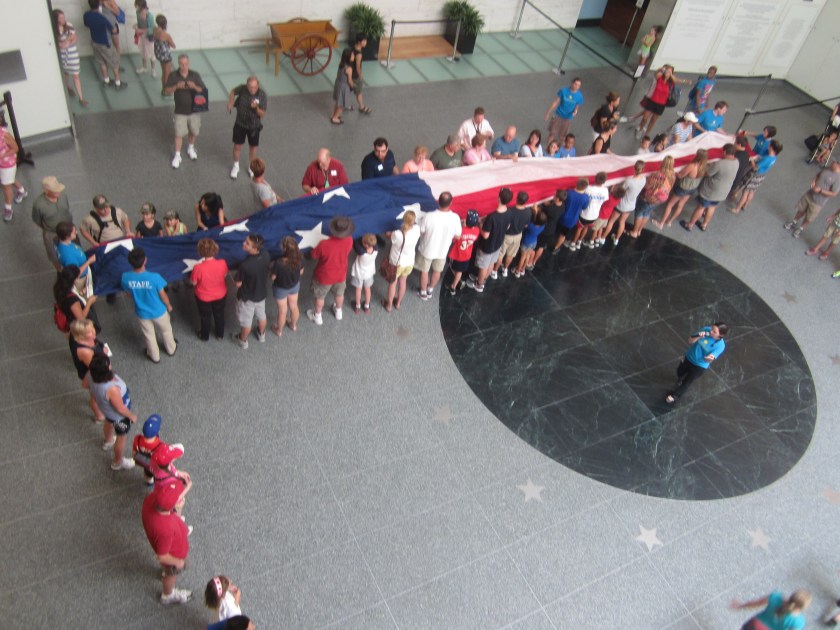
Third stop: The Star-Spangled Banner Exhibit, Washington DC: Link to the exhibit is here.

Getting ready to unfold the Flag and sing the National Anthem. Curious eyes follow every step of the way. All visitors become part of the interactive visit to the Museum of American History – at 3pm, the performance starts…


Our children watched, mesmerized, the visitors below, singing and honoring the National Flag – what a great way to share with them information about the greatest symbol of the country… learning should never stop… a live experience they’ll always hold in their hearts!

Next time, our fourth stop, where we’ll share images and comments of our visits to several halls at the Museum of Natural History (Smithsonian). Children’s curiosity is endless! 😮 We had the pleasure of being joined by a dear friend, whose patience and care for my children are priceless… Thank you very much, Cherise! ♥

Snapshots from Home Leave: An afternoon at the Clemyjontri Park in McLean, Virginia.

[Backstory: Well, we’re in La Paz, Bolivia, now. But before we arrived to our newest work and life adventure, we got to spend some time with family back in the US, sharing our stories and experiences of the past two years living and working in Brazil; do a bit of traveling, spend some great quality time with our kids at parks in Delaware and Virginia… and visit the National Mall in Washington, DC. A lot done during our ‘home leave’, now, being shared with our friends, family and curious readers! All of that will be presented here… one at a time, though! 😮

That said, let’s continue with our tales & reporting from our time back in the US, during this year’s home leave. Before, I shared here some unique images from an intriguing visit to the Butterfly Garden, hosted by the Smithsonian [Natural History Museum], in Washington, DC. Without question, the National Mall in Washington, D.C., is the United States’ public playground, with loads of open space for tourists, and kids in particular, to roam. There’s not much here in terms of specific play features, but you’ve got leafy areas for picnics, a carousel, paddleboats on the Tidal Basin, and lots of biking and walking trails.

Second stop: The Clemyjontry Park, McLean Virginia: Link to more information about the park, its hours and features, here.

As in, the packaging for a new toy can be as entertaining as the toy itself. I find that traveling with young kids follows a similar logic. You can do all the museums, monuments, churches, and castles in the world, but what kids really want is a place in which to run around like they do at home. So to aid in that quest, here are my recommendations for small-people spaces in big-city places—namely, adventuresome playgrounds that will stand in for that well-worn play area at your neighborhood school or park.

We had the pleasure of being joined by a dear friend, whose patience and care for my children are priceless… Thank you very much, Cherise! ♥

Photography: B&W dads for Brazilian Father’s Day


In Brazil, Father’s Day is honored during the second Sunday of August, and it’s common to have the celebrations throughout the whole weekend, offering parents and children an opportunity to enjoy each other’s company at length. In honor of Brazilian Father’s Day, here are a few black and white images of the important fathers in my life: my own dad, who can currently appreciate the physical proximity to his American-Brazilian grandkids, always on the move; my husband, wonderful father of our three children, and my husband’s dad, who’s become a second dad to me, unconditionally accepting me as part of his family, in a quasi-adoptive manner, as the daughter he did not have (and later this year will have two “daughters“, when my soon-to-be sister-in-law enters the family in the Fall!). Here, to all the dads out there, Brazilians or not…

For starters, the husband: the best dad our kids could’ve asked for. A lot of commitment and willingness to learn…


welcoming our second daughter


Following, my husband’s father, my second dad:

He is the one I’m grateful for my husband’s parenting skills…

And here, my dad. The person with whom I share not only a total lack of coordination for sports, but also, an inexplicable passion for Science and numbers. The one who taught me how to count, is now counting my daughter’s little fingers…


Snapshots from Home Leave: A visit to the Butterfly Garden at the Smithsonian Museum, Washington DC.


Well, we’re in La Paz, Bolivia, now. But before we arrived to our newest work and life adventure, we got to spend some time with family back in the US, sharing our stories and experiences of the past two years living and working in Brazil; do a bit of traveling, spend some great quality time with our kids at parks in Delaware and Virginia… and visit the National Mall in Washington, DC. A lot done during our ‘home leave’, now, being shared with our friends, family and curious readers! :All of that will be presented here… one at a time, though! 😮 

First stop: The Butterfly Garden, Washington DC: Link to the exhibit is here.

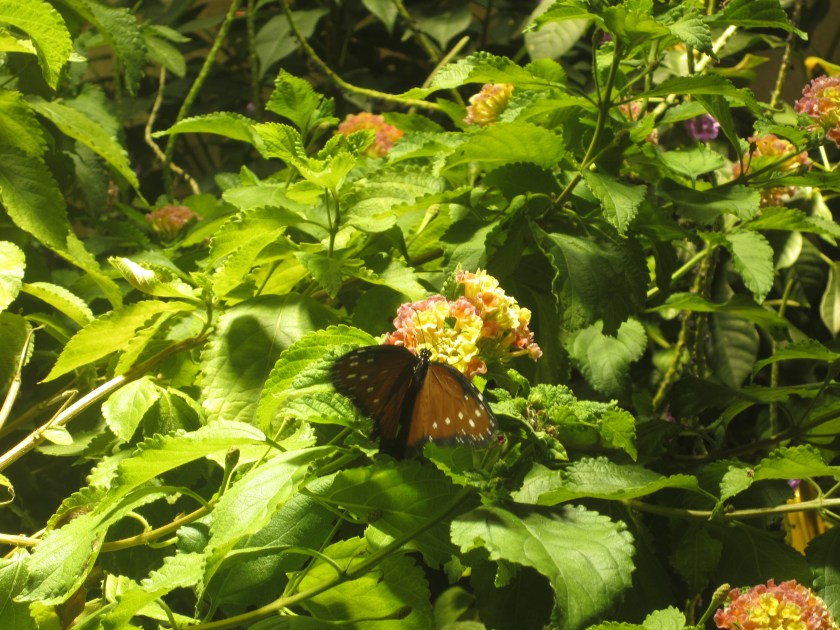
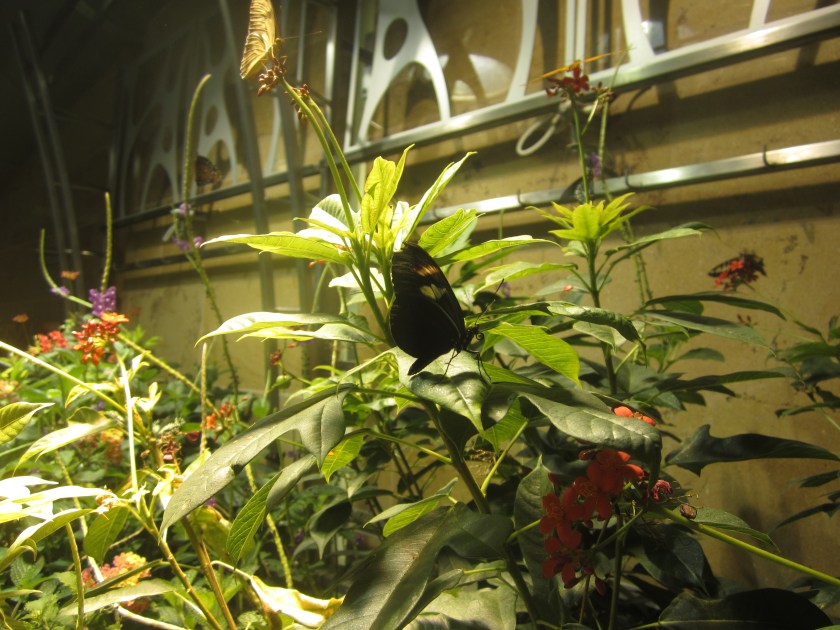
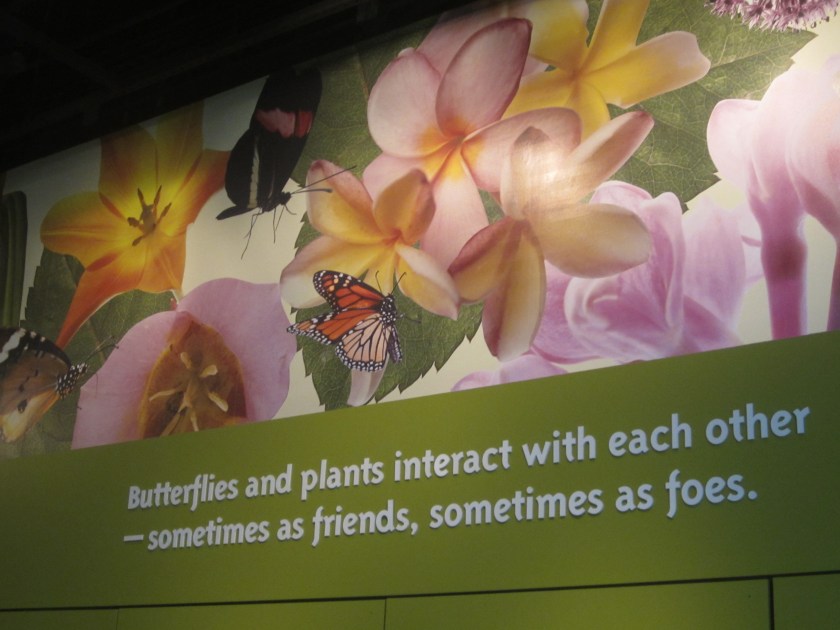
We had the pleasure to visit the $3million butterfly exhibit at the Smithsonian Natural History Museum. The exhibit “Butterflies + Plants: Partners in Evolution” features a 1,200 square foot tropical butterfly garden with approximately 400 butterflies. In the exhibit’s main hall, visitors learn about the co-evolution of butterflies and plants.

The butterfly garden at the Smithsonian is located on the Ninth Street side of the National Museum of Natural History building. 

Four distinct habitats — wetland, meadow, wood’s edge and urban garden — encourage visitors to observe the partnerships between plants and butterflies.

The garden is a joint project of the Horticulture Services Division and the Museum with partial funding from the Smithsonian Women’s Committee.

The garden, on view at all times, is a perfect complement to a visit to the O. Orkin Insect Zoo on the second floor of the Museum. [Stay tuned for upcoming posts on other visits to the Smithsonian wonders!] 😮

As a Biologist, mom/teacher and former volunteer at the Natural History Museum (2004), I can say the visit, the explanations, and the teaching/learning combinations are well worthy a day trip with your own children, class students, friends, or simply, a ‘curious soul’… We had the pleasure of being joined by a dear friend, whose patience and care for my children are priceless… Thank you very much, Cherise! ♥


Sunset through the Mountains around Nuestra Señora de La Paz, Bolívia.

Click to visit the original post
Sunset… as it is! Beautiful, thanks to Awoodstock!

What we see looking though our TV room window…

We made it. We’ve been in La Paz for exactly 7 days, and here is a bit of what we’ve been able to see… But before we go into the image gallery, just found out that Jill is hosting another Foreign Service Blog Round Up (here we go, people unfamiliar with the ‘acronym world’- it became FS BRU!) – and, a fellow blogger, Ailsa, from “Where’s my Backpack?“, came up with a great travel theme: “sunset”!

Anyway, this week’s theme is coincidently: ‘your current post’, and 5 pros and cons of it… so, for somebody who’s got less than 2 weeks at post, take this list with a grain of salt… 😮 I’m sure things will change with time… for better… or for worse… let’s wait and see! For now, enjoying life in ‘Breathless La Paz‘ (you’ll soon find out why!). So, just taking advantage of a blog post written a couple days ago, to share my very own list of “pros and cons” or our newest post:

Nuestra Señora de La Paz is the administrative capital of Bolivia. It is located at an elevation of 3,660 meters above sea level, making it the world’s highest capital city. The city sits in a “bowl” surrounded by the high mountains of the altiplano. As it grows, La Paz climbs the hills, resulting in varying elevations from 3,000 meters to 4,100 meters. Overlooking the city is towering triple-peaked Illimani, which is always snow-covered and can be seen from several spots of the city, including from the neighbor city, El Alto. La Paz is an important cultural center of Bolivia, and we can’t wait to start discovering its culture, learning about its history, the people, the traditions…. and living surrounded by unique beauty!

The city hosts several cathedrals belonging to the colonial times, such as the San Francisco Cathedral and the Metropolitan Cathedral, this last one located on Murillo Square, which is also home of the political and administrative power of the country. Hundreds of different museums can be found across the city, the most notable ones on Jaén Street, which street design has been preserved from the Spanish days and is home of 10 different museums… We haven’t had a chance (yet!) to really go through the main attractions, but, ‘high altitude permitting’ (!!), we’ll begin… very soon!

PROS of our current ‘setting’:

  • The beautiful views surrounding our house, the mountains, the unique geography throughout the city of Nuestra Señora de La Paz, our #1 bid… I seem to never get tired of looking at these mountains…
  • The School. We were finally able to be at a post where we enrolled our kids (almost 7 & 4,5 yrs old) at an American School [in Mozambique, our son went to a Canadian Montessori Academy, and in Brazil, the oldest ones went to a private local school – for now, let’s just leave any discussions behind us… let’s say we were lucky to have different options for our children!]. Regarding their current school, we’re quite pleased with what we’ve seen, so far… Baby girl is still too young for school days, so, for the time being, she’s staying at home with….
  • … a great NANNY! Close friends (from our time in Mozambique) who were living in La Paz, hooked us up with their nanny/maid pair, right before they had to depart to their next posting – so, we had both ladies waiting for us at the house the day we arrived at our new home…
  • Our ‘sponsors’ have been in country for over a decade. They’re pretty ‘plugged in’, have a lot of insight info to share, tips, recommendations… they’ve got kids at similar ages to ours, and… are pretty involved with tourism, extreme sports, mountain biking, hiking… That said, we’ve already built a good ‘network’ during our few days in country…
  • The food! I’m simply loving it! Very tasty, so far, very safe to our ‘foreign stomaches’…  Our maid is a trained cook, and tries to ‘surprise’ us with a different recipe each day. Groceries seem to be way more affordable than back in Recife (Brazil) or DC/Va, for that matter. That said, going grocery shopping has become an entertaining task for this still-stay-home-mom!

Now, the, ‘not-so-positive’ remarks:

  • ‘mate’ (tea) does help with the high altitude effects… A lot, actually! 😮

    The ALTITUDE. Coming from our 4 weeks of home leave in the US, and before that, a great couple of years posted in Recife, Brazil, pretty much across the street from the ocean, the effects of the high altitude resulted in a shock to my body …

  • The HIGH ALTITUDE. I DEFINITELY WAS NOT MYSELF for the first 36 hours in country. Had the husband call the med unit at the embassy, and thought: “has somebody ever asked for curtailing after less than 48 hours at post?“. Became best friends with the oxygen tank. It made it possible, so, i’m very grateful to whoever came up with the idea of portable/personal oxygen tanks/cylinders. My deepest appreciation to you, Mr Inventor, whoever you are….

    One of my newest ‘best friends’ here in in La Paz!
  • The VERY HIGH ALTITUDE. Besides the oxygen, I learned about keeping your body filled with fluids… Any kind, just avoiding the obvious options of alcohol, sodas, coffee… What??! Can’t I drink coffee?! I’m born in Brazil, to a Portuguese mom, and we’ve been drinking coffee since I was in grammar school! [I know it’s sounds horrible, but, hey, blame the Portuguese culture for that!] 😮 That said, imagine somebody, already dizzy, with a killer headache for literally almost 2 full days, lacking her daily dose of caffeine… Simply, not fair… But I survived… and now, guess what? I’m back into drinking my favorite beverage… And it’s all good…
  • The COLD WEATHER. It’s pretty cold over here, no central heating system, so we’re managing with several portable space heaters (thanks GSO!), but I’m sure we’ll adjust. Right now we’re leaving out of our suitcases, waiting for our stuff to come from Brazil (hasn’t left yet!) and from the US (part of the HHE/UAB coming from the east coast). Despite the cold, it’s quite easy to get a real SUN BURN if you’re just outside, trying to warm your bones up… sunscreen is a must! As they say here, “you’re closer to the sun, so, gotta respect that!”.
  • And lastly, it’d be great once we have a working cable TV… no shows for the kids, yet. No cartoons… but it’s giving us a chance to talk more (at least, that’s what we’re doing to forget about the lack of a TV). It’s been good to talk with the kids, and inquire about their first impressions of this new life. Talking’s been good. Unless, they get on our nerves, and guess what? Then it’s time for bed, school days are back, and the school bus doesn’t wait for long in the morning!

After the adjustment to the weather and the high altitude, it’s possible to enjoy the beauty that surrounds us…

Here, ‘peeking’ into our new life… and this is just the beginning!

A view of the American School, La Paz

UPDATED: “Got Greene?” – Greenes’ roots in England and fun Facts!


The Greene Family, Burke, Virginia, July 2012. A long-waited family reunion enable almost 40 of us to get together and celebrate family ties! 😮

The Greene family has a very rich history in the United States and England that  has been well-documented by researchers.  The Greenes were among he earliest colonizers of the United States, having arrived in 1635.  Related branches of the Greene family trace back to at least three Mayflower passengers:  William BrewsterRichard Warren, and George Soule.

The first Greenes were likely Norman French before arriving in England, and the original spelling was de Grene de Boketon – which means Lord of the Deer Park.

Greens Norton in Central England was where the original Greenes lived, and the town still carries their name.  Our line later moved to Gillingham on the Southern coast of England.  It is from this town that our Greenes sailed to the New World.

 While no Greene was on the Mayflower, our Greene line traces directly back to at least three Mayflower passengers:  William Brewster, George Soule, and Richard Warren.

  • The first Greene of our line to arrive in North America was John Greene “the Surgeon”, who arrived on the ship James on June 3, 1635.  He really was a surgeon.
  • John Greene was a friend of Roger Williams.  He was also one of the original proprietors of Providence, Rhode Island and a co-founder of the town of Warwick.
  • Our line from the arrival of the first generation until my grandfather goes like this:  John-James-David-David-David-David-Joseph-David-Hosea-Hosea-Shirley.
  • David Sr. (third generation) was the first of our Greene line born in America.
  • David III (fifth generation) was a Private in the Rhode Island Militia during the Revolutionary War.  He was a second cousin of the famous General Nathanael Greene, considered second only to George Washington in military ability.
  • David (eight generation) was a private in the CT Volunteers during the Civil War and fought at Winchester, VA before his discharged after a year of service (1862-3).
  • Hosea Jr. (tenth generation) was a Private and appointed musician in the CT Volunteers during the Spanish-American War.  The war ended before he saw action.

Five years ago… We began the search for the Greenes’ roots:
The Miranda Family headed back to Washington, DC, for our well-deserved R&R, after almost a year in Mozambique during our first hard-to-fill assignment.
We decided to stop in England, one of Leonel’s long lost plans as part of his genealogy hobby/work…
The family enjoyed time in London, visiting the Big Ben and Parliament in Westminster Abbey, the London Eye, the plaza of St. Margaret’s Church, the Buckingham Palace, the Tower Bridge and Tower of London.
And, of course, experienced the famous “London rain”…
Leaving the capital, we visited Greens Norton, the historic home of the Greene Family – St. Bartholomew’s Church, and headed out to Oxford, the home of the famous university, and visited sites like the Saxon Tower of St Michael at the North Gate, the city’s oldest building.
After Oxford, we drove to Bath. City used to be a spa resort built by Romans in the 1st Century, with its various architecture examples, including the medieval wall at the Bath Abbey.
Continuing with the search through the family ancestors, we visited Gillingham, the last home of the Greenes before moving to the new world in the 1630s. Road trip continued to Shaftesbury, Salisbury and the mysterious Stonehenge, before heading back to London on our way to the New World!

Snapshots from The Washington Redskins Training Camp – a great keepsake for our departing family!

We’re leaving the DC area…. Once more, heading out to our new ‘assigned life’: this time, La Paz, Bolivia, for the next two years. But we’re departing DC with a beautiful set of images, to remind our family of one of its passions: The Washington Redskins! 😮

I’d like to show my deepest appreciation to a dear friend, Joe Glorioso, for these fantastic shots (thank you for letting me share these, Joe! Our son loved them!) 😮

Thanks to a friend of his (Darwin Navarrete) and the Redskins Nick Sundberg #57, he got to go VIP style to his first Redskins training camp. Amazing experience and it brought him one step closer to fulfilling yet another bucket list action item. Here is what he saw…

Related articles

UPDATED: Building Memories – the result: Three generations honoring multiculturalism.

The Greene Mirandas, The Lima Mirandas, The Solorzano Mirandas 😮 Three countries merging together into one multicultural setting!

This slideshow requires JavaScript.

A Family Portrait: The best way to celebrate the bonds between different generations, especially when they’re all scattered around, due to work schedules and/or lifestyles… They live in different places, learn and speak different languages, share and cherish different cultures, but all with one common goal: to celebrate and honor the family ties…

Weekly Photo Challenge: Purple.

This is an experiment in blogging motivation from the folks at WordPress.com. Every week, they post blogging ideas and tips to help you get the most out of the blog. The challenge from WordPress is purple, and here is the ‘closest to purple’ photo I found among our collection! a purple house downtown the Old Dutch Brazil… Very unique!

Our little ‘Daughters of the Mayflower’ descendants and their ‘royal roots’

Just decided to repost (or re-blog!) this, in preparation for the weekend: Family Reunion.

Here is the post:

The original suggestion for this blog post came as an interesting opportunity to share a bit of my husband’s ongoing research on his family origins, and is one of the themes we already posted about.

The most recent wedding preparation events in England are the perfect excuse to bring out the reasons why our two daughters are part of the descendent line from the “Mayflower“, and (very, very far, “urban legend-bordering”, but still) able to be traced back to European royalty… (really??)

Let’s see how it turns out!

My husband’s dabbled with researching his family’s history. Our children can trace back to royal roots in their very distant past through the family of their grandmother, whose last name is Greene. The Greenes came to the United States from England in the 1630’s and eventually married into the Mayflower descendants bloodline. Before England, the original Greene family could be found in France, and the spelling of the name has changed throughout the years.

Honestly, I have no intention to bore anyone with facts/info, just a historical excerpt, but still trying to keep a “fluid” feel for the post: (Acknowledgement: Mrs. Pamela D. Hudson, Georgia USA ).”

“Today’s name “Greene” was originally written “de Grene”, “de Grean” (sometimes transcribed as “atte Gream”) or “Grene” and changed again to simply “Greene” and in America changed again to mostly “Green”. It appears that the Greene’s assumed their name from an allusion to their principal and beloved manor which was Boketon (now Greene’s Norton), in the County of Northampton, England. The place was known for the excellency of its soil, its situation, and its spacious and delightful green. From Buckton, they assumed three bucks for their coat of arms. The earliest known Greene, Alexander, a younger son of the de la Zouche family, was given an estate and title as a “Great Baron” by King John of England in 1202 AD. The estate was that of Grene de Boketon. Walter de Boketon, was in the Seventh Crusade in 1244. Walter’s son, John Grene de Boketon, died in the next crusade in 1271 leaving a year old son, Thomas, who became Sir Thomas de Grene (married Alice Bottisham). Then came Sir Thomas de Grene, who married Lady Lucy de la Zouche, his relative, and a direct descendant of King Henry I of France“.

For us over here at least it’s fun to learn about these interesting historical twists. In the meantime, our two little “aspiring princesses” are happily living in the Lima-Miranda Castle, our “always-on-the-move home”, surrounded by unicorns, barbie dolls and baby bottles!!! 😮

Fifty years of Fun at the boardwalk, Rehoboth Beach, DE

Funland is a family amusement center located on the boardwalk in Rehoboth Beach, Delaware.

A family owned and operated business since 1962, Funland provides family fun at reasonable prices for those who visit us each summer – and this Miranda Family is happy to spend part of its Home Leave around here! 😮

The park offers great entertainment for the whole family, featuring 18 rides, 13 midway games, an electronic shooting gallery, redemption center, and an arcade with video and pinball machines. Each summer approximately 100 high school and college age students from the U.S. and countries around the world are hired to provide quality service to all who choose Funland as an entertainment destination.

Family fun at the Grove Park, Rehoboth Beach, DE

Grove Park is located at the intersection of Columbia Ave & Grove Street, Rehoboth Beach, DE.

Surrounded by big trees, Grove Park is great for relaxing in the shade on a hot summer day, or enjoying a picnic with family and friends. The Park has a “Tot Lot” area for children to play, Pavilion seating for large gatherings, Bathrooms and many benches. Grove Park is located near the Visitor Center and Museum. In addition to the ‘tot lot’, there’s newly installed circuit work out equipment with more than ten stations and detailed instructions for each piece of equipment. Hot weather, at the beach, but could we get a bit of shade?


Great facilities for kids and just plain relaxation for yourself. Reading, sitting or taking a break from jogging or walking.

This slideshow requires JavaScript.

Related articles

Liked the La Paloma cocktail? Then, you’ll love this one! [sharing the love]

Thank you very much, SaborKitchen, for this fantastic piece! Better than just reblogging from their site, here is the whole description, recipe, and comments! Thanks, thanks for letting me share this! 😮

From the original author:

“The real voyage of discovery consists not in seeking new landscapes, but in having new eyes ~ Proust

We all know what happened in 1492. Some Italian dude was commissioned by the Spanish King to sail around the world until he found Asia. His name was Christopher Columbus and he failed miserably, missing the Asian continent by several thousand miles and landing on some random island (Haiti) in the middle of the Caribbean – not a bad trade-off, if you ask me.  Vasco de Gama took the trophy instead, reaching India in 1512 and helping Portugal become the first European power with naval access to Asia.  This is what Charlie Sheen would refer to as “winning.”

Our friend Columbus wasn’t a complete failure, though.  He still discovered something, and that something turned out to be pretty damn important.  Ever hear of North and South America?  What about the United States?  Those things probably wouldn’t exist the way they do today if it weren’t for old Christopher’s epic fail.  Maybe we should start waving the Spanish flag on the fourth of July.  Kidding.

You’ve heard this “origins” story before, probably in a seventh-grade history class, so let’s examine what happened afterwards.  It goes without saying that the Spaniards were pretty damn bitter about Portugal making sweet commercial love to China.  They wanted a piece of the action, but all they had was this stupid continent in the middle of the Pacific with endless resources and weak, impressionable people.  Wait a minuteMaybe we can use this worthless landmass, they said in their thick, Iberian accents.  Columbus was totally on board (pun intended), eager to make a name for himself and prove to Vasco de Gama that he wasn’t a complete moron.  He laid out his evil plans quite clearly in his journal, writing that “They [the indigenous] would make fine servants . . . With fifty men we could subjugate them all, and make them do whatever we want.”  Sounds kinky.

So for the next few decades, Columbus organized a series of expeditions to the “New World,” where he discovered new landscapes, new cultures, and new ways of life.  He brought gifts from Spain (mostly diseases) to the indigenous peoples, and returned every so often to share the bounty of the New World (mostly women) with his Spanish compatriots.  This colonization process, known as La Conquista, lasted several hundred years and witnessed a vast expansion of Spain’s empire, which at its height stretched from the tip of Argentina to the Canadian border.   They lost it all within a few hundred years, but that’s a story for another day.

In between episodes of conquest, murder, rape, and pillage, those dirty Spaniards worked up a serious appetite.  They were exposed to an array of new foods and cooking techniques in the New World, many of which were exported back to Spain and western Europe.  Ever hear of apotato?  It came from the Andes mountains and is easily one of the most important starches in European cuisine – without it there would be no french fries, “chips,” papas bravas, or gnocchi.  Other Central and South American ingredients – tomatoes, chiles, peanuts  – made their mark as well.  So from a gastronomic perspective, Spain wasn’t the only nation involved in La Conquista.  Many of the so-called “conquered” lands were, in fact, doing quite a bit of conquering themselves.

Today’s recipe is a tribute to the gastronomic volley that took place between Europe and the Americas during the age of colonization.  Old World meets New World in an 8-ounce pour that combines classic ingredients from each region (orange & sherry from Spain, tequila & lime from Mexico).  It’s a bit of a metaphor, a symbolic harmony of two formerly disparate cultures whose histories remain intrinsically connected – not only in the culinary arts, but in everything.  The synthesis occurs in the best possible medium – a cocktail – to stoke the spirit of cultural celebration.  So raise your glasses, my friends.  Here’s to new flavors in old places (and vice versa).

Ingredients:
2 oz orange juice
2 oz Spanish sherry
1 oz Cointreau (or triple sec)
1 oz tequila
1 oz lime juice
1 tbsp egg white
ice

Directions: Add all ingredients to a cocktail shaker. Shake vigorously for 30 seconds and pour into a highball. Garnish with lime wedge.  Bottoms up.”

****************************************************************************************

And here, remembering the La Paloma drink and the accompanying dessert, published earlier! 😮 Enjoy!
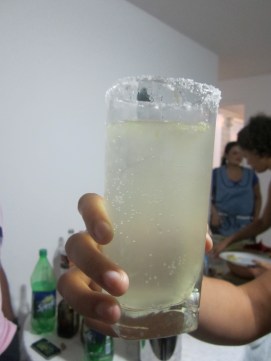
Sunday is always for food… what about, let’s say… dessert and drinks? 

Our “quasi-Mexican creative juices” are constantly boiling, and when there’s time to “experiment something new in the kitchen”, I’m all for it! This time, snapshots from two quick ideas:

One Mexican drink, “Paloma Cocktail” and one dessert, “Margarita Cupcakes”, all “adjusted” to our reality here in Brazil (it’s not always possible to find the perfect ingredients for that perfect recipe – also, I’m far from perfect, when it comes to cooking/baking/mixing, but I’m pretty venturous for trying to make something intriguing, interesting, or, at least, cool-looking…) 😮

How to make the ” La Paloma”?

For a refreshing, thirst quenching cocktail, the Paloma is definitely at the top of the list and it’s a favorite in Mexico. It’s a light, fruity drink with a fizz and one of the smoothest tequila drinks out there. With a splash of soda instead of a grapefruit soda like Squirt (or, in our case here in Brazil, “Sprite”!).

Ingredients:

  • 2 oz blanco or reposado tequila
  • 1/2 oz lime juice
  • salt for rimming (optional)

Preparation:

  1. Rim a collins glass with salt.
  2. Fill the glass with ice and add the tequila and lime juice. Top it all off with a splash of Sprite. (need to share this with another fellow blogger, who loves “Brazilian challenges“!)

The original recipes for the margarita cupcakes may be found here: Margarita Cupcakes and here Margarita Cupcakes – I had to “adapt” a little, making the frosting myself with lime jello mix and chantilly cream – “Brazilian-style”, but it worked! 😮


Hey! We’re already missing some cupcakes!!!! 😮

Building memories through photography: three generations honoring multiculturalism.

A Family Portrait: [the making-of]

The best way to celebrate the bonds between different generations, especially when they’re all scattered around, due to work schedules and/or lifestyles… They live in different places, learn and speak different languages, share and cherish different cultures, but all with one common goal: to celebrate and honor the family bonds…
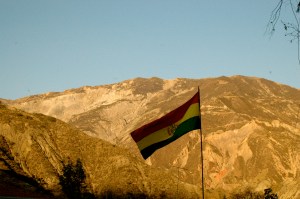
This slideshow requires JavaScript.

Stay tuned for the results! 

[a.k.a. the long-wished Family Portrait!] 😮

Date Night & Thai Cuisine in Rehoboth Beach, DE.

dscn1817

Lily Thai opens 6 days a week for lunch and dinner, closed on Mondays, at this time of the year. They have great specials, and it is very affordable.

dscn1809

dscn1027

Chef and Owner Lily Thamibutra worked at her sister’s restaurant, Seaside Thai (now closed for good), for 5 years before venturing out to create Lily Thai.  It’s located on First Street, right next to the original Nicola’s, where Dos Locos used to be many (many) years ago. They have (finally!) acquired their liquor license, so no more BYOB. Pony up for a nice cold beer or some wine. In spite of how long it took to get the nod for booze, Lily’s has already earned a reputation for authentic Thai food served up in pleasing, if not austere surroundings.

The signature dishes are the Pad Thai (with chicken or shrimp) and the Tom Yum soup (chicken or shrimp with lemon grass and cilantro). .

Weekly Photo Challenge: Dreaming.

While most of us were still dreaming, a real dream becomes true… an everyday wonder, an everyday dream…
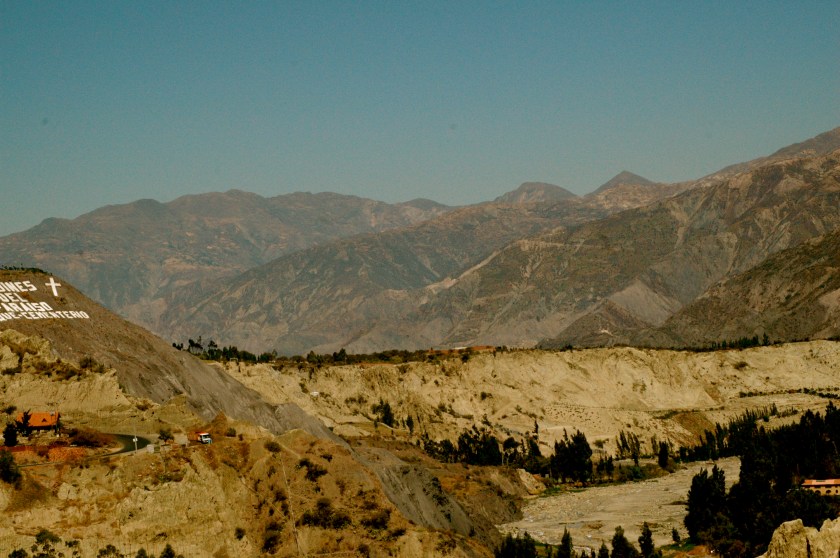
See what others have to show, for this week’s photo challenge!


While most of us are still dreaming, a real dream becomes true… an everyday wonder, an everyday dream…

See what others have to show, for this week’s photo challenge!

Weekly Photo Challenge: Dreaming « wingrish Weekly Photo Challenge: Dreaming « e-Shibin Weekly Photo Challenge: Dreaming | Wind Against Current Weekly Photo Challenge: Dream « Much Ado About Nothing Weekly Photo Challenge: Dreaming | Lonely Travelog Weekly Photo Challenge – Dreaming (and a bit of flash fiction) | Four Deer Oak Photo Challenge: Dreaming « Detours by Deepali Dreaming « bukaningrat ™ Weekly Photo Challenge: Dreaming | Andy in Oman ¿Soñando de nuevo? | La Mandraka Weekly Photo Challenge: Dreaming « Fenland Photos Dreaming « Broken Light: A Photography Collective Weekly Photo Challenge – Dreaming Weekly Photo Challenge: Dreaming « beyondpaisley Weekly Photo Challenge – Dreaming « The Urge To Wander Weekly Photo Challenge: Dreaming | Chronic Illness Champions Weekly Photo Challenge: Dreaming… | Figments of a Dutchess Weekly Photo Challenge: Dreaming « Words And Peace Weekly Photo Challenge: Dreaming | Lucid Gypsy