Taking up on a new cooking challenge: in order to help a fundraising bake sale, I’m getting back into baking. High altitude baking. That said, after having a long conversation with my [American] stove/oven, we came to the agreement that we’d become friends, not rivals.
If I’m able to get my mini cakes out, not deflated, nice looking, and attractive to someone else’s mouth, both of us would win: I’d promised to throughly clean it after I was done.
Strawberry cupcakes filled with ‘dulce de leche’ (caramel)My ‘transcontinental’ margarita cupcakes: (tried and) approved by Brazilians, Mexicans & Americans!my ‘assistant’…
Taking up on a new cooking challenge: in order to help a fundraising bake sale, I’m getting back into baking. High altitude baking. That said, after having a long conversation with my [American] stove/oven, we came to the agreement that we’d become friends, not rivals.
If I’m able to get my mini cakes out, not deflated, nice looking, and attractive to someone else’s mouth, both of us would win: I’d promised to throughly clean it after I was done.
Both of us [the oven and myself] smiled at the agreement [or at least I did, and maybe, in my crazy mind, my oven’s alter-ego did the same].
Moving on to the preparations. Simply followed a regular yellow cake recipe [oh, you, Martha Stewart!], as well as, a simple lemon pound cake recipe, and a fantastic recipe for strawberry cupcakes, from Yummy Cakes from Lynn, discovering [through extensive online research] a few tips/adjustments for baking at high altitudes [that’s why I’m calling this post ‘getting high (altitude) on cupcakes!].
La Paz, Bolivia, can be a great example of how frustrating it might be for a rookie baker! In order to remain in good terms with my kitchen oven, ‘we‘ decided to go for this ‘new & improved first-timer’ cake (batter) step-by-step: 😮
Flour: Increased by 2 Tbs per cup of batter
Baking Powder/Soda: Decreased by 1/4 tsp per tsp of mix
Sugar: Decreased by 2 Tbs per cup of mix [we’re always advised to go light on the sugar here, it’s healthier and better for the body’s blood pressure…]
Milk: Increased by 2 Tbs per cup of mix
Extra egg: added one more to the usual 3
Oven Temperature: Increased by 25 degrees
Baking Time: Decreased by five minutes per 30 minutes of baking time.
It looks like a lot of math, right? Adding this, subtracting that…. raising the oven temperature, decreasing the baking time… But it all makes sense – you’re looking for a less ‘runny’ cake mix/batter, and with hotter oven, it’s logical (!!) to leave your ‘lovies’ in there for less time. At the end, it’s all about a great deal of TLC! ♥
Curious about the results?
Take a look, and let me know how you think the bake sale went with the ‘highest cupcakes I’ve ever baked’!
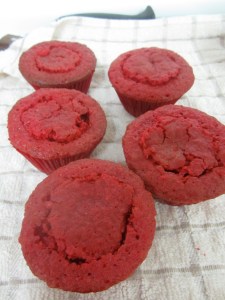
baking the strawberry cupcakes
Cupcakes filled with ‘dulce de leche’ (very popular in Latinamerica, similar to caramel)
decorating the cupcakes
Below, strawberry cupcakes, filled with fruit (jam) and topped with ‘bubble gum’ frosting [just came up with this recipe today… let me know if you’re curious about it!]
cupcakes topped with caramel
and lastly, a new version of the ‘margarita cupcakes’: lemon cake recipe, with light lemon frosting and of course, the mini-straws for the final touch! [again, another ‘creation from my kitchen’… happy to share the tips along!] 😮
[Backstory]: Bolivia is known internationally as “The Country of the Altiplano, which has the highest seat of government of the world, highest navigable lake on earth, is known for pre-Columbian ruins Tiahuanaku etc. What is known that two thirds of Bolivia are located in the tropical lowlands of the Amazon and silver, whose average elevation is 300 m. above sea level with an average temperature of 27 º C. La Paz sits in the Andes Mountain range and is the world’s highest capital. The city is the top place to visit in Bolivia. National Museum of Natural History joined the Bolivian Fauna Collection (La Paz), and the Noel Kempff Mercado National History Museum (Santa Cruz) to bring community and scientific expertise together to enable effective local and regional planning for biodiversity conservation. This association was called Conservación de la Biodiversidad para un Manejo Integrado (COBIMI), or Biodiversity Conservation through Integrated Management.
October Magic – learning through art, history, and now… dinosaurs! A group of friends got to spend an afternoon at the La Paz Natural History Museum, sharing with our children the fantastic lessons learned through investigative work, replicas, stories and, even… tales! Needless to say, everyone had a great time, easy to verify below through the images/photos taken during our trip to the museum.
[Backstory]: Bolivia is known internationally as “The Country of the Altiplano, which has the highest seat of government of the world, highest navigable lake on earth, is known for pre-Columbian ruins Tiahuanaku etc. What is known that two thirds of Bolivia are located in the tropical lowlands of the Amazon and silver, whose average elevation is 300 m. above sea level with an average temperature of 27 º C. La Paz sits in the Andes Mountain range and is the world’s highest capital. The city is the top place to visit in Bolivia. National Museum of Natural History joined the Bolivian Fauna Collection (La Paz), and the Noel Kempff Mercado National History Museum (Santa Cruz) to bring community and scientific expertise together to enable effective local and regional planning for biodiversity conservation. This association was called Conservación de la Biodiversidad para un Manejo Integrado (COBIMI), or Biodiversity Conservation through Integrated Management. Recognizing the urgent need for communities living in and around protected areas to actively participate in and benefit from the conservation of the resources upon which they depend, the COBIMI partners convened workshops to develop dialogue among local stakeholders, provided training for these groups in communication and outreach; and provided financial resources and technical assistance for communities and protected area staff to design and implement, for the first time, their own conservation projects. Several innovative community resource management projects were implemented, including community museums (or “interpretive centers”), ecotourism facilities, trails for tourists that highlight biodiversity, and protected area informational materials.
The T-Rex: The Official Story
“Tyrannosaurus, meaning ‘tyrant lizard’) is a genus of theropod dinosaur. The famous species Tyrannosaurus rex (‘rex’ meaning ‘king’ in Latin), commonly abbreviated to T. rex, is a fixture in popular culture around the world. It lived throughout what is now western North America, with a much wider range than other tyrannosaurids.
Fossils of T. rex are found in a variety of rock formations dating to the last three million years of the Cretaceous Period, approximately 68 to 65 million years ago; it was among the last non-avian dinosaurs to exist prior to the Cretaceous–Tertiary extinction event.
So, yesterday, hubby and I celebrated our ninth anniversary… A week day, kids got school the following morning… work, as usual. We found a nice way to share our joy with a close group of friends here in La Paz – at a bowling alley! And, I had to live for 40 years to have my first encounter with a bowling ball! It was a lot of fun!!
So, yesterday, hubby and I celebrated our 9th anniversary… A week night, kids got school the following morning… everyone gotta go to work, as usual – so the night couldn’t be wild. We found a nice way to share our joy with a close group of friends here in La Paz – at a bowling alley! And, I had to wait for 40 years to have my FIRST encounter with a bowling ball! It was a lot of fun, followed by tasty spicy wings!!
According to Sara Rosso, whose photograph was portraited as this week’s photo challenge inspiration at Wordpress, “BIG. It’s larger than life, it’s unexpected, it’s the protagonist in a scene”.
Although it’s Spring in La Paz, here and there, the weather changes – and a cold snowy front comes up… Beautiful, big, and majestic!
Although it’s Spring in La Paz, here and there, the weather changes – and a cold snowy front comes up… Beautiful, big, and majestic!
According to Sara Rosso, whose photograph was portraited as this week’s photo challenge inspiration at WordPress, “BIG. It’s larger than life, it’s unexpected, it’s the protagonist in a scene”.
La Paz, Bolivia – October 2012: volunteers went to Hogar San Ramon in La Paz to green an area that the Sisters are turning into a park for their Alzheimer’s patients.
Volunteering
+
Planting
+
Enjoying quality time with co-workers, family and new friends
=
Newly built consciousness among younger generations. Returning to the community all the good we’ve received… Teaching & Learning. Sharing. Growing as human beings…
Bonus Result → Doing good, feels good! ♥
What a great way to spend a Saturday morning! Not even the light showers were able to stop the hard workers! Proud to have been part of the greening project, helping the Senior Center (“Casa de Ancianos”) Hogar San Ramon, in La Paz Bolivia. Is there a better way to teach our children the importance of giving? Giving their time, their skills, their open mind and heart? I hope we’re doing the right thing. I feel we are. And I’m grateful our family was able to volunteer… Wishes for a peaceful (and green!) weekend! 😮
Simply loved week’s photo challenge inspiration at Wordpress, “Happy”. And I’m using the new feature, displaying the images in circles, which I’m calling today, “circles of happiness”…
What’s keeping me HAPPY, this days?!
Simply loved thisweek’s photo challenge! The latest inspiration at WordPress is “Happy“. And I’m using the new feature, displaying the images in circles, which I’m calling today, “circles of happiness”… According to the “happiness engineers” from WP, lots have been waiting on pins and needles until they could share the new gallery formats which were announced yesterday on the WordPress.com blog! So now that they’re out, let’s put them to good use! We’re going to have a multi-photo challenge!
Let me know what do you think about this new way of telling our traveling family/expats/multicultural experiences! That’s what the ‘comments’ section’ is for! 😮
What’s keeping me HAPPY, these days??
The love we nurture within our family, the joy shown by our kids, well-adjusted to the new school, new cultures, new language, and their ability to ‘translate challenges into adventures’...
The love and support from a good husband, our joint passion for exploring and learning new South American traditions (La Paz, Bolivia), the music and dance expressions, the food (hummm!)… my endless affair for anything-chocolate… the proximity to the holidays (Halloween & Thanksgiving just around the corner!)… so many things are keeping me happy these days!
The beautiful landscape, living surrounded by peaceful mountains and unique natural features, and my recently ‘re-discovered’ passion for painting, a way to express my love and care for this new place, we’re calling home…
South America is home to some of the oldest known societies, with pre-Columbian civilizations dating back to earlier than 15,000 BCE.
Aymara and Quechua cultures are among the indigenous peoples that still dwell in the Andes Mountains, which cover parts of Bolivia, Peru, Ecuador, and Chile. In Bolivia, fifty percent of the population is of indigenous ancestry.
South America is home to some of the oldest known societies, with pre-Columbian civilizations dating back to earlier than 15,000 BCE.
Aymara and Quechua cultures are among the indigenous peoples that still dwell in the Andes Mountains, which cover parts of Bolivia, Peru, Ecuador, and Chile. In Bolivia, fifty percent of the population is of indigenous ancestry.
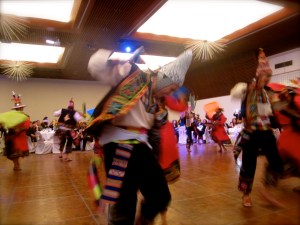
Bolivia’s rich dance repertoire consists of pre-Columbian dances performed in rural areas during religious and secular community celebrations, as well as European influenced mestizo dances, which originated after the Spanish conquest.
Mestizo dances are common in urban centers where they are performed at popular festivals and celebrations of Catholic patron saints. During these community celebrations, group solidarity is strengthened, while shared values and cultural identities are reaffirmed.
We were fortunate enough to enjoy a pleasant dinner and dance, organized by the Association of Diplomatic Ladies in La Paz, Bolivia, was the stage for a beautiful and colorful presentation, coordinated by the Ballet Folklorico Potosi.
[From local newspaper]
Obtener fondos, socializar algunos problemas y llegar a más centros de atención de los más necesitados forman parte de la agenda diaria de la Asociación de Damas Diplomáticas y Organismos Internacionales.
La actividad más importante del año es el baile de gala, evento en el que las damas buscan recaudar la mayor cantidad de fondos, con el apoyo de empresas y personas que contribuyen a la realización de este noble fin.
Este año, la gala se realizará el sábado 29 del presente, en los salones del Radisson Plaza Hotel.
La presidenta de la organización, Keiko Watanabe, y las damas de su directiva invitan a los corazones generosos a contribuir con esta labor social.
What could be a better way to spend the last Sunday of September? Friends, family, kids running around, all waiting to try the different chili dishes during a Cook Off hosted by the local Marine Detachment… On top of that, add the possibility to watch a couple of football games, enjoying a beautiful Spring Sunday.
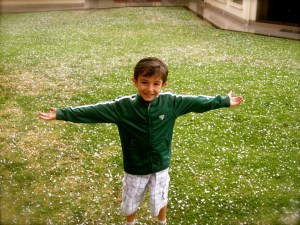
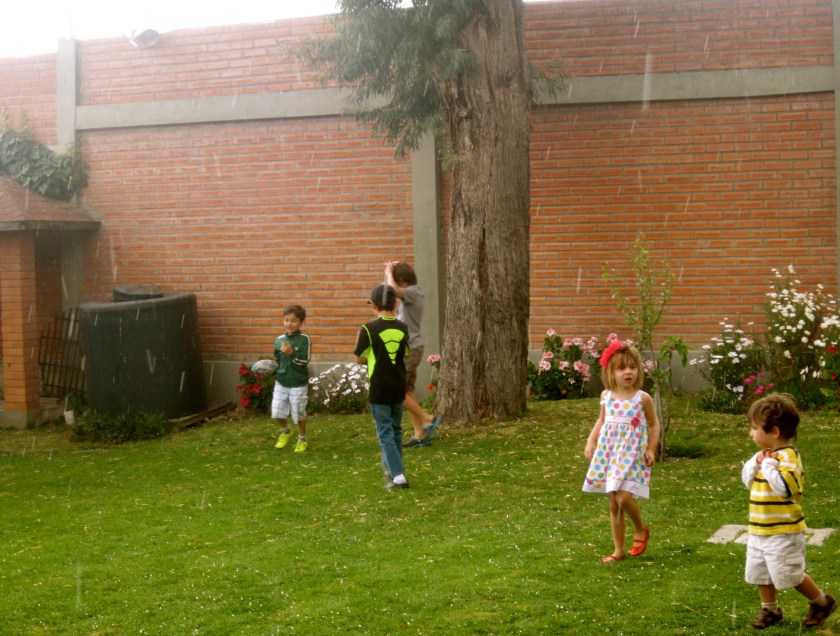
Weather in La Paz, Bolivia, tends to change on a dime. That said, our gorgeous Spring day witnessed a surprising hail shower! But, does anyone think it could have stopped the chili contestants (aka, the ‘chefs’), or the excited and full of energy children?
Not one single bit! Hail showers during Spring? Humm… but it’s La Paz, so nothing surprises us anymore…With the lowered temperature, more people for the hot burgers, and more for the chili!
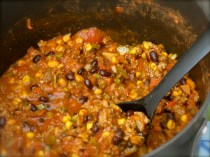
The different chili dishes, ready to be tried, judged and devoured! 😮
Hey! Almost forgetting! Regarding this Sunday’s game, Washington Redskins vs Tampa Bay Buccaneers, guess who won? That’s right! And here, a big Hail to the Redskins! Literally!! 😮
Photo Credit to Joe Glorioso (Redskins Training Camp).Photo Credit to Joe Glorioso.
What could be a better way to spend the last Sunday of September? Friends, family, kids running around, all waiting to try the different chili dishes during a Cook Off hosted by the local Marine Detachment… On top of that, add the possibility to watch a couple of football games, enjoying a beautiful Spring Sunday.
the #1 chili!Hail… to The Redskins! Hail Victory!
Weather in La Paz, Bolivia, tends to change on a dime.
That said, our gorgeous Spring day witnessed a surprising hail shower!
look at these ice pieces!
But, does anyone think it could have stopped the chili contestants (aka, the ‘ cookingchefs‘), or the excited and full of energy children?
Not one single bit! Hail showers during Spring? Humm… but it’s La Paz, so nothing surprises us anymore…
With the lowered temperature, more people for the freshly grilled burgers, and… more for the chili!
A quick look at the different chili dishes, ready to be tried, judged and devoured! 😮
Hey! I was almost forgetting:
This DC-based family is all burgundy and gold. Regarding this Sunday’s game, Washington Redskins vs Tampa Bay Buccaneers, guess who won? Despite Tampa putting the full court press during the second half, scoring a field goal during the last two minutes of the game… The savior 42-yard field goal gave the Redskins the most deserved 2-point lead!
That’s right! 😮
And here, a big Hail to the Redskins! Real hail… Literally!! 😮
We’ve been at post for two months now. A lot has happened during this period, especially regarding our foreign service community, worldwide. We’ve got friends posted everywhere. We’ve got friends working back home. We’ve kept in contact, ensuring that all of us are well, safe, sane. We’re all, somehow, moving on with our lives, it’s our work, our lifestyle, our choice… And we’re proud of our choices.
These past two months have been filled with cultural, linguistic, social adjustments for our family. Our oldest son is an active first grader, and thrilled with the discoveries that the ability to read has brought him. We, as parents, are pleased and keep encouraging his success. Our middle daughter has a more intense social life than her parents, invited to play dates and birthday gatherings with her kindergarden peers. And our baby girl, who’s approaching her second birthday, is simply enjoying life, chasing birds in the yard, having picnics on the grass with her mamma, exercising her constantly learned Spanish skills.
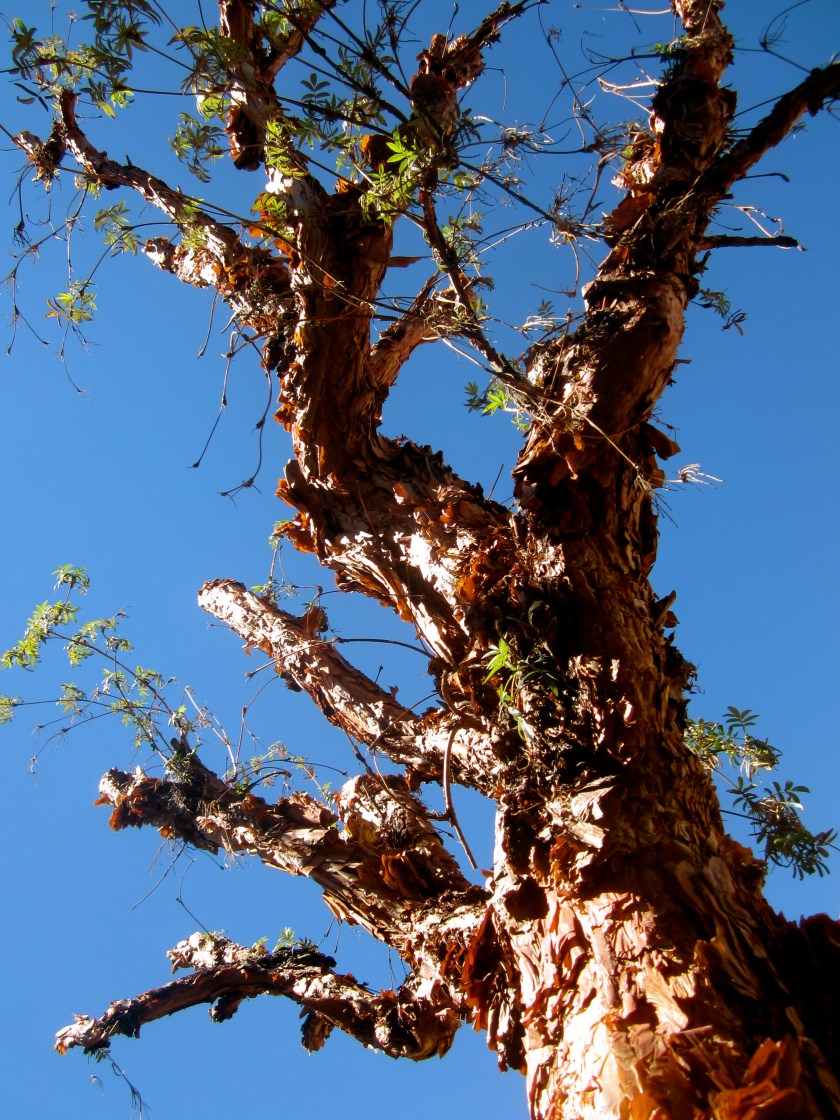
The Queñoa Tree, with its beautiful red bark, grows higher than any other tree in the world.
We’ve been at post for two months now. A lot has happened during this period, especially regarding our foreign service community, worldwide. We’ve got friends posted everywhere. We’ve got friends working back home. We’ve kept in contact, ensuring that all of us are well, safe, sane… We’re all, somehow, moving on with our lives. It’s our work, our lifestyle, our choice… And we’re proud of the choices we’ve made.
These past two months have been filled with cultural, linguistic, social adjustments for our family. For the five of us. Our oldest son is an active first grader, and thrilled with the discoveries that the ability to read has brought him. We, as parents, are pleased and keep encouraging his success. Our middle daughter has a more intense social life than her parents do, often invited by her kindergarden peers to play dates and birthday gatherings. And our baby girl, who’s approaching her second birthday, is simply enjoying life, chasing birds in the yard, having picnics on the grass with her mama, exercising her constantly learned Spanish skills…
All in all, we’re fine. And as I stated earlier, I’m in love. I’m in love with this new, calm, high-altitude, slow-paced life. I’m in love with the possibility to spend more time with our kids, and to be more involved with their school, offering my help and skills to the American community.
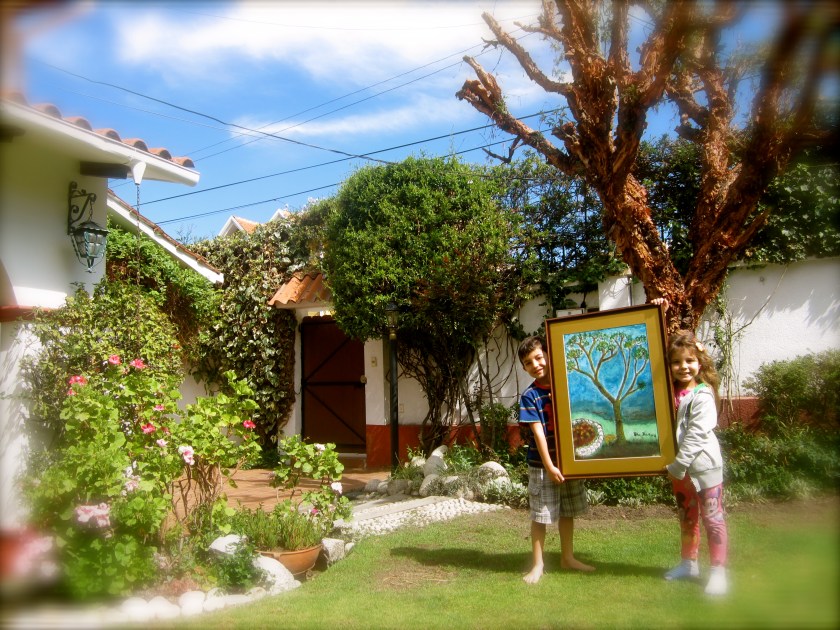
And I’m in love with our yard, our Fall-colored plants (even though it’s Spring here!), the eco-projects I’ve been working on, and, most of all, I’m in love with our tree, the typical Andean Queñua (or Kenua) – the first thing I see in the morning, from our bedroom window. I wrote about it before [excerpt below], and, as a way to bring my mind back to good things, a strategy to temporarily forget about recent unhappy events, I decided to create a memory of this one natural feature, painting it on canvas. We still don’t have our HHE, nor my brushes, paints, but a simple problem that was easily solved. So, in order to honor my ‘newest love’, here it is, the recent creation, with a few other ‘creations of mine’… and I’m proud of all of them! ♥
Cheers to building memories!
Feeling very proud of my ‘creations’, right now…
***************************************
[From original post about the Queñua Tree]
[Español] La keñua o queñoa de altura (Polylepis tarapacana) es una especie de planta con flor de la familia de las rosáceas (Rosaceae). La especie se distribuye a lo largo de la Coordillera Andina desde Perú hasta Chile, incluyendo Bolivia.
La especie se encuentra en floración entre diciembre-enero y marzo-abril. Fructifica abundantemente, en racimos. Parte de las hojas y de las últimas ramificaciones, cae durante el invierno; cuando el nuevo follaje está completamente desarrollado, se desprenden las hojas restantes.
La especie se distribuye en un rango elevacional entre 3900 hasta 4700 m, algunos individuos aislados pueden llegar hasta 5200 msnm en el Parque Nacional Sajama. Es conocida mundialmente porque en su distribución la especie alcanza más altitud que cualquier otro árbol en el mundo. Queñoales eres una comunidad vegetal en que es dominante la Queñoa (Polylepis spp.), árbol característico del Altiplano. Los troncos, de madera dura, son generalmente retorcidos, y están cubiertos por una corteza exfoliante, formada por múltiples láminas de color castaño rojizo.
[English] Polylepis woodland is a distinctive, high-elevation Andean forest habitat that occurs above cloud level (3,500-5,000 m) as patches of woody vegetation surrounded by paramo (e.g., Festuca species) or puna (e.g., Ichu species) grass and shrub (e.g., Baccharis species) communities. These high-altitude woodlands tend to be relicts of a once-widespread habitat and comprise mainly evergreen trees of the genus Polylepis (Rosaceae) which are highly drought tolerant. The trunk and branches are laminated with brown-reddish bark that peels off in paper-like sheets as a protection against extremely low temperatures, and often have mosses and lichens growing on them.
Ailsa, from “Where’s my Backpack?” brought this week’s suggestion: “It’s getting all autumnal up here in the northern hemisphere, while down in the southern hemisphere everyone’s looking forward to spring. Whichever hemisphere you inhabit, now is a fantastic time to get out and have a look at what the trees are doing. Whether they’re about to burst into life with fresh green growth, or starting to adorn themselves in their autumn glory; even if they’re still wearing their evergreen needles, it’s a wonderful time to go leaf peeping!”
For us, Spring just started. But we’re in La Paz, Bolivia, so, the colors, the textures, the feelings, very much bring us back to Fall – what a fantastic experience!
Ailsa, from “Where’s my Backpack?” brought this week’s suggestion: “It’s getting all autumnal up here in the northern hemisphere, while down in the southern hemisphere everyone’s looking forward to spring. Whichever hemisphere you inhabit, now is a fantastic time to get out and have a look at what the trees are doing. Whether they’re about to burst into life with fresh green growth, or starting to adorn themselves in their autumn glory; even if they’re still wearing their evergreen needles, it’s a wonderful time to go leaf peeping!”
For us, Spring just started. But we’re in La Paz, Bolivia, so, the colors, the textures, the feelings, very much bring us back to Autumn – what a fantastic experience! Sharing here, images from a local park in La Paz, from a road trip to Mecapaca or simply, a snapshot from my front yard. Enjoy!
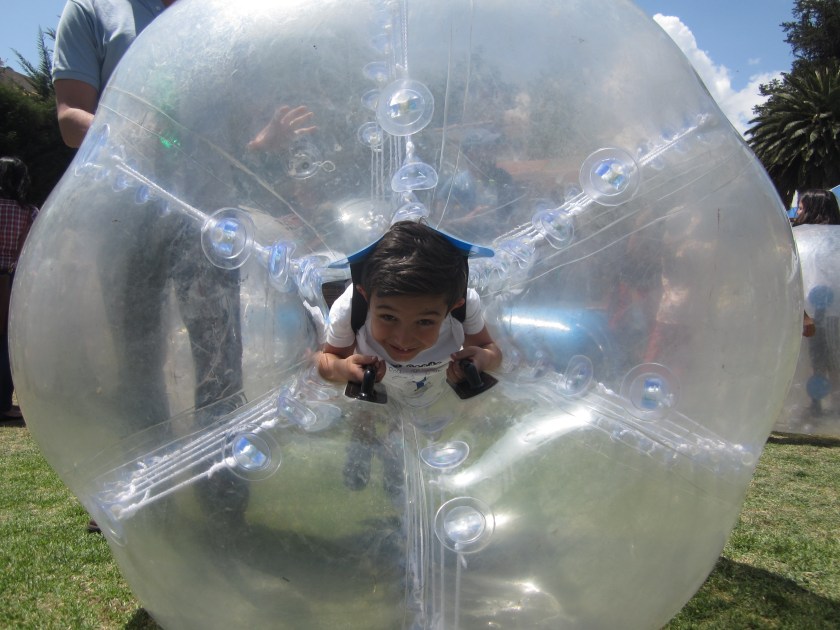
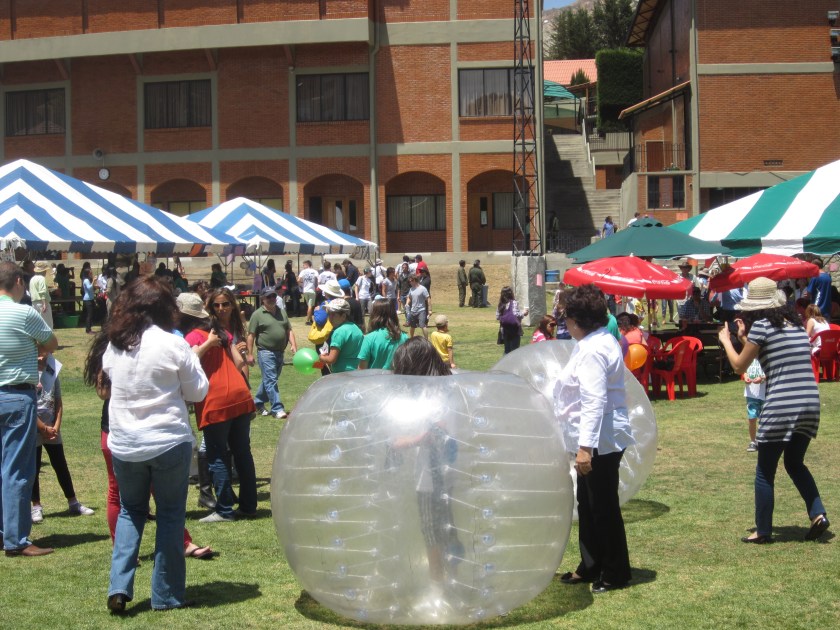
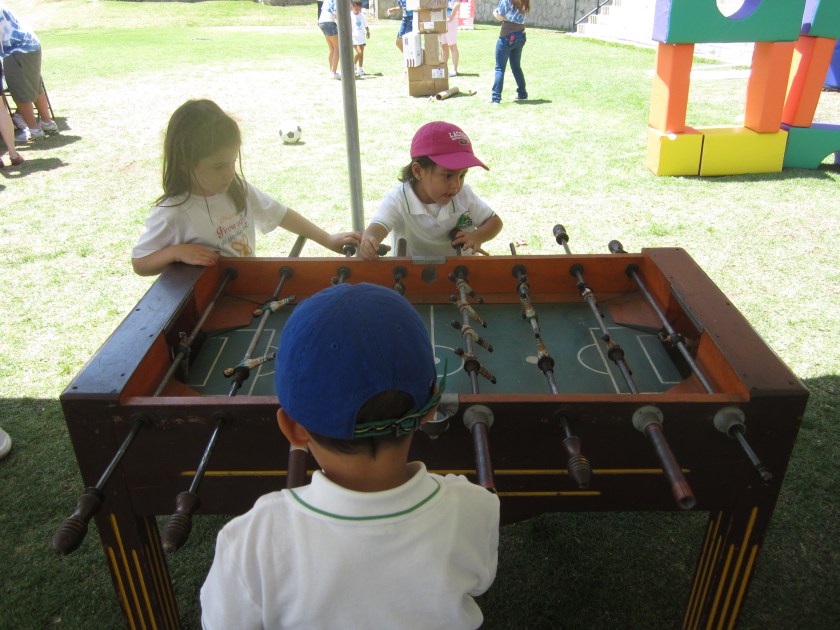
Opening the School Year. bit late, but well-worthy the wait! From KG3 to G12. Parents, siblings, food for sale, games, contests, bake sales, you name it… Kids had a lot of fun!
Friday September 21st is the UN’s International Day of Peace. The first Peace Day was celebrated in 1982; this year marks the 30th anniversary. The theme for 2012 is ‘Sustainable Peace for a Sustainable Future’.
From the UN web site: There can be no sustainable future without a sustainable peace. Sustainable peace must be built on sustainable development.
The message from the UN Secretary-General Ban Ki-moon reads:
Armed conflicts attack the very pillars of sustainable development.
Natural resources must be used for the benefit of society, not to finance wars.
Children should be in school, not recruited into armies.
National budgets should focus on building human capacity, not deadly weapons.
On the International Day of Peace, I call on combatants around the world to find peaceful solutions to their conflicts.
Let us all work together for a safe, just and prosperous future for all.
In addition to ‘Walk to Work’ Day, Friday, September 21, is also International Peace Day. This day provides an opportunity for indi-viduals, organizations, and nations to create practical acts of peace on a shared date. International Peace Day was established by a UN resolution in 1981 to coincide with the opening of the General Assembly. The first Peace Day was celebrated in 1982. During the discussion of the UN Resolution that established this day, it was suggested that:
“Peace Day should be devoted to commemorating and strengthening the ideals of peace both within and among nations and peoples. This day will serve as a reminder to all peoples that our organization, with all its limitations, is a living instrument in the service of peace and should serve all of us here within the organi-zation as a constantly pealing bell reminding us that our permanent commitment, above all interests or differences of any kind, is to peace. “
Friday September 21st is the UN’s International Day of Peace. The first Peace Day was celebrated in 1982; this year marks the 30th anniversary. The theme for 2012 is ‘Sustainable Peace for a Sustainable Future’.
From the UN web site: There can be no sustainable future without a sustainable peace. Sustainable peace must be built on sustainable development.
The message from the UN Secretary-General Ban Ki-moon reads:
Armed conflicts attack the very pillars of sustainable development.
Natural resources must be used for the benefit of society, not to finance wars.
Children should be in school, not recruited into armies.
National budgets should focus on building human capacity, not deadly weapons.
On the International Day of Peace, I call on combatants around the world to find peaceful solutions to their conflicts.
Let us all work together for a safe, just and prosperous future for all.
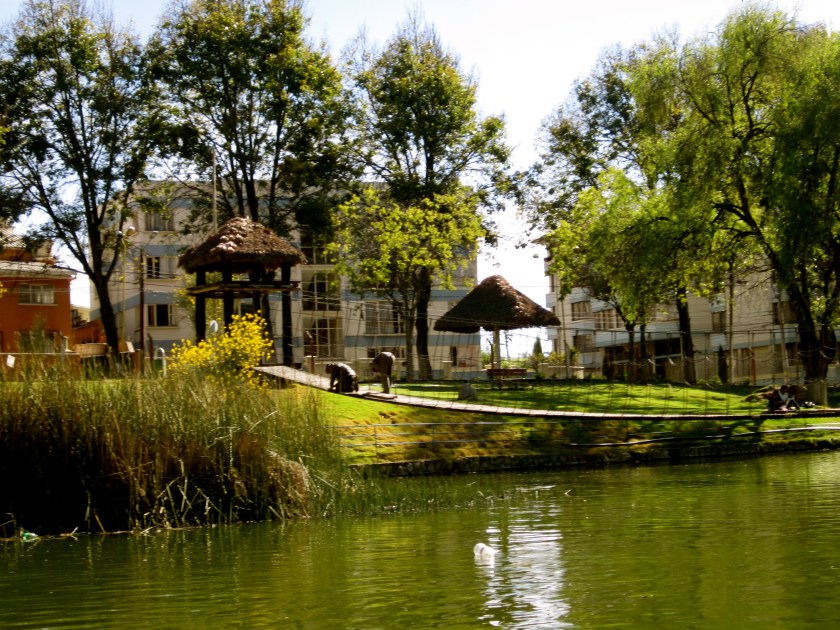
School was off for a day – a staff meeting. What to do with our super energetic, active, children? Get them to run, enjoy the playground together, ride the pedal boat, chase ducks, walk (several times!) along the bridges, have a picnic at the park! That’s exactly what some four families (Chilean-Argentinean, Greek-American, Brazilian-American and Norwegian-American) did! It’s one of the beauties of this (sometimes crazy & intense!) expat life! ♥
It is one of the largest parks of the city of La Paz, with a surface area of 2 hectares. Here we find an aquatic lagoon with fish and ducks, games, a suspension bridge, bike path, green areas with games for children, adult areas and barbecues to enjoy a pleasant field day for the family. The park of Cota Cota is in the Southern district of the city.
[Español] Es uno de los parques más grandes de la ciudad de La Paz, tiene una superficie aproximada de 2 hectareas. Aquí encontramos una laguna con peces y patos, juegos acuáticos, un puente colgante, ciclovía, áreas de juegos para niños, adultos, áreas verdes y parrilleros para disfrutar de un agradable día de campo con la familia. El parque de Cota Cota se encuentra en la zona sur de la ciudad.
Sharing today a bit of feedback on what we´re calling, “our newest home”. After being in La Paz, Bolivia, for a month, our overall experience is pretty positive, which is fantastic, considering we´re still waiting for our household effects to arrive, and kids don´t have a lot of toys to play with. All in all, very positive, and we`re enjoying every moment.
Sharing today a bit of feedback on what we´re calling, “our newest home”. And thanks to Ailsa, from Where is my Backpack? for the usual inspiration! After being in La Paz, Bolivia, for over 4 months, our overall experience is pretty positive, which is fantastic, considering we´re still waiting for our household effects to arrive, and kids don´t have a lot of toys to play with. All in all, positive vibes, and we`re enjoying every moment.
One thing that I find very ´peculiar´ is the traffic/transportation/driving dynamics here. Although, I shouldn´t, I suppose, after living and driving in Mozambique/South Africa/Swaziland, on the “wrong side” 😮 of the road, for some 3 years, and in Recife (Brazil), for another 2 years, nothing should come as a real surprise.
But, in fact, there´s always something new at you. And, it actually makes me laugh on any regular day: not one single dull moment throughout this beautiful city here! I was quite happy to find a post that shared similar thoughts, and am adding it here, with a few comments. My appreciation to Strolling South America, another blogger with WordPress, for sharing actual/realistic and funny facts about the ´transportation´ in La Paz! I added my comments below each original statement. Have fun reading!
Obviously, cropped the bottom of the pic… respecting the driver’s privacy… 😮
Taxi
This is the quickest option. I know it’s hard to believe, but some taxi drivers overcharge foreigners, so make sure you negotiate the price before you leave. The driver can tell you’re a foreigner even if you aren’t wearing stripey hippie pants and standing by Sagarnaga street. Also, make sure it’s a licensed taxi if you don’t want to risk getting EXPRESS KIDNAPPED. If you’re lucky, the front seat will have a seat belt. The back seats will not, but take comfort in the fact that the driver isn’t wearing one either as he passes on the right and runs red lights.
Comment:Gotta love the taxis here. For a mom of 3 little ones, still waiting for our family car, I became quite dependent on taxis, know already a few companies/agencies, and even names of drivers. But the notion of strongly hugging/hauling your kids during any drive (especially the ones towards the downtown area, waving through the curves), is let´s say, exciting, but in not a great way! Something else about the taxis here: for some reason, they don´t have a meter (!!), so, the driver has to inform the passenger about the cost. After a while, one gets to know how much a certain trip would cost, and we`re all good. But, going back to the ´lack of a meter situation´, according to one of my drivers (I´m becoming quite familiar with cab drivers here!), there´s a simple explanation: THE ALTITUDE. That´s right! The high altitude of the city would ´damage´ any meter they tried to have installed… 😮 Believe it or not, the important thing is that cab drivers and their companies swear by this quasi-fact. That said, one has to trust their driver.
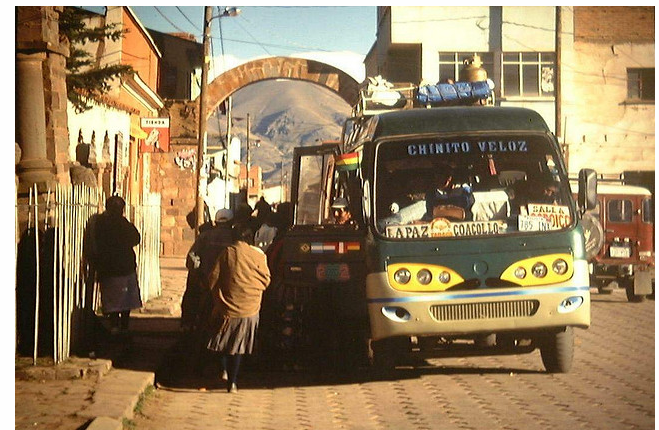
Always wished you were a little bit taller? You won’t as your head hits the ceiling while the driver goes over a bump. More like a van than a bus, this is the most intimate of travel choices. Passengers often greet those seated with a “Buenas tardes” as they board. This is because they’re probably going to be cozily squeezed between a couple of them. Probably the safest of travel options as the driver has to frequently slow down to pick up passengers. No, there aren’t any seat belts, but if that’s what you’re looking for you’ll have to rent a car. Look at the sign in the front window to see where the bus is going. Failing that, listen for the fare collectors shouting the destinations out the open door.
Microbus
Microbus in La Paz
Despite the name, microbuses are actually the largest type of intra-city transport. Usually blue or yellow, they are bigger than minibuses, but smaller than your average bus back home. When the seats fill up it’s standing room only. This is the slowest and cheapest of transport options. I wouldn’t recommend it unless you’re really broke, or if you’re in a hurry and the minibuses and trufis are all full.
Trufi
The famous “trufi”!
This is really just a mini-bus disguised as a taxi. Trufis, which also advertise their destinations with a sign in the front window, run set routes like buses, the only difference is that they’re generally a bit faster as they don’t stop as often to let people on and off. They’re ever so slightly more expensive than mini-buses, but the difference is negligible unless you’re on a really tight budget. And if you are on a really tight budget, well you knew that this job only paid 30 bolivianos an hour when you signed up.
Comment: Right now, my position is just watch, listen and learn. what I´ve learned so far? I guess that there´s a very strong possibility I won´t be riding on a Minibus or using a Trufi, as intriguing and exciting they might look to foreigner eyes… I´m fine with my taxis, for the time being… Even though, I know there´ll be no seat belts on the back seat, and there´s a great chance they won´t be able to load their trunk with my groceries, due to the tank of gas (propane, I think!) – hey, I guess it´s a cheap way to beat the economic crisis, getting more driving than with regular oil… 😮
Bicycle
It was nice knowing you. It’s honestly safer to cycle on this road.
ok, ok… this is actually mountain biking… got a couple friends who’ve got a biking/sports business, so, biking is definitely part of my “TO DO” list while here!
Comment: Well… I´m actually looking forward to try that, despite a few warnings about biking in the city… Don´t have a bike yet, but it´s part of my plans… Kids need to get their bikes, as well, so, I´ll try to be a good role model, reminding myself from my biking-to-work days in Davis, CA. Again, let´s wait to see what the future brings, but so far, I´m up for the challenge.
Foot
La Paz is a great city in which to take a stroll if you’re training for the Olympics. The altitude combined with the hills will put you in peak physical condition, which you’ll need to fight off food poisoning. The cobblestone streets can be slippery, so I wouldn’t recommend parkour. Keep in mind that crosswalks are merely for decoration.
Comment: Very true. The slippery streets and my knees have already met. Once… or twice, before. Not a fun experience, but a good lesson to learn when one goes out grocery shopping and decides to come back home (uphill) wearing boots and carrying groceries bags… Maybe, it wasn´t a smart decision from my part. From now on, I´ll stick with a cab ride on my way back from the market. Yes, those taxis, the fun ones, with no seat belts nor meters! 😮
Jane Hutchinson, Rossie Arraya, Carolina Burgos, Patricia Koester, Martha Rountree, Amparo Castellón y Claudia Riveros.
Más de 70 personas fueron convocadas para conocer sobre la importante labor que realiza ABIA, cuya ayuda se orienta a cuatro instituciones: el comedor popular de San Calixto, el Hospital del Niño, el proyecto Luz de Esperanza y el centro de rehabilitación y salud mental San Juan de Dios.
Nos comentaron que, además de pasar un agradable momento y dar la bienvenida a los nuevos integrantes, los presentes quedaron gratamente sorprendidos con la fina decoración y los originales bocaditos que caracterizan a The Ambassador’s Table.
American British International Association (ABIA) anualmente ofrece una recepción para dar la bienvenida a sus nuevos integrantes, en esta oportunidad realizó un Wine and Cheese en el The Ambassador’s Table.
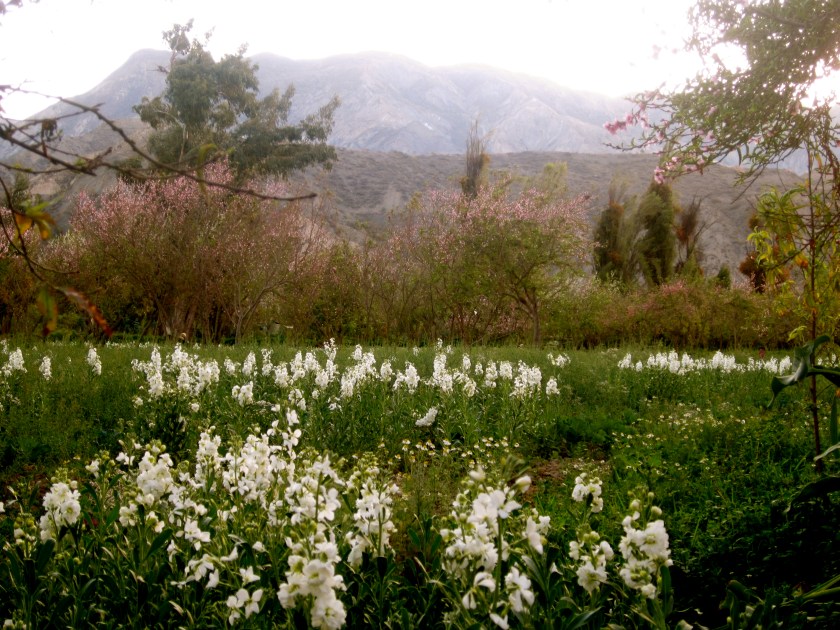
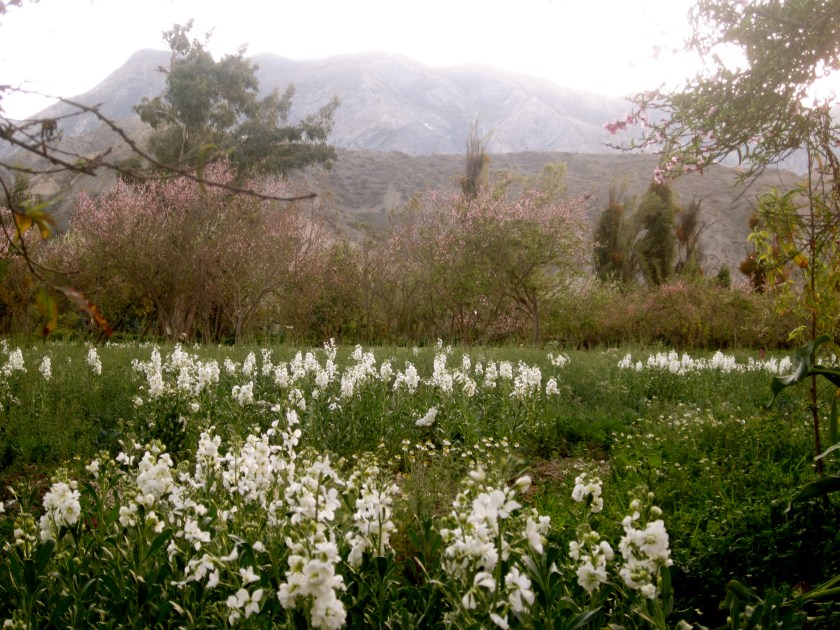
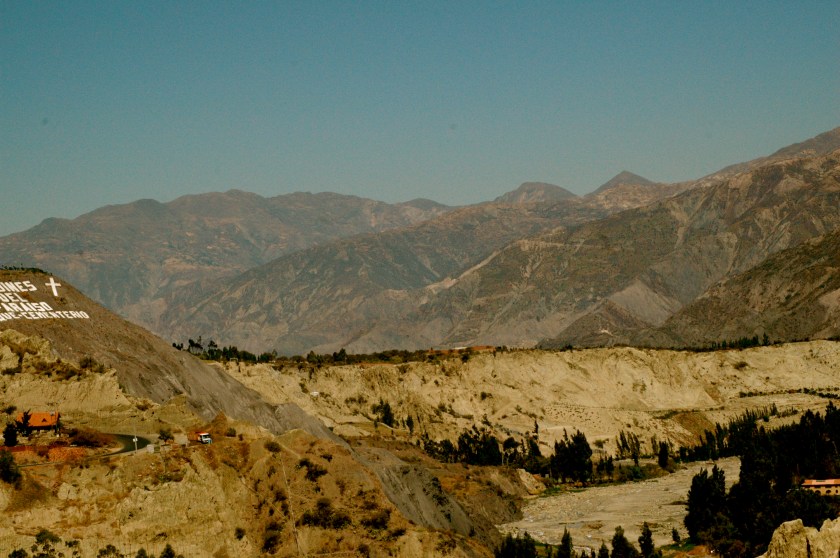
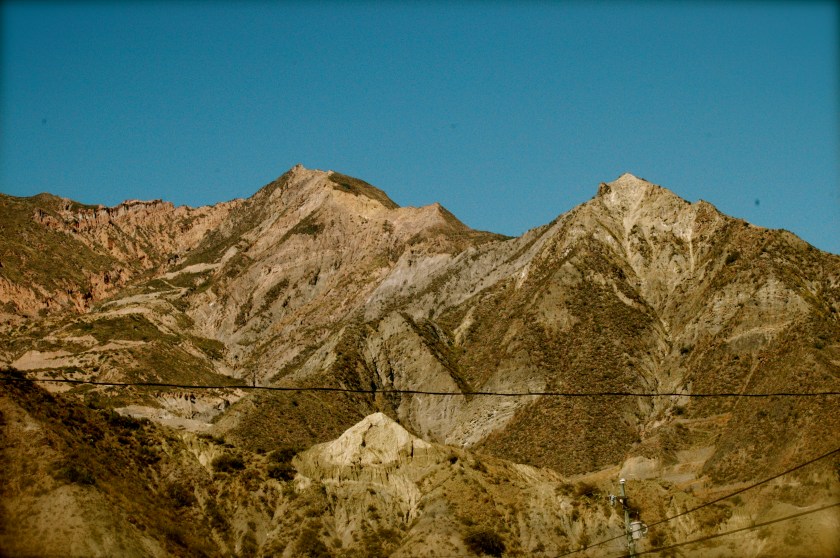
One of the great attractions of Mecapaca is that it is only 45 minutes from La Paz city center and even closer to the Zona Sur (the southern suburbs of La Paz). Moreover, it is easily reached by taxi or one of the regular minibuses. Minibuses (number 253–look for the “Mecapaca” sign on the dashboard) leave for Mecapaca regularly from Plaza Humbolt, a small plaza on the right as you cross into the Zona Sur. Mecapaca is the “end of the line” so transportation back is not a problem. We went by car, a family of friends (2 adults, 2 kids) kindly invited us to join them for lunch at a popular hotel/restaurant in Mecapaca. Close by to our end-point, is the well-known Valle de la Luna (Valley of the Moon), a popular tourist destination with strange eroded sandstone formations – but hopefully, will be hit on a future trip… we’re still adjusting to the new lifestyle, altitude and the curvy roads, so, would’ve been a bit much to ask the kids to endure… For the time being, enjoy the images from our recent road trip!
view from the Hotel Andino, Mecapaca
One of the great attractions of Mecapaca is that it is only 45 minutes from La Paz city center and even closer to the Zona Sur (the southern suburbs of La Paz). Moreover, it is easily reached by taxi or one of the regular minibuses. Minibuses (number 253–look for the “Mecapaca” sign on the dashboard) leave for Mecapaca regularly from Plaza Humbolt, a small plaza on the right as you cross into the Zona Sur. Mecapaca is the “end of the line” so transportation back is not a problem. We went by car, a family of friends (2 adults, 2 kids) kindly invited us to join them for lunch at a popular hotel/restaurant in Mecapaca. Close to our end-point, is the well-known Valle de la Luna (Valley of the Moon), a popular tourist destination with strange eroded sandstone formations – but hopefully, will be hit on a future trip… we’re still adjusting to the new lifestyle, altitude and the curvy roads, so, would’ve been a bit much to ask the kids to endure… For the time being, enjoy the images from our recent road trip!
How we got there:
The Curvy, Bumpy, No-Shoulder Roads… and the Reward!
The DM Hotel Andino, our Sunday Lunch getaway, is significantly lower in altitude, nestled in mountains, and has a fantastic year-round climate and beautiful scenic views of the Andes, and of course, enjoying a delicious quinua paella, my newest favorite! 😮
Pluck not the wayside flower;
It is the traveler’s dower.
~William Allingham
Celebrating our first month in Bolivia – our new post assignment, our new home. New life brings new expectations… Here’s what we’re seeing: “Flowers have spoken to me more than I can tell in written words. They are the hieroglyphics of angels, loved by all men for the beauty of their character, though few can decipher even fragments of their meaning”. Lydia M. Child
“Pluck not the wayside flower; It is the traveler’s dower”. William Allingham
“For myself I hold no preferences among flowers, so long as they are wild, free, spontaneous. Bricks to all greenhouses! Black thumb and cutworm to the potted plant!” Edward Abbey
“The flowers of late winter and early spring occupy places in our hearts well out of proportion to their size”. Gertrude S. Wister
“Every flower is a soul blossoming in nature”. Gerard de Nerval
“The artist is the confidant of nature, flowers carry on dialogues with him through the graceful bending of their stems and the harmoniously tinted nuances of their blossoms. Every flower has a cordial word which nature directs towards him”. Auguste Rodin
“Flowers have an expression of countenance as much as men or animals. Some seem to smile; some have a sad expression; some are pensive and diffident; others again are plain, honest and upright, like the broad-faced sunflower and the hollyhock”. Henry Ward Beecher
“Perfumes are the feelings of flowers, and as the human heart, imagining itself alone and unwatched, feels most deeply in the night-time, so seems it as if the flowers, in musing modesty, await the mantling eventide ere they give themselves up wholly to feeling, and breathe forth their sweetest odours. Flow forth, ye perfumes of my heart, and seek beyond these mountains the dear one of my dreams!” Heinrich Heine
New country. New home. A brand new garden to work on! ♥ And believe me: there’s a great deal of gardening to be done before our front yard gets to where we’d like it to be – full with native plants, adapted to the high altitude, able to endure the cold and dry weather, and yet, displaying colorful plants, flowers, and trees. Soon we’ll be sharing images of our newest project: The Miranda Garden! For now, my main responsibility is bringing it back to life, finding new seedlings for transplant, planting, and, with the help of our newly hired gardener, offer the yard a lot of TLC!
Detail, from a coffee plant
New country. New home. A brand new garden to work on! ♥ And believe me: there’s a great deal of gardening to be done before our front yard gets to where we’d like it to be – full with native plants, adapted to the high altitude, able to endure the cold and dry weather, and yet, displaying colorful plants, flowers, and trees. Soon we’ll be sharing images of our newest project: The Miranda Garden!For now, my main responsibility is bringing it back to life, finding new seedlings for transplant, planting, and, with the help of our newly hired gardener, offer the yard a lot of TLC!
I’m a planner. I live by ‘lists’. Maybe I’m even a controller… hard to say… [my husband should be the one to address that!]. Anyway, my very first chore was a visit to one of the best-known plant nurseries in town: The Vivero de Aranjuez.
Over 180 different species of plants. Most of the workers are women, who take pride on what they do, and claim to understand more about plants than any man would…
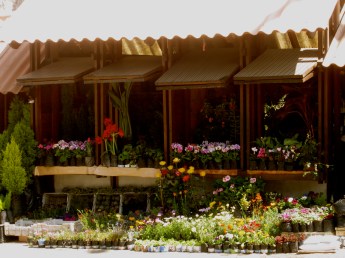
Fuchsias, daisies, calla lilies, geranius, coffee plants, palm trees, gerberas… you name it! And I brought them all back home… gotta get the Project started!
Here are images from our visit (baby girl also came): Click on the image to see it blossom! Enjoy!♥
This week’s photo challenge is guest hosted by Strauss Louw. “Free Spirit. I chose this as the topic for this week’s photo challenge as it lends itself to so many possibilities for subject matter and composition. I work exclusively with film and believe this element is quite important concerning a theme such as the free spirit, as it allows for more experimentation and creative exploration due to how film reacts differently to light than a digital sensor would. To capture this idea of the free spirit, I would suggest breaking some rules. Sometimes it is necessary to overexpose a frame slightly and point the lens to the sun for a bit of glare to capture that sense of a different, free, moving reality. I shot this image at the Fish River Canyon in Namibia on a road trip with a dear friend of mine who likes writing and always keeps her typewriter close by. When she took it out and started writing at the edge of the canyon, it was just too perfect of an opportunity for some interesting shots to pass on”.
This week’s photo challenge is guest hosted by Strauss Louw. “Free Spirit. I chose this as the topic for this week’s photo challenge as it lends itself to so many possibilities for subject matter and composition. I work exclusively with film and believe this element is quite important concerning a theme such as the free spirit, as it allows for more experimentation and creative exploration due to how film reacts differently to light than a digital sensor would. To capture this idea of the free spirit, I would suggest breaking some rules. Sometimes it is necessary to overexpose a frame slightly and point the lens to the sun for a bit of glare to capture that sense of a different, free, moving reality”.
My take on the theme? A very free-spirited fisherman! 😮
This tree, with its beautiful red bark, grows higher than any other tree in the world.
What a fantastic find, for a Biologist like myself, having this beauty as part of our yard is simply a blessing!
[Español] La keñua o queñoa de altura (Polylepis tarapacana) es una especie de planta con flor de la familia de las rosáceas (Rosaceae). La especie se distribuye a lo largo de la Coordillera Andina desde Perú hasta Chile, incluyendo Bolivia. [ref. Wikipedia]
La especie se distribuye en un rango elevacional entre 3900 hasta 4700 msnm, algunos individuos aislados pueden llegar hasta 5200 msnm en el Parque Nacional Sajama. Es conocida mundialmente porque en su distribución la especie alcanza más altitud que cualquier otro árbol en el mundo.QUEÑOALES – Comunidad vegetal en que es dominante la Queñoa (Polylepis spp.), árbol característico del Altiplano. Los troncos, de madera dura, son generalmente retorcidos, y están cubiertos por una corteza exfoliante, formada por múltiples láminas de color castaño rojizo. La especie se encuentra en floración entre diciembre-enero y marzo-abril. Fructifica abundantemente, en racimos. Parte de las hojas y de las últimas ramificaciones, cae durante el invierno; cuando el nuevo follaje está completamente desarrollado, se desprenden las hojas restantes.
[English] Polylepis woodland is a distinctive, high-elevation Andean forest habitat that occurs above cloud level (3,500-5,000 m) as patches of woody vegetation surrounded by paramo (e.g., Festuca species) or puna (e.g., Ichu species) grass and shrub
The Queñoa Tree
This tree, with its beautiful red bark, grows higher than any other tree in the world.
And we get to enjoy this unique beauty every day… just walk out to the front yard!
What a fantastic find, for a Biologist like myself, having this beauty as part of our yard is no less than a blessing!
[Español] La keñua o queñoa de altura (Polylepis tarapacana) es una especie de planta con flor de la familia de las rosáceas (Rosaceae). La especie se distribuye a lo largo de la Coordillera Andina desde Perú hasta Chile, incluyendo Bolivia. [ref. Wikipedia]
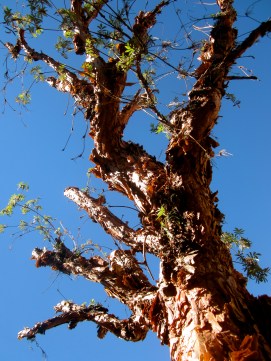
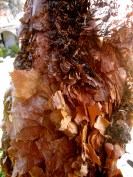
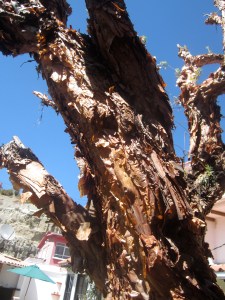
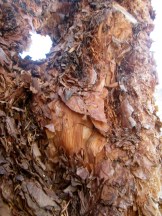
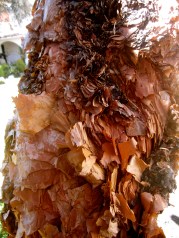
Detail, tree trunk with ‘peeling layers’, a result from the cold weather (physiological adaptation response).
La especie se encuentra en floración entre diciembre-enero y marzo-abril. Fructifica abundantemente, en racimos. Parte de las hojas y de las últimas ramificaciones, cae durante el invierno; cuando el nuevo follaje está completamente desarrollado, se desprenden las hojas restantes. La especie se distribuye en un rango elevacional entre 3900 hasta 4700 m, algunos individuos aislados pueden llegar hasta 5200 msnm en el Parque Nacional Sajama. Es conocida mundialmente porque en su distribución la especie alcanza más altitud que cualquier otro árbol en el mundo. Queñoales eres una comunidad vegetal en que es dominante la Queñoa (Polylepis spp.), árbol característico del Altiplano. Los troncos, de madera dura, son generalmente retorcidos, y están cubiertos por una corteza exfoliante, formada por múltiples láminas de color castaño rojizo.
[English] Polylepis woodland is a distinctive, high-elevation Andean forest habitat that occurs above cloud level (3,500-5,000 m) as patches of woody vegetation surrounded by paramo (e.g., Festuca species) or puna (e.g., Ichu species) grass and shrub (e.g., Baccharis species) communities. These high-altitude woodlands tend to be relicts of a once-widespread habitat and comprise mainly evergreen trees of the genus Polylepis (Rosaceae) which are highly drought tolerant. The trunk and branches are laminated with brown-reddish bark that peels off in paper-like sheets as a protection against extremely low temperatures, and often have mosses and lichens growing on them. ♥ Learning something new everyday here! 😮
the peeling trunk [detail]
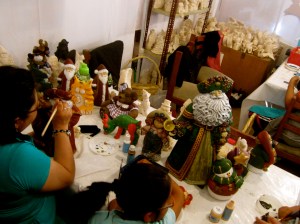
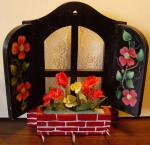
El evento internacional, en su cuarta versión, tuve más de 180 expositores que llegarán de diferentes distritos del país y el exterior para mostrar y enseñar sus nuevas técnicas en el arte decorativo. El Ministerio de Culturas en apoyo al arte popular, la artesanía, desarrollo y promoción de proyectos productivos de las artes manuales e incentivando el intercambio cultural brinda su respaldo a la IV Feria Internacional del Arte Decorativo Fidad – Bolivia 2012. “La feria internacional será inaugurada este miércoles en el Círculo de Oficiales del Ejército (COE), donde se ha instalado un circuito cerrado para la difusión de los talleres y de espacios recreativos para los niños”, informó la Coordinadora de la Fidad, Gladys de Rodríguez.
La Paz Feria de Arte Decorativo
El evento internacional, en su cuarta versión, tuve más de 180 expositores que llegarán de diferentes distritos del país y el exterior para mostrar y enseñar sus nuevas técnicas en el arte decorativo. El Ministerio de Culturas en apoyo al arte popular, la artesanía, desarrollo y promoción de proyectos productivos de las artes manuales e incentivando el intercambio cultural brinda su respaldo a la IV Feria Internacional del Arte Decorativo Fidad – Bolivia 2012. “La feria internacional será inaugurada este miércoles en el Círculo de Oficiales del Ejército (COE), donde se ha instalado un circuito cerrado para la difusión de los talleres y de espacios recreativos para los niños”, informó la Coordinadora de la Fidad, Gladys de Rodríguez.
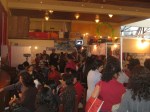
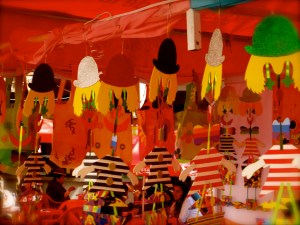
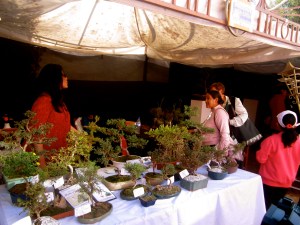
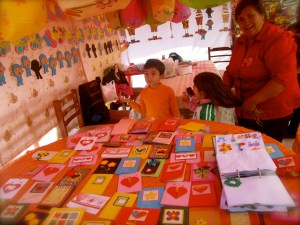
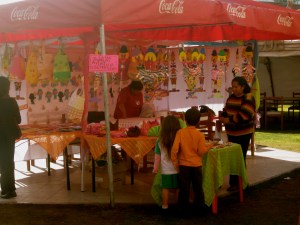
[English] What could be a better idea for an “after school Friday activity”? This past Friday, decided to take the kids to the Military Circle, in La Paz, for a Fair on Arts, Crafts and Decoration, complete with short-classes, and courses on how to make ceramic, plaster, paintings… Kids loved the experience and this mom over here left very pleased with the results, after over 2 very intense/active hours! 😮
El objetivo fue de estimular la creatividad de las personas que están relacionadas con las artes decorativas, para ello, los expositores mostrarán y enseñarán las nuevas técnicas en sus propios stands que se convertirán en talleres para que cada visitante opte por el aprendizaje de un arte en breve tiempo, según el reporte oficial.
A manera de incentivar al público asistente, los organizadores de la Fidad – Bolivia 2012 programaron pasarelas de moda con modelos de Top Secret, presentaciones de ballets y espacios de comida rápida.
School year just begun… nothing says “Welcome” better than a morning filled with fun activities for the whole family, topped off with typical (and delicious!) “salteñas!
Bolivia is known for its special kind of empanada called a salteña. Oddly, the salteña takes it’s name from a city in Argentina (Salta), but it’s definitely a Bolivian specialty. You can recognize salteñas by the repulgue (the braid-like fold that seals the filling inside) which runs across the top of the pastry instead of along the side.
There are many varieties, but in general the meat and vegetable filling in a salteña tends to be runnier and sweeter (yet spicy) than most other empanadas. They are tricky and time-consuming to prepare, with traditional recipes calling for gelatin in the filling, so most salteña fans buy them from restaurants and street food carts. Salteñas are typically enjoyed as a mid-morning snack in Bolivia.
Salteñas are often served with a plate and a spoon, but expert salteña eaters know how to enjoy them without letting the juices run down their sleeves, by kind of pouring the liquid into their mouth as they take bites!! 😮
This slideshow requires JavaScript.
And here, the recipe for this delicious treat!
Filling – Ingredients:
1 cup lard or margarine
1 cup ground spicy red pepper (cayenne) mixed with water
½ tablespoon ground cumin
½ tablespoon black ground pepper
½ tablespoon crumbled oregano
1½ tablespoon salt
2 cups white onion, cut into small cubes
1½ cups green onion, finely chopped
3 pounds lean meat, cut into small cubes
1 cup potato, peeled, cooked, and cut into small cubes
½ cup cooked green peas
¼ cup granulated sugar
½ tablespoon vinegar
½ cup parsley, finely chopped
2 spoonfuls unflavored gelatin dissolved in 3 cups water
½ black olive per salteña
3 raisins per salteña
1 slice of boiled egg per salteña
Preparation:
In a casserole add the margarine and the spicy red pepper. Set to boil over high heat until the margarine separates from the pepper. Next add cumin, ground black pepper, oregano, and salt. Let cook for ten minutes over low heat so that the mixture does not stick. Stir constantly. Next add the white onion and let it cook for five more minutes. Finally add the green onion.
Remove the casserole from the heat, add the sugar, vinegar, parsley, potato and cooked peas.
In another casserole add the three gelatin cups. Let it cook over high heat and as soon as it starts to boil, add the meat. Mix quickly and remove from the heat.
Mix the first preparation with the gelatin and meat. Let it cool in the refrigerator one night or until it thickens. If wanted, add the olives, raisins and egg before it thickens or add them directly on the dough when preparing the salteñas.
DOUGH
Ingredients:
12 cups flour
1½ cups lard or margarine (boiling)
6 whole eggs
½ cup sugar
3 teaspoons salt
2¼ cups lukewarm water (more or less)
Preparation:
Sift the flour in a bowl and add the boiling lard or margarine. Mix quickly with a wood spoon. Let it cool for a few minutes and add the eggs, the sugar and lukewarm water with salt. Knead until getting a dry dough. Cover the dough with a kitchen towel and let it rest for ten minutes.
Divide all the dough into fifty small balls and thin them out one by one with a roller, until getting round-shaped pieces (about ¼ of and inch thick by 5 inches of diameter).
On each round-shaped piece put a spoonful of the filling with the olive, raisins and egg, if these ingredients were not mixed before.
Dampen the edges of each piece with water, fold each one and join the edges very well so that each salteña is closed perfectly. Leave the closing on top.
Put salteñas, on a backing sheet sprinkled with flour. Place each salteña separate from the next one. Bake them at a high temperature (European oven: 300 C.; American oven 572 F.) between seven to ten minutes. Serve them warm.
NOTE 1: If desired, paint salteñas before baking them. In a frying pan add 6 spoonfuls of lard or margarine, 2 spicy red peppers (ground), 4 spoonfuls of water and a teaspoon of salt. Mix the ingredients and cook them over low heat until the water evaporates. Remove the mixture from the heat and paint eachsalteña with a kitchen brush. NOTE 2: If desired, you can substitute meat with chicken, or you can combine both.
SILHOUETTE. The proper definition of a silhouette is “the outline of a body viewed as circumscribing a mass.” In photography, often we achieve that effect by putting light behind the object whose silhouette we want to capture, effectively darkening out the features of the subject instead of highlighting them – according to this week’s challenge, from the Daily Post, in Wordpress.
According to Ailsa, from “Where’s my Backpack?”: It fascinates me how a silhouette; a two-dimensional outline of a person or object, can suggest a story just as clearly as if you could see the scene in its entirety. Perhaps it makes our imagination work overtime, trying to fill in the details we cannot see.”
SILHOUETTE. The proper definition of a silhouette is “the outline of a body viewed as circumscribing a mass.” In photography, often we achieve that effect by putting light behind the object whose silhouette we want to capture, effectively darkening out the features of the subject instead of highlighting them – according to this week’s challenge, from the Daily Post, in WordPress.
According to Ailsa, from “Where’s my Backpack?”: It fascinates me how a silhouette; a two-dimensional outline of a person or object, can suggest a story just as clearly as if you could see the scene in its entirety. Perhaps it makes our imagination work overtime, trying to fill in the details we cannot see.”
Our family arrived at our new assignment less than 3 months ago, as many of you may know by now: 2012 marks the move to our first Spanish speaking post: La Paz, Bolivia. The ‘model’ for this photograph is our oldest son, and adventurous and curious boy, pictured against our view through the backyard. The idea of the ‘unknown’ is, at the same time, scary and intriguing… The silhouette against the beautiful mountain scenario tries to represent that – even though we’re not totally sure about what’s ahead of us, we can still enjoy the little bit of beauty that our eyes are able to catch… we’ll be writing our stories and tales in different ways now… This particular blogpost represents the transition that’s waiting for us – my appreciation to Where’s my backpack? for the inspiration! 😮
This week’s inspiration is “urban”. The idea behind urban photography is to photograph your city and the streets where you grew up as they are. Unlike the photoshopped pictures to which we are accustomed nowadays, urban photography presents a more direct, unaltered view of life. It is about documenting urban living space and how people adapt their environment to certain needs and vice versa. Urban photography shots provide cultural, social, economical, and ecological context all at once, and can capture social tension. Think of urban photography as a complement to street photography—it provides the context in which street photography unfolds.
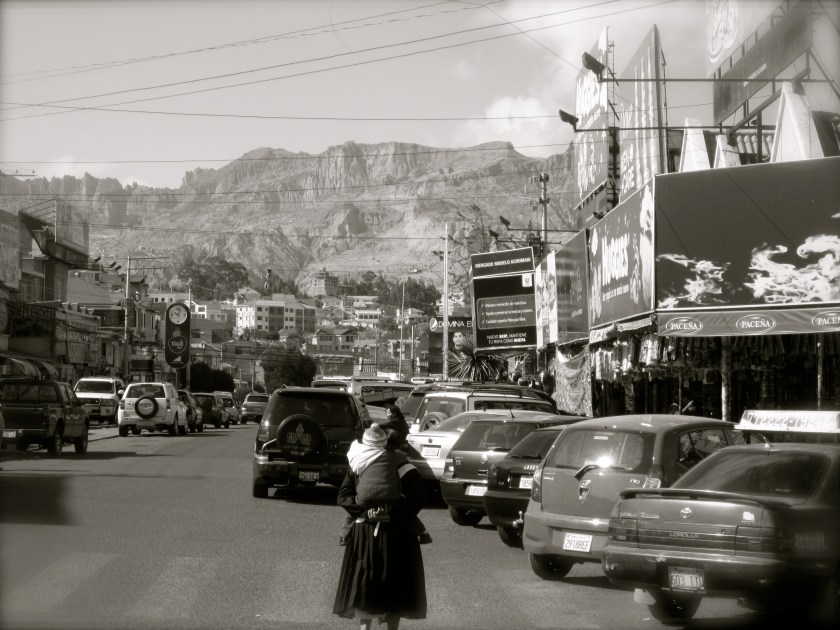
“Colorless Urban”
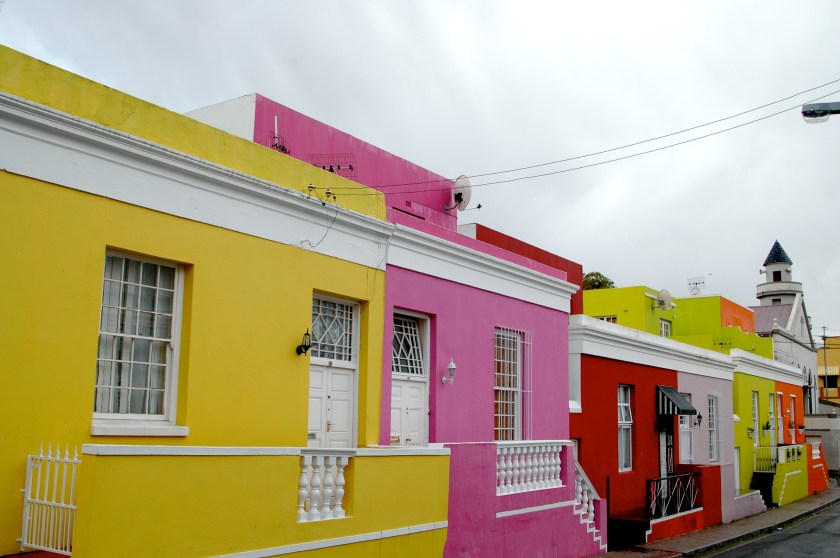
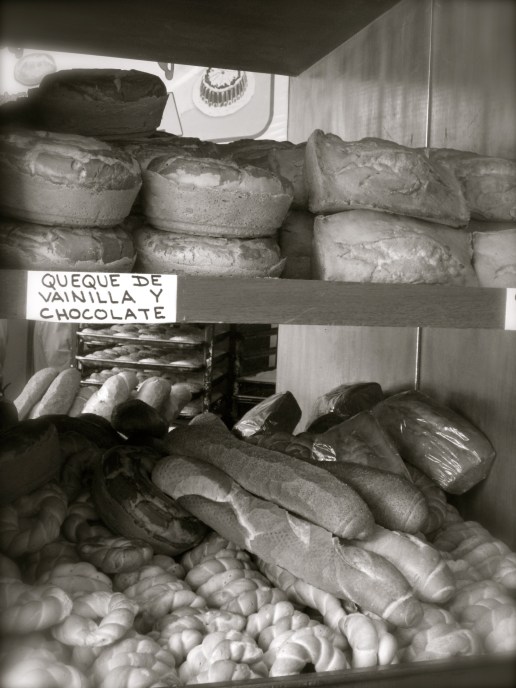
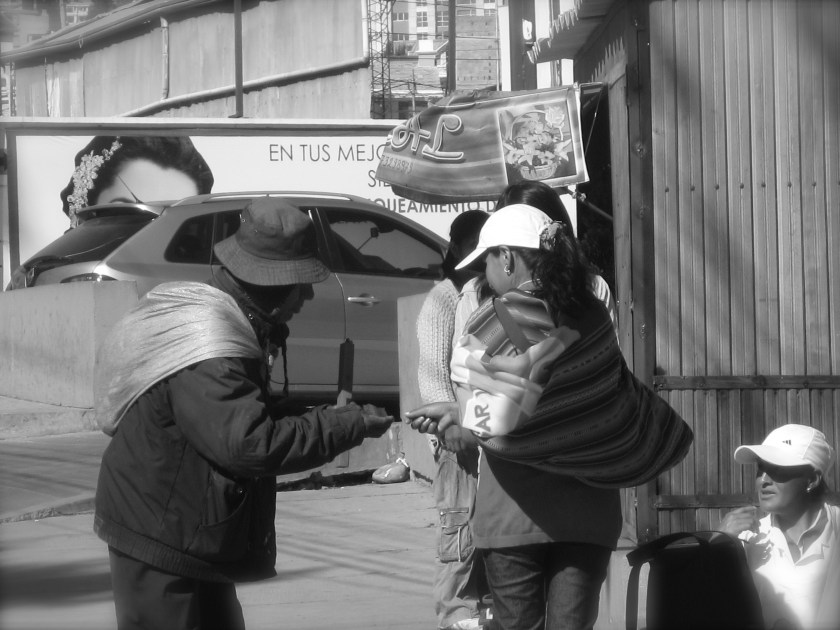
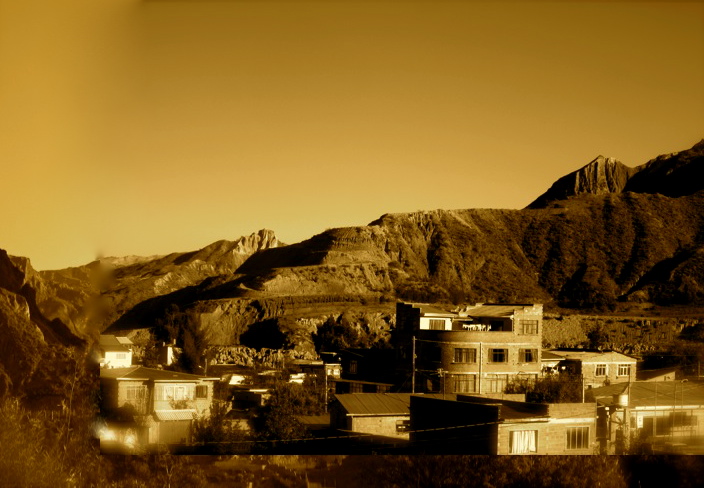
This week’s photo challenge is guest hosted by This week’s photo challenge is guest hosted by Terence S. Jones of A Guy With a Camera. Here, I’m presenting two views of the same city, a ‘colorless urban”, and a ‘colorful’ one, seen below. Urban settings can be whatever we want them to be – sad and colorless, or lively, colorful, pleasant!
“Colorful Urban”
This week’s inspiration is “urban“. The idea behind urban photography is to photograph your city and the streets where you grew up as they are. Unlike the photoshopped pictures to which we are accustomed nowadays, urban photography presents a more direct, unaltered view of life. It is about documenting urban living space and how people adapt their environment to certain needs and vice versa. Urban photography shots provide cultural, social, economical, and ecological context all at once, and can capture social tension. Think of urban photography as a complement to street photography—it provides the context in which street photography unfolds. Thanks for the inspiration! ♥
It’s August, and surprisingly enough, we’re keeping ourselves warm while enjoying our new settings. This is what we see, throughout the neighborhood of Achumani in La Paz. The prominent peak that that dominates the skyline over the city of La Paz is the beautiful snow capped Mount Illimani. It lies just south of La Paz at the eastern edge of the Altiplano.
Mount Illimani has an elevation of 6,438 meters (21,122 ft), making it the highest mountain in the Cordillera Real mountain range (name of mountain chains in the Andes Mountains) of western Bolivia. It is the second highest peak in Bolivia, after Nevado Sajama and the eighteenth highest peak in South America. The mountain has five main peaks. The highest is the south summit known as Pico Sur. On the west side is Nevado Illimani, where the normal climbing route is located, which is a popular ascent for mountain climbers. At this time of the year, it’s possible to see the mountains covered in fog and thin snow, result from the cold night, and the perfect excuse for lighting up the fireplace… in the middle of August! 😮
This week’s photo challenge is guest hosted by Gary Ng of Gnostec Photography. Merge. The world is made up of many things. There is a saying that opposites attract, and this is true for relationships and other things. What about photography? Many surprises can come out of merging two different entities into one. Sometimes this fusion of the elements is what we call art.
This week’s photo challenge is guest hosted by Gary Ng of Gnostec Photography. Merge. The world is made up of many things. There is a saying that opposites attract, and this is true for relationships and other things. What about photography? Many surprises can come out of merging two different entities into one. Sometimes this fusion of the elements is what we call art.
This week’s inspiration is “merge“. Here is my interpretation, merging two different settings from around our newest neighborhood… one, could be considered the perfect scenario, just the mountains… the second one, once the urban constructions have arrived… Original images may be seen below. Let’s see how good of a “merging job” was done… Thanks for the inspiration! ♥
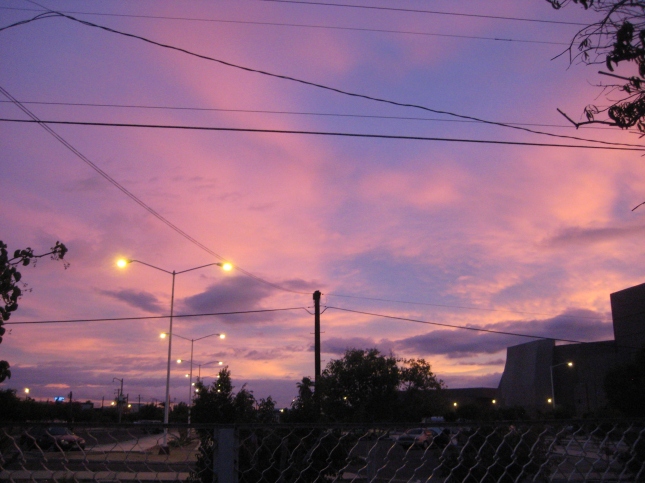
Sunset… as it is! Beautiful, thanks to Awoodstock!
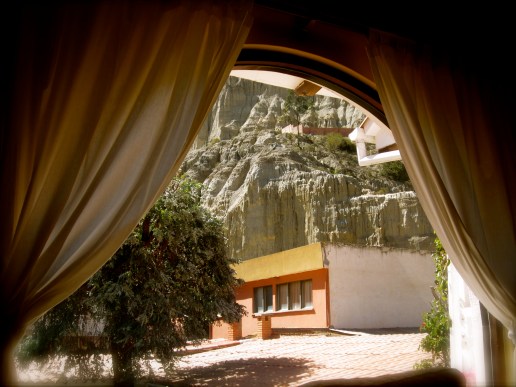
What we see looking though our TV room window…
We made it. We’ve been in La Paz for exactly 7 days, and here is a bit of what we’ve been able to see… But before we go into the image gallery, just found out that Jill is hosting another Foreign Service Blog Round Up (here we go, people unfamiliar with the ‘acronym world’- it became FS BRU!) – and, a fellow blogger, Ailsa, from “Where’s my Backpack?“, came up with a great travel theme: “sunset”!
Anyway, this week’s theme is coincidently: ‘your current post’, and 5 pros and cons of it… so, for somebody who’s got less than 2 weeks at post, take this list with a grain of salt… 😮 I’m sure things will change with time… for better… or for worse… let’s wait and see! For now, enjoying life in ‘Breathless La Paz‘ (you’ll soon find out why!). So, just taking advantage of a blog post written a couple days ago, to share my very own list of “pros and cons” or our newest post:
Nuestra Señora de La Pazis the administrative capital of Bolivia. It is located at an elevation of 3,660 meters above sea level, making it the world’s highest capital city. The city sits in a “bowl” surrounded by the high mountains of the altiplano. As it grows, La Paz climbs the hills, resulting in varying elevations from 3,000 meters to 4,100 meters. Overlooking the city is towering triple-peaked Illimani, which is always snow-covered and can be seen from several spots of the city, including from the neighbor city, El Alto. La Paz is an important cultural center of Bolivia, and we can’t wait to start discovering its culture, learning about its history, the people, the traditions…. and living surrounded by unique beauty!
The city hosts several cathedrals belonging to the colonial times, such as the San Francisco Cathedral and the Metropolitan Cathedral, this last one located on Murillo Square, which is also home of the political and administrative power of the country. Hundreds of different museums can be found across the city, the most notable ones on Jaén Street, which street design has been preserved from the Spanish days and is home of 10 different museums… We haven’t had a chance (yet!) to really go through the main attractions, but, ‘high altitude permitting’ (!!), we’ll begin… very soon!
PROS of our current ‘setting’:
The beautiful views surrounding our house, the mountains, the unique geography throughout the city of Nuestra Señora de La Paz, our #1 bid… I seem to never get tired of looking at these mountains…
The School. We were finally able to be at a post where we enrolled our kids (almost 7 & 4,5 yrs old) at an American School [in Mozambique, our son went to a Canadian Montessori Academy, and in Brazil, the oldest ones went to a private local school – for now, let’s just leave any discussions behind us… let’s say we were lucky to have different options for our children!]. Regarding their current school, we’re quite pleased with what we’ve seen, so far… Baby girl is still too young for school days, so, for the time being, she’s staying at home with….
… a great NANNY! Close friends (from our time in Mozambique) who were living in La Paz, hooked us up with their nanny/maid pair, right before they had to depart to their next posting – so, we had both ladies waiting for us at the house the day we arrived at our new home…
Our ‘sponsors’ have been in country for over a decade. They’re pretty ‘plugged in’, have a lot of insight info to share, tips, recommendations… they’ve got kids at similar ages to ours, and… are pretty involved with tourism, extreme sports, mountain biking, hiking… That said, we’ve already built a good ‘network’ during our few days in country…
The food! I’m simply loving it! Very tasty, so far, very safe to our ‘foreign stomaches’… Our maid is a trained cook, and tries to ‘surprise’ us with a different recipe each day. Groceries seem to be way more affordable than back in Recife (Brazil) or DC/Va, for that matter. That said, going grocery shopping has become an entertaining task for this still-stay-home-mom!
Now, the, ‘not-so-positive’ remarks:
‘mate’ (tea) does help with the high altitude effects… A lot, actually! 😮
The ALTITUDE. Coming from our 4 weeks of home leave in the US, and before that, a great couple of years posted in Recife, Brazil, pretty much across the street from the ocean, the effects of the high altitude resulted in a shock to my body …
The HIGH ALTITUDE. I DEFINITELY WAS NOT MYSELF for the first 36 hours in country. Had the husband call the med unit at the embassy, and thought: “has somebody ever asked for curtailing after less than 48 hours at post?“. Became best friends with the oxygen tank. It made it possible, so, i’m very grateful to whoever came up with the idea of portable/personal oxygen tanks/cylinders. My deepest appreciation to you, Mr Inventor, whoever you are….
One of my newest ‘best friends’ here in in La Paz!
The VERY HIGH ALTITUDE. Besides the oxygen, I learned about keeping your body filled with fluids… Any kind, just avoiding the obvious options of alcohol, sodas, coffee… What??! Can’t I drink coffee?! I’m born in Brazil, to a Portuguese mom, and we’ve been drinking coffee since I was in grammar school! [I know it’s sounds horrible, but, hey, blame the Portuguese culture for that!] 😮 That said, imagine somebody, already dizzy, with a killer headache for literally almost 2 full days, lacking her daily dose of caffeine… Simply, not fair… But I survived… and now, guess what? I’m back into drinking my favorite beverage… And it’s all good…
The COLD WEATHER. It’s pretty cold over here, no central heating system, so we’re managing with several portable space heaters (thanks GSO!), but I’m sure we’ll adjust. Right now we’re leaving out of our suitcases, waiting for our stuff to come from Brazil (hasn’t left yet!) and from the US (part of the HHE/UAB coming from the east coast). Despite the cold, it’s quite easy to get a real SUN BURN if you’re just outside, trying to warm your bones up… sunscreen is a must! As they say here, “you’re closer to the sun, so, gotta respect that!”.
And lastly, it’d be great once we have a working cable TV… no shows for the kids, yet. No cartoons… but it’s giving us a chance to talk more (at least, that’s what we’re doing to forget about the lack of a TV). It’s been good to talk with the kids, and inquire about their first impressions of this new life. Talking’s been good. Unless, they get on our nerves, and guess what? Then it’s time for bed, school days are back, and the school bus doesn’t wait for long in the morning!
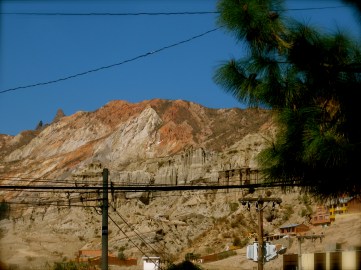
After the adjustment to the weather and the high altitude, it’s possible to enjoy the beauty that surrounds us…
Here, ‘peeking’ into our new life… and this is just the beginning!
So, today, as described earlier, we celebrate a year into our assignment. I wrote about challenges and victories. At lunch time, we were greeted with another victory: our next Post.
The Mirandas are going to their #1 Choice!
Here it is a hint about our next assignment:
Still no clue? Here’s another one:
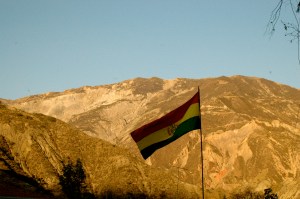
Not much of a “flag person”? It’s fine. What about some Elementary School Geography?
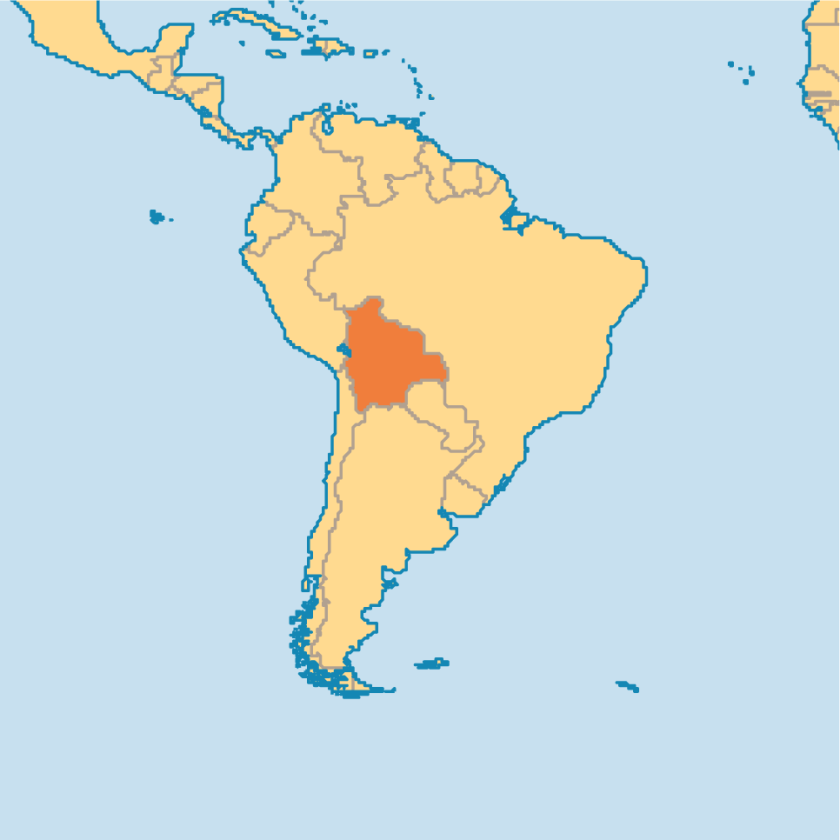
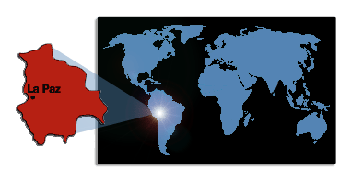
That’s right! We’re assigned to La Paz, and couldn’t wait to tell everyone!
We’re so very happy: got dear friends in Bolívia, friends we made while posted in Africa. One of them is an amazing mom-wife-blogger, and a great inspiration for me… Wait for us, van Herksens, we’re coming!












































































 3rdculturechildren
Different views on “free spirit”:
« The Great Escape » Life from behind a lens « beyond toxicity – Joy and Woe Lonely Travelog « Flickr Comments « Express with Photos – Free Spirit | Just Snaps | My Sardinian Life | La Mia Vita Sarda « Broken Light: A Photography Collective « miljoanne « So where’s the snow? « Mondrak’s Blog | Ohm Sweet Ohm « What’s (in) the picture? « the thirdeyeworld