
Blog Hop: I’ve talked before about our family’s cultural settings – husband and wife coming from different (but not exclusive) cultures/languages, raising our 3 TCKs, all now 7 years of age, and under; as well as presented thoughts on the Creative Flow of a TCK. This past April, AFSA hosted a panel discussion on emotional resilience in third-culture kids (TCKs) with a particular focus on the Foreign Service experience, during the first week of April. Experts on the issue of TCKs are expected to discuss the issue, taking questions from the audience – too bad we´re a bit far from DC, but we´re looking forward to reading about the discussion. The main question under discussion will be why some kids adapt very well to life in the Foreign Service while others struggle [check the AFSA website for more information].
From my/our end, we are trying to do our part of the challenging task that is raising worldy third-culture children. And we´re doing it through language. It’s already known that speaking several languages fluently increases job opportunities, makes international travel easier, and enables you to communicate with a lot more people a lot more easily. There are various theories on how to best raise multilingual kids. “One parent, one language” (OPOL for short) is popular, and to some extent that is what we’re doing in our family.

We’ve found out we’re “moderate” multilingual parents… At least, that’s how we tested, according to the Multilingual Living Quiz. Which is the best “group of multilingual parents”? Hard to say, they’re all different, and unique in their own way. There’s no magic formula when it comes to raising children in a multicultural setting. I’m always talking about our multilingual household, the challenges of trying to keep up with Spanish, Portuguese and English, while assisting our 1st grader on his (now!) English homework assignments, as well as with his homeschooling English/Spanish tasks! [Note: our son had started first grade in Brazil, last February, attending a Brazilian Montessori School, and had English classes three times a week. We moved to our current post, La Paz, Bolivia, in August, so, he could begin the American School year, as a first grader…] And our oldest child is just one of the examples: there two more on the line – his younger sisters (now aged 4,5 and almost 2) are a lively part of this multilingual/multicultural environment….

Challenging, but exciting. And we’re very satisfied with the outcome: our oldest children are capable of communicating with both sets of grandparents, watching bilingual TV, having play dates both in English and Portuguese, and, offer very positive feedback to their dad when talked to/read to in Spanish. 😮 Recently, I stumbled upon a great quote, about the experience of raising bi/multilingual children: “raising multilingual children is an adventure you share together – one that is a lot of fun, but for which you will need quite a lot of patience. Sometimes, linguistic development will not progress in the way you hoped. That is fine, and everything will eventually work itself out. Sharing my language with my children has been about sharing my heritage more than anything else. It might be difficult at times, but it is a gift that will last a lifetime“. Couldn’t agree more! 😮

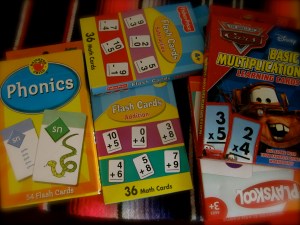
Helping our oldest children with their homework in Portuguese, having them practice English phonics with their native-speaker father, seeing the children have routine conversations with their dad in Spanish and English; and reading bed time stories in … who knows what!
We’ve been very fortunate regarding the kids school back in Brazil (they get both Portuguese and English), and we were thankful for the opportunity to use the educational allowance for homeschooling our 1st grader when it came to supplement his English language.
All in all, it’s working, and we’re pleased with the current results. Based on the explanation for each “group of multilingual parenting styles”, the Moderate Parent has found the golden middle way of bilingual parenting. Well-informed about bilingual issues yet know that ultimately they have to make your own rules and decisions that suit your family the best. Have a healthy dose of commitment towards your bilingual endeavour, a reasonable amount of self-confidence in what you are doing, and have no problem in bending the rules when necessary and when it’s in your family’s best interest. the “moderate parents” have chosen a model, are committed to it, and don’t give up easily when troubles arise. Acquainted with worries and problems but can ride through rough times by getting the right support from certain experts, their online group and other bilingual parents.
[Test originally published in Multilingual Living Magazine]
After all that, now it’s your turn to answer: “What type of multilingual parent do you think you are?” Take the quiz and find out! Here are examples of the questions:
“When you are on the playground with your child, you…”
“When your child speaks to you in the “wrong” language, you…”
“When it comes to literature on bilingualism, you…”
“Your reaction to the word “OPOL” is…”
“Your aim is for your child is…”
And there are many more questions/concerns/curiosities… Take your time to check it out!
So, how do you think you did?
Click Here to calculate your score and find out the results! We had a lot of fun (and learned a lot!) doing this little exercise! 😮 thanks for coming along!
Related articles
- 14 Celebrities Who Are Multilingual (Bonjour, Bueno, Konnichiwa!) (styleblazer.com)
- Bilingual Children and the First Days of School (languagelizard.com)
- Speaking multiple languages can influence children’s emotional development (eurekalert.org)
- Bilingual is Better; Review and Giveaway (5minutesformom.com)
- About OPOL (expatsincebirth.com)


 3rdculturechildren